Artwork
Madonna and Child with Cherubs
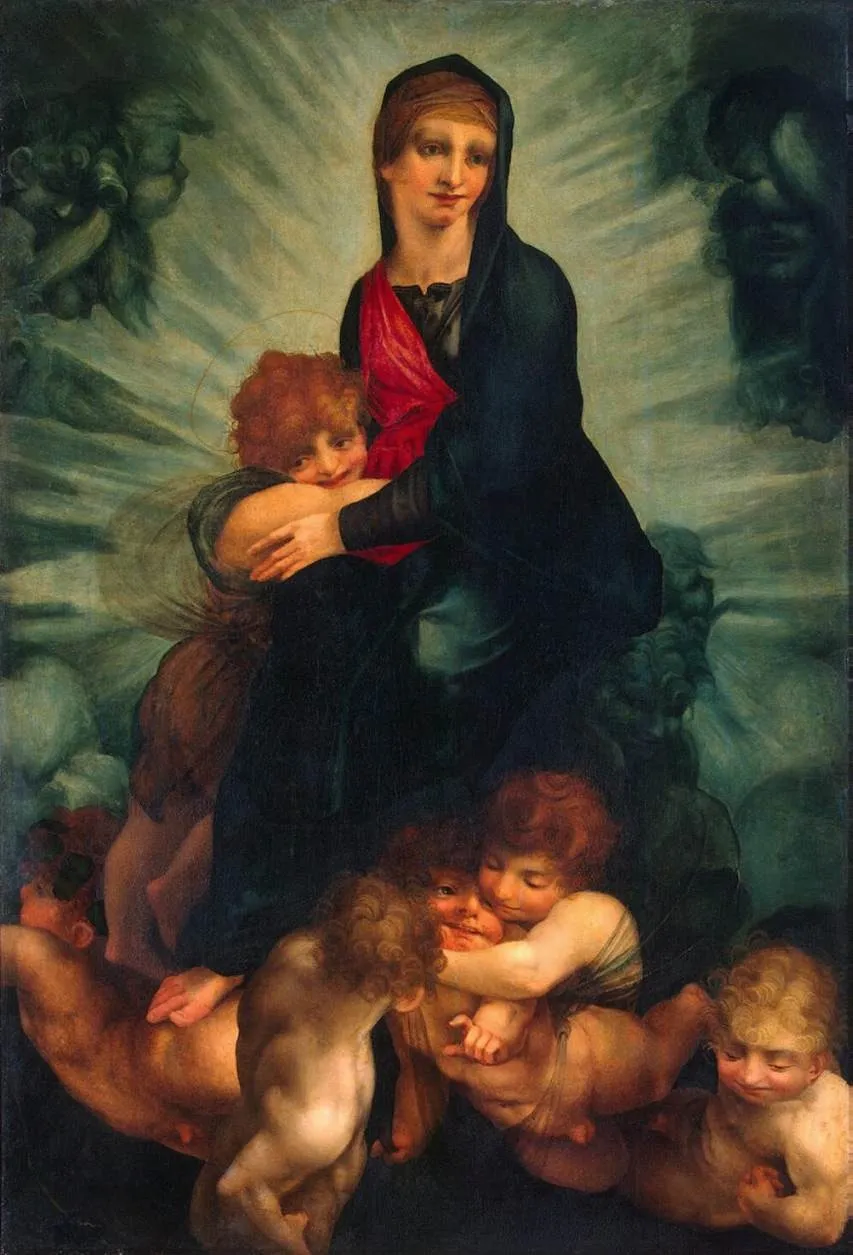
Madonna and Child with Cherubs is an oil painting by the Mannerist artist Rosso Fiorentino. It dates from 1517 and is held in the collection of the Hermitage Museum.
About this work
Overview
Rosso Fiorentino's oil painting, Madonna and Child with Cherubs, created between 1512 and 1517, depicts the Virgin Mary tenderly holding the infant Jesus, surrounded by playful cherubs. Originally painted on a wooden panel, the work was later transferred to canvas. It is currently housed in the Hermitage Museum in Saint Petersburg, having been acquired in 1810 for its collection.
Subject & Meaning
One prominent cherub in the foreground strikingly echoes a figure from classical sculpture, adding a layer of artistic reference to the sacred scene.
The painting centers on the Virgin Mary, clad in a red dress and blue robe, cradling the infant Jesus. Their tender embrace forms the core of the composition, suggesting intimacy and maternal affection. Naked cherubs emerge from the background and foreground, some engaging playfully with the child, while others display dynamic poses. One prominent cherub in the foreground strikingly echoes a figure from classical sculpture, adding a layer of artistic reference to the sacred scene.
Technique & Style
Rosso Fiorentino's distinctive Mannerist style is evident in the painting's expressive figures and dramatic composition. The artist imbues the faces with a unique non-conformism, characterized by elongated mouths, prominent noses, and large eyes that convey heightened emotion. Figures exhibit a plastic vigor and twisting forms, contributing to a sense of dynamic movement. The use of chiaroscuro further enhances the depth and volume, while strong color contrasts contribute to the overall visual impact of the oil medium.
Legacy
Rosso Fiorentino drew upon significant artistic precedents in developing this composition. Models by Fra Bartolomeo informed the overall structure, while the pyramidal grouping and the Virgin's contorted pose reflect the profound influence of Michelangelo. Echoes of Michelangelo's Madonna of Bruges are discernible in the embrace, and the cherubs' 'unfinished' quality recalls works like the Taddei Tondo. One cherub in particular, viewed from above, strikingly references Michelangelo's David, demonstrating a sophisticated engagement with contemporary sculpture.
History & Provenance
Initially executed on a wooden panel, Madonna and Child with Cherubs underwent a transfer to canvas at some point in its history. The artwork was acquired for the Imperial collection in 1810, facilitated by Baron Dominique Vivant Denon, a prominent figure in French art administration. This acquisition brought the painting from Paris to the burgeoning Hermitage Museum in Saint Petersburg, where it has remained a part of the collection since.
Artist & collection

Artist
Rosso Fiorentino stood out in the Italian Renaissance for one reason—he was always bent on doing things his own way.
