Artwork
Spray of Flowers
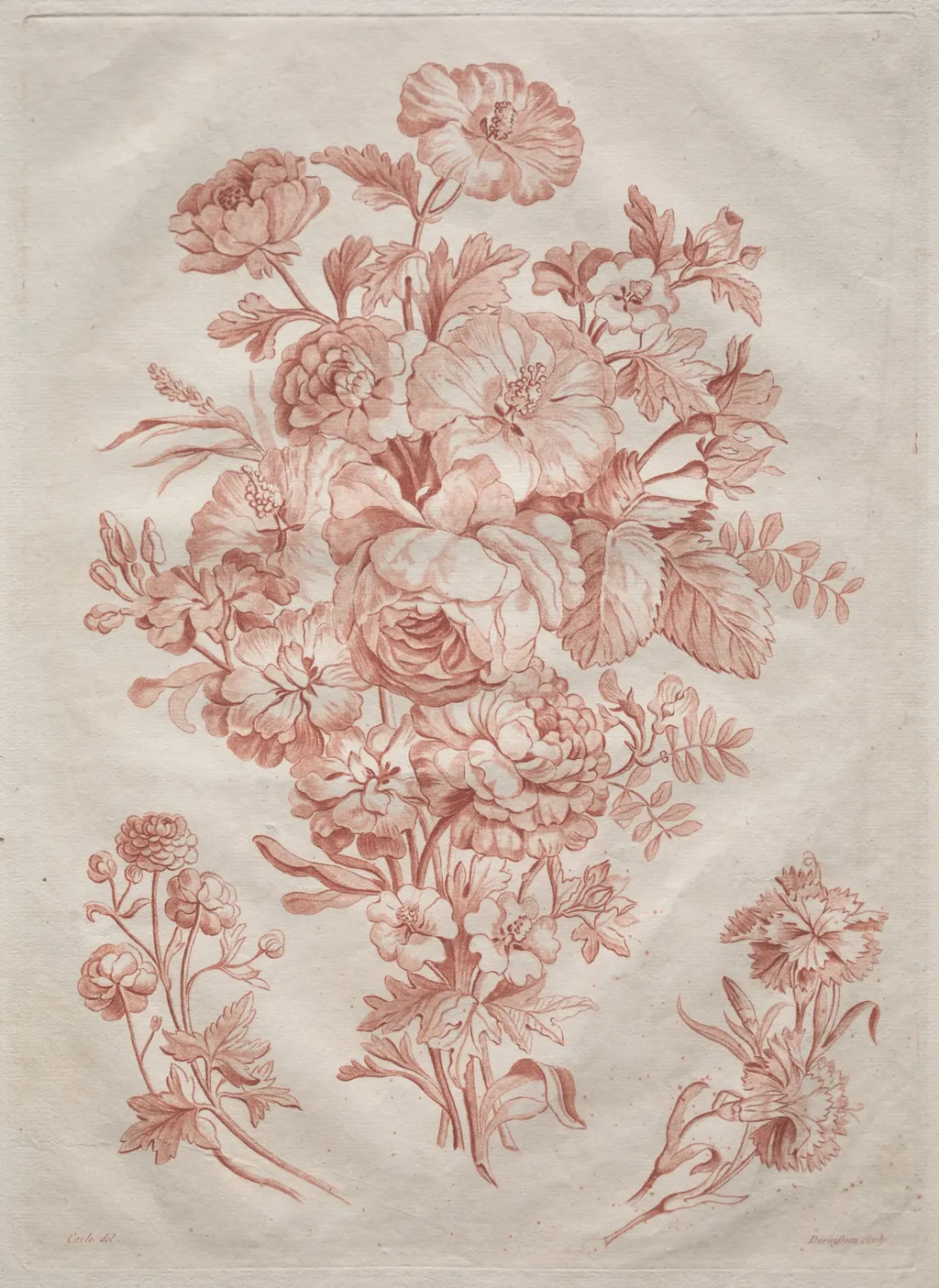
Spray of Flowers is a print by the Romanticist artist Roubillac. It is held in the collection of the Cleveland Museum of Art.
About this work
Overview
Spray of Flowers is an 18th‑century crayon‑manner etching that reproduces a chalk drawing of a loose bouquet. The composition features soft pink and white blossoms with wilted stems and a single drooping green leaf. The work was created as a print to disseminate a naturalistic floral study for decorative purposes.
Technique & Style
The image was produced using the crayon‑manner technique, wherein a metal mattoir—an instrument bearing irregular, toothed points—was pressed into the paper to mimic the grainy texture of chalk on textured support. This method allowed the printer to render the delicate, sketch‑like quality of the original drawing while preserving the spontaneity of the hand‑drawn line.
Subject & Meaning
The etching presents a modest arrangement of flowers rendered in muted pinks and whites, emphasizing the fleeting nature of the blossoms through limp stems and a sagging leaf. The naturalistic observation reflects an interest in botanical accuracy, while the informal composition suggests a decorative rather than narrative intent.
History & Provenance
Crayon‑manner etchings emerged in the 1700s to satisfy the demand for chalk‑style drawings in print form. This particular work, titled Etudes de fleurs d’après nature, was circulated among artisans who adapted its motifs for textiles, furniture, and other applied arts. It is now part of the Cleveland Museum of Art’s collection.
Context
During the eighteenth century, the popularity of chalk studies prompted the development of printing techniques that could reproduce their tactile quality. Such prints served as pattern books, providing designers with ready‑made floral motifs that could be integrated into decorative objects, thereby linking fine art practice with commercial design.
Artist & collection

Artist
Louis-François Roubiliac was a French sculptor who worked in England. One of the four most prominent sculptors in London working in the rococo style, he was described by Margaret Whinney as "probably the most…

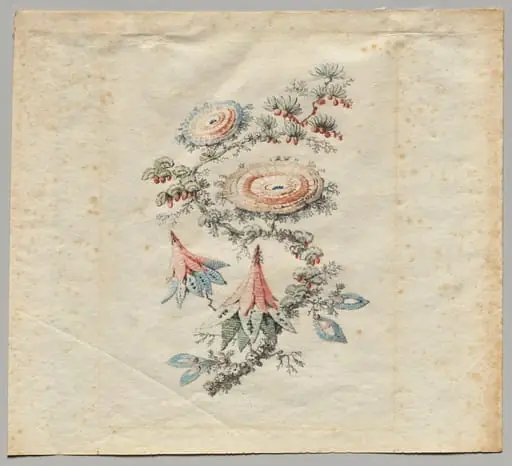 Flower Embroidery Design for Silk Manufactory of Lyon
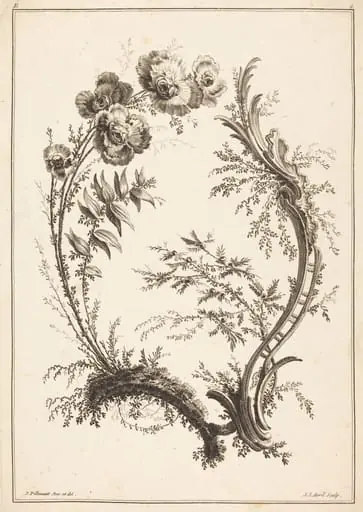 Ornament with Flowers
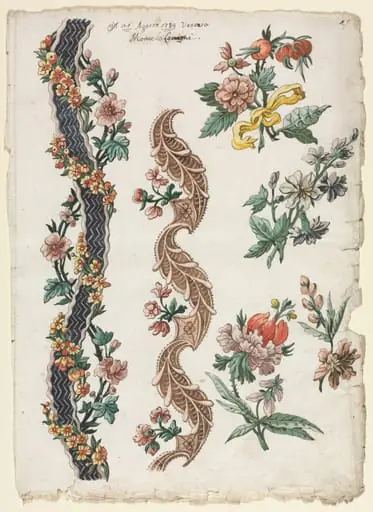 Floral Designs and Floral Bands
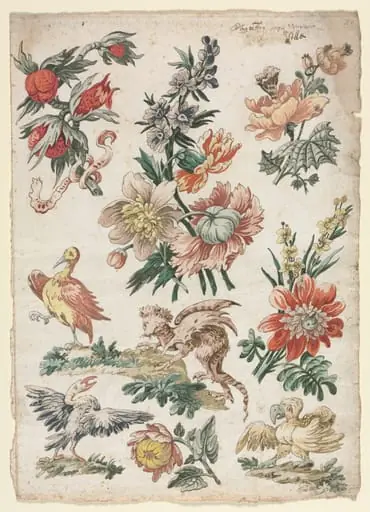 Floral Designs with Birds and Griffon
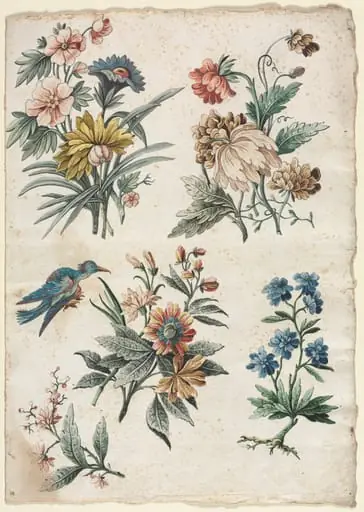 Floral Designs with a Blue Bird
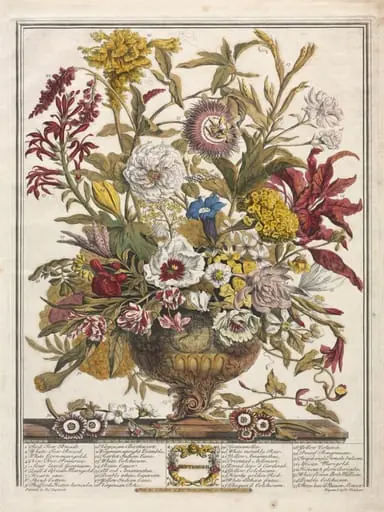 Twelve Months of Flowers: September
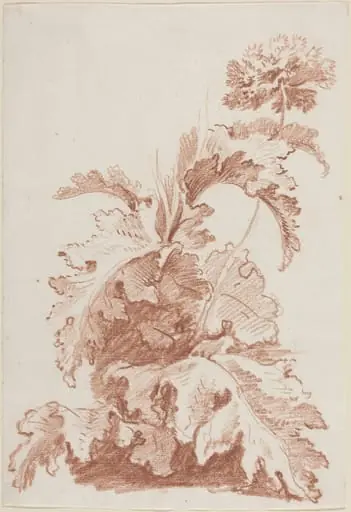 Poppy in Bloom
 Divers fleurs mises en boucquets: No. 1 - Hollyhocks and Narcissus
 Liure de Toutes Sortes de fleurs d'après nature: Vase of Flowers
 Bouquet in a Glass Bottle