Artwork
Twelve Months of Flowers: September
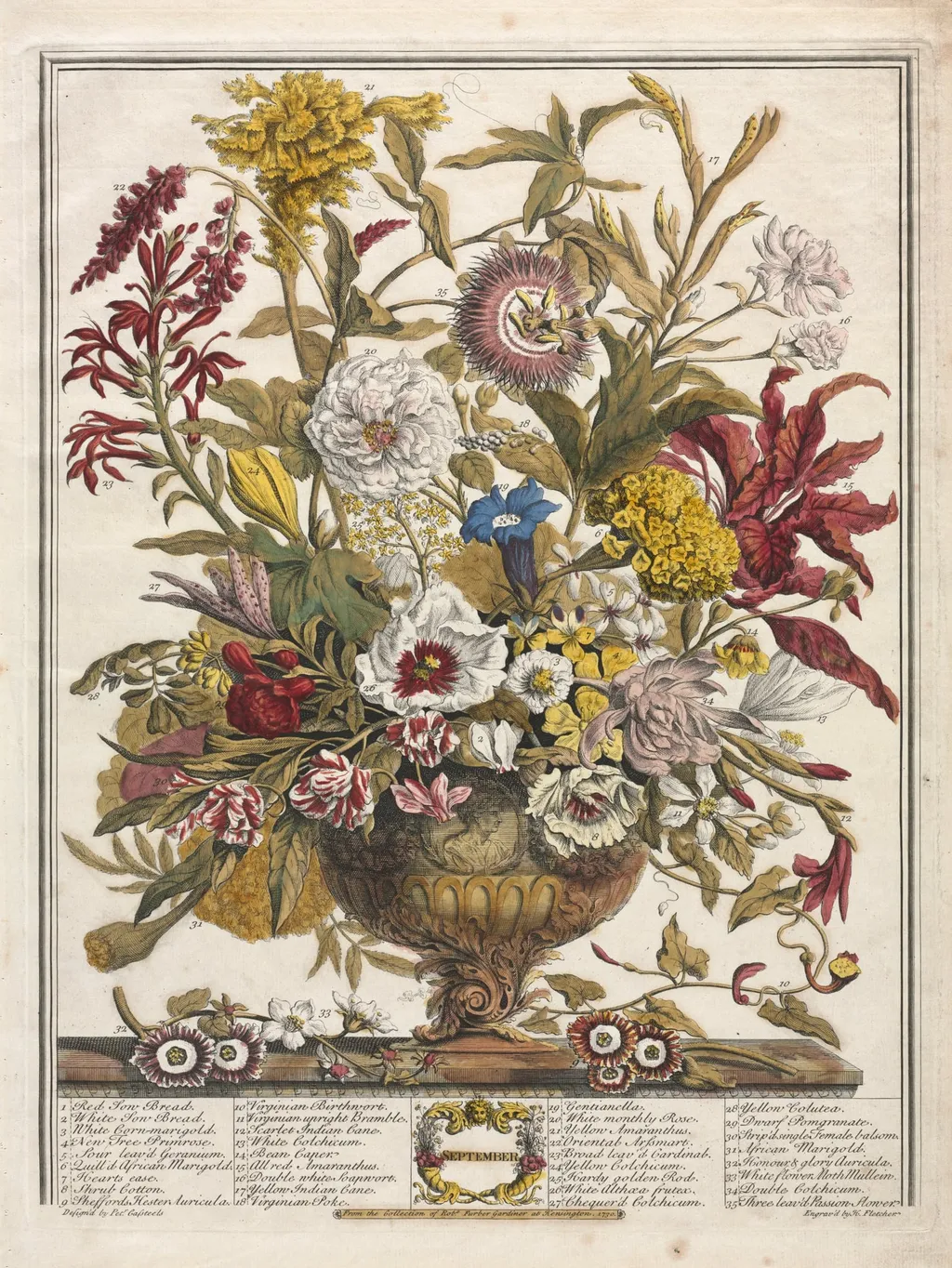
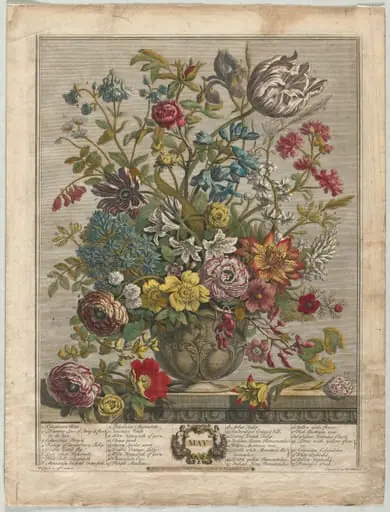
Twelve Months of Flowers: September is a print by the Baroque artist Henry Fletcher. It dates from 1730 and is held in the collection of the Cleveland Museum of Art.
About this work
Overview
Fletcher, known for his detailed botanical and bird engravings, translated Pieter Casteels’s original watercolors into finely rendered copperplate prints.
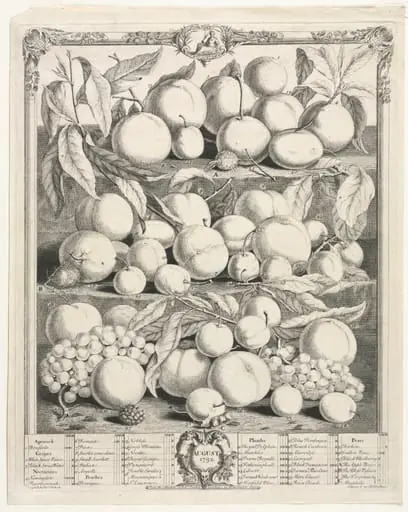
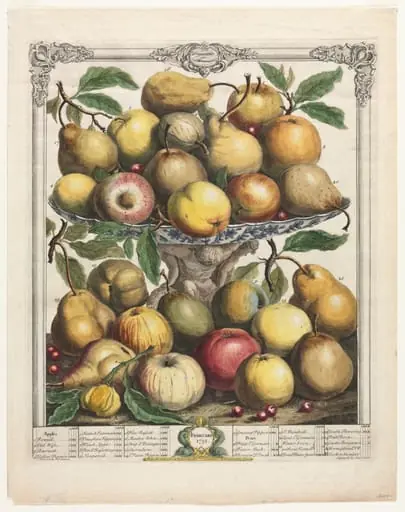
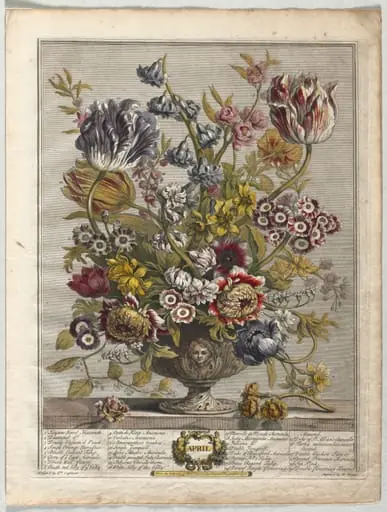
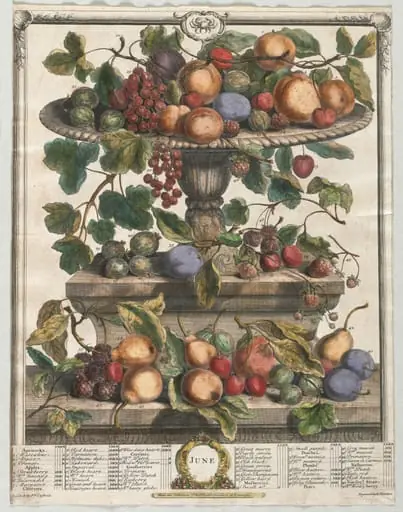
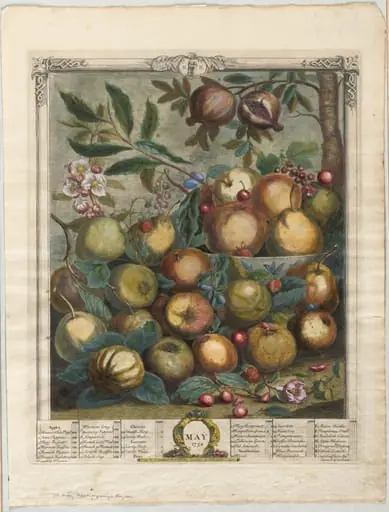
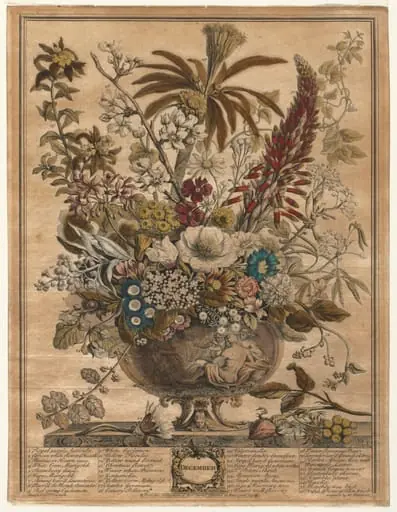
Created in 1730 by English engraver Henry Fletcher, this print is part of a twelve-part series depicting seasonal flowers. It was produced for Robert Furber’s horticultural publication, which aimed to document cultivated plants with scientific precision. Fletcher, known for his detailed botanical and bird engravings, translated Pieter Casteels’s original watercolors into finely rendered copperplate prints. The work reflects early 18th-century England’s growing interest in systematic plant classification and garden aesthetics.
Subject & Meaning
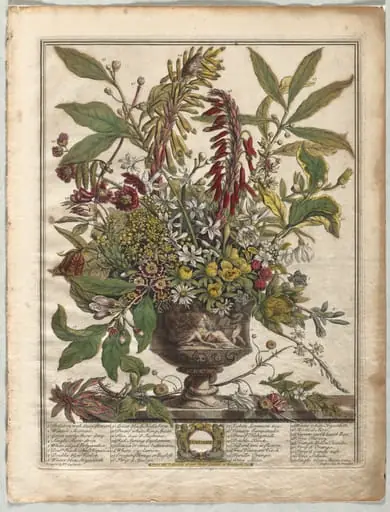
The print features a dense arrangement of September-blooming flowers, each labeled with its common name and numbered for identification. Species such as White Free Primrose and Virginian Birthwort are rendered with botanical accuracy, suggesting an educational purpose. The composition, centered on a woven basket resting on a wooden ledge, emphasizes cultivated nature rather than wild abundance. This orderly presentation aligns with Enlightenment-era values of observation and taxonomy, turning decorative horticulture into a form of visual knowledge.
Technique & Style
Fletcher employed fine-line engraving to capture intricate details of petals, stamens, and foliage, using cross-hatching and delicate stippling to model form and texture. The flowers appear lifelike, with subtle gradations in color achieved through ink density rather than washes. The basket and ledge are rendered with restrained realism, grounding the floral display in a tangible space. The absence of background scenery focuses attention entirely on the plants, enhancing their scientific clarity while retaining a quiet decorative harmony.
History & Provenance
The print originated in a commercially published series commissioned by Robert Furber, a London nurseryman, to promote his horticultural catalog. Fletcher’s engravings were among the most accurate of their time, and the series was widely distributed among gardeners and naturalists. The Cleveland Museum of Art’s copy is one of several surviving examples, preserved as part of a broader collection of early botanical illustration. Its provenance traces back to private collections in England before entering institutional care in the 20th century.
Context
This work emerged during a period when botanical study was increasingly institutionalized, with societies and publications dedicated to plant classification. Furber’s series responded to rising public interest in gardening among the middle and upper classes. While Baroque aesthetics influenced ornamental composition, the emphasis here is on documentation over theatricality. The prints served both as reference tools and status objects, reflecting the convergence of science, commerce, and domestic leisure in early Georgian England.
Legacy
Fletcher’s engravings contributed to the standardization of botanical illustration in Britain, influencing later works by artists such as William Curtis and James Sowerby. Though not widely celebrated as fine art, these prints were essential to the development of horticultural science and public engagement with botany. Their survival in museum collections underscores their role as transitional objects between artistic tradition and empirical study, bridging decorative culture and the scientific revolution in natural history.
Artist & collection
Artist
Henry Fletcher (fl. 1710–1750), was an English engraver. Fletcher worked in London, and produced engravings possessing some merit. He most excelled as an engraver of flowers, notably The Twelve Months of Flowers and The…