Artwork
La Guerre (The War)
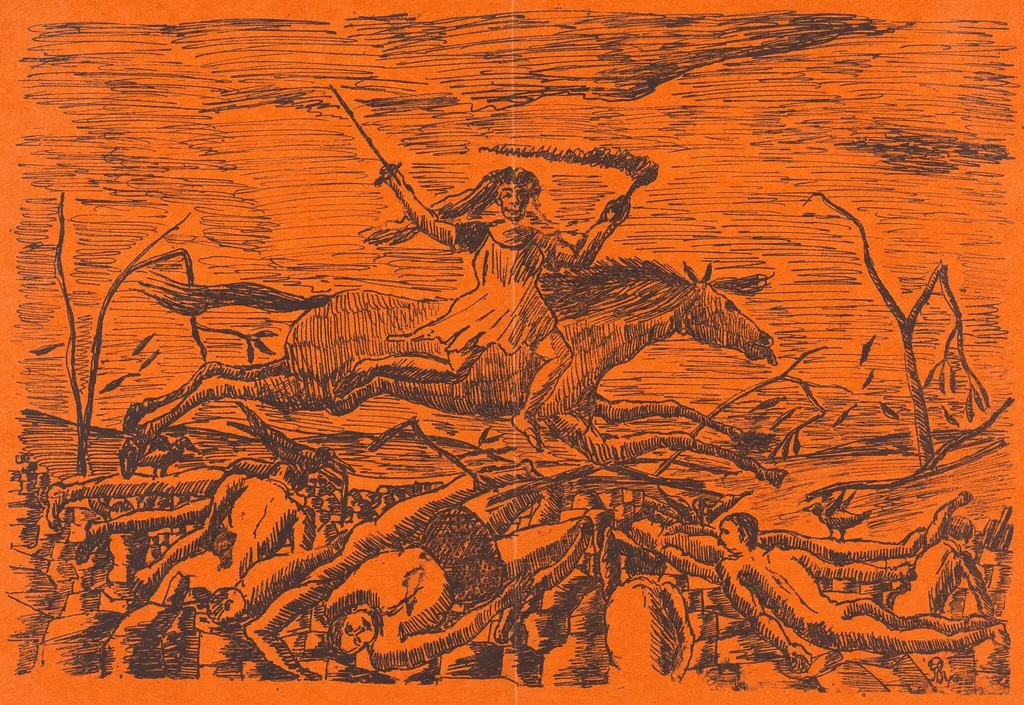
La Guerre (The War) is an ink print by the Impressionist artist Henri Rousseau. It dates from 1894 and is held in the collection of the National Gallery of Art.
About this work
Overview
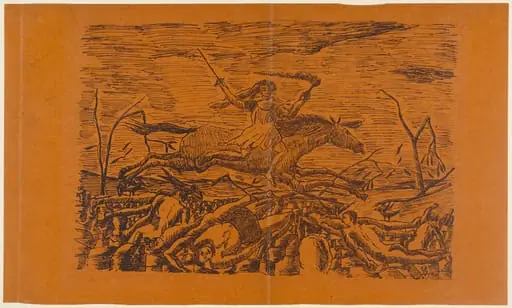
Henri Rousseau’s 1894 lithograph La Guerre presents a turbulent battlefield rendered in stark black lines against a vivid orange ground. The image captures a moment of conflict, emphasizing movement and tension through its bold contrast and compact composition, typical of the artist’s print work from the late nineteenth century.
Subject & Meaning
At the centre, a woman clad in white astride a horse brandishes a sword and a flag, her determined gaze and upright posture suggesting resolve amid chaos. Surrounding her are fallen soldiers and scattered debris, evoking the devastation of war while highlighting a solitary figure of resilience confronting the turmoil.
Technique & Style
Executed as a lithograph on orange wove paper, the work exploits the medium’s capacity for strong line work and tonal variation. The dark outlines stand out sharply against the warm paper, creating depth and a sense of immediacy. Rousseau’s handling of the lithographic process yields a textured surface that enhances the dramatic scene.
History & Provenance
Created in 1894, La Guerre belongs to Rousseau’s lesser‑known print output, produced during a period when he explored graphic media alongside his paintings. The lithograph’s provenance traces back to early exhibitions of his work, though specific ownership records remain limited, reflecting its status as a relatively rare example of his printmaking.
Context
The piece emerges at a time when European societies were preoccupied with military conflict and national identity, themes that resonated in contemporary art. Rousseau’s choice of a female warrior diverges from typical masculine depictions, offering a nuanced commentary on gender and heroism within the broader cultural discourse of the 1890s.
Artist & collection
Artist
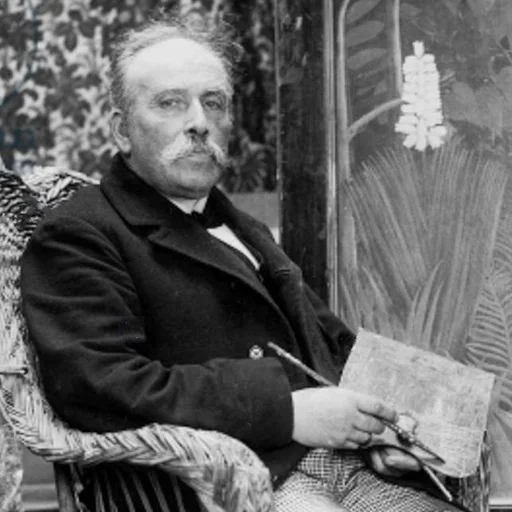
Henri Julien Félix Rousseau was born on 21 May 1844 in Laval, Mayenne, and died in Paris on 2 September 1910.

 Untitled
 Saint George and the Dragon
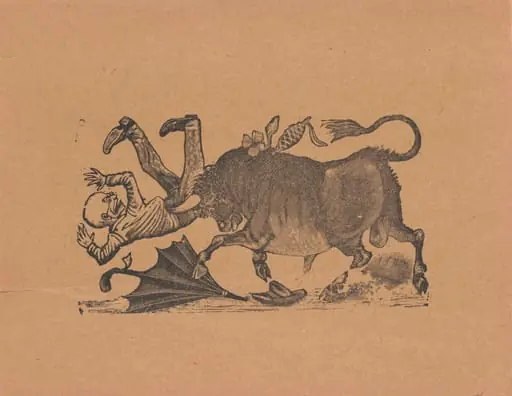 Don Chepito
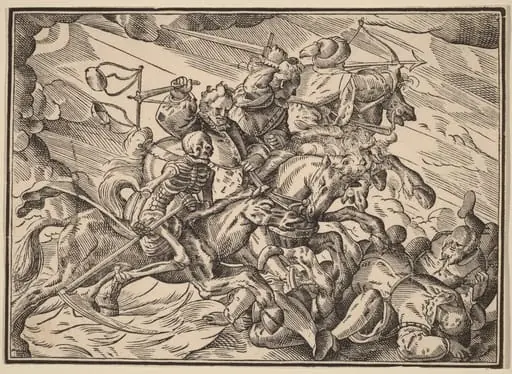 The Four Horsemen of the Apocalypse
 A Bacchanale with Egyptian and Classical Figures
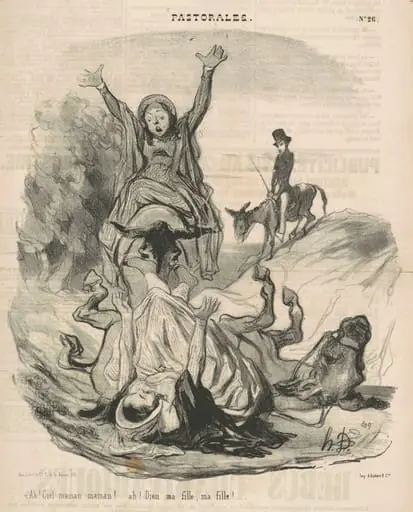 Ah! Ciel maman maman ... Ah! Dieu ma fille ...
 Untitled
 Il y eut des luttes et des vaines victoires (There were struggles and vain victories)
 Specimens of Polyautography: Cavalry Charge