Artwork
La Guerre (The War)
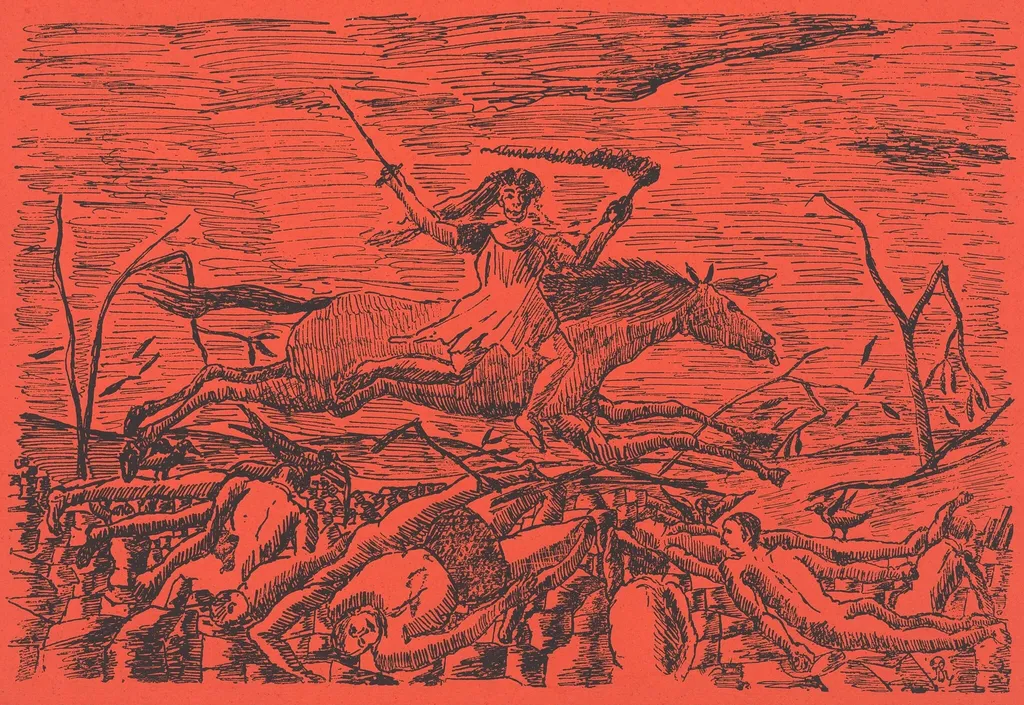
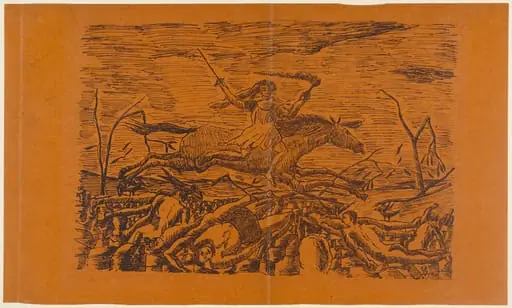
La Guerre (The War) is a print by the Impressionist artist Henri Rousseau. It dates from 1895 and is held in the collection of the National Gallery of Art.
About this work
Overview
Rendered entirely in black ink against a vivid red ground, the composition relies on stark contrast to emphasize its surreal, dreamlike tension.
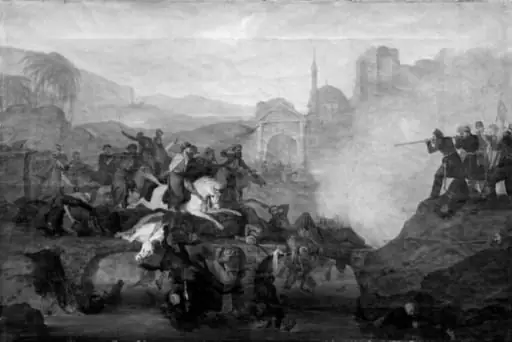
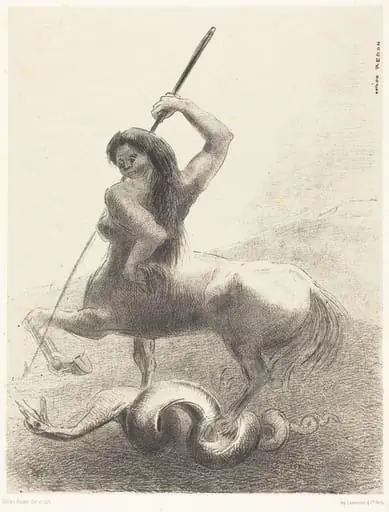
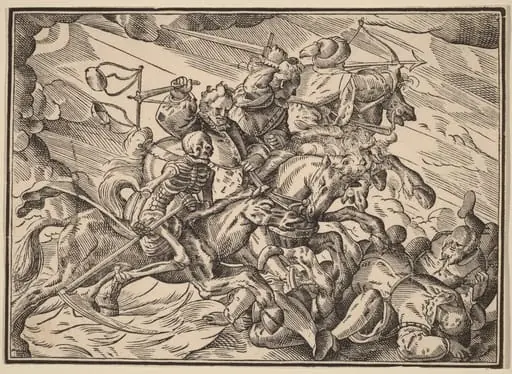
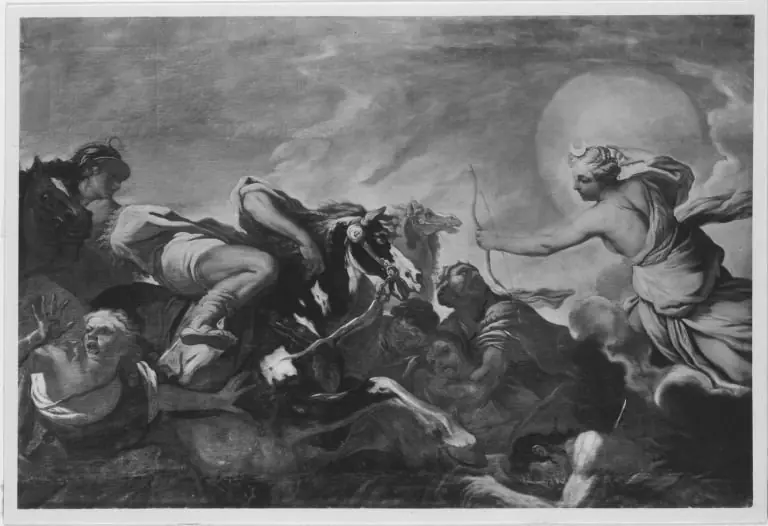
La Guerre, created in 1895 by Henri Rousseau, is a photomechanical relief print on red-coated wove paper. The image depicts a solitary woman astride a horse, advancing through a disordered battlefield. Rendered entirely in black ink against a vivid red ground, the composition relies on stark contrast to emphasize its surreal, dreamlike tension. The technique produces a textured, uneven line quality, reinforcing the work’s raw, unpolished aesthetic.
Subject & Meaning
A lone female figure rides through a chaotic scene of war, surrounded by fragmented soldiers, weapons, and swirling smoke. The absence of clear narrative or historical context invites symbolic interpretation. The rider, neither clearly heroic nor victimized, suggests an allegorical presence—perhaps war itself, or an indifferent force moving through destruction. Rousseau’s choice to isolate her amplifies the scene’s eerie stillness amid violence.
Technique & Style
Rousseau employed photomechanical relief printing, a process where ink is applied to raised surfaces to transfer the image. This method produced bold, irregular lines with a hand-drawn quality, contrasting with the precision of commercial printing. The roughness of the lines, combined with the unmodulated red background, enhances the work’s primitive intensity. The style aligns with Rousseau’s broader tendency to favor intuitive form over academic realism.
History & Provenance
Created in 1895, La Guerre was produced during a period when Rousseau was experimenting with printmaking alongside his more familiar paintings. Few prints from this phase survive, and this work is among the rare examples of his graphic output. Its early provenance is undocumented, but it entered public collections in the 20th century as interest grew in Rousseau’s unconventional approach to imagery.
Context
In the mid-1890s, Rousseau was largely self-taught and working outside the Parisian art establishment. While contemporaries pursued Impressionism or Symbolism, he developed a personal visual language rooted in imagination rather than observation. La Guerre reflects his fascination with exoticism and conflict, themes recurring in his paintings, though here rendered with the immediacy and limitations of printmaking.
Legacy
La Guerre stands as an early example of Rousseau’s engagement with print media, illustrating his consistent disregard for conventional technique in favor of expressive clarity. Though not widely circulated in his lifetime, it later contributed to his posthumous reputation as a pioneer of naïve art. Its raw aesthetic influenced 20th-century artists drawn to unrefined, emotionally direct imagery.
Artist & collection
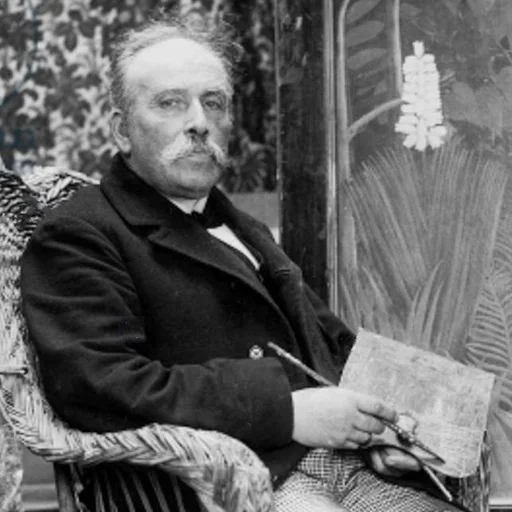
Artist
Henri Julien Félix Rousseau was born on 21 May 1844 in Laval, Mayenne, and died in Paris on 2 September 1910.