Artwork
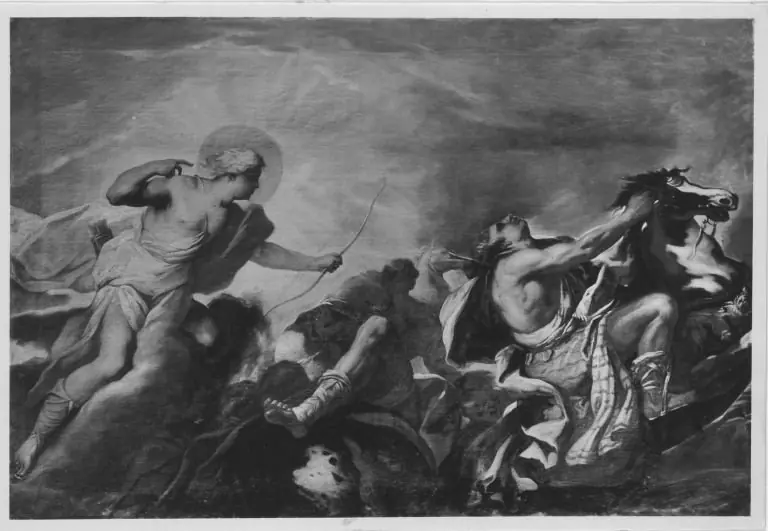
Diana tötet die Kinder der Niobe
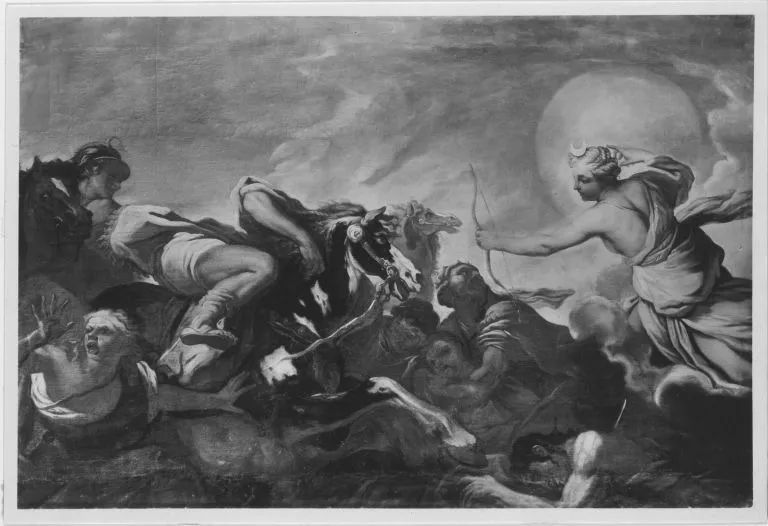
Diana tötet die Kinder der Niobe is an unspecified painting by the Rococo painting artist Sebastiano Conca. It dates from 1722 and is held in the collection of the Bavarian State Painting Collections.
About this work
Overview
The composition is a dynamic example of late Baroque narrative painting, characterized by a swirling, chaotic arrangement of figures that fills the canvas.
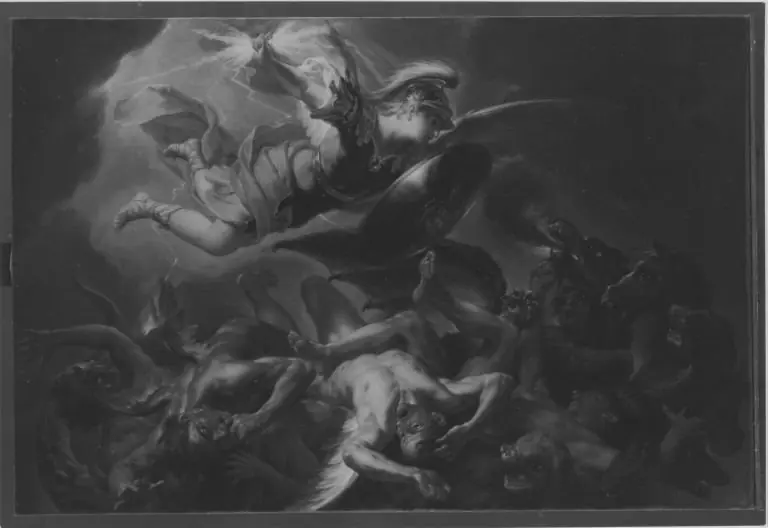
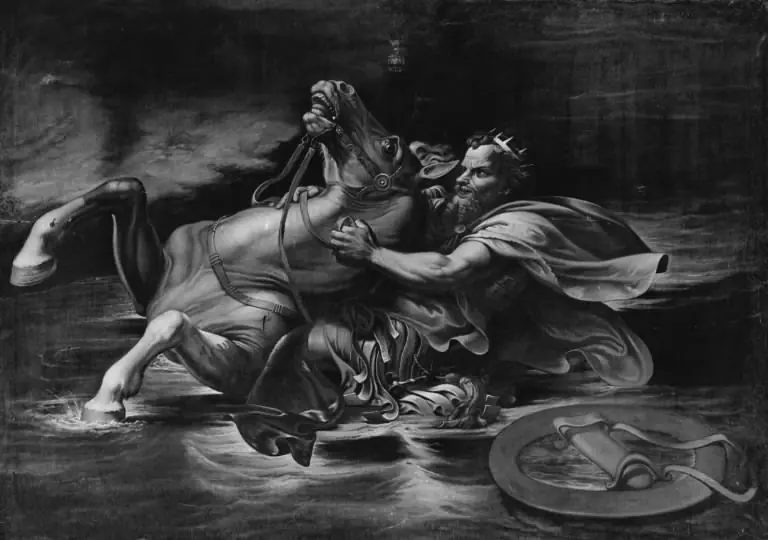
Sebastiano Conca's 'Diana tötet die Kinder der Niobe' (1722) depicts the mythological moment from Ovid's Metamorphoses where the goddess Diana, accompanied by her brother Apollo, punishes Niobe for her hubris by slaying her children. The composition is a dynamic example of late Baroque narrative painting, characterized by a swirling, chaotic arrangement of figures that fills the canvas. Diana is positioned prominently on the right, often identified by her bow and quiver, as she releases an arrow amidst the turmoil. The scene captures the immediate aftermath of the attack: Niobe's sons and daughters are shown in various states of collapse and death, while a rearing horse and a desperate male figure clinging to it heighten the sense of panic and physical struggle. The dark, turbulent sky serves as a dramatic backdrop, amplifying the emotional intensity of the massacre. Painted in 1722, this work reflects Conca's mature style, demonstrating his ability to synthesize the theatricality of the Roman Baroque with the emerging clarity of the Rococo. It stands as a significant example of his mythological output during his active years in Rome, showcasing his skill in rendering complex groupings and expressive anatomy.
Subject & Meaning
The work illustrates the Roman goddess Diana’s vengeance after Niobe boasts that her own offspring surpass those of the goddess. In response, Diana unleashes a lethal volley, slaying Niobe’s children. The painting thus visualizes the ancient warning against hubris, emphasizing divine retribution and the fragility of mortal pride.
Technique & Style
Conca employs a pronounced chiaroscuro, contrasting bright, illuminated figures with deep, shadowed backgrounds to heighten drama. The winged Diana is rendered with crisp outlines and a luminous skin tone, while the surrounding chaos recedes into darker tones. This handling of light and shade, combined with vigorous brushwork, underscores the emotional intensity of the scene.
History & Provenance
Created in the early eighteenth century, the canvas entered the collection of the Alte Pinakothek in Munich, where it remains on display. Its acquisition reflects the museum’s focus on Baroque and Rococo works, and the painting has been documented in the museum’s catalogue since the nineteenth century.
Artist & collection