Artwork
Viehherde am See
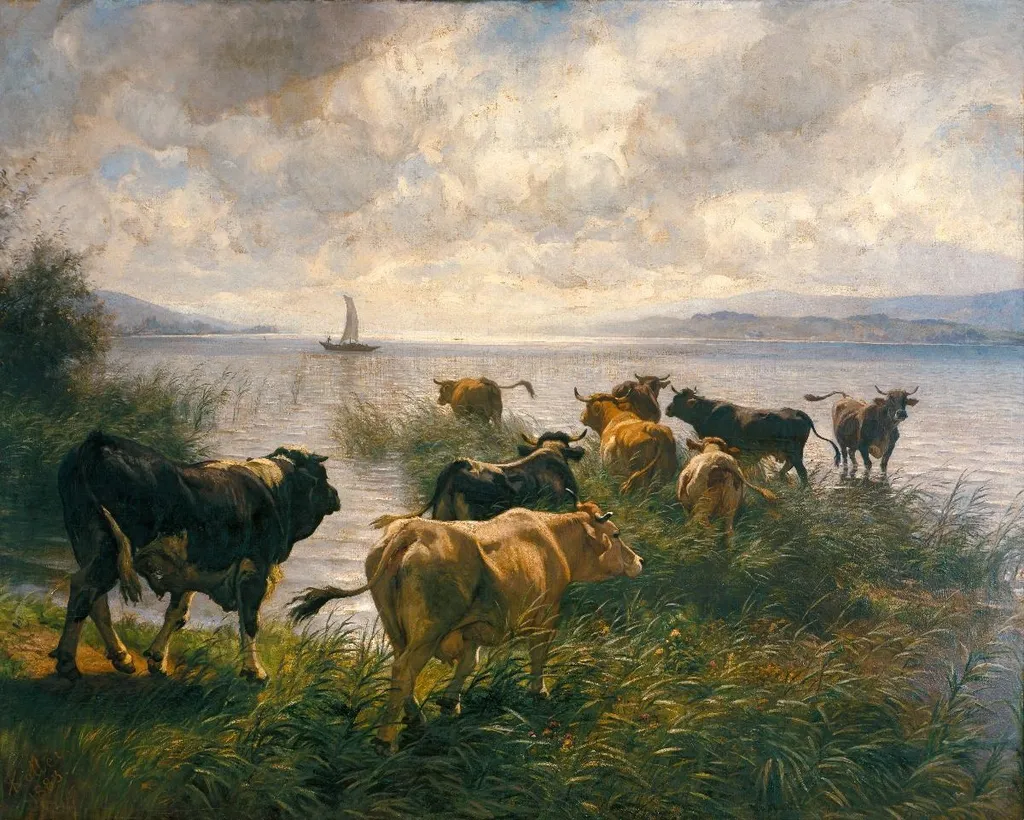
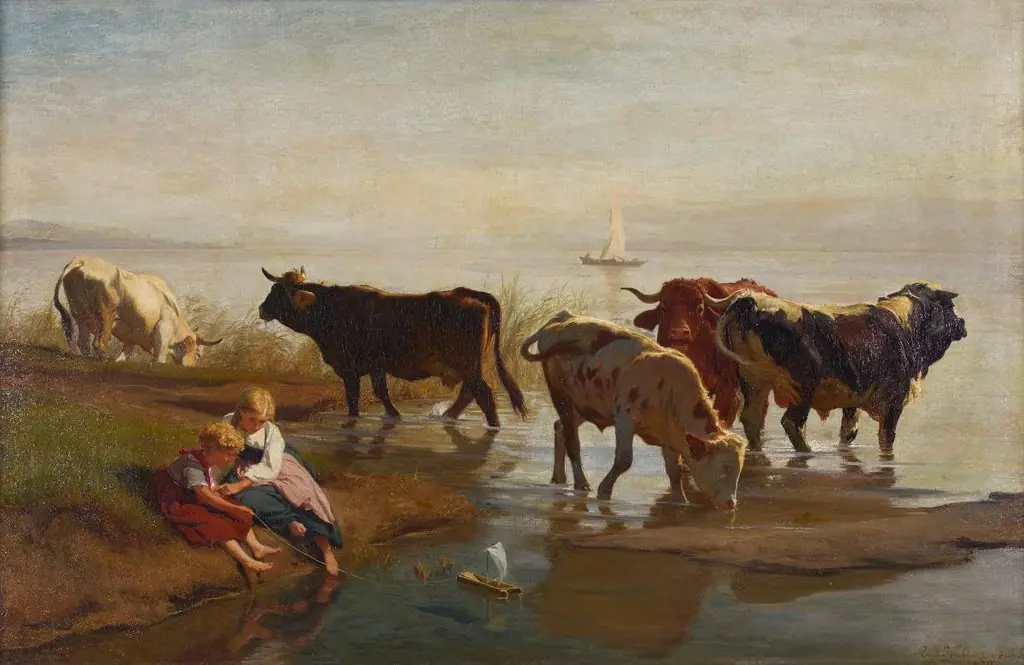
Viehherde am See is an oil painting by the Impressionist artist Rudolf Koller. It dates from 1892 and is held in the collection of the Kunsthaus Zürich.
About this work
Overview
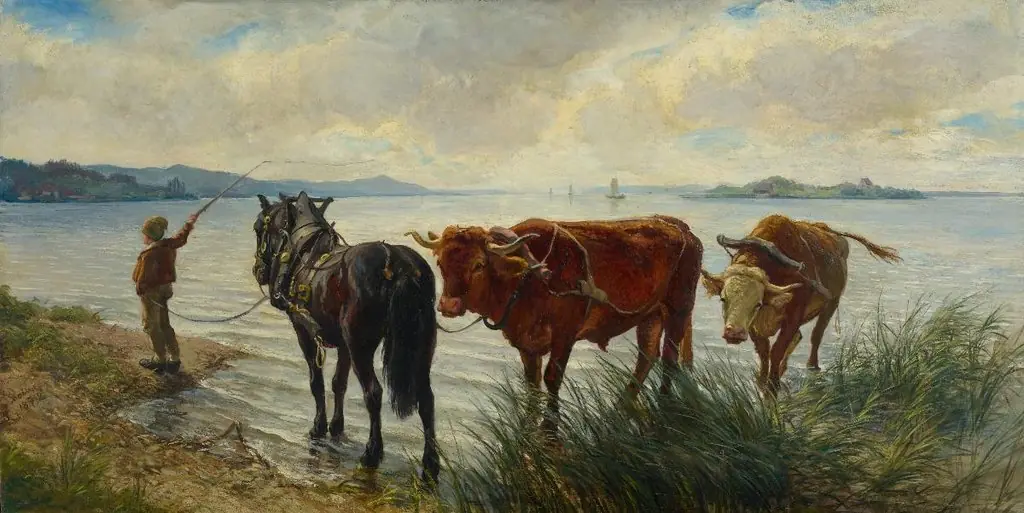
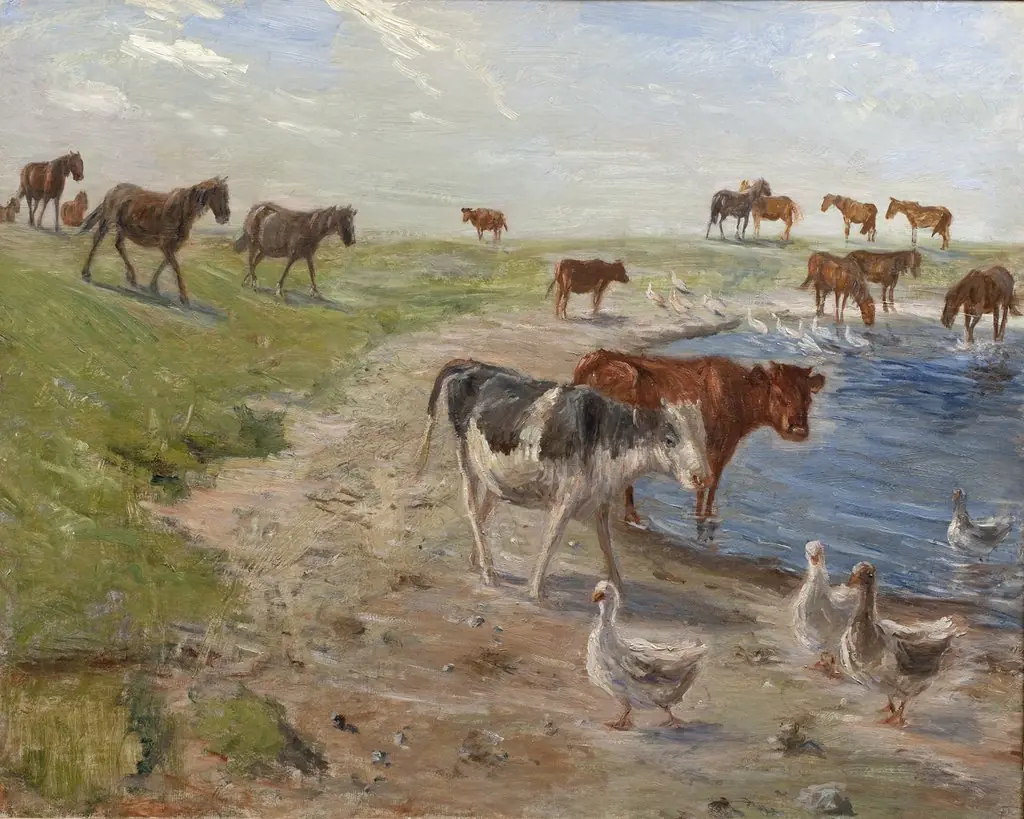
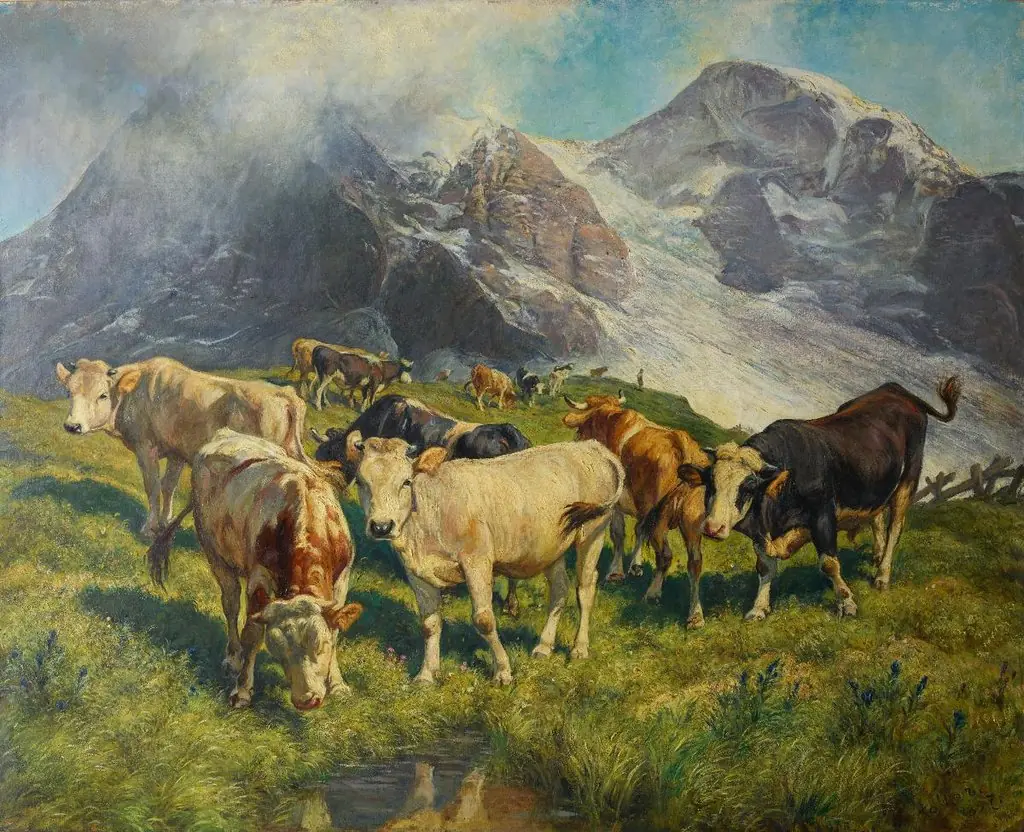
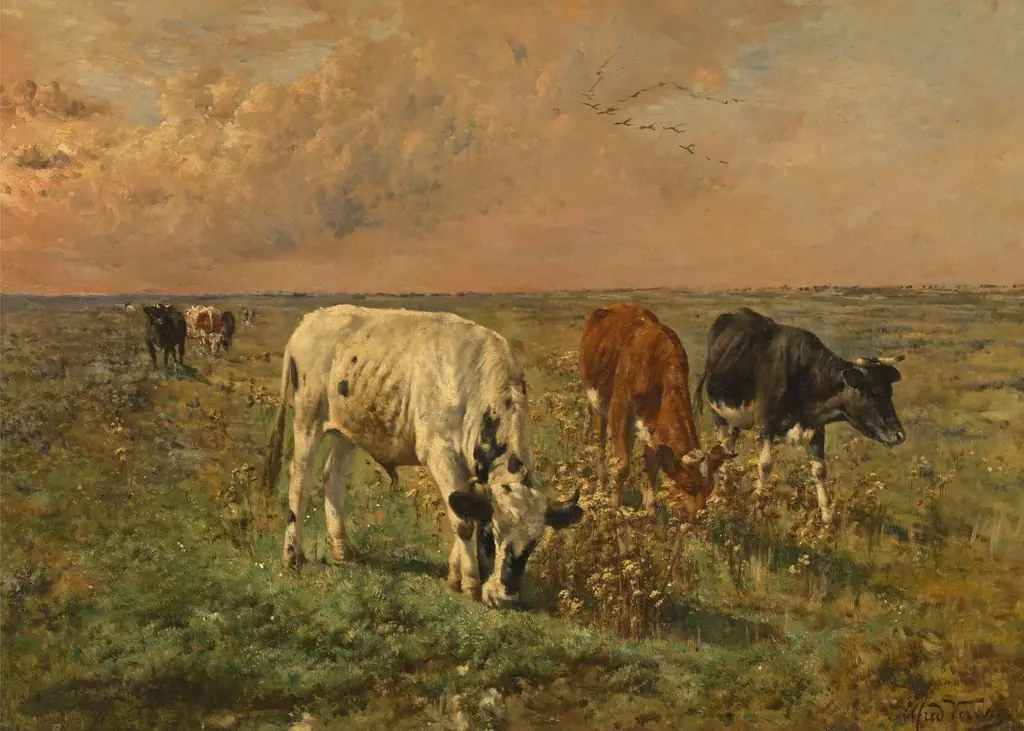
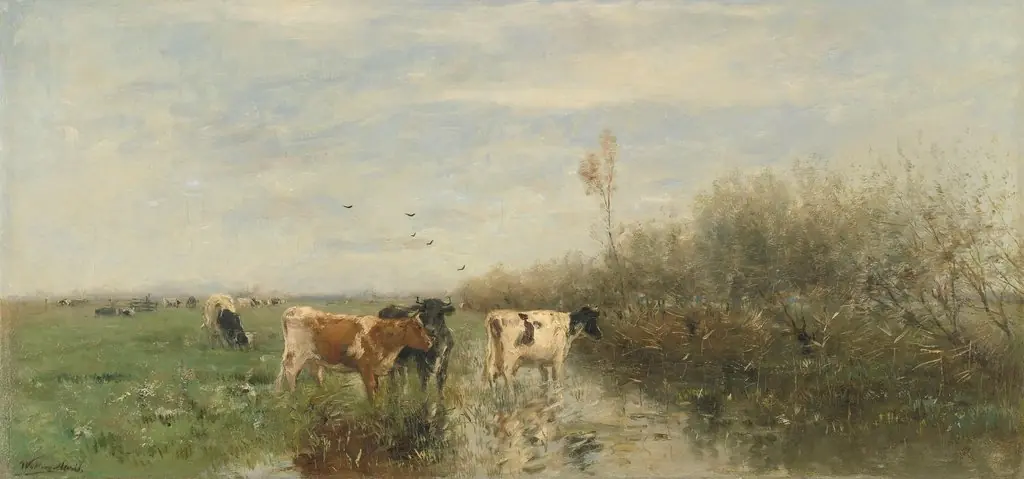
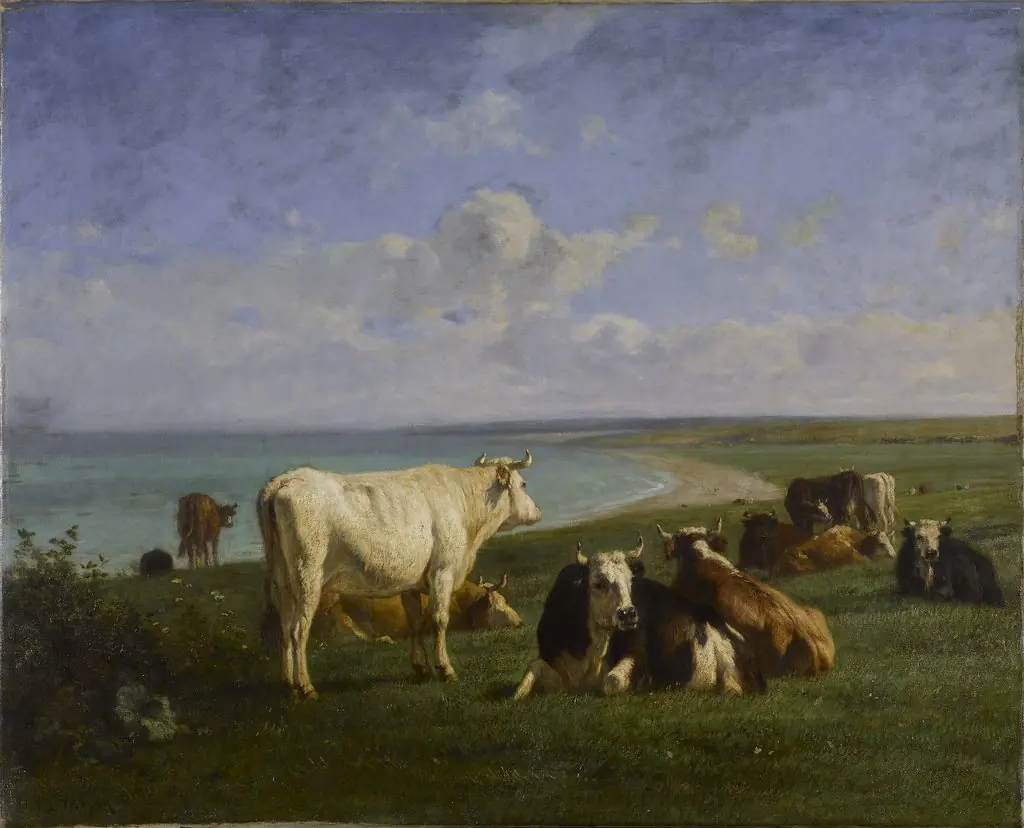
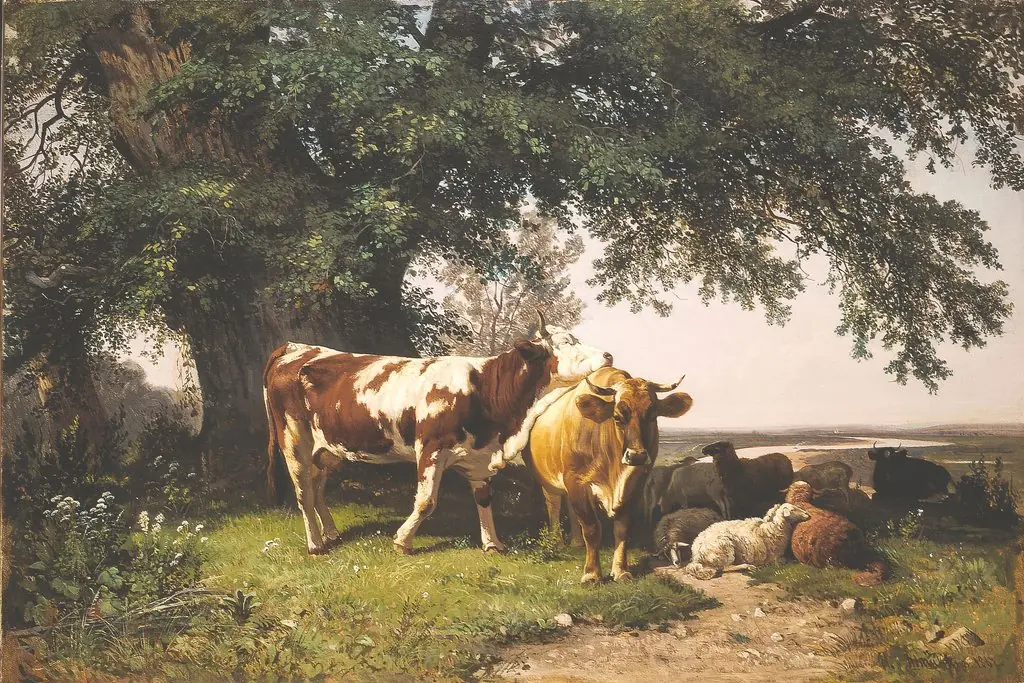
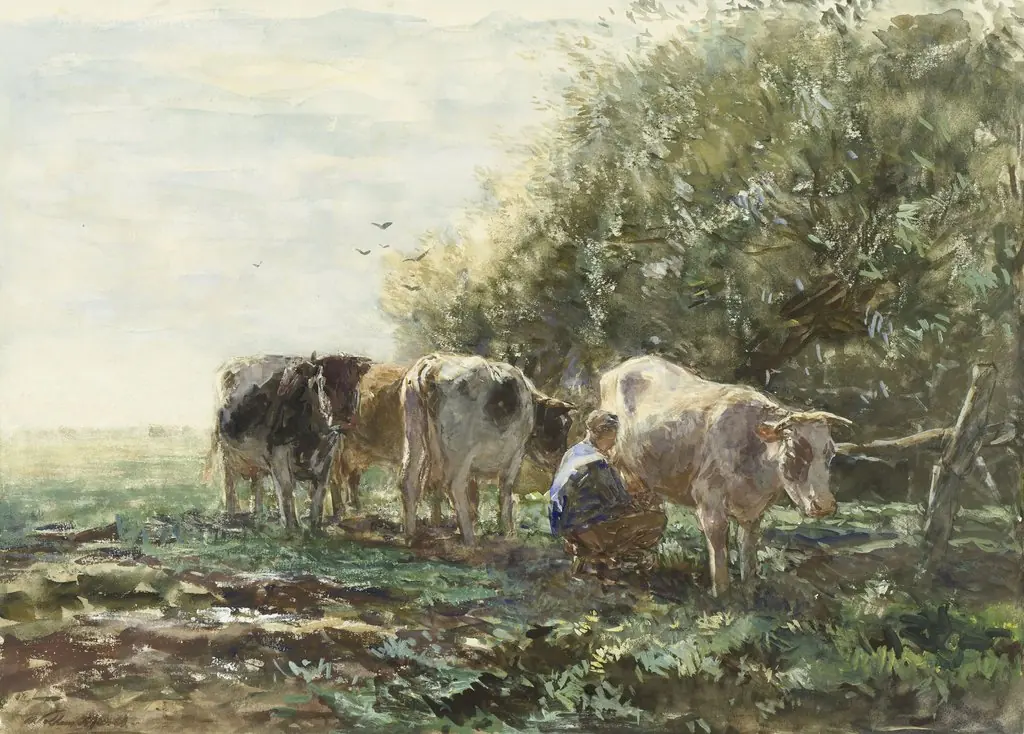
Created in 1892, *Viehherde am See* is an oil painting by Swiss artist Rudolf Koller. The work shows a group of cattle gathered near a lake, rendered with a clear, naturalistic eye. It is part of the permanent collection of the Kunsthaus Zürich and exemplifies Koller’s focus on rural life and animal subjects.
Subject & Meaning
The composition centers on a herd of cattle standing at the water’s edge, suggesting a moment of quiet repose in a pastoral landscape. By placing the animals against the reflective surface of the lake, the painting emphasizes the relationship between domesticated livestock and their natural environment, a recurring theme in Koller’s oeuvre.
Technique & Style
Koller employed oil on canvas with a realist foundation, integrating plein‑air observation to capture light and atmosphere. The brushwork balances detailed animal anatomy with looser treatment of the surrounding scenery, aligning the piece with Impressionist tendencies while retaining a classicist compositional order.
History & Provenance
After its completion, the painting entered the holdings of the Kunsthaus Zürich, where it remains on display. Its acquisition reflects the museum’s commitment to representing Swiss art of the late nineteenth century, particularly works that document the nation’s agrarian heritage.
Context
Koller’s approach was shaped by the Düsseldorf school and the influence of French painters such as Gustave Courbet and Jean‑Baptiste‑Camille Corot. These connections placed him within a broader European realist tradition, while his outdoor studies linked him to the emerging Impressionist movement of the period.
Artist & collection
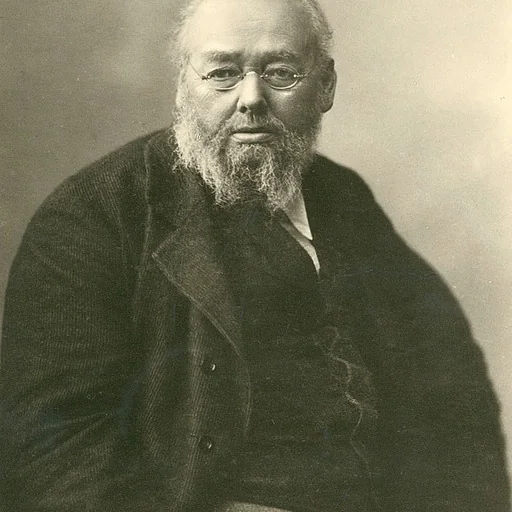
Artist
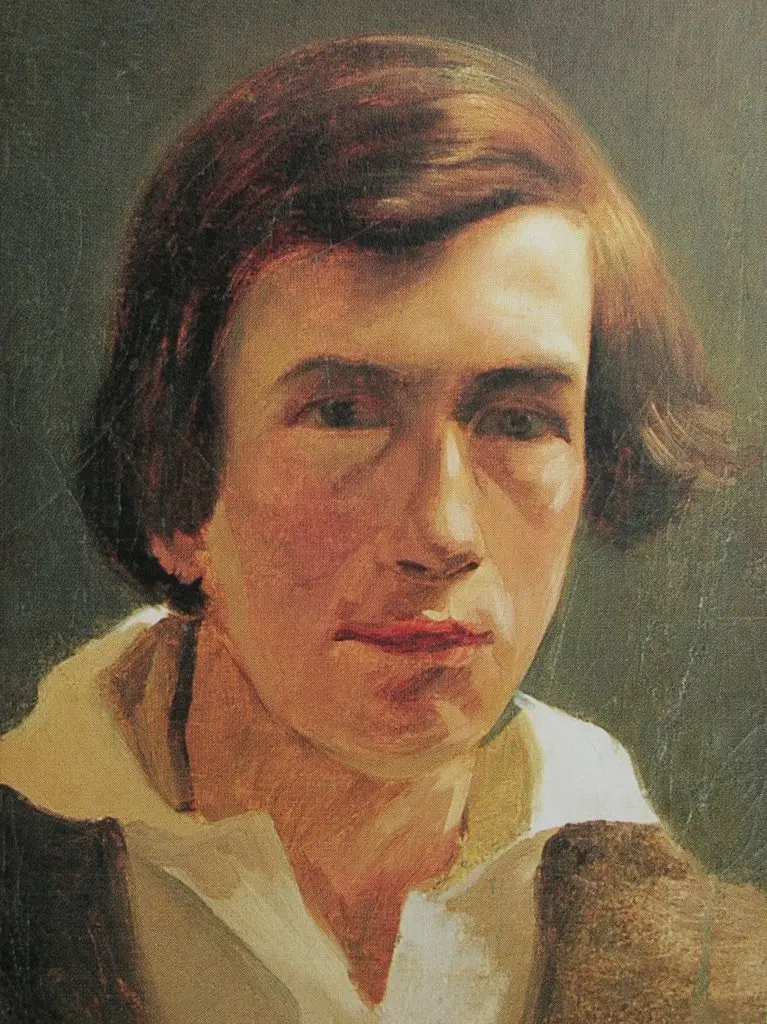
Rudolf Koller (21 May 1828 – 5 January 1905) was a Swiss painter. He is associated with a realist and classicist style, and also with the essentially romantic Düsseldorf school of painting. Koller's style is similar to…