Artwork
Portrait of Eduard I. Totleben
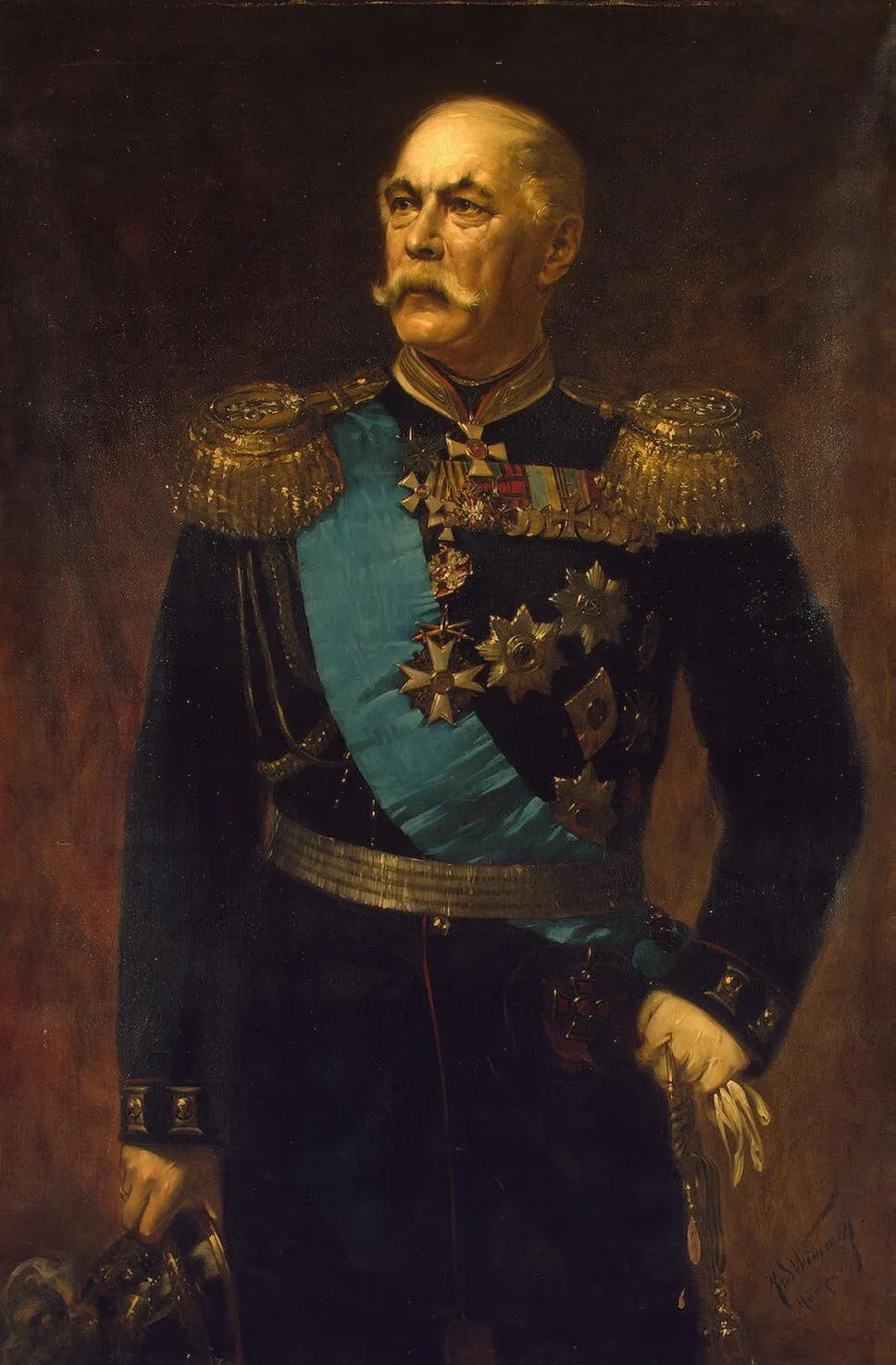
Portrait of Eduard I. Totleben is an oil painting by the Impressionist artist Rudolf Wimmer. It dates from 1898 and is held in the collection of the Hermitage Museum.
About this work
Overview
Rudolf Wimmer’s 1898 oil portrait presents Eduard I. Totleben in full military regalia. The canvas, now part of the State Hermitage Museum’s collection, captures the officer’s stern visage framed by a dark blue uniform, gold epaulettes, a blue sash, and an array of medals. A white glove rests on his left hand while he holds a sword in his right, emphasizing his rank and decorum.
Subject & Meaning
The sitter, Eduard I. Totleben, is depicted as a disciplined military figure, his expression austere and composed. The inclusion of numerous decorations and the ceremonial sword underscores his service and honors, while the contrasting white glove suggests formality and the rituals of command. The portrait functions as both a personal likeness and a visual affirmation of his official status.
Technique & Style
Wimmer employs chiaroscuro to model Totleben’s features, allowing light to fall on the face and metallic details while the background recedes into shadow. The brushwork renders the texture of the fabric and metal insignia with precise attention, creating a three‑dimensional presence. The limited palette of deep blues, golds, and muted tones reinforces the solemn atmosphere of the composition.
History & Provenance
Completed in 1898, the portrait entered the State Hermitage Museum’s holdings, where it remains on display. Its acquisition reflects the museum’s broader effort to document Russian military figures of the late nineteenth century, preserving both the artist’s work and the visual record of Totleben’s career.
Context
Eduard I. Totleben served during a period of significant military reform in the Russian Empire, and portraits such as this were commonly commissioned to commemorate rank and achievements. Wimmer’s rendering aligns with contemporary Russian portraiture that emphasized realism, formal attire, and the visual language of authority.
Artist & collection
