Artwork
Calligraphy 「鵬齋逸才子」 書
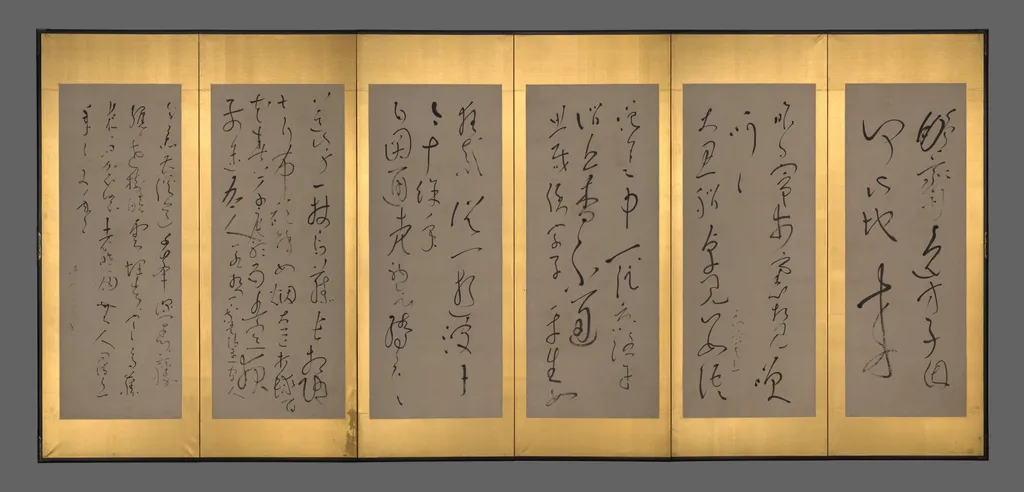
Calligraphy 「鵬齋逸才子」 書 is an unspecified painting by Ryōkan. It dates from 1798 and is held in the collection of the Metropolitan Museum of Art.
About this work
Overview
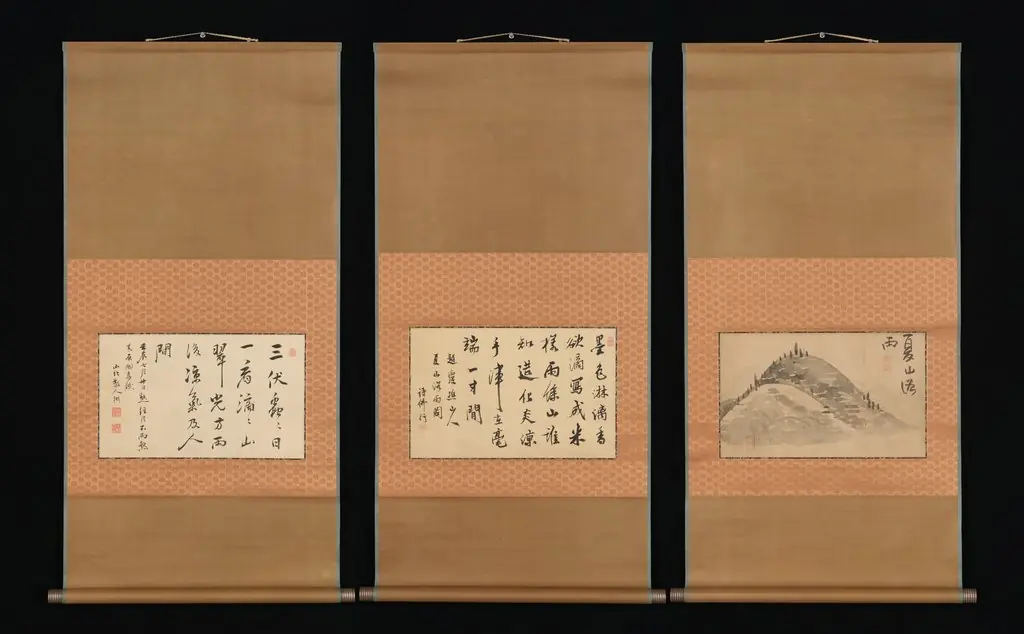
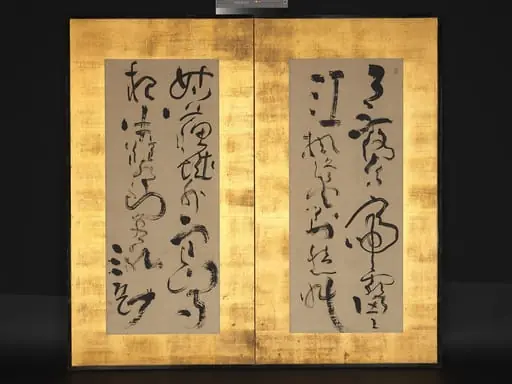
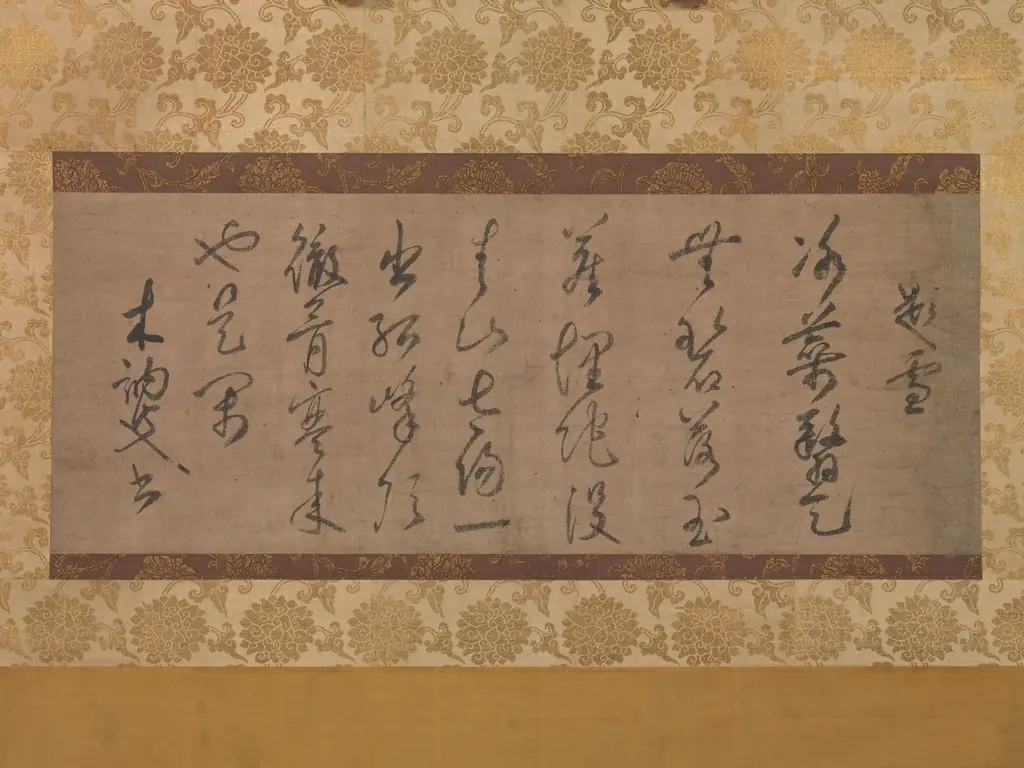
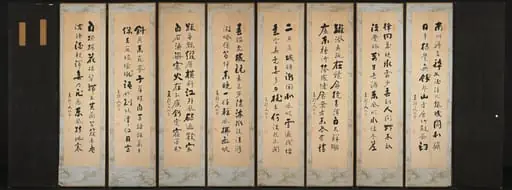
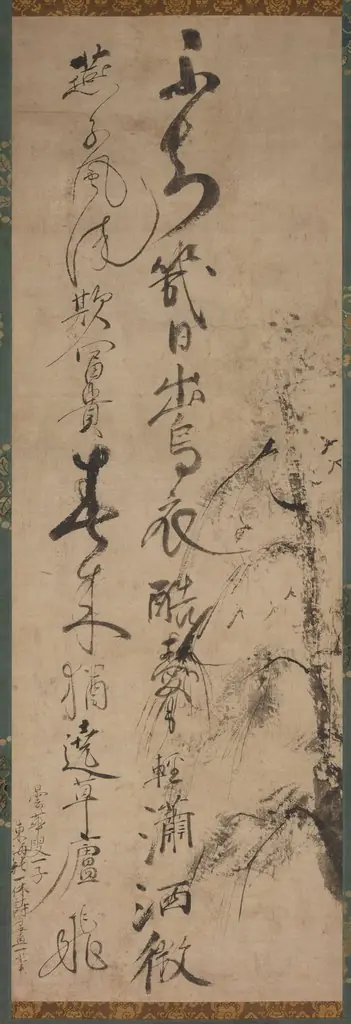
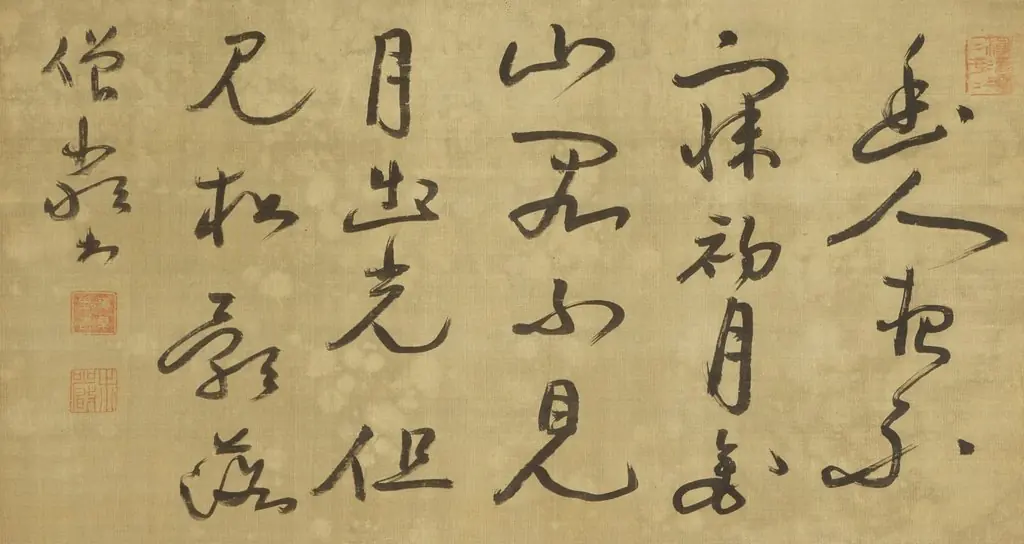
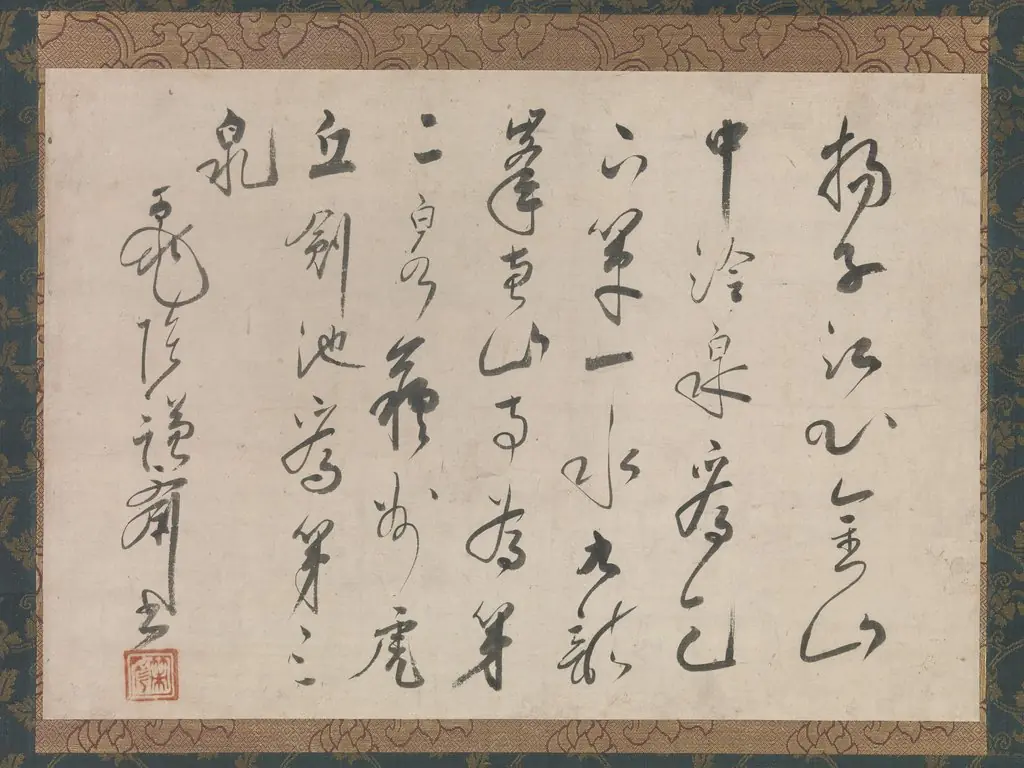
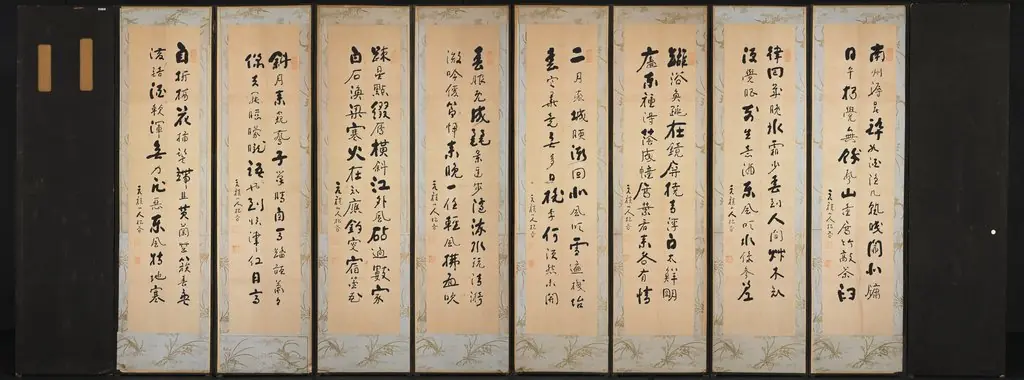
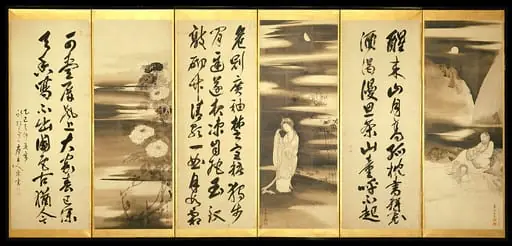
Calligraphy 「鵬齋逸才子」 書 is a 1798 painting by Ryōkan, currently in the collection of The Metropolitan Museum of Art. The work comprises five vertical panels arranged horizontally, resembling a scroll.
Subject & Meaning
The subject is the calligraphic rendering of the phrase 「鵬齋逸才子」, which translates to 'Pengzhai Yicai Zi'. The meaning behind this phrase is not explicitly stated in the provided information, suggesting it may require additional contextual knowledge to fully interpret.
Technique & Style
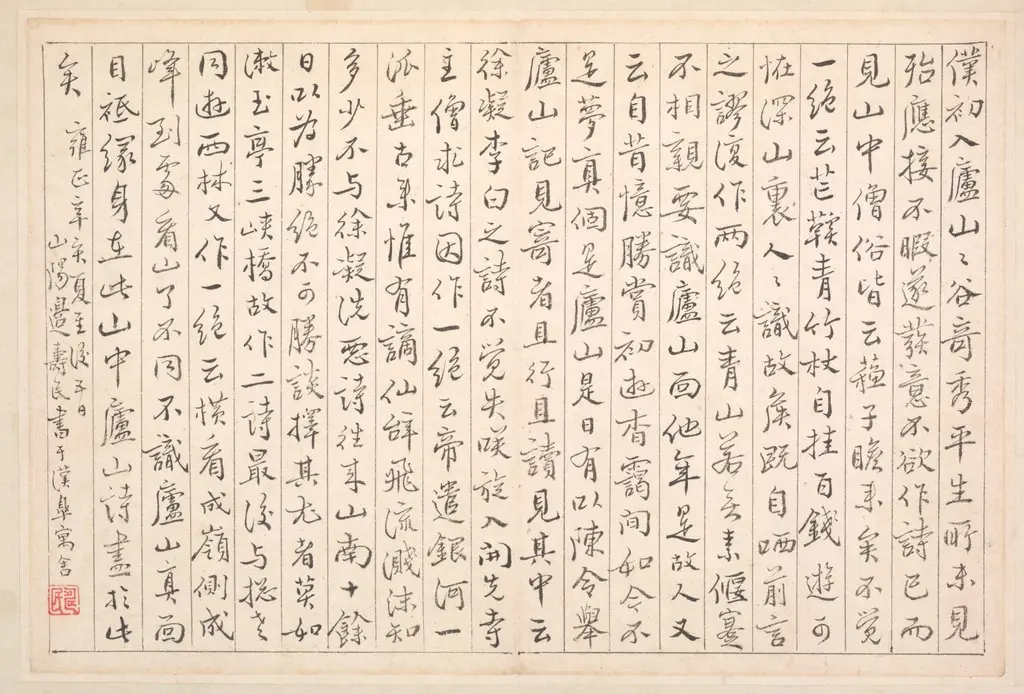
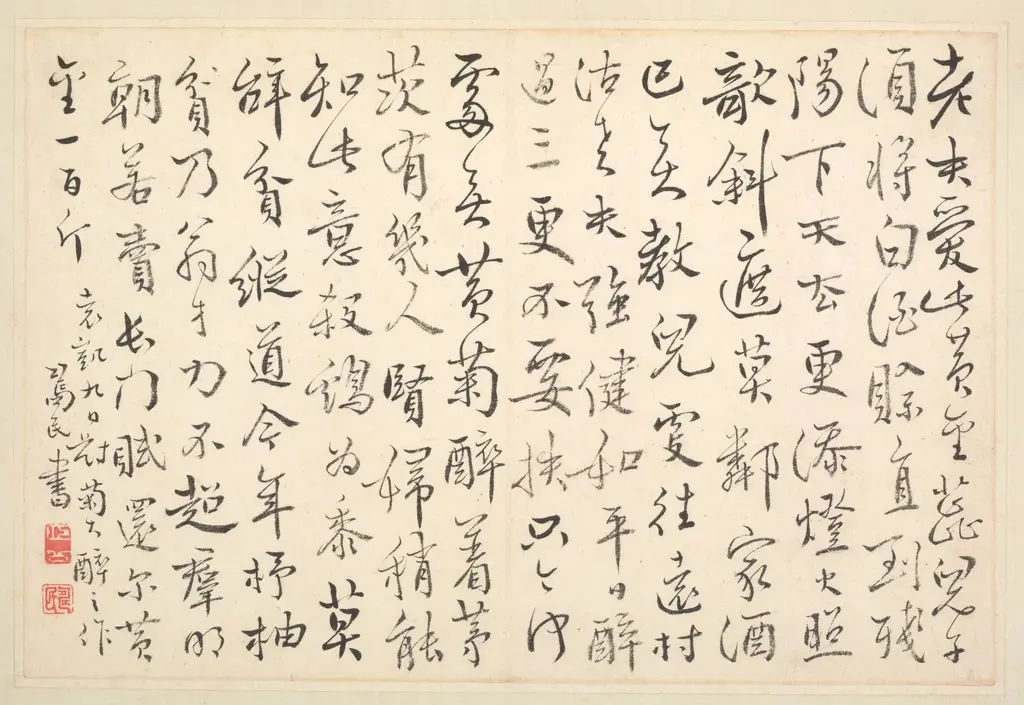
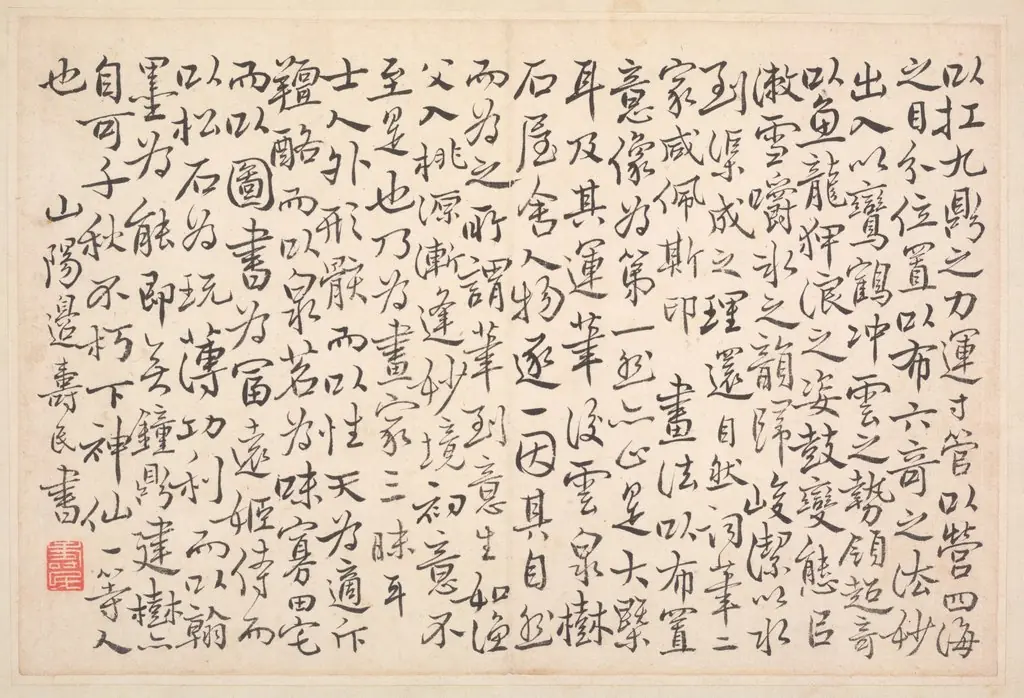
The panels feature black ink calligraphy on a light-brown background, framed in gold with a darker gold outer border. The writing styles vary, combining bold and thin lines, indicative of a blend of formal and informal Japanese calligraphic traditions.
History & Provenance
Created in 1798 by Ryōkan, the painting is now part of The Metropolitan Museum of Art's collection. Specific details about its history before acquisition are not provided.
Context
As a work by Ryōkan, it reflects the artistic practices of late 18th-century Japan, particularly in its calligraphic styles. Ryōkan's background as a Buddhist monk may influence the piece's themes or execution, though this is not explicitly detailed here.
Legacy
The piece's inclusion in a major museum collection suggests its significance in the study of Japanese calligraphy and Ryōkan's oeuvre. However, its broader impact or influence on subsequent artists is not specified in the available information.
Artist & collection
Artist
Japanese Zen monk Ryōkan left brushwork as spare and quiet as his life. His 1794 scroll “Calligraphy「鵬齋逸才子」書” shows a single phrase drifting across the paper, a single work you can trace from line to line. If the…