Artwork
西園方済筆 梧桐下錦鶏図|Pheasant beneath Paulownia Tree
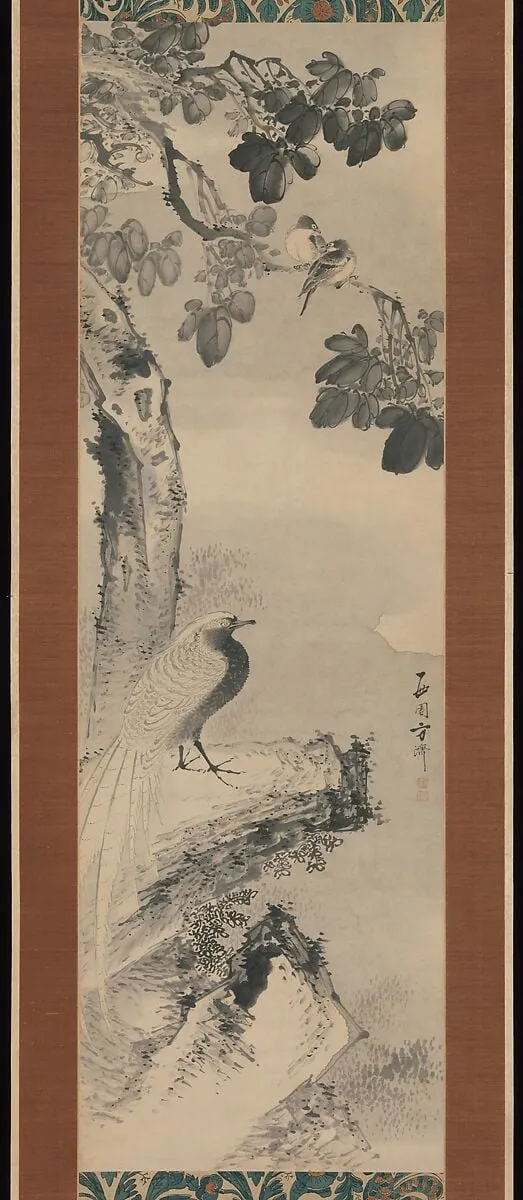
西園方済筆 梧桐下錦鶏図|Pheasant beneath Paulownia Tree is an ink painting by the Baroque artist Saien Hōsai. It dates from 1765 and is held in the collection of the Metropolitan Museum of Art.
About this work
Overview
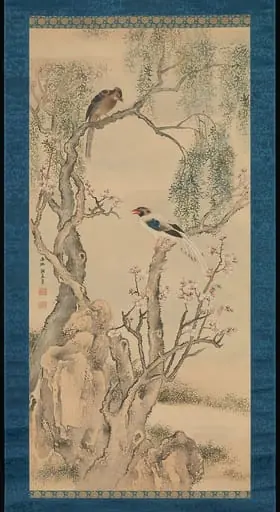
Saien Hōsai’s hanging scroll, dated 1765, presents a solitary pheasant beneath a towering paulownia tree. Executed in monochrome ink on paper, the composition captures a quiet moment in the natural world, with the bird poised beneath branches laden with purple blossoms.
Subject & Meaning
The pheasant, rendered in a calm, almost statuesque pose, occupies the foreground while the paulownia’s foliage arches overhead. In Japanese iconography, the bird often symbolizes seasonal change, and the paulownia, associated with resilience, frames the scene as a study of stillness amid subtle movement.
Technique & Style
Hōsai employs a range of ink tones to model light and shadow, achieving depth with a single brush. Delicate gradations suggest the softness of the pheasant’s plumage, whereas rough, textured strokes convey the tree’s bark, creating a tactile contrast within the monochrome palette.
History & Provenance
Created in the mid‑eighteenth century, the scroll reflects the Edo period’s interest in ink wash landscapes. While specific ownership records are scarce, the work remains a representative example of Saien Hōsai’s oeuvre, illustrating his skill in rendering natural subjects with restrained elegance.
Artist & collection

Artist
Saien Hōsai painted delicate ink-on-paper scrolls in eighteenth-century Japan. Two hanging scrolls survive: *Pheasant beneath Paulownia Tree* shows a pheasant beside broad leaves, and *Mynah Bird on Plum Branch*…