Artwork
Triomphe de Pompee dans Rome
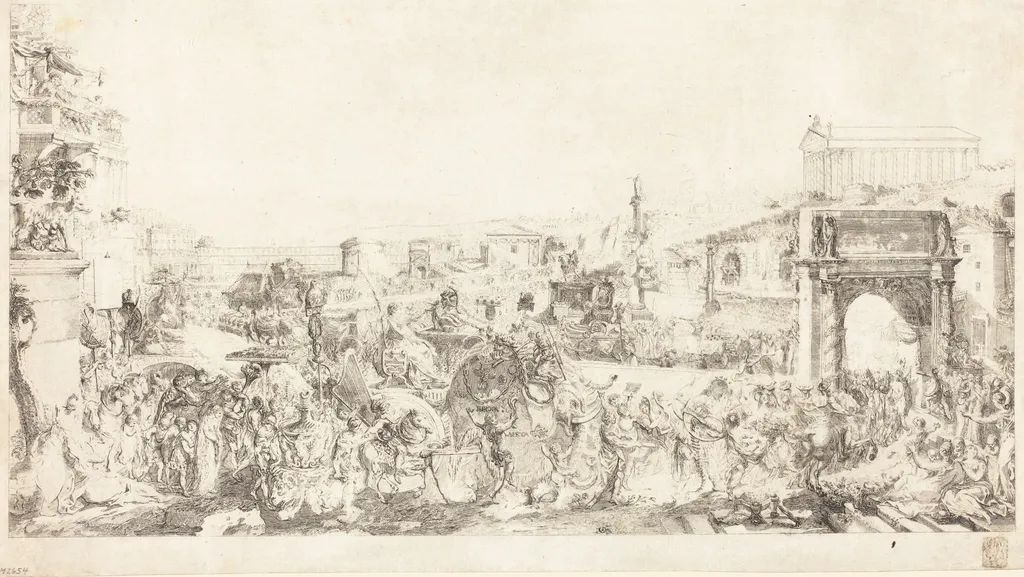
Triomphe de Pompee dans Rome is an ink print by the Romanticist artist Gabriel de Saint-Aubin. It dates from 1775 and is held in the collection of the National Gallery of Art.
About this work
Overview
Gabriel de Saint‑Aubin’s 1775 etching, titled *Triomphe de Pompee dans Rome*, is a proof printed on laid paper. The work captures a bustling triumphal procession that snakes through an imagined Roman cityscape, rendered with meticulous line work characteristic of late‑18th‑century French printmaking.
Subject & Meaning
The image depicts a grand parade moving along a wide thoroughfare lined with classical arches, statues and towering structures. Crowds of pedestrians and mounted riders fill the streets, suggesting a public celebration of military victory, likely referencing the historic triumphs granted to victorious generals in ancient Rome.
Technique & Style
Executed as an etching, Saint‑Aubin employed fine, closely spaced lines to delineate architectural details, clothing folds, and the musculature of horses. The narrow, horizontal format forces the viewer’s eye to travel the length of the scene, creating a sense of forward motion while maintaining compositional balance within the limited space of the proof.
History & Provenance
Created as a proof in 1775, the print belongs to the later period of Saint‑Aubin’s career, when he explored complex urban vistas. The work is recorded in several European collections, though its precise ownership trail after the artist’s death remains sparsely documented.
Context
During the Enlightenment, French artists often looked to antiquity for subject matter, using prints to disseminate classical themes. Saint‑Aubin’s choice of a Roman triumph aligns with contemporary interests in civic virtue and the grandeur of ancient civic ceremonies, reflecting broader cultural fascinations of the era.
Artist & collection

Artist
Gabriel de Saint-Aubin was a French draftsman, printmaker, etcher and painter.


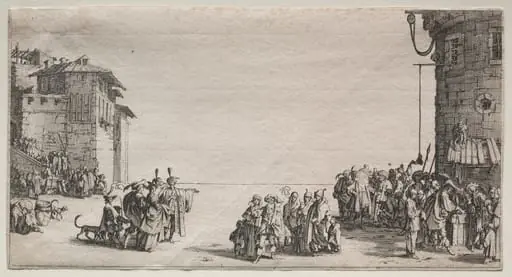 The Slave Market
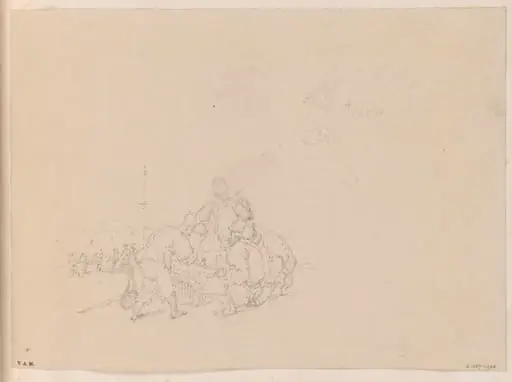 Chinese men surrounding a basket
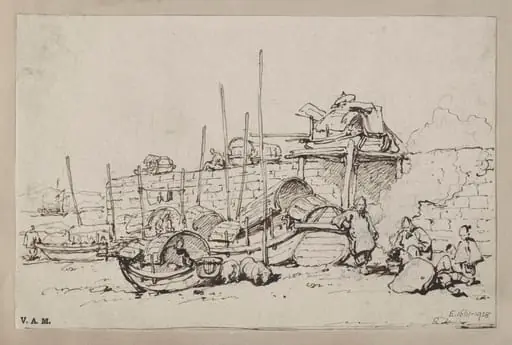 Tanka boats and boatpeople on the beach by the sea wall, Macau
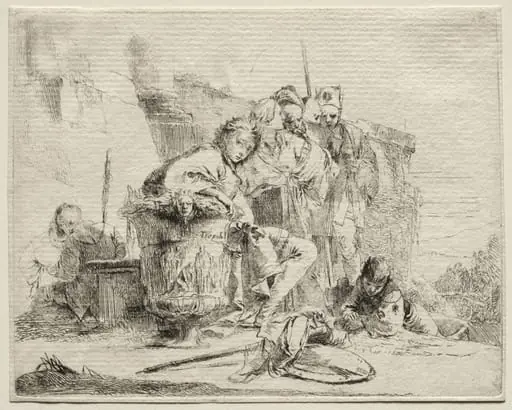 Various Caprices: Young Man Seated, Leaning Against an Urn
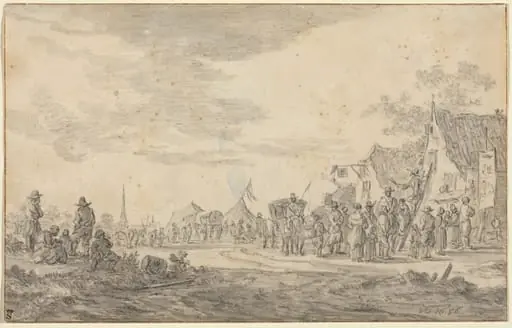 Village Fair
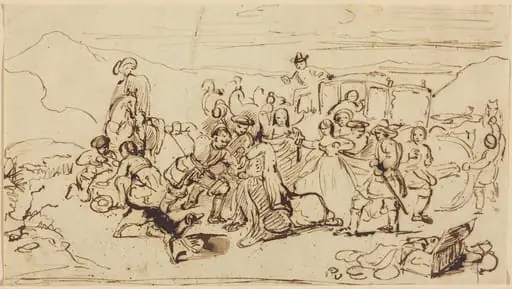 The Murder of Archbishop Sharpe
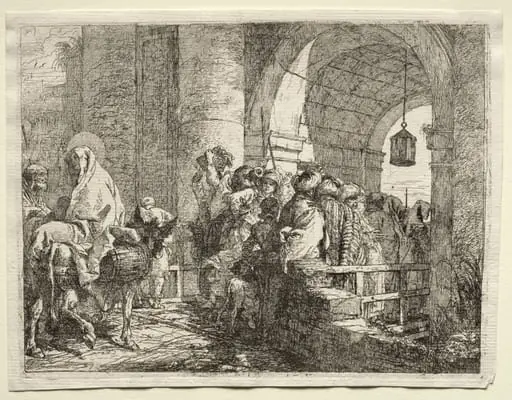 Flight into Egypt: The Holy Family Passing under an Arch
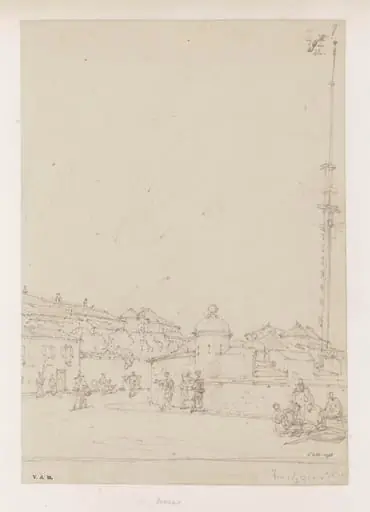 The fort of S. Pedro, Macau
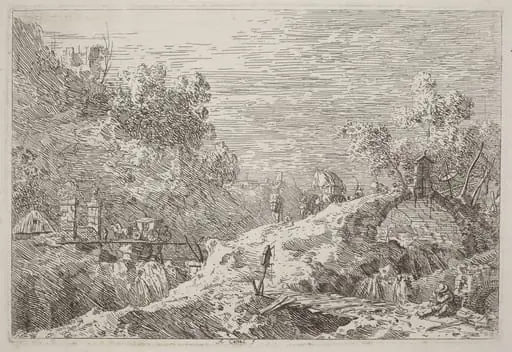 Mountain Landscape with Five Bridges
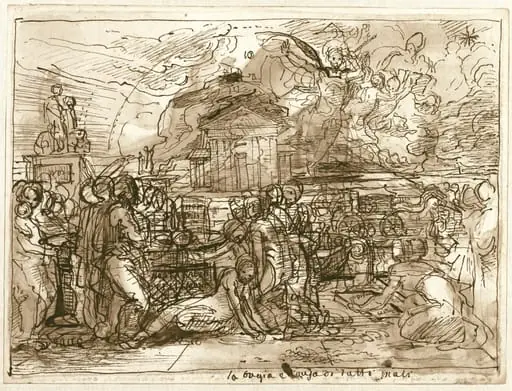 Falsehood Is the Cause of All Evil (recto); An Allegory of Truth and Falsehood (verso)
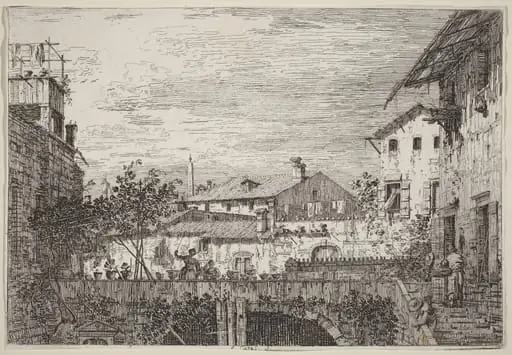 The Terrace
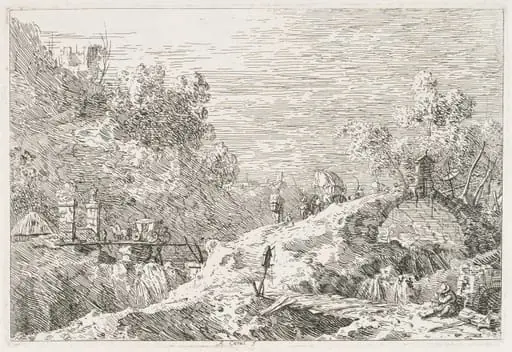 Views: Mountain Landscape with Five Bridges