Artwork
Cherry Blossoms
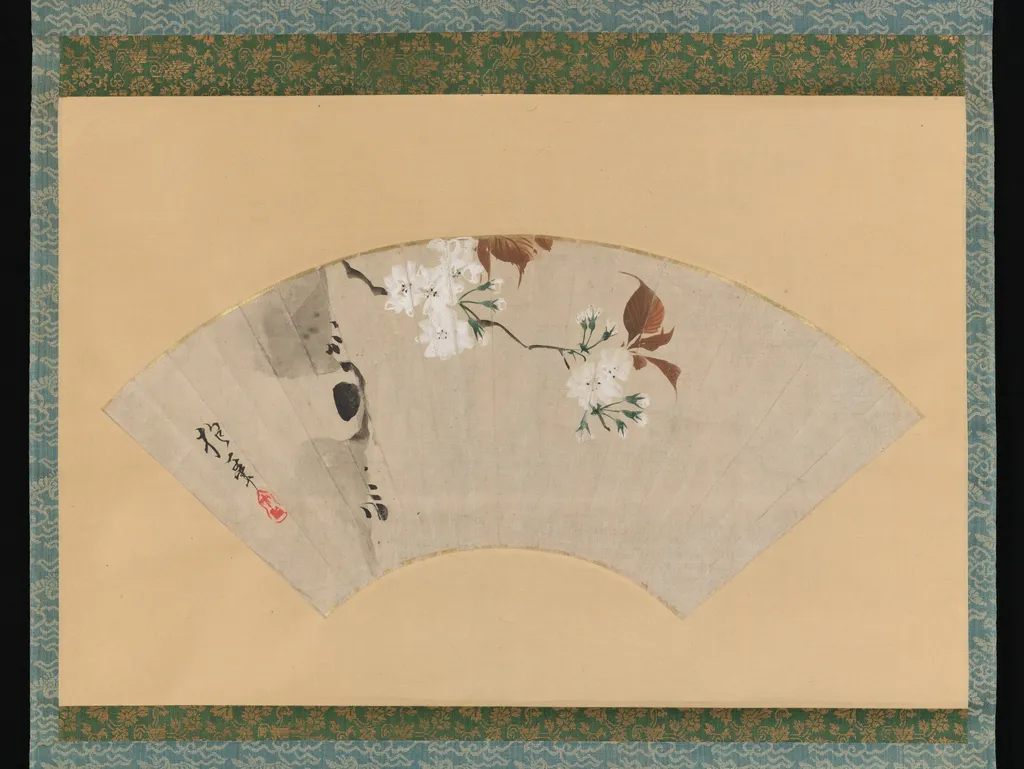
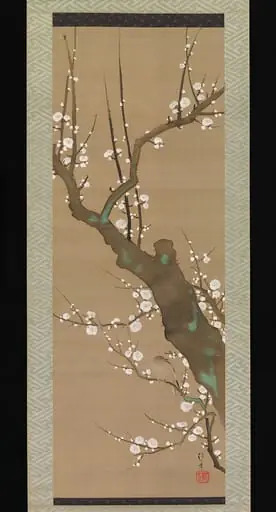
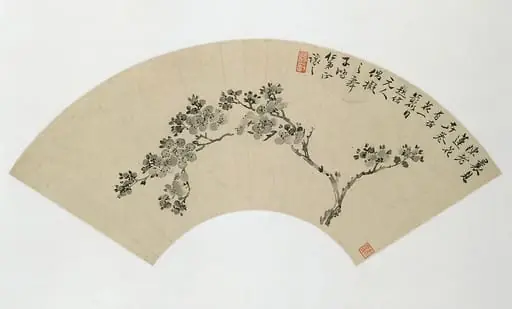
Cherry Blossoms is an unspecified painting by the Ukiyo-e artist Sakai Hōitsu. It dates from 1749 and is held in the collection of the Metropolitan Museum of Art.
About this work
Overview
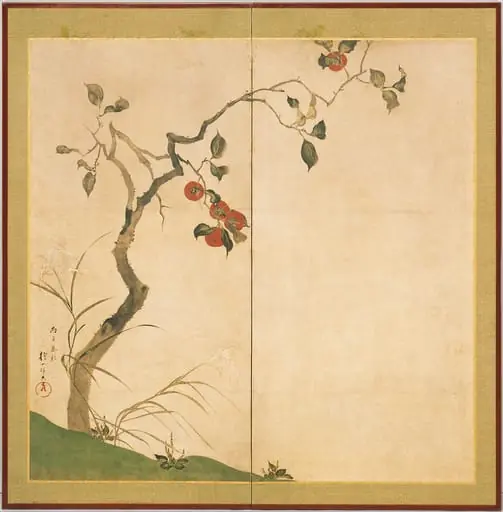
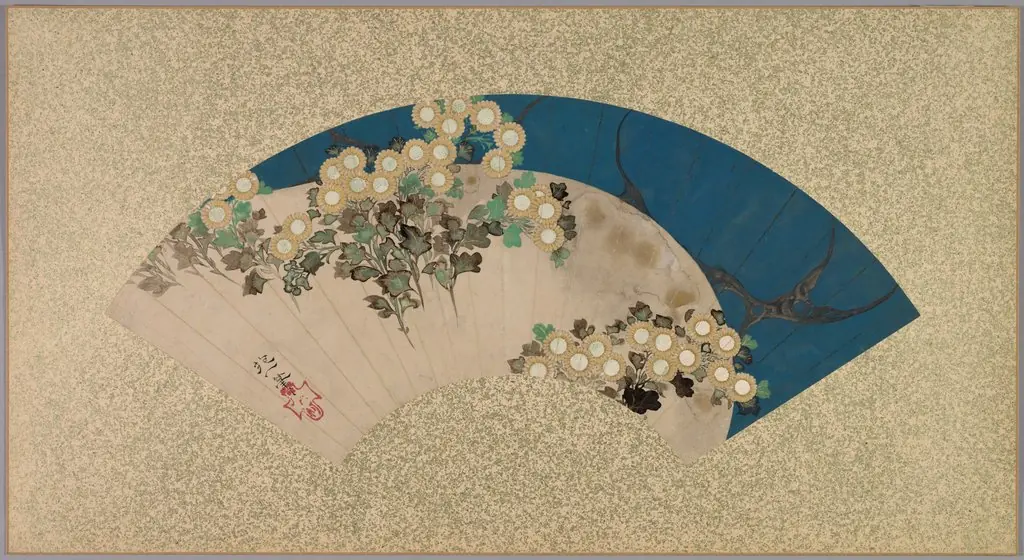
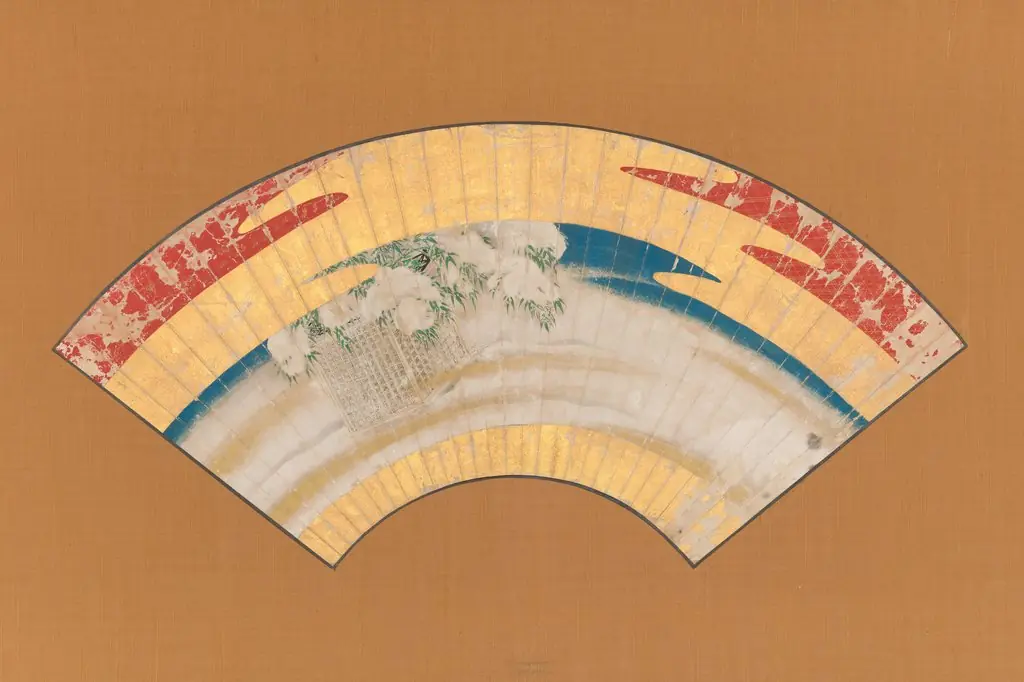
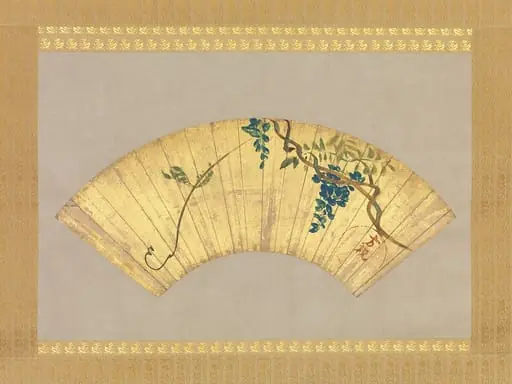
Created in 1749 by the Japanese painter Sakai Hōitsu, this work presents a single folded fan adorned with cherry blossoms. The composition is set against a muted yellow field edged with a green‑gold pattern, while the fan itself is rendered on a plain background. The painting is part of the collection of the Metropolitan Museum of Art in New York.
Subject & Meaning
The central motif consists of delicate white cherry blossoms, their petals outlined with subtle green leaves and a few buds tinged red. In Japanese visual culture, cherry blossoms often symbolize the fleeting nature of beauty and the transience of life, suggesting a contemplative reflection on impermanence.
Technique & Style
Hōitsu employs restrained yet precise brushwork, emphasizing the natural curvature of each blossom. The fan’s fold is delineated by a clean, curved line that bisects the surface, while the simple background allows the floral forms to stand out. The limited palette—white, green, red, and muted earth tones—reinforces the work’s understated elegance.
History & Provenance
The painting has remained in private and institutional hands since its creation in the mid‑18th century, eventually entering the Metropolitan Museum of Art’s collection. Its provenance reflects the broader appreciation of Rinpa‑style works, of which Hōitsu was a prominent later exponent.
Artist & collection