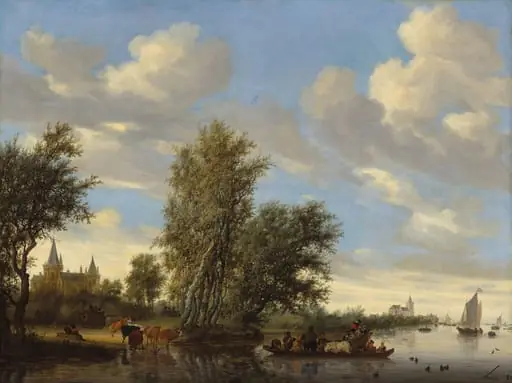
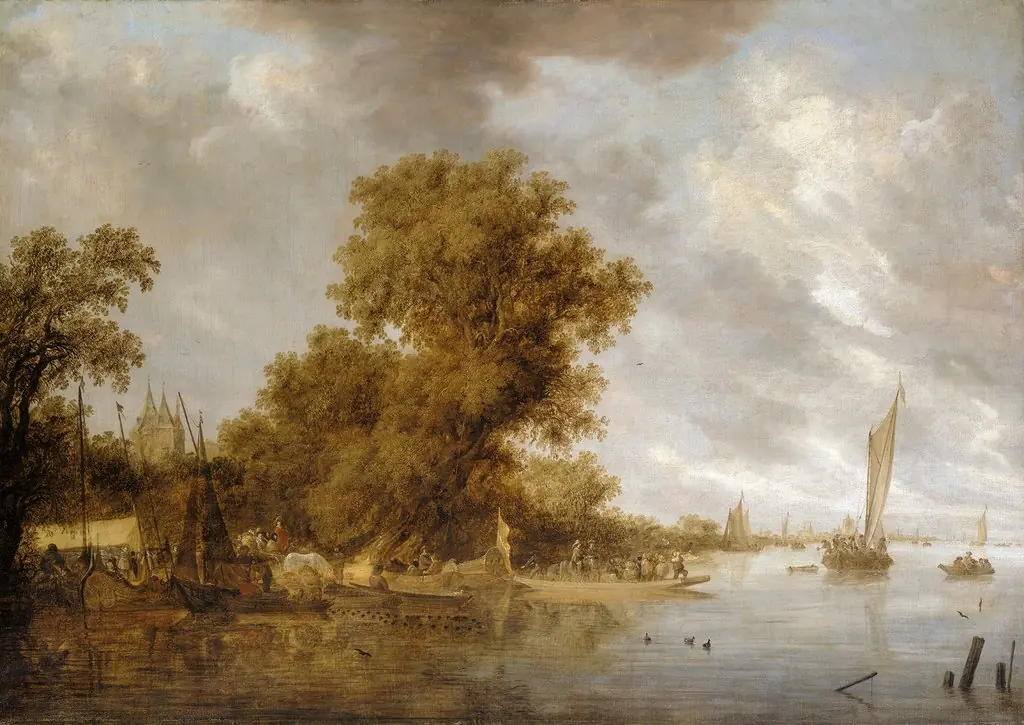
Artwork
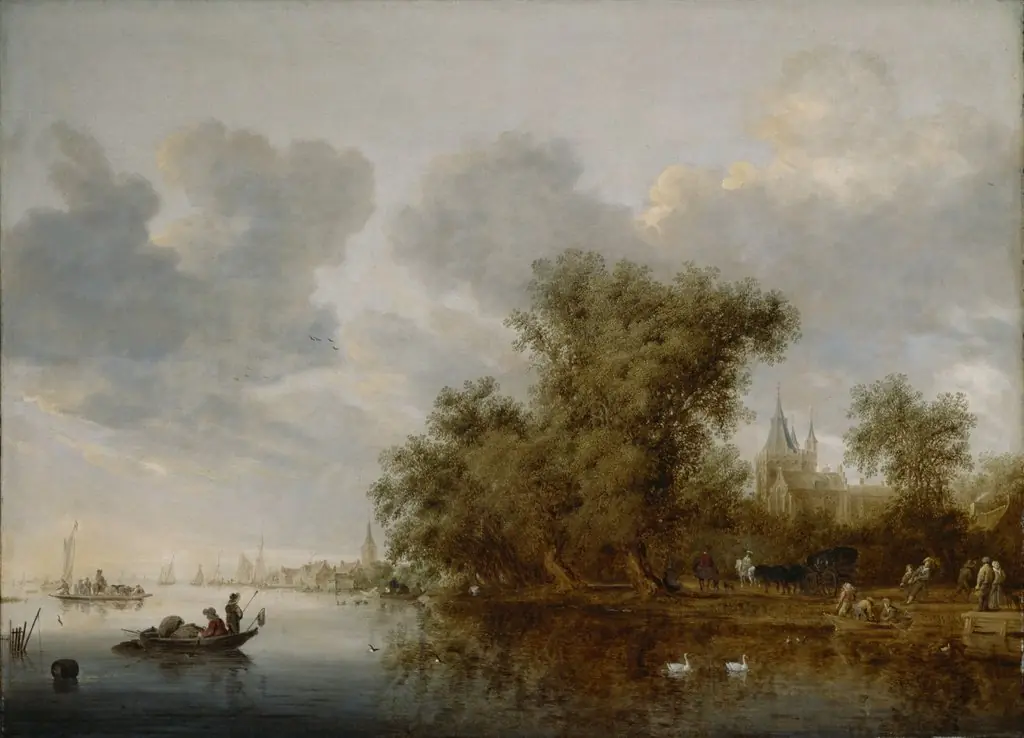
River Landscape with a Church in the Distance
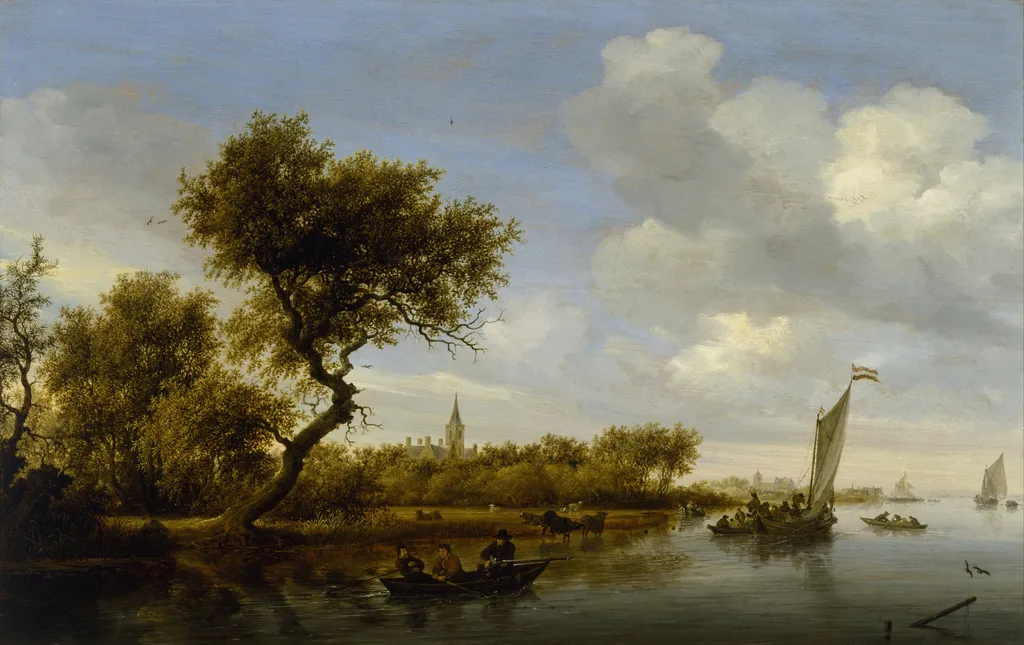
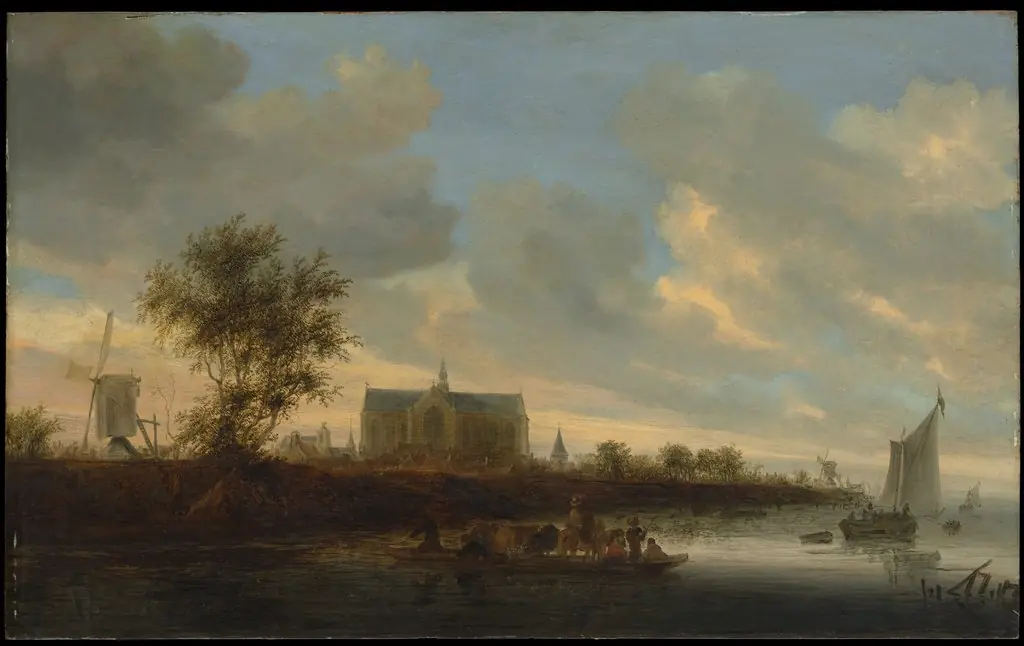
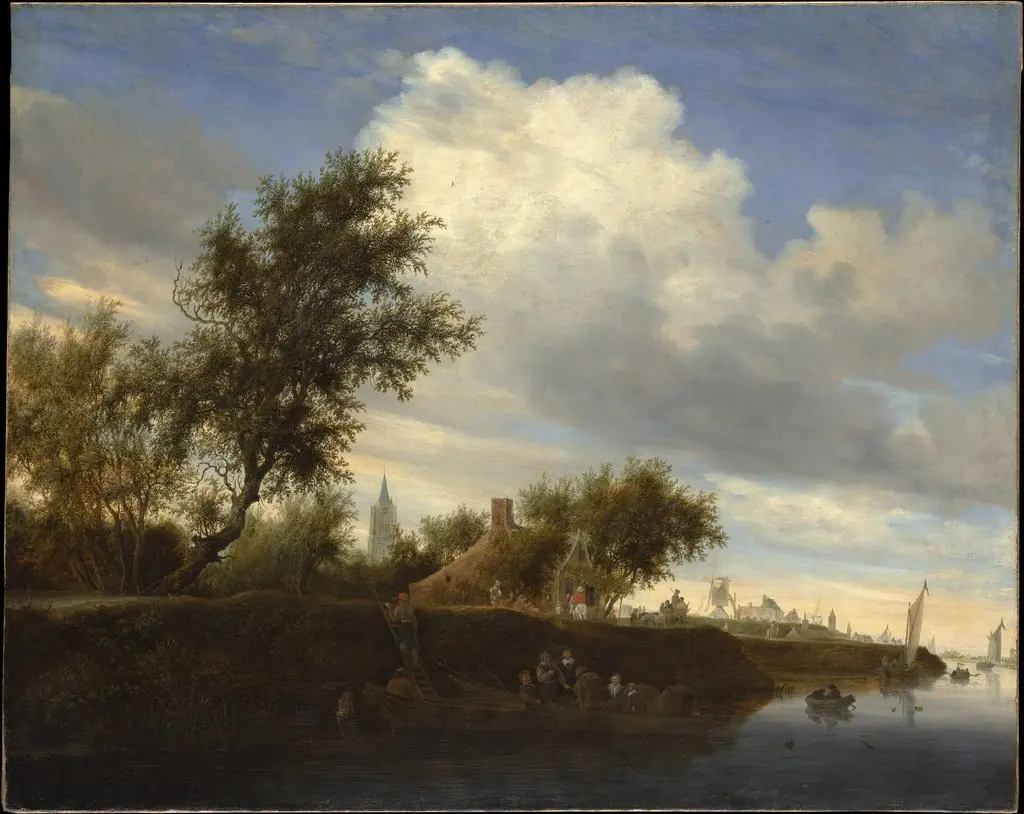
River Landscape with a Church in the Distance is an oil painting by the Dutch Golden Age artist Salomon van Ruysdael. It dates from 1657 and is held in the collection of the Museum of Fine Arts, Houston.
About this work
Overview
Painted in 1657 by Salomon van Ruysdael, this oil-on-canvas work presents a quiet riverside scene characteristic of Dutch Golden Age landscape painting.
Painted in 1657 by Salomon van Ruysdael, this oil-on-canvas work presents a quiet riverside scene characteristic of Dutch Golden Age landscape painting. It captures a tranquil stretch of water with a distant church spire, framed by low banks and a broad, overcast sky. The composition balances natural elements with human activity, reflecting the era’s interest in everyday rural life and atmospheric effects.
Subject & Meaning
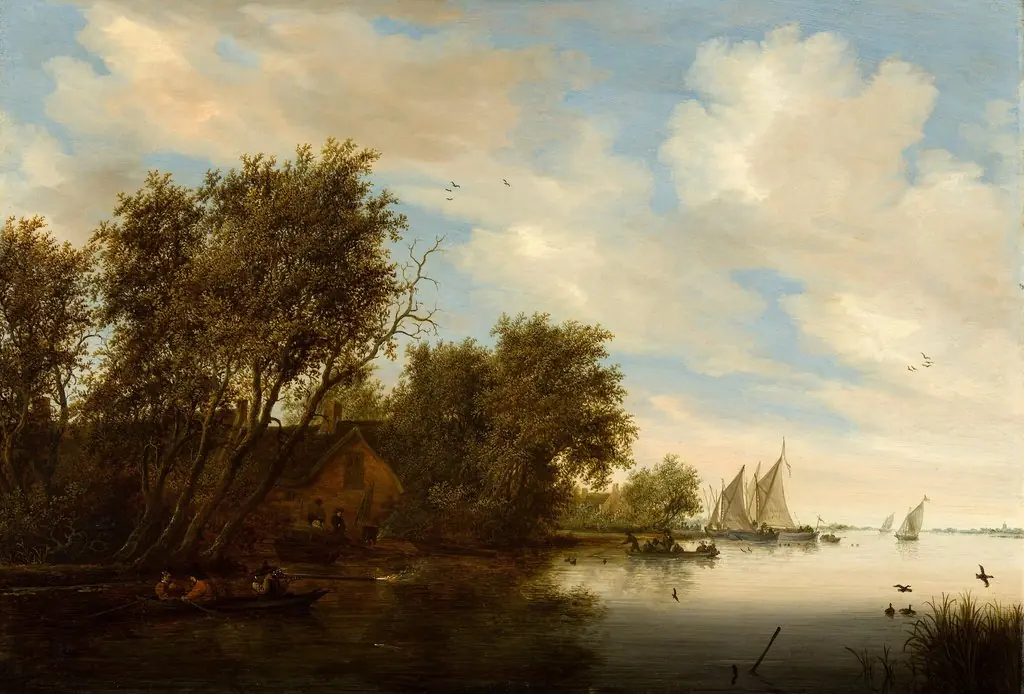
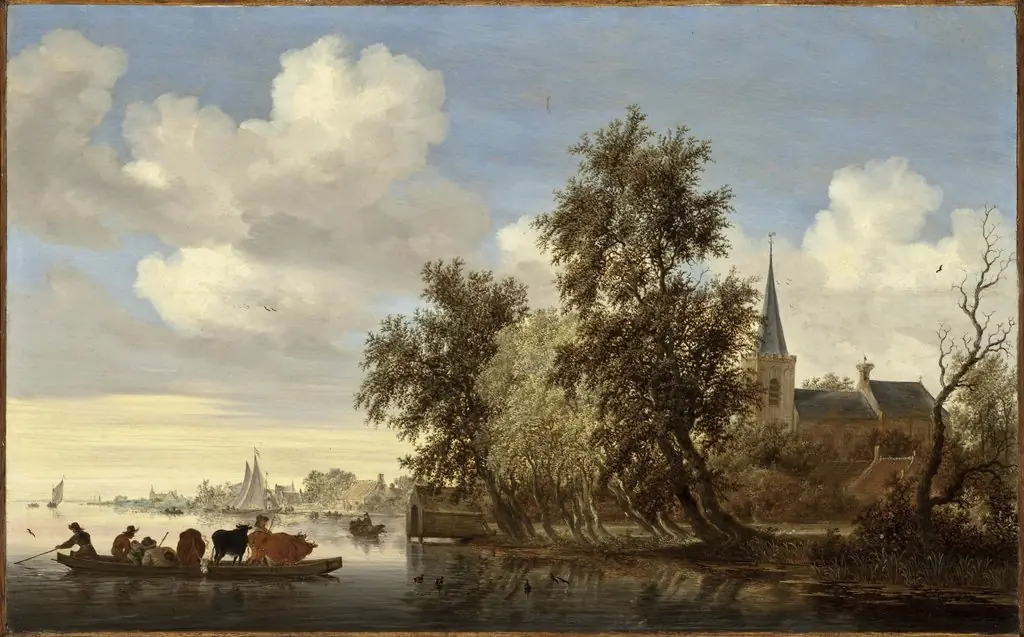
The painting portrays ordinary life along a Dutch river: figures gather on the shore, boats drift lazily, and birds glide through the sky. The church in the distance, not dominant but quietly present, suggests spiritual or communal continuity within the landscape. There is no overt narrative—instead, the scene invites contemplation of harmony between people, nature, and architecture.
Technique & Style
Van Ruysdael employs subtle gradations of tone and muted hues to convey atmospheric depth. Light filters through cloud cover, casting soft shadows that model forms without harsh contrast. The brushwork is precise yet unobtrusive, particularly in rendering water reflections and the texture of foliage. Chiaroscuro is used sparingly, enhancing volume rather than drama, aligning with the restrained realism of Dutch landscape tradition.
History & Provenance
Created during the height of Dutch landscape painting, the work entered the collection of the Museum of Fine Arts, Houston, where it remains today. While its early ownership is undocumented, its style and date place it firmly within Salomon van Ruysdael’s mature period, when he refined his depictions of river views and sky-dominated compositions.
Context
In mid-17th century Holland, landscape painting flourished as a distinct genre, valued for its truthful observation of the natural world. Artists like van Ruysdael responded to a growing middle-class market that prized scenes of familiar terrain. This painting reflects a cultural shift toward secular, localized beauty, where the ordinary landscape held intrinsic worth.
Legacy
Salomon van Ruysdael’s work laid groundwork for later Dutch landscape painters, including his nephew Jacob. His emphasis on atmospheric perspective and quiet composition influenced the development of the genre. Though less celebrated today, his paintings remain important for their understated realism and contribution to the evolution of Northern European landscape art.
Own this work as a print
Artist & collection
Artist
Salomon van Ruysdael (c. 1602, Naarden – buried 3 November 1670, Haarlem) was a Dutch Golden Age landscape painter. He was the uncle of Jacob van Ruisdael.