Artwork
River View with a Man Hunting Ducks
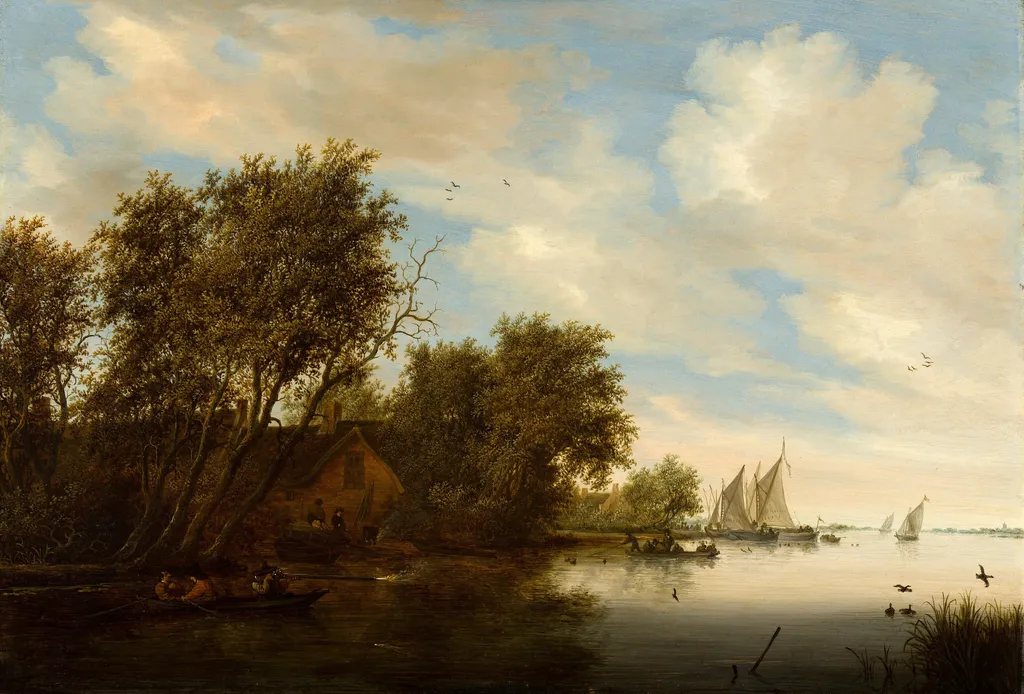
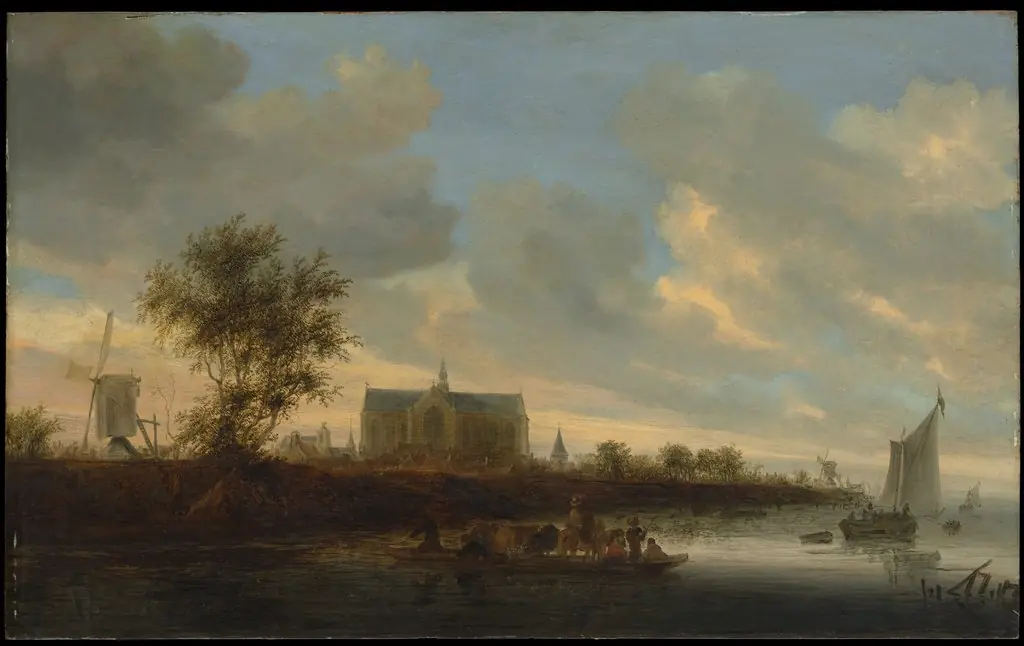
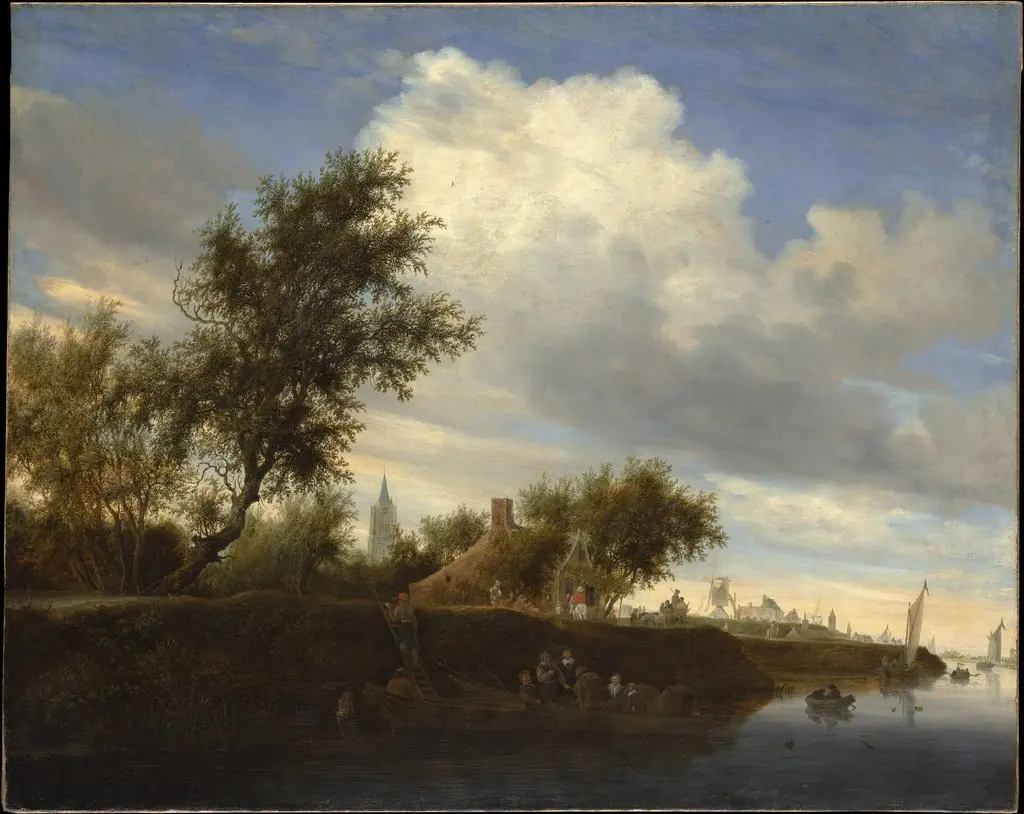
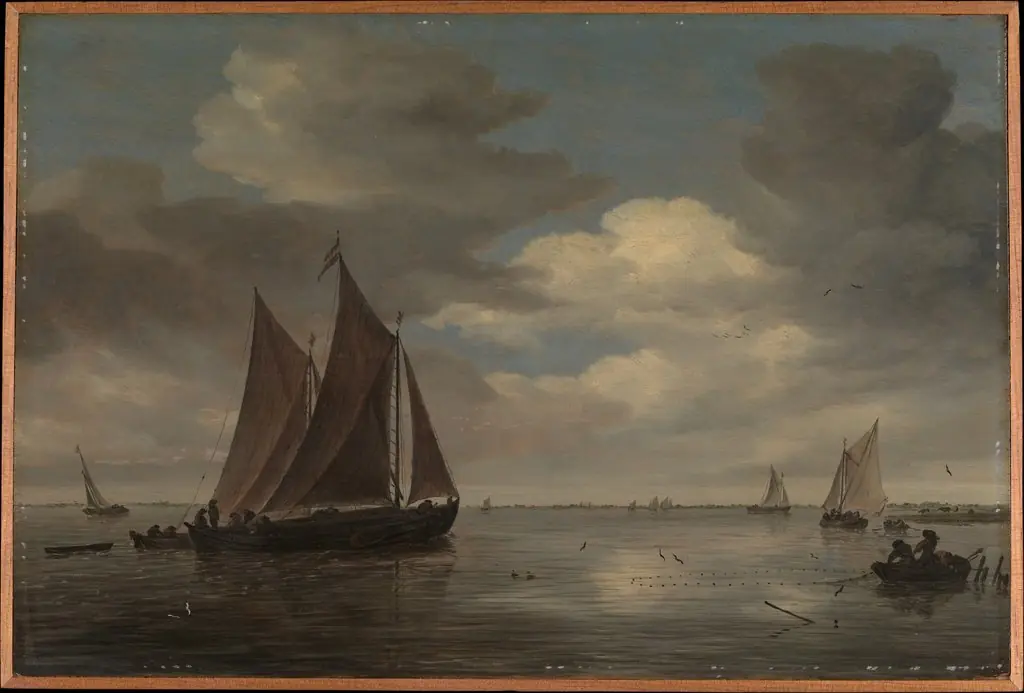
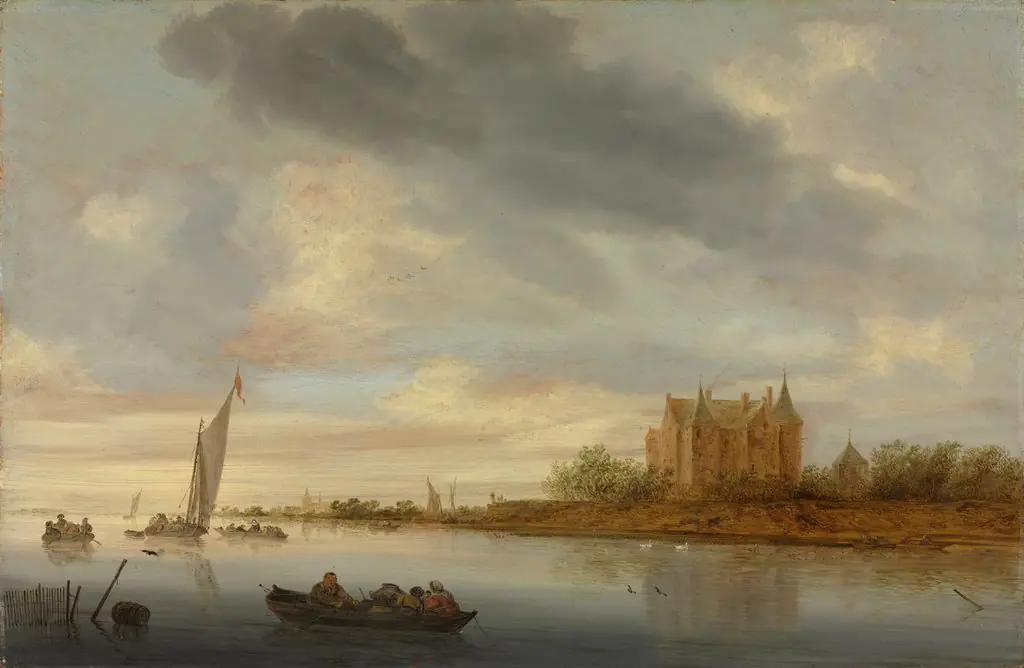
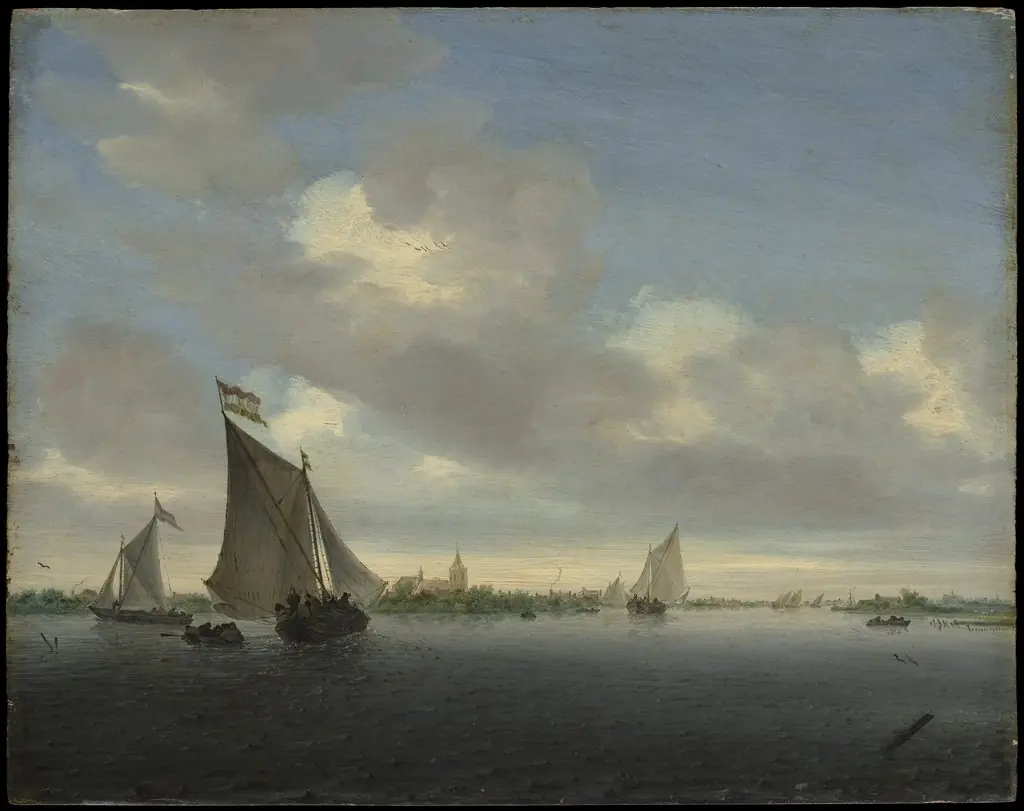
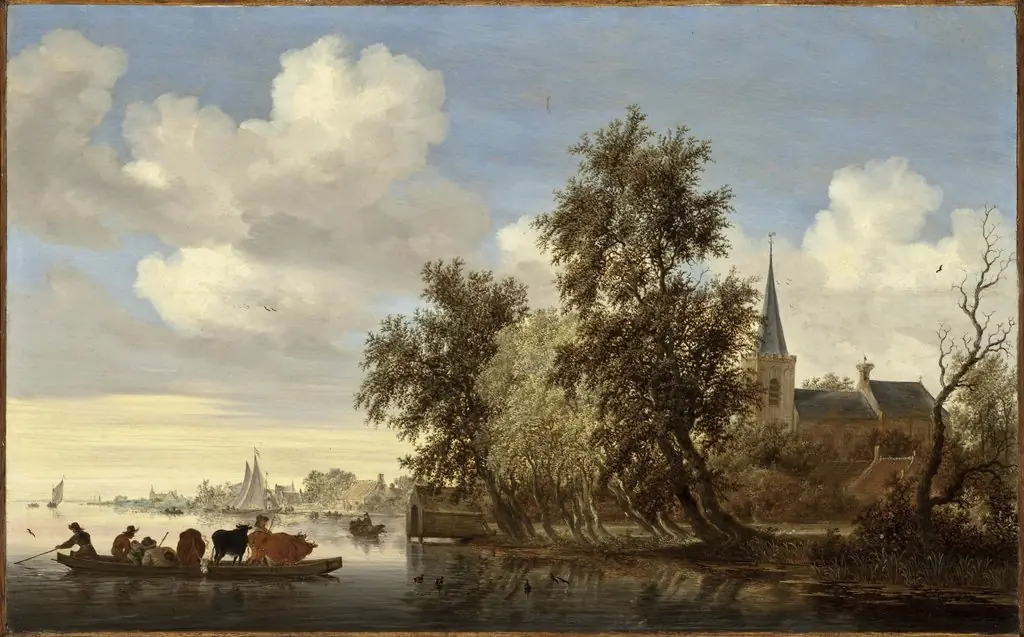
River View with a Man Hunting Ducks is an oil painting by the Dutch Golden Age artist Salomon van Ruysdael. It dates from 1648 and is held in the collection of the Mauritshuis.
About this work
Overview
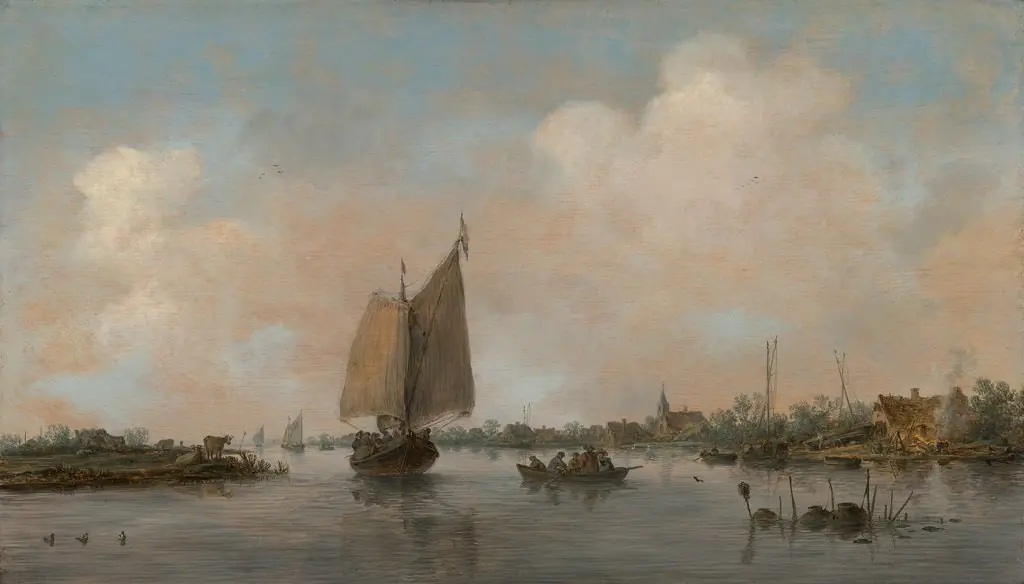
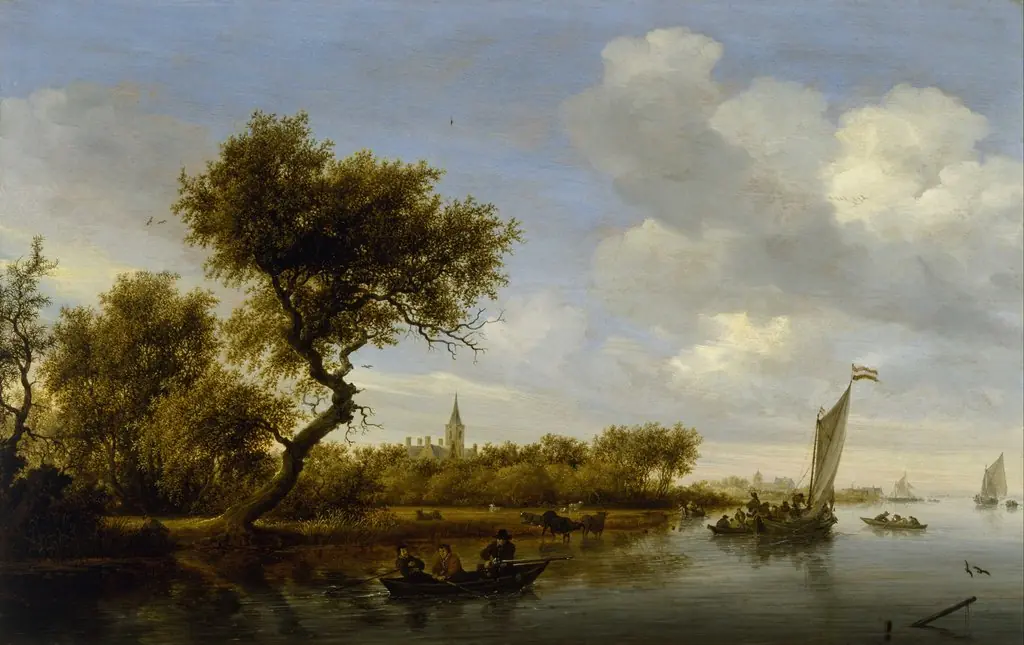
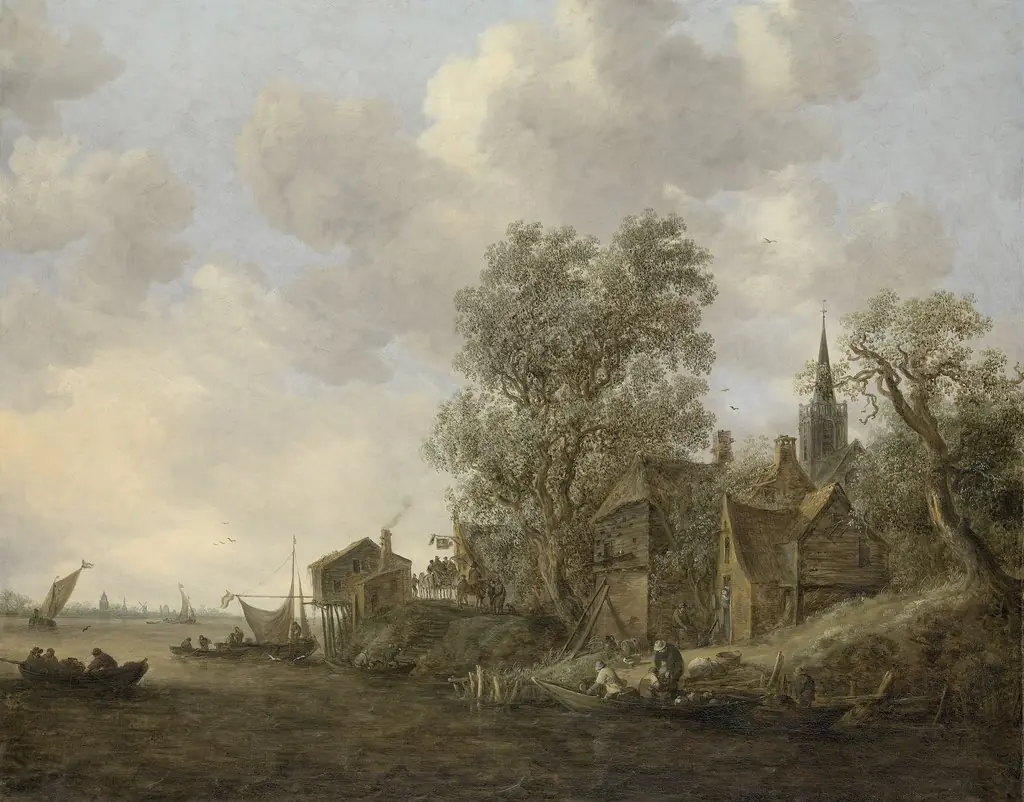
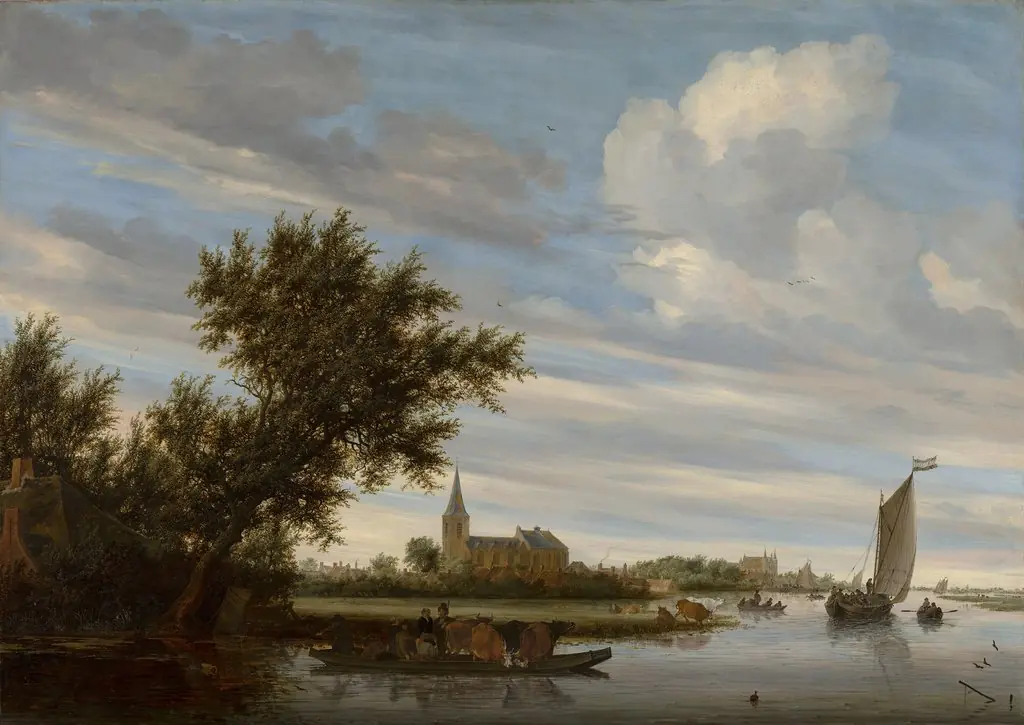
Painted in 1648 by Salomon van Ruysdael, this oil on panel depicts a quiet riverside moment in the Dutch countryside. The scene captures a solitary hunter in a small boat, using a long-handled net to pursue waterfowl. The composition emphasizes stillness and natural harmony, with muted tones and careful attention to atmospheric effects typical of mid-17th-century Dutch landscape painting.
Subject & Meaning
The figure hunting ducks represents a common rural activity, not idealized but observed with quiet realism. The act is integrated into the landscape rather than dominating it, suggesting a balance between human presence and nature. There is no dramatic narrative—instead, the painting conveys the rhythm of daily life along waterways, valued for its quiet dignity in the Dutch Golden Age.
Technique & Style
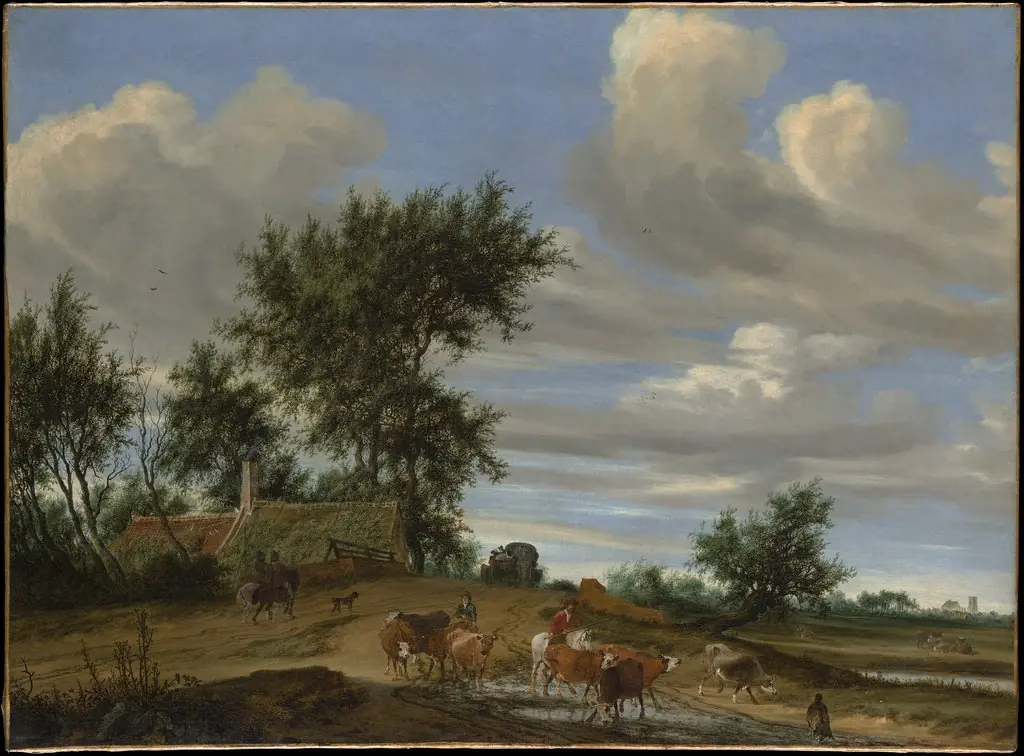
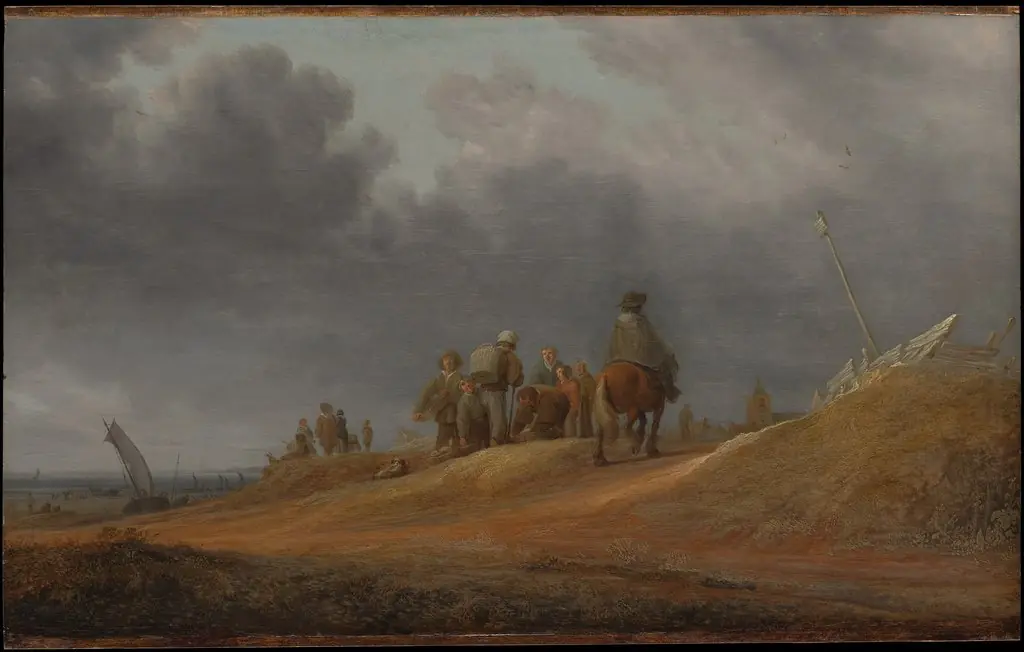
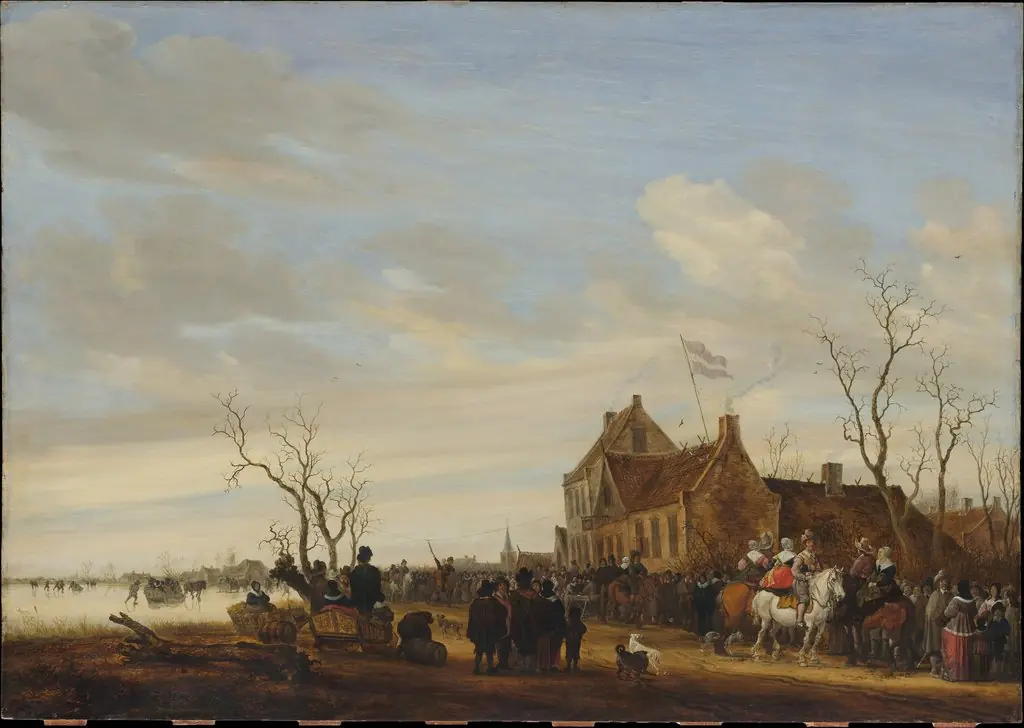
Ruysdael employed fine brushwork to render textures: the rough bark of trees, the ripples on water, and the soft diffusion of light through overcast skies. His palette favors earthy greens, browns, and grays, avoiding vivid contrasts. The brushstrokes are deliberate yet unobtrusive, creating a sense of depth and atmospheric perspective that draws the eye gently from foreground to distant horizon.
History & Provenance
It was likely acquired during the 18th or 19th century as part of broader efforts to preserve Dutch Golden Age works.
The painting entered the Mauritshuis collection in The Hague, where it remains today. It was likely acquired during the 18th or 19th century as part of broader efforts to preserve Dutch Golden Age works. Its attribution to Salomon van Ruysdael has been consistently supported by stylistic analysis and archival records, distinguishing it from the more dramatic landscapes of his nephew, Jacob van Ruisdael.
Context
Created during the height of the Dutch Golden Age, the painting reflects a cultural preference for serene, everyday scenes over grand historical or religious themes. River landscapes like this one were popular among urban patrons seeking connection to the rural environment. Ruysdael’s work contributed to a tradition of observational realism that celebrated the subtle beauty of the Netherlands’ waterways and skies.
Legacy
Salomon van Ruysdael’s approach influenced later landscape painters through his restrained composition and sensitivity to light and weather. While less celebrated than his nephew, his work helped define the quiet, intimate mode of Dutch landscape painting. Today, this piece stands as a representative example of how ordinary moments were elevated through careful observation and technical precision.
Own this work as a print
Artist & collection
Artist
Salomon van Ruysdael (c. 1602, Naarden – buried 3 November 1670, Haarlem) was a Dutch Golden Age landscape painter. He was the uncle of Jacob van Ruisdael.