Artwork
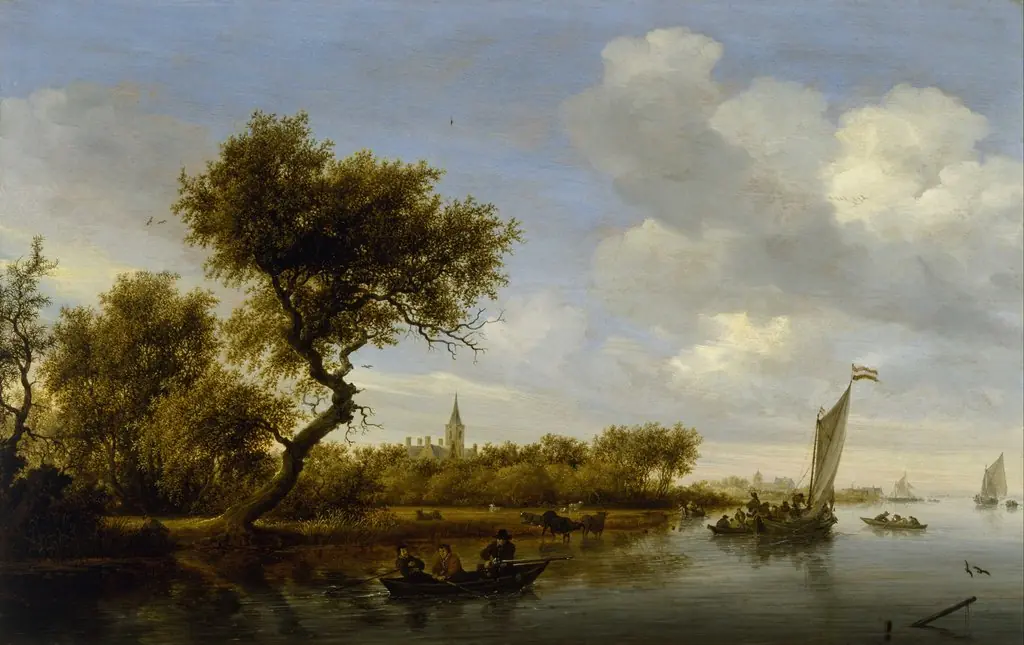
River Landscape with a Ferryboat Transporting Animals
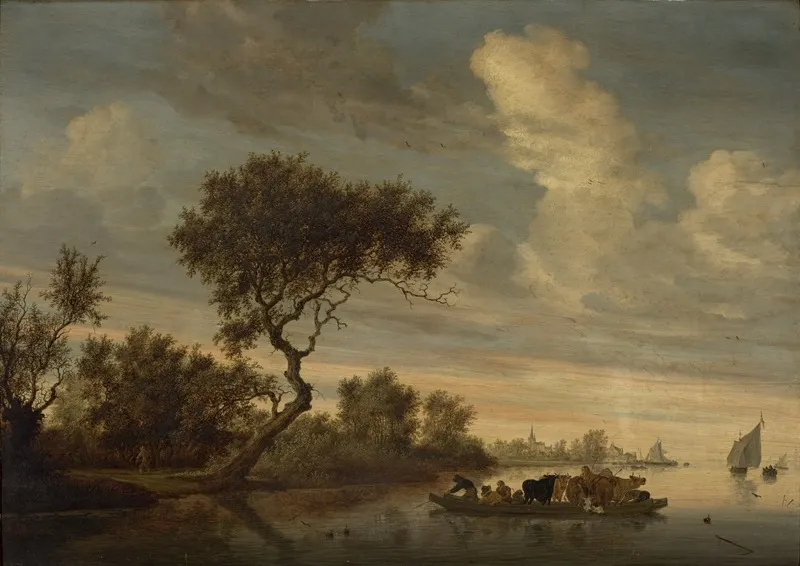
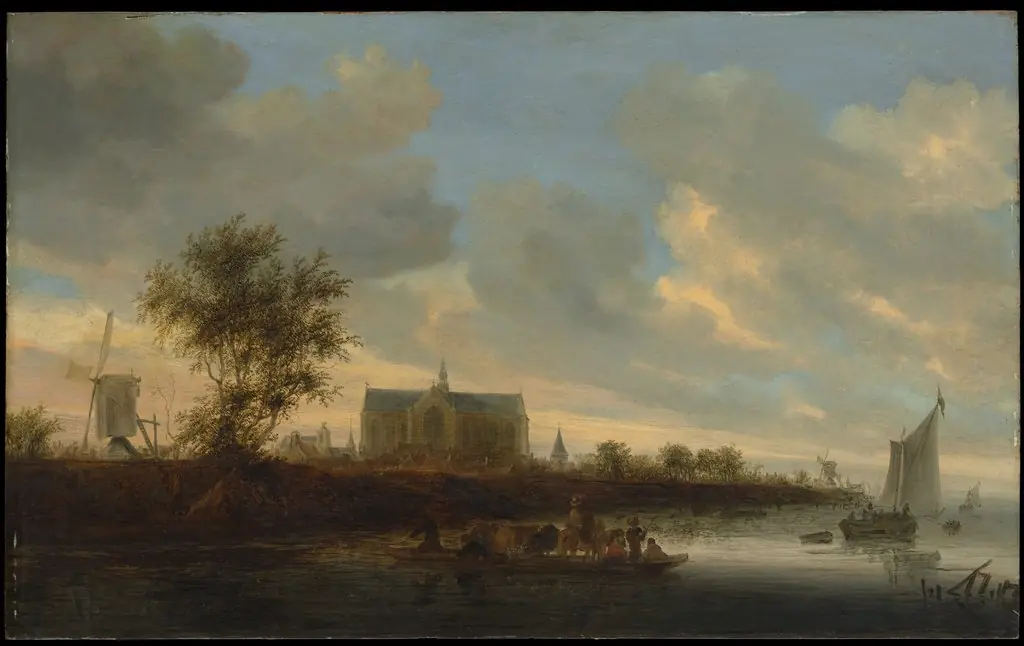
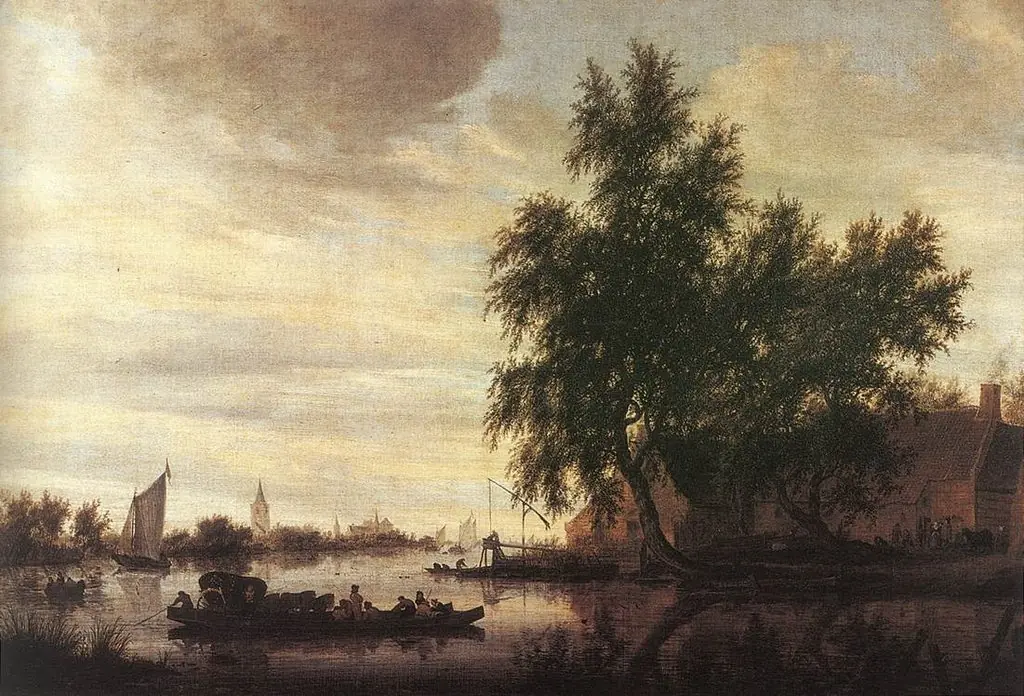
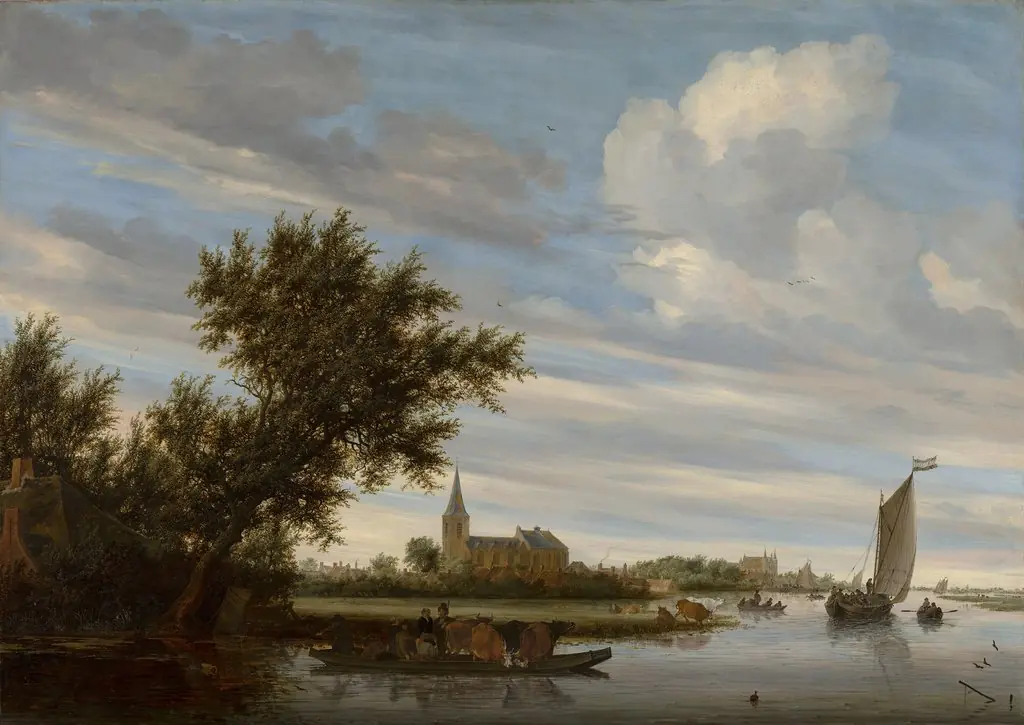
River Landscape with a Ferryboat Transporting Animals is an oil painting by the Dutch Golden Age artist Salomon van Ruysdael. It dates from 1650 and is held in the collection of the São Paulo Museum of Art.
About this work
Overview
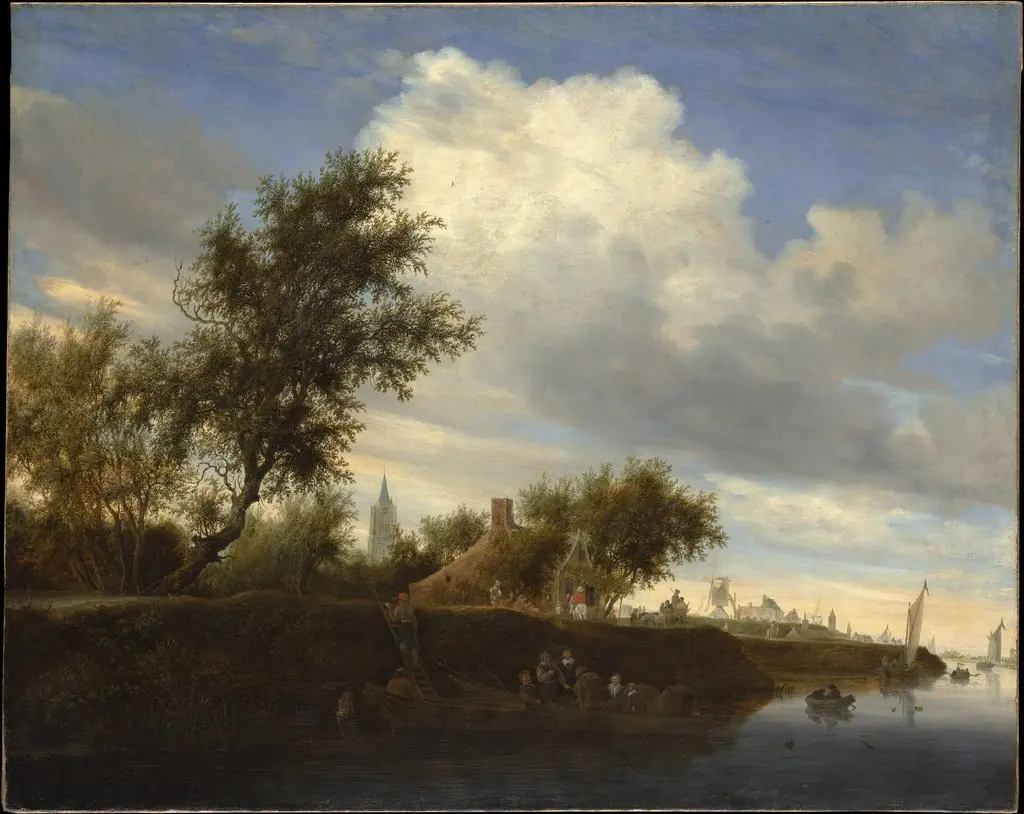
Painted around 1650, this oil-on-canvas work by Salomon van Ruysdael captures a quiet moment of rural transport along a Dutch river. It reflects the artist’s consistent interest in inland waterways and the modest rhythms of everyday life. The composition centers on a ferryboat laden with livestock, set against a tranquil backdrop of trees, distant buildings, and a soft, overcast sky.
Subject & Meaning
The scene portrays a practical river crossing, with cows and horses being ferried across the water, accompanied by a few figures.
The scene portrays a practical river crossing, with cows and horses being ferried across the water, accompanied by a few figures. There is no grand narrative—only the unremarkable yet essential movement of goods and animals. The painting elevates ordinary labor and regional economy, reflecting the Dutch Golden Age’s preference for grounded, observable reality over idealized or mythological themes.
Technique & Style
Van Ruysdael employs subtle tonal gradations and muted earth tones to convey atmospheric depth. Light glances off the water’s surface with restrained precision, enhancing the sense of stillness. The ferryboat is placed prominently in the foreground, guiding the viewer’s eye through a layered landscape that recedes gently toward a distant church steeple and hazy horizon.
History & Provenance
The painting has been part of the São Paulo Museum of Art’s collection since the mid-20th century. Its journey to Brazil likely followed the broader dispersal of Dutch Golden Age works through European collections in the 19th and early 20th centuries. While its early ownership is undocumented, its presence in São Paulo underscores the global reach of Dutch landscape painting.
Context
Created during the height of the Dutch Golden Age, the work aligns with a cultural shift toward secular, localized subjects. Unlike grand historical or religious scenes favored elsewhere in Europe, Dutch artists like van Ruysdael found significance in rivers, fields, and working life. This painting exemplifies how commerce and nature coexisted in the visual culture of the Netherlands.
Legacy
Salomon van Ruysdael’s focus on humble river scenes influenced later landscape painters, including his nephew Jacob. His quiet, observational approach helped define a distinctly Dutch mode of landscape art—one that valued accuracy, atmosphere, and the dignity of the everyday. Though less celebrated than his nephew’s dramatic works, his contributions remain foundational to the genre.
Artist & collection
Artist
Salomon van Ruysdael (c. 1602, Naarden – buried 3 November 1670, Haarlem) was a Dutch Golden Age landscape painter. He was the uncle of Jacob van Ruisdael.