Artwork
Scenes of Witchcraft: Day
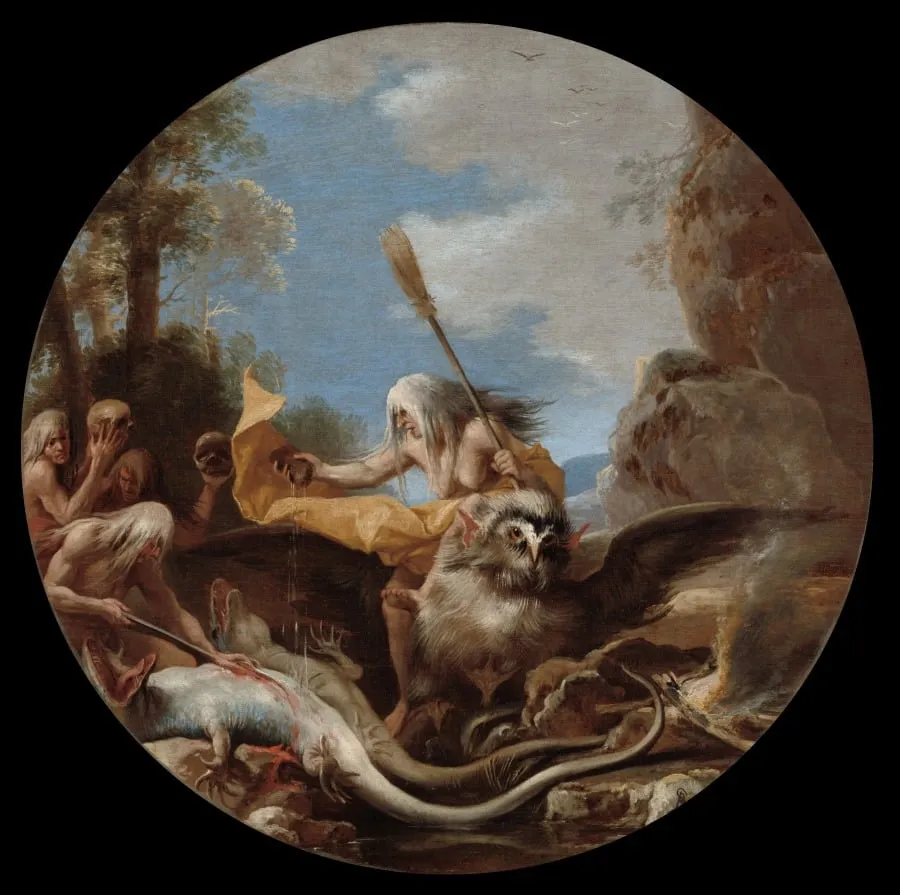
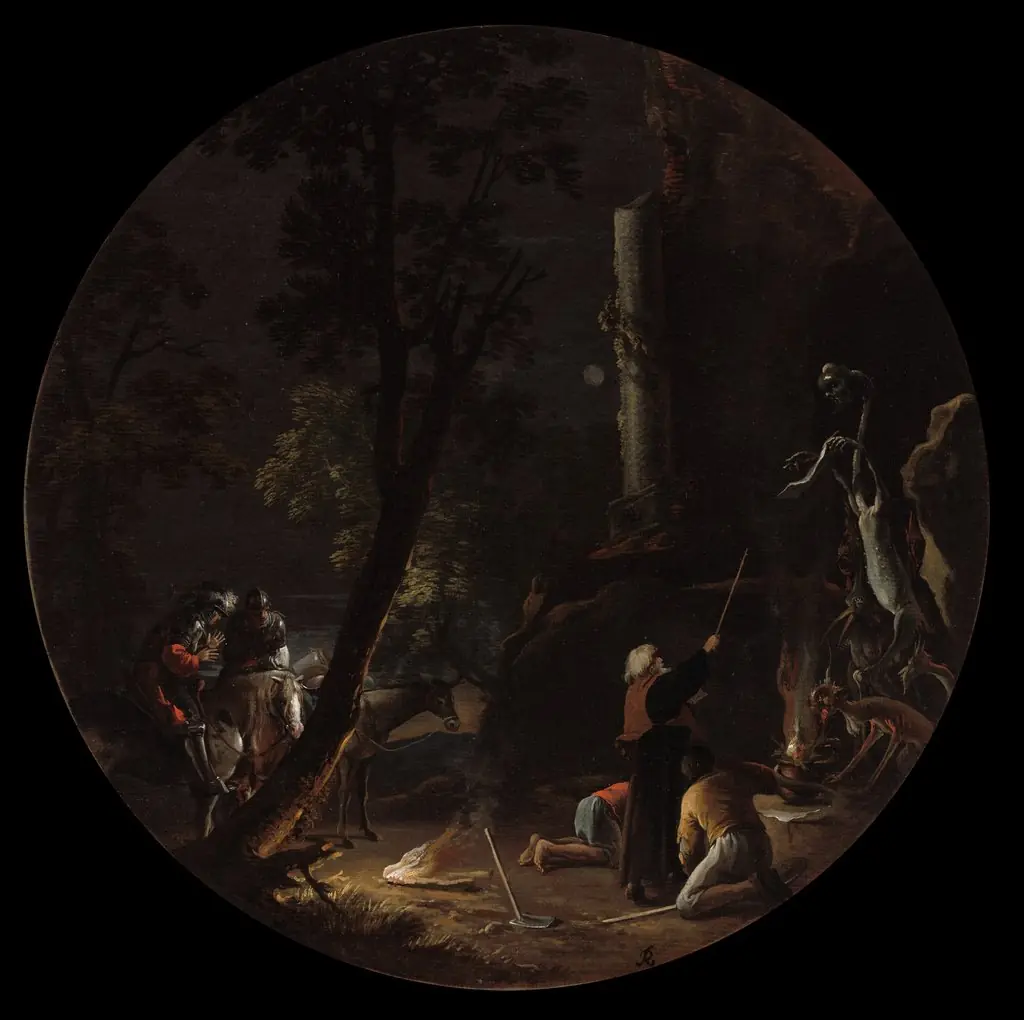
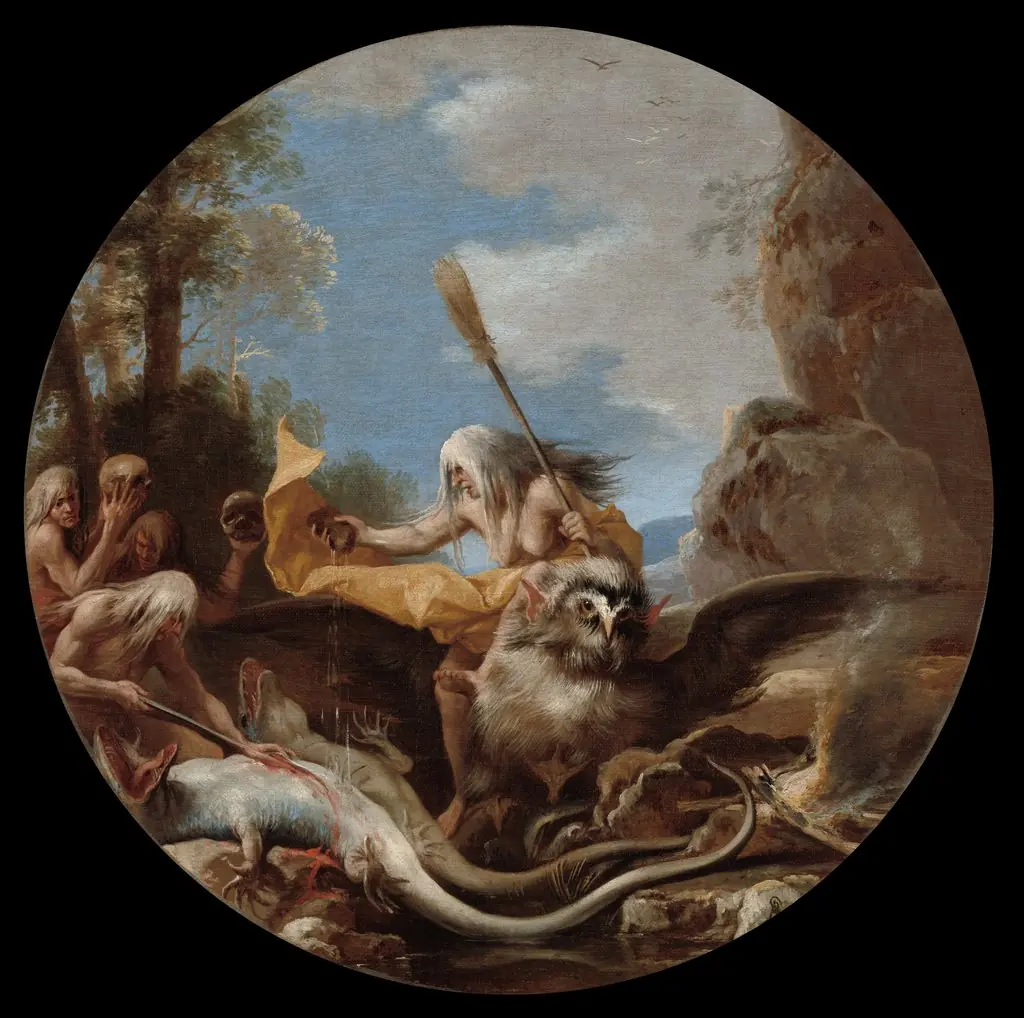
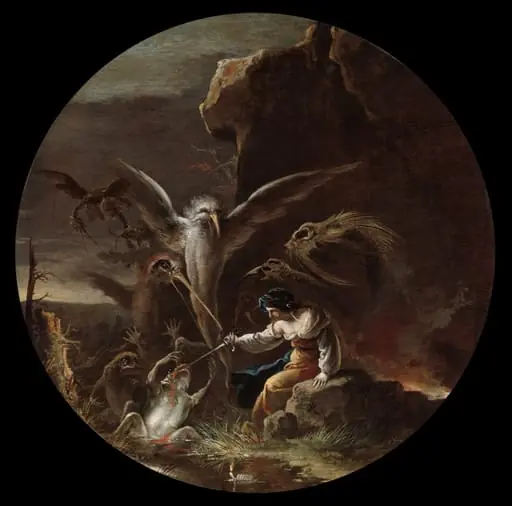
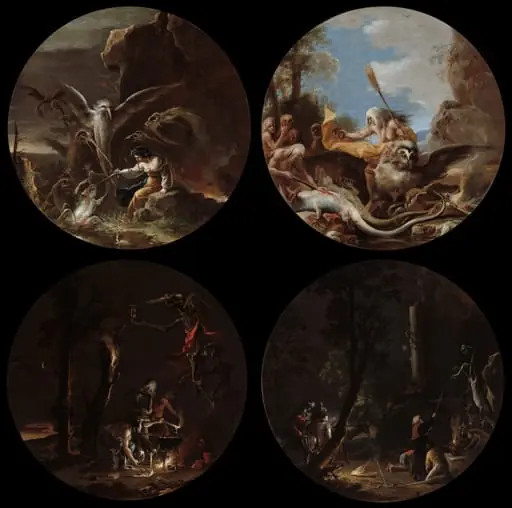
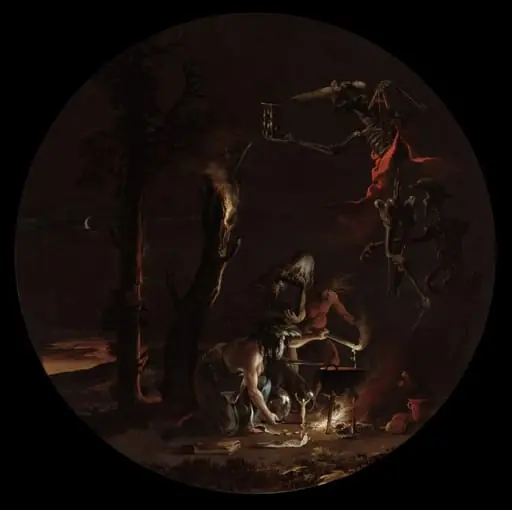
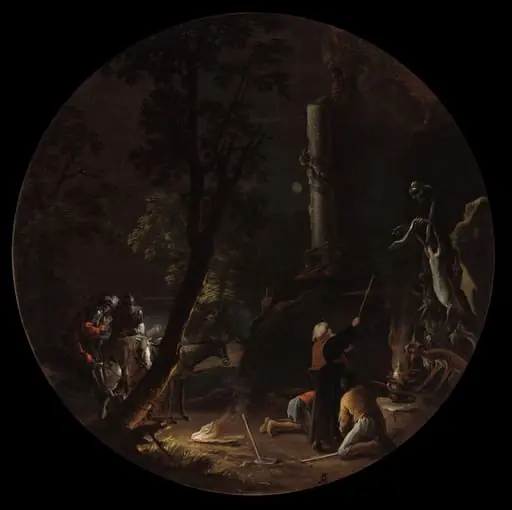
Scenes of Witchcraft: Day is an unspecified painting by the Baroque artist Salvator Rosa. It dates from 1647 and is held in the collection of the Cleveland Museum of Art. Painted at noon, this work depicts a group of witches engaged in ritualistic labor under harsh daylight.
About this work
Overview
An owl, replacing the customary goat, hovers as an unsettling symbol, heightening the sense of unease without romanticizing the occult.
Painted at noon, this work depicts a group of witches engaged in ritualistic labor under harsh daylight. Unlike traditional depictions of supernatural terror, Rosa presents them as grimy, mundane figures—preparing potions, handling animal remains, and tending to strange tools. The scene lacks overt demonic grandeur, instead emphasizing their gritty, almost domestic activity. An owl, replacing the customary goat, hovers as an unsettling symbol, heightening the sense of unease without romanticizing the occult.
Subject & Meaning
The witches are shown performing acts of alchemical preparation: flaying lizards, clutching skulls, stirring cauldrons. These actions reference folk beliefs about witchcraft, yet Rosa strips them of mysticism, rendering them as crude, physical tasks. The substitution of an owl for a goat disrupts conventional iconography, suggesting a deliberate distortion of myth. The daylight setting undermines the expected darkness of the Sabbath, framing the scene not as sacred horror but as absurd, human folly.
Technique & Style
Rosa employs sharp contrasts of light and shadow to define the rocky terrain and the figures’ ragged forms. The bright midday sun illuminates every detail—the texture of skin, the gleam of bone, the slickness of lizard entrails—without softening their repulsiveness. Brushwork is direct and unidealized, capturing movement and texture with a documentary precision. This clarity enhances the grotesque, making the bizarre feel immediate and tangible rather than imagined.
History & Provenance
Created during Rosa’s time in Rome after his return from Florence, the painting reflects his engagement with satirical literature and social critique. His poetic writings from this period often mocked superstition and human vice, and this work extends that tone into visual form. Though its early ownership is undocumented, its thematic alignment with his literary output suggests it was intended as a commentary rather than a devotional or decorative piece.
Context
In mid-17th century Italy, witchcraft was still a subject of popular fear and ecclesiastical concern, yet intellectual circles increasingly viewed such beliefs as relics of ignorance. Rosa, influenced by humanist satire, used grotesque imagery not to endorse superstition but to expose its absurdity. By placing witchcraft in daylight and emphasizing its banality, he aligned himself with critics who saw moral decay in credulity, not in the supernatural.
Legacy
Rosa’s approach to witchcraft diverged from contemporaries who emphasized horror or moral allegory. His focus on the mundane grotesque anticipated later satirical traditions in art and literature. The painting’s unflinching realism and ironic tone influenced 18th-century artists who sought to critique society through the lens of the bizarre. It remains a rare example of early modern visual satire that treats the occult not as supernatural, but as a mirror of human behavior.
Artist & collection
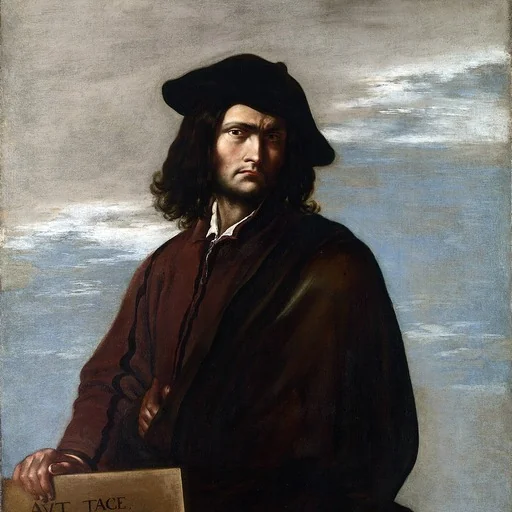
Artist
Salvator Rosa (1615 – 15 March 1673) is best known today as an Italian Baroque painter, whose romanticised landscapes and history paintings, often set in dark and untamed nature, exerted considerable influence from the 17th century into…