Artwork
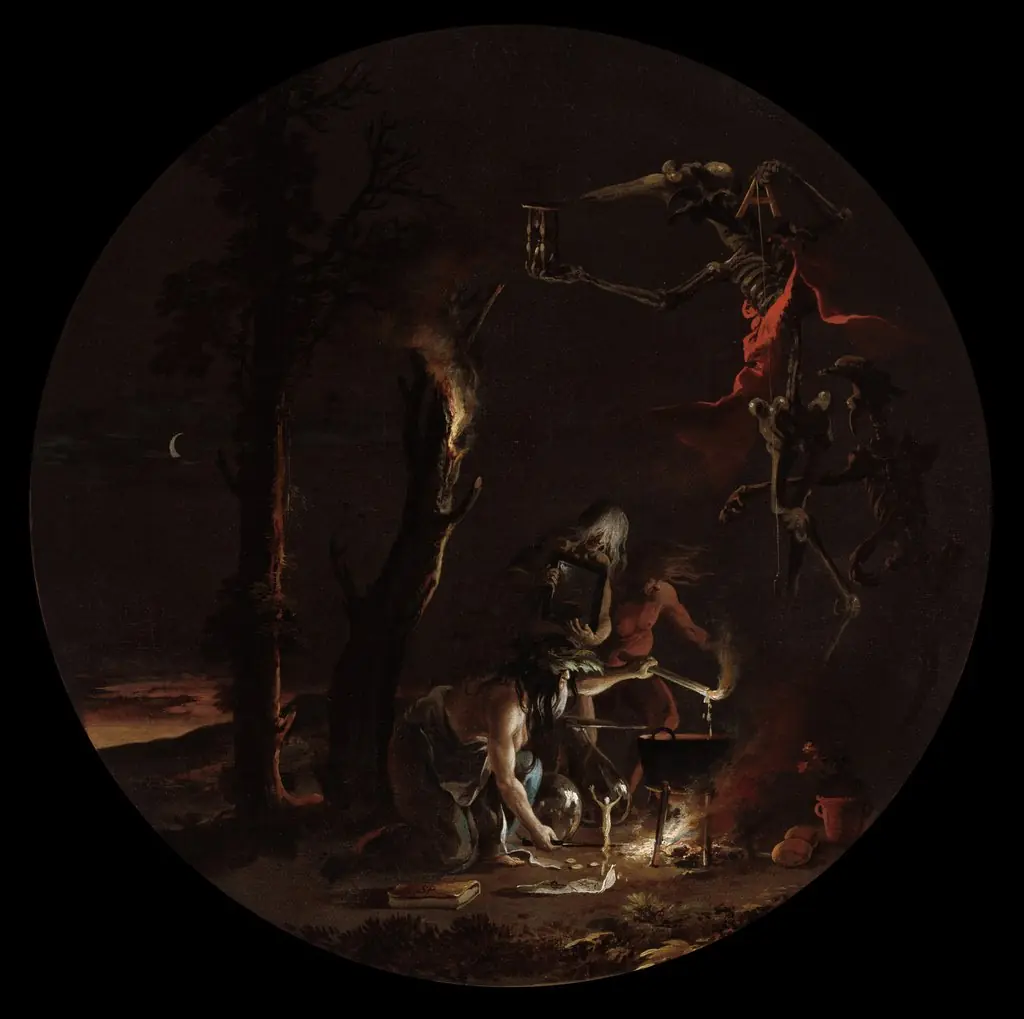
Scenes of Witchcraft: Evening
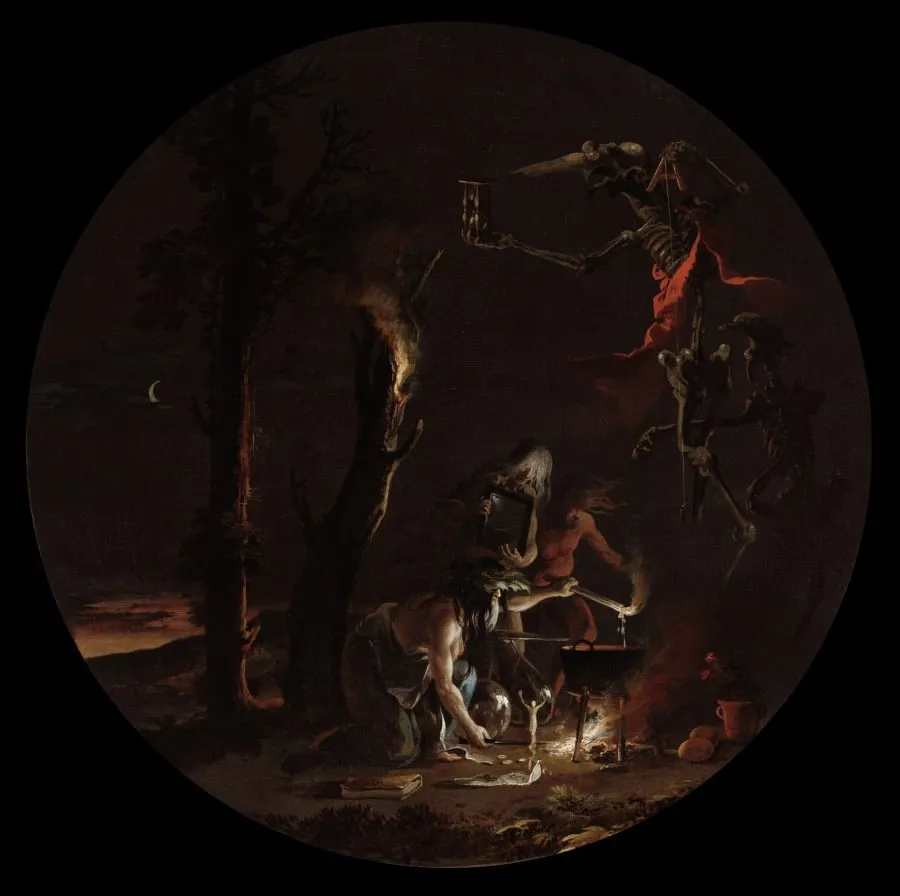
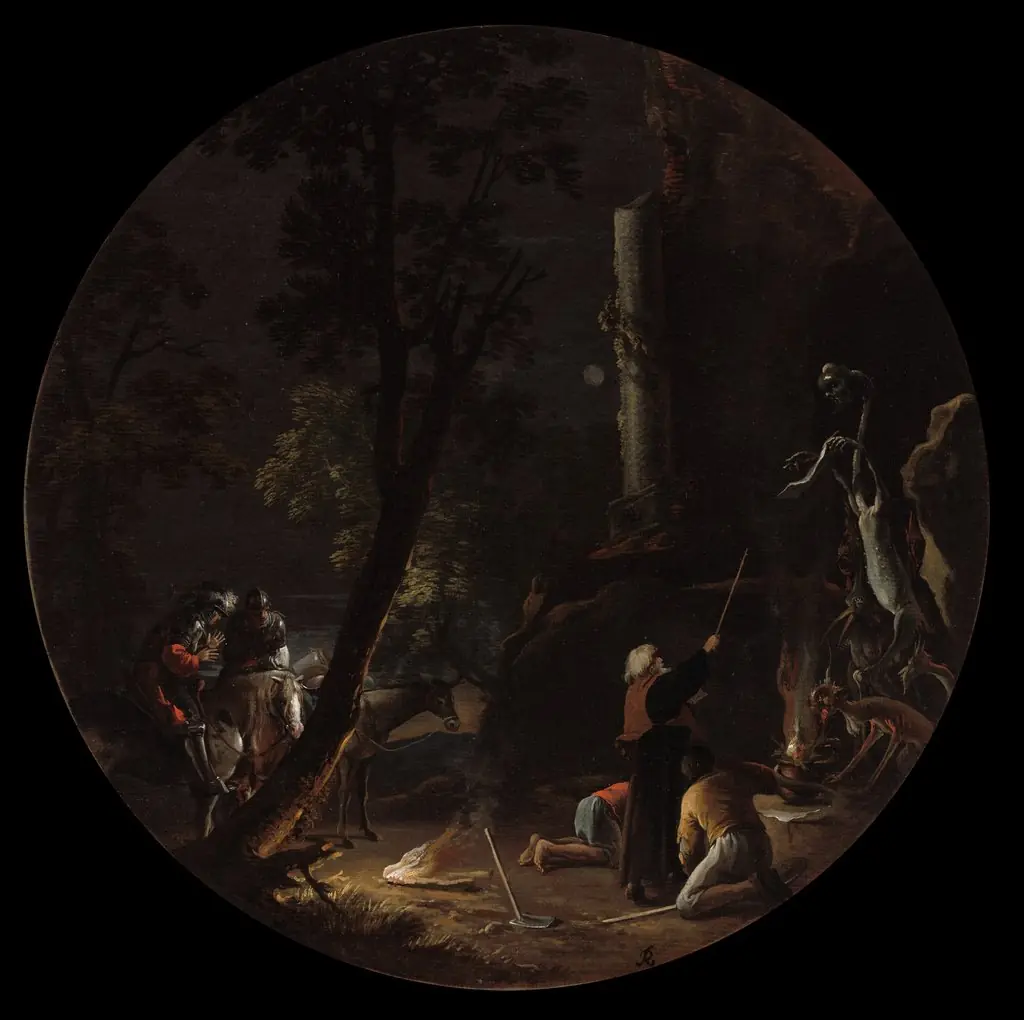
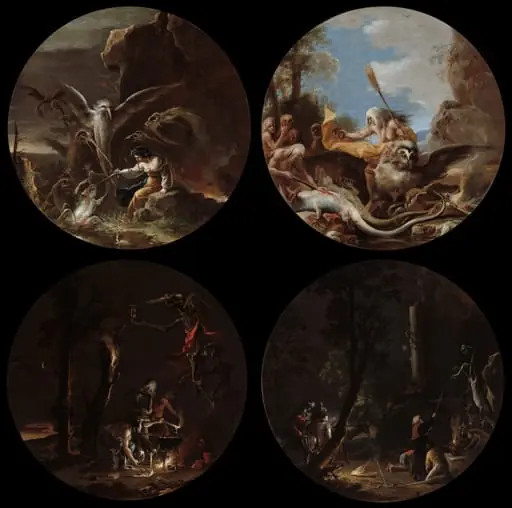
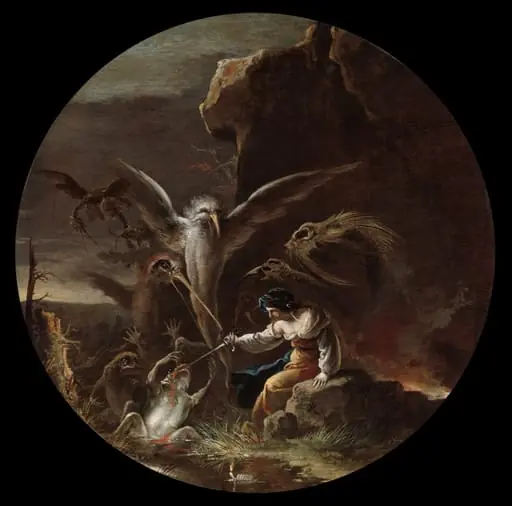
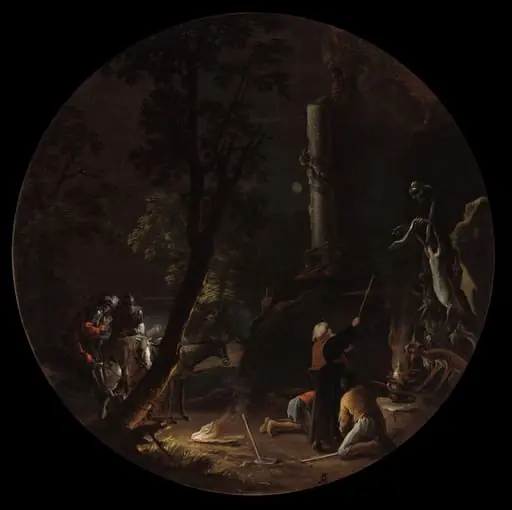
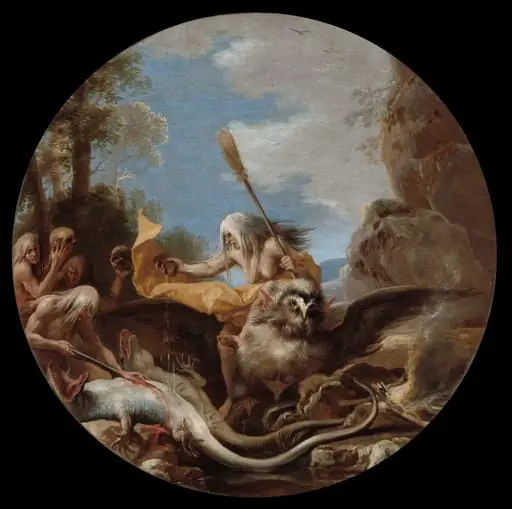
Scenes of Witchcraft: Evening is an unspecified painting by the Baroque artist Salvator Rosa. It dates from 1647 and is held in the collection of the Cleveland Museum of Art. The canvas depicts a twilight hillside where a group of women, identified as witches, congregate around a steaming cauldron.
About this work
Overview
The canvas depicts a twilight hillside where a group of women, identified as witches, congregate around a steaming cauldron. Hovering above them is a translucent skeleton clutching an hourglass and a stylized letter A from which a plumb line dangles. The composition balances darkness with illuminated figures, creating a nocturnal tableau that merges ritual with symbolic judgment.
Subject & Meaning
The central figures perform a spell, yet the skeletal overseer introduces themes of temporality and justice: the hourglass signals life's fleeting nature, while the plumb line evokes measurement and moral balance. Together they suggest that the witches are not merely conjuring curses but enacting a night‑time tribunal, dispensing judgment upon the world below.
Technique & Style
Rosa employs pronounced chiaroscuro, contrasting deep shadows with stark highlights to model forms and intensify the eerie atmosphere. The brushwork is meticulous in the figures’ garments and the cauldron’s vapour, while the spectral skeleton is rendered with a softer, almost ethereal touch, reinforcing its otherworldly presence within the composition.
History & Provenance
Created in the early 17th century, the work belongs to a relatively small body of painted witch scenes, a subject more common in contemporary poetry and literature. The painting entered a private collection in the late 1700s before being acquired by a regional museum in the early 20th century, where it remains on display.
Context
Rosa’s interest in witchcraft aligns with a broader literary tradition that traced back to Virgil and Horace, whose texts described love magic. Poets of the 1500s and 1600s continued this motif, and Rosa himself authored a poem, "La Strega," enumerating ingredients for a revenge spell, linking his visual and textual explorations of the occult.
Artist & collection
Artist
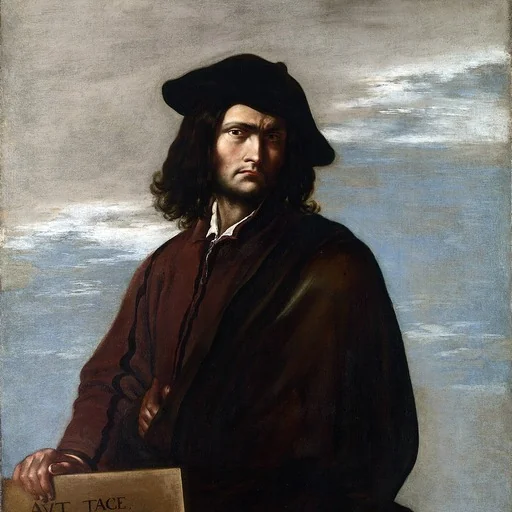
Salvator Rosa (1615 – 15 March 1673) is best known today as an Italian Baroque painter, whose romanticised landscapes and history paintings, often set in dark and untamed nature, exerted considerable influence from the 17th century into…