Artwork
Harriet White
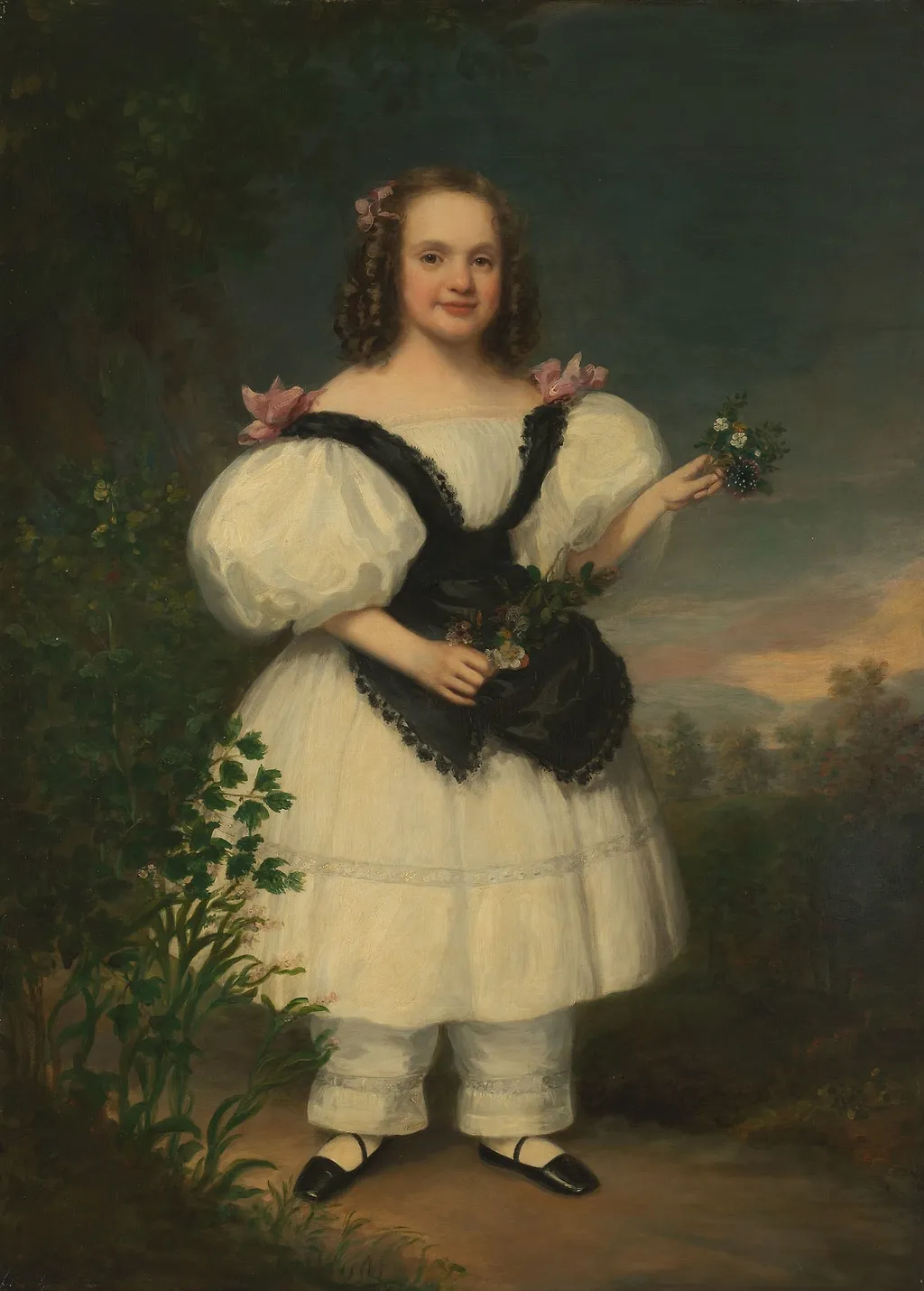
Harriet White is an oil painting by the Realist artist Samuel Lovett Waldo. It dates from 1837 and is held in the collection of the Art Institute of Chicago.
About this work
Overview
Painted in 1837 by Samuel Lovett Waldo, this oil portrait captures a young girl named Harriet White in a naturalistic outdoor setting. The work resides in the collection of the Art Institute of Chicago and exemplifies early 19th-century American portraiture, blending intimate subject matter with careful attention to light and environment.
Subject & Meaning
Harriet White is depicted as a child in a moment of quiet contemplation, dressed in a white gown with puffy sleeves and a black waist sash.
Harriet White is depicted as a child in a moment of quiet contemplation, dressed in a white gown with puffy sleeves and a black waist sash. Her curled brown hair is decorated with pink blossoms, and she holds a small bouquet, suggesting innocence and connection to nature. The composition avoids theatricality, favoring a gentle, unposed presence that reflects domestic ideals of childhood in the period.
Technique & Style
Waldo employed subtle chiaroscuro to model the girl’s form against the dappled light of the landscape. Soft brushwork defines her dress and hair, while the background is rendered with loose, atmospheric strokes that suggest depth without detail. The color palette—pale whites, muted greens, and soft blues—enhances the painting’s serene mood and reinforces the harmony between subject and setting.
History & Provenance
The painting was completed in 1837 and entered the Art Institute of Chicago’s collection in the 20th century. Its provenance before institutional acquisition is not fully documented, though it likely remained in private hands within the Northeastern United States, consistent with Waldo’s clientele and regional activity during the 1830s.
Context
Created during a period when American artists increasingly turned to domestic and natural themes, the portrait reflects a shift away from formal studio portraiture toward more intimate, landscape-integrated depictions of children. Waldo, trained in Europe and active in New York, brought European techniques to American subjects, contributing to a growing tradition of genteel, nature-infused portraiture.
Legacy
Though not widely exhibited outside institutional settings, the painting remains a representative example of mid-19th-century American portraiture. Its quiet composition and attention to natural light distinguish it from more ornate contemporary works, offering insight into evolving aesthetic values and the cultural idealization of childhood in antebellum America.
Own this work as a print
Artist & collection

 Retrato de niña con rosas
 Minnie Willard
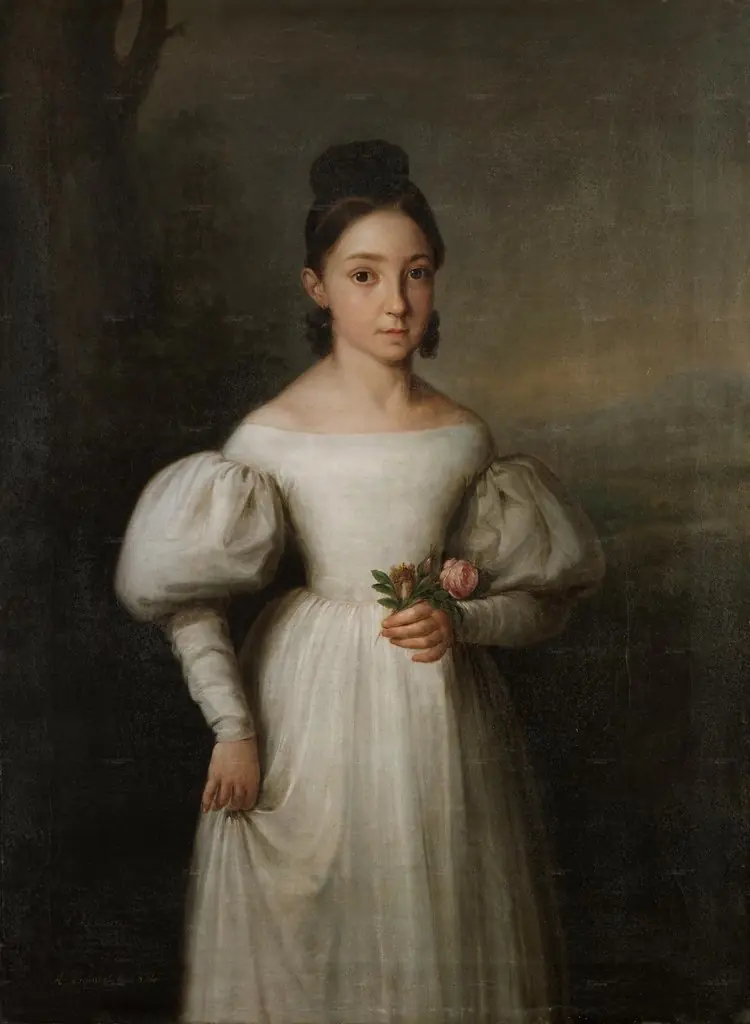 La infanta María Luisa Teresa de Borbón luego duquesa de Sessa
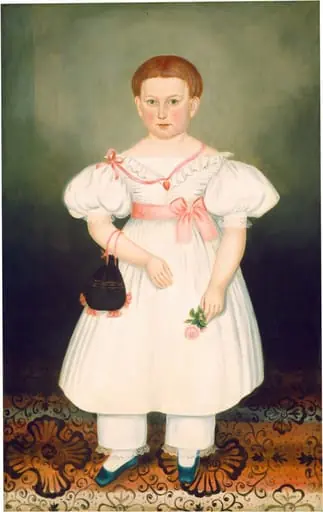 Girl with Reticule and Rose
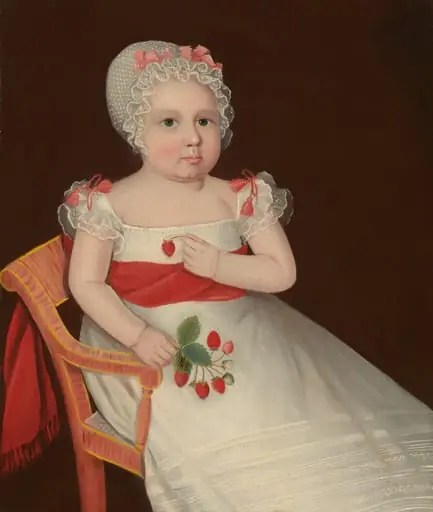 The Strawberry Girl
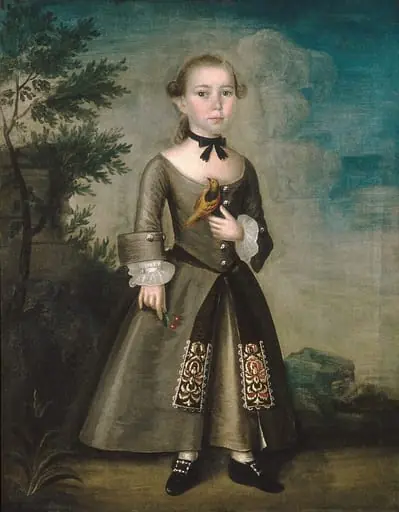 James Badger
 Infantin Maria Theresa von Neapel (1772-1807)
 Portrait of a Lady
 Tadea Arias de Enríquez
 Portrait of a Young Lady
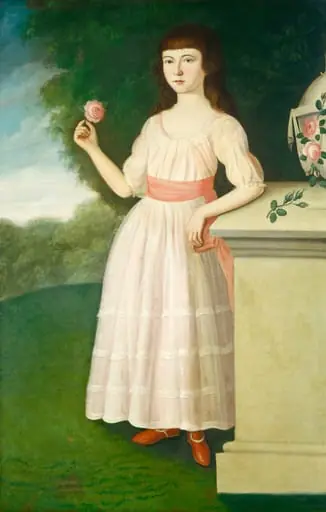 Anna Maria Cumpston
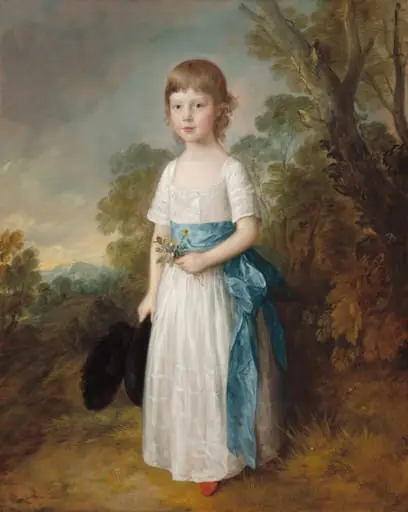 Master John Heathcote