Artwork
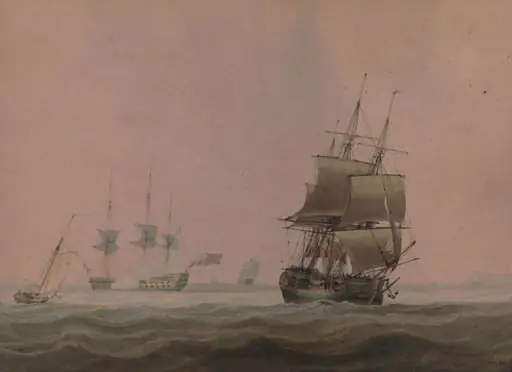
Indiaman lying-to for a pilot
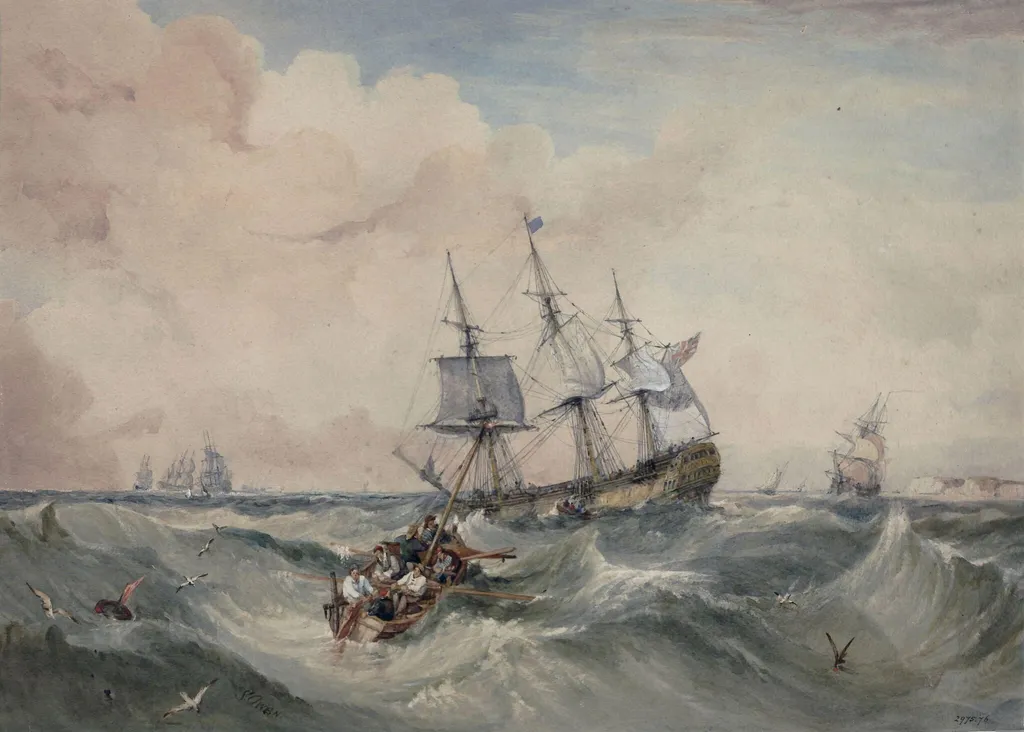
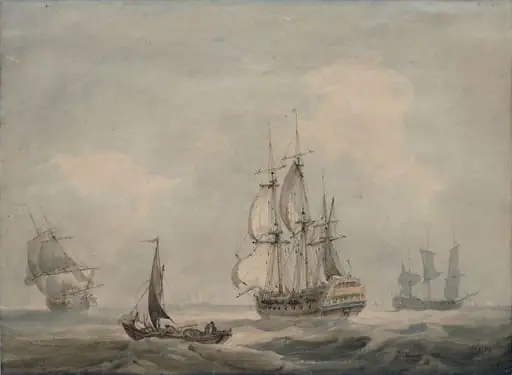
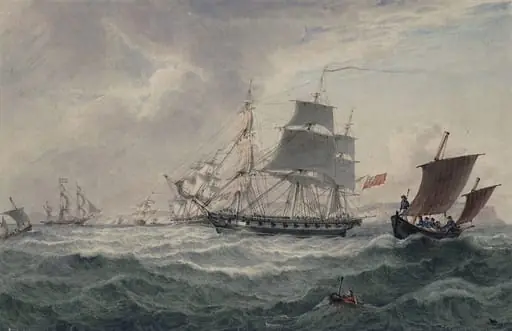
Indiaman lying-to for a pilot is a watercolor work on paper by the British Romanticist artist Samuel Owen. It dates from 1790 and is held in the collection of the Victoria and Albert Museum.
About this work
Overview
The scene conveys the precariousness of maritime operations, where navigation depended on timely assistance from smaller vessels.
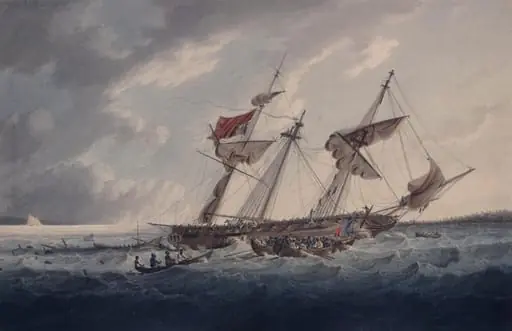
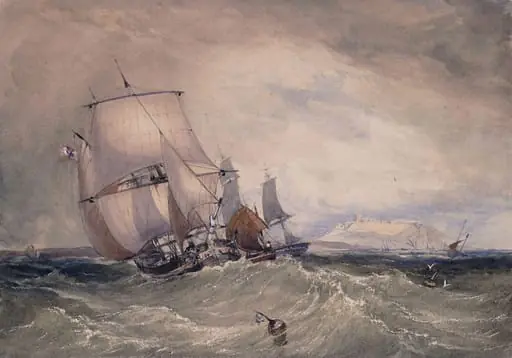
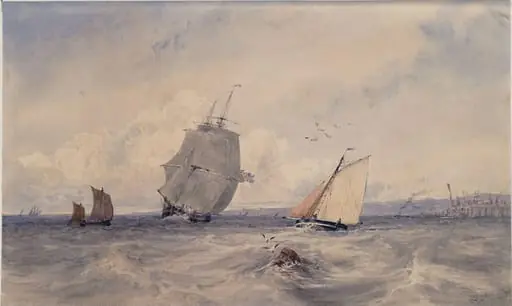
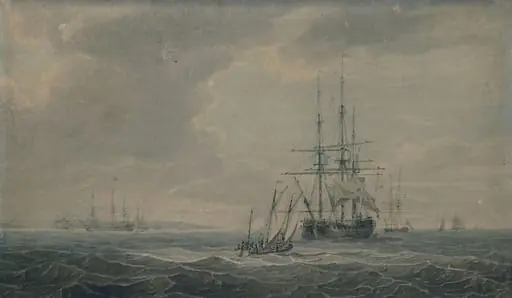
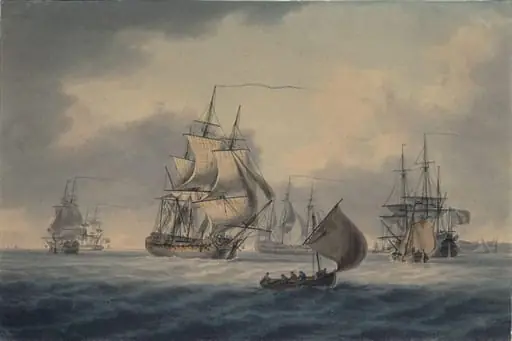
Samuel Owen’s watercolour captures a merchant vessel, known as an Indiaman, at anchor during a turbulent sea condition. A pilot boat, crowded with figures, battles rough waves nearby. The scene conveys the precariousness of maritime operations, where navigation depended on timely assistance from smaller vessels. Owen’s medium and scale suggest a study rather than a grand commission, emphasizing observation over spectacle.
Subject & Meaning
The painting illustrates the critical role of pilot boats in guiding large merchant ships into port. The Indiaman, stationary and imposing, contrasts with the struggling pilot boat, whose occupants risk their lives in hazardous conditions. The presence of seabirds circling overhead underscores the natural forces at play. The image reflects the routine yet perilous labor of maritime trade in the early 19th century.
Technique & Style
Owen employs loose, fluid brushwork to convey the motion of wind and water. Washes of pale watercolour suggest a hazy sky, while darker, layered strokes define the churning sea. The pilot boat’s figures are rendered with minimal detail, prioritizing movement over individuality. The Indiaman’s rigging is suggested rather than meticulously drawn, reinforcing the immediacy of the moment and the artist’s focus on atmospheric effect.
History & Provenance
The work is attributed to Samuel Owen, a British artist known for maritime subjects during the late 18th and early 19th centuries. Likely created between 1800 and 1820, it aligns with his documented interest in naval and commercial shipping. The painting entered the Victoria and Albert Museum’s collection through established channels of British art acquisition, though its exact early ownership remains unrecorded.
Context
During Owen’s time, British Indiamen dominated long-distance trade with Asia, requiring skilled pilots to navigate treacherous coastlines. Pilot boats, often manned by local mariners, operated in all weather, making their work both essential and dangerous. This painting reflects a widely understood maritime practice, documented in journals and port records, rather than a dramatic or exceptional event.
Legacy
Owen’s watercolours contributed to a growing genre of maritime documentation that valued accuracy over romanticism. His works, though not widely exhibited in his lifetime, remain valuable for their depiction of everyday naval operations. Today, they serve as historical records of seafaring life, preserved in institutions like the Victoria and Albert Museum for study and contextual understanding.
Artist & collection