Artwork
On the Thames
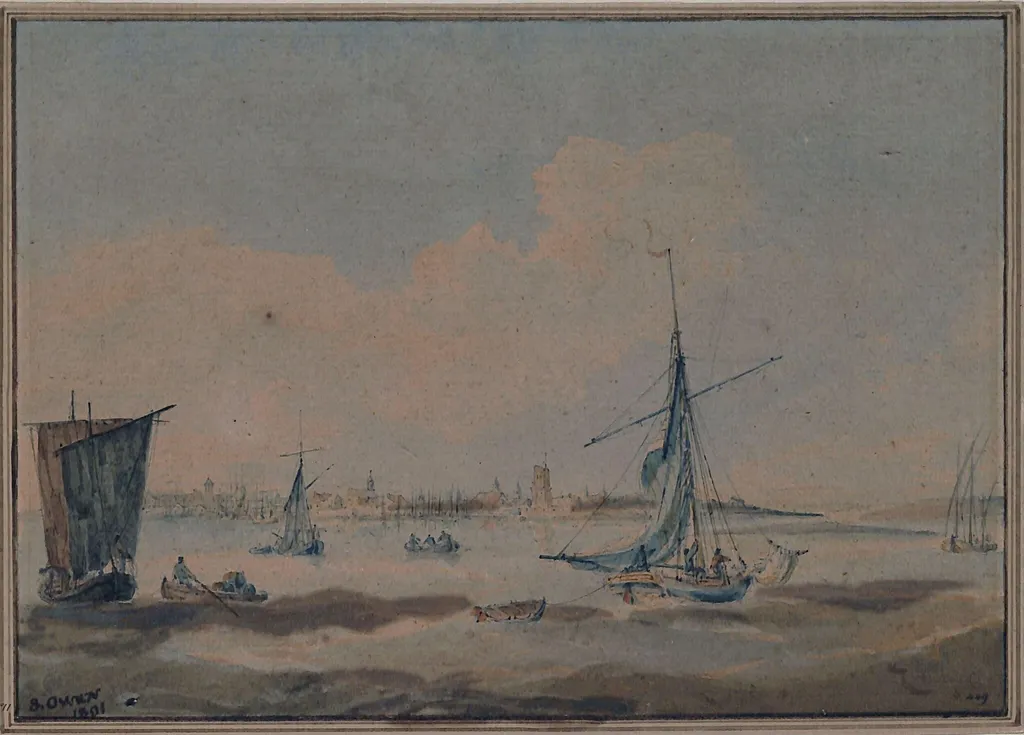
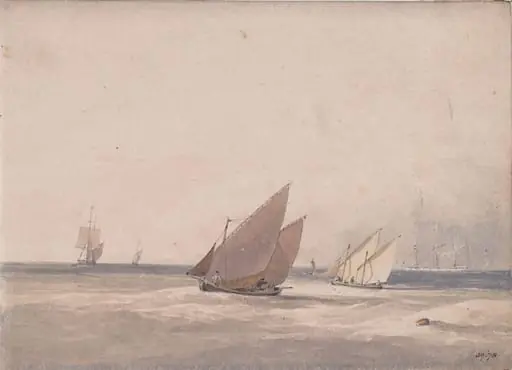
On the Thames is a watercolor work on paper by the British Romanticist artist Samuel Owen. It dates from 1801 and is held in the collection of the Victoria and Albert Museum.
About this work
Overview
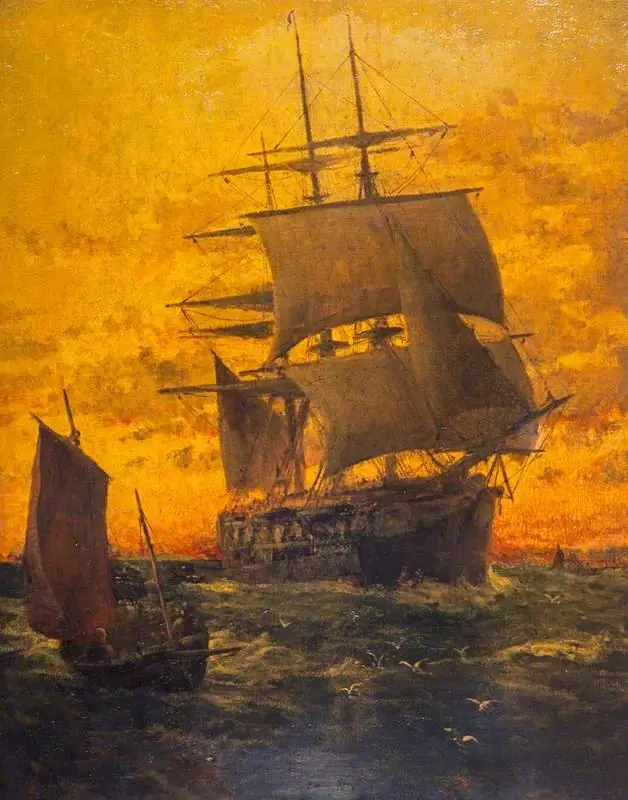
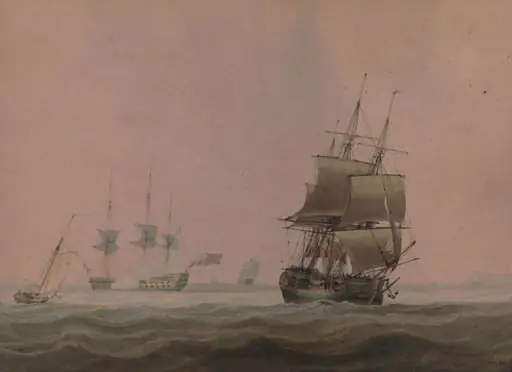
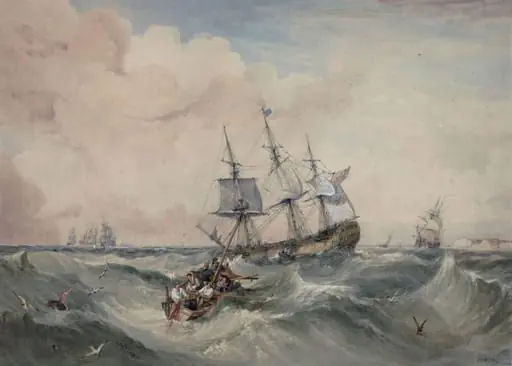
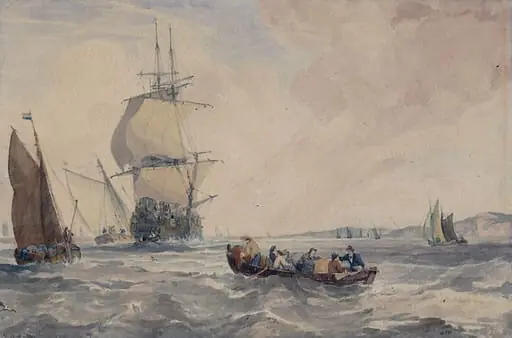
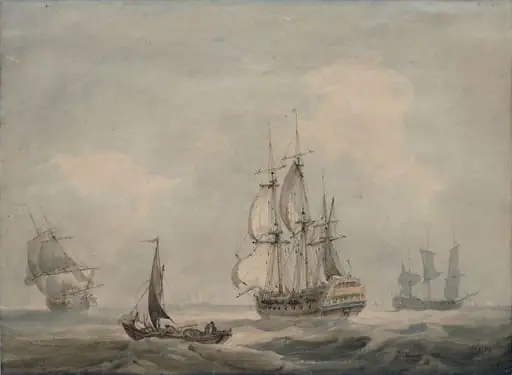
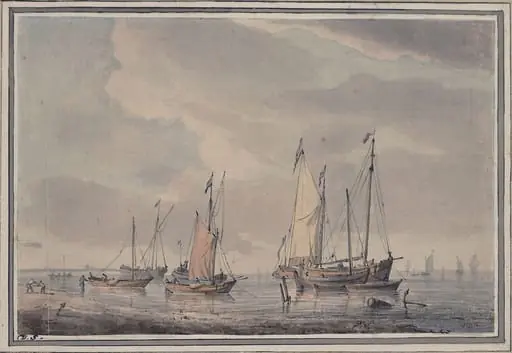
Painted in 1801 by Samuel Owen, On the Thames is a watercolour depicting a tranquil stretch of the river with multiple vessels in motion.
Painted in 1801 by Samuel Owen, On the Thames is a watercolour depicting a tranquil stretch of the river with multiple vessels in motion. Executed in delicate washes, the work captures a quiet moment of daily maritime activity. It is part of the permanent collection at the Victoria and Albert Museum, where it represents early 19th-century British watercolour practice focused on landscape and riverine life.
Subject & Meaning
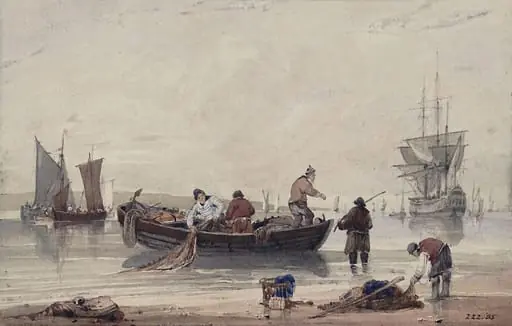
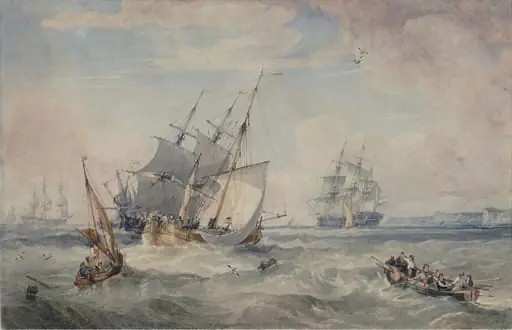
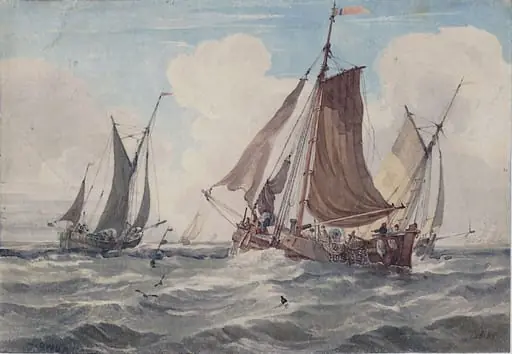
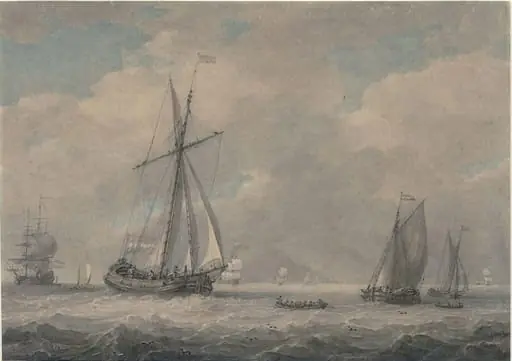
The scene portrays a modest fleet of sailing ships and smaller boats navigating the Thames near its urban edge. No single event is dramatized; instead, the painting conveys the routine rhythm of river commerce and transport. The distant skyline of buildings and spires suggests London’s presence without intrusion, emphasizing the river as a quiet corridor of movement amid the growing city.
Technique & Style
Owen employed light, transparent watercolour washes to suggest atmosphere and movement. The sky is rendered in pale blues with soft, diffused clouds; the water appears muted and still, reflecting subtle tonal shifts. Details of ships are simplified, avoiding sharp outlines, allowing the overall mood of calm to dominate. The technique reflects the influence of topographical watercolour traditions, prioritizing atmosphere over precision.
History & Provenance
The painting entered the Victoria and Albert Museum’s collection as part of its broader acquisition of British watercolours from the late 18th and early 19th centuries. While specific ownership history prior to museum acquisition is not widely documented, its inclusion reflects institutional interest in documenting everyday British scenes through the medium of watercolour during the period.
Context
Created during a time of expanding maritime trade and naval activity, the painting reflects the Thames’ role as a vital artery for commerce and travel. Unlike grand historical or romanticized river views, Owen’s work presents an unembellished view of the river’s daily life, aligning with a growing trend among British artists to observe and record ordinary scenes with quiet attention.
Legacy
On the Thames exemplifies the quiet, observational approach that defined much British watercolour painting in the early 1800s. While not widely exhibited outside institutional settings, it remains a representative example of how artists used the medium to capture the subtle rhythms of the natural and urban environment without theatricality or embellishment.
Own this work as a print
Artist & collection