Artwork
Sandy Lane, Ham
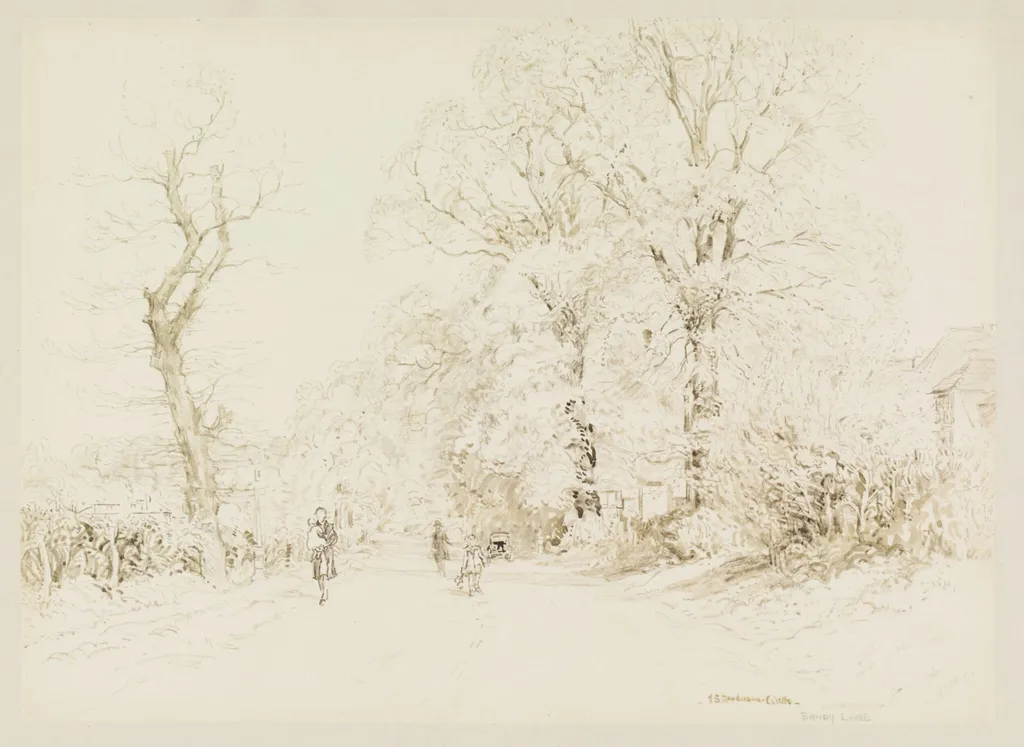
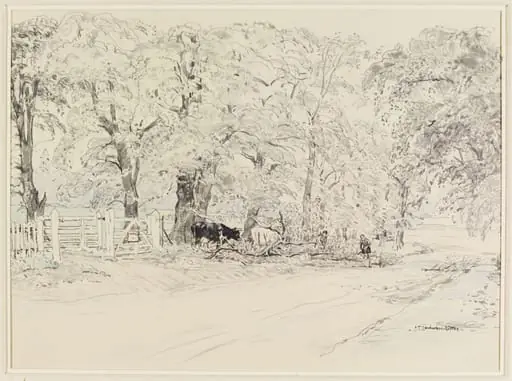
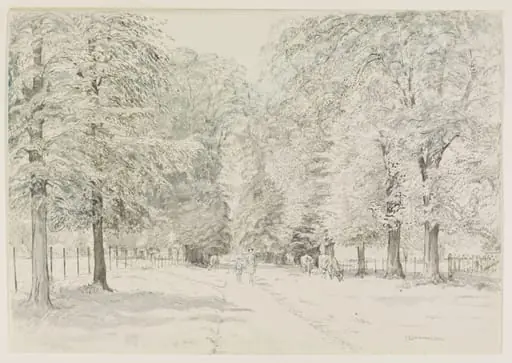
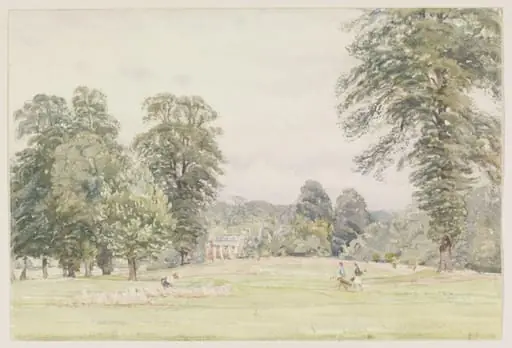
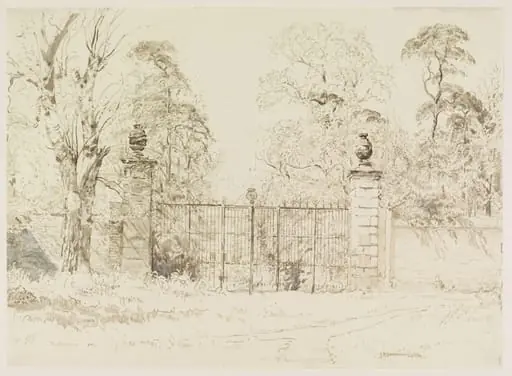
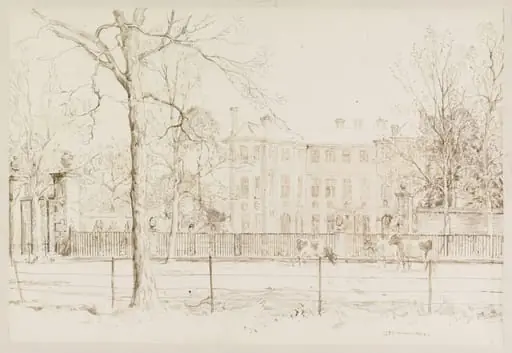
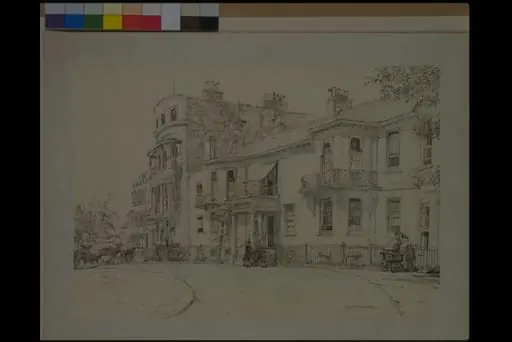
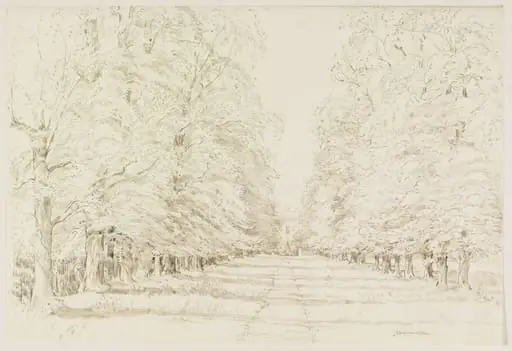
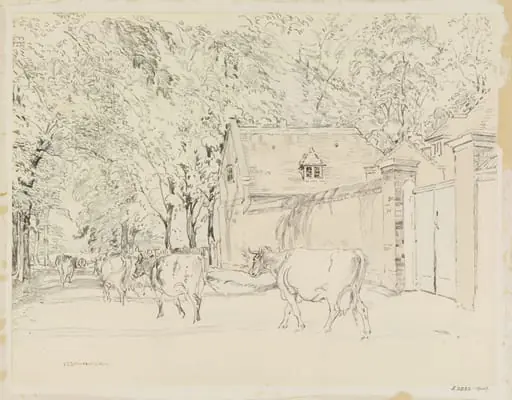
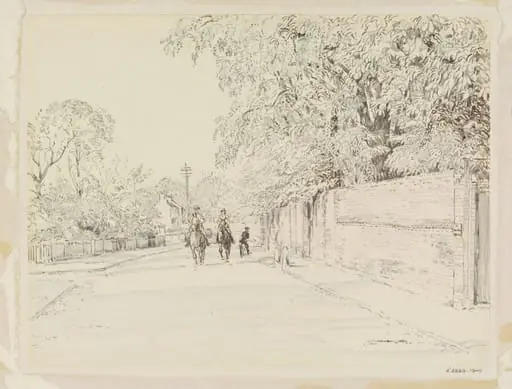
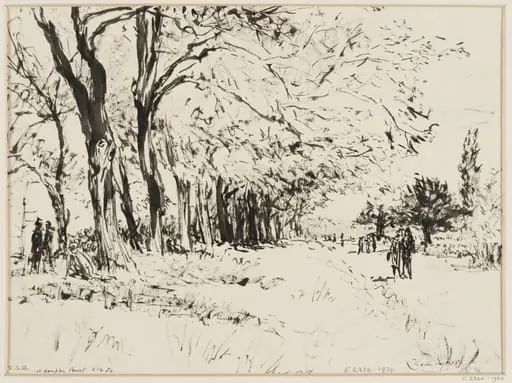
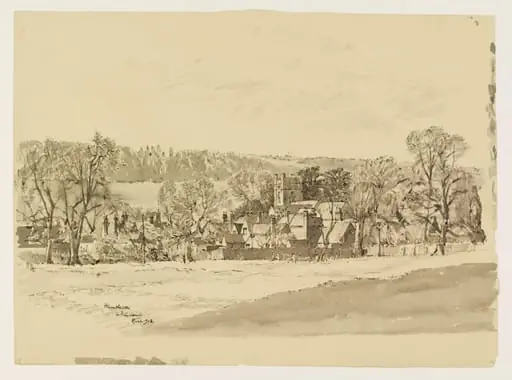
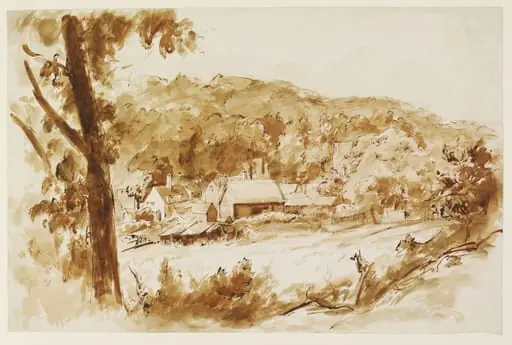
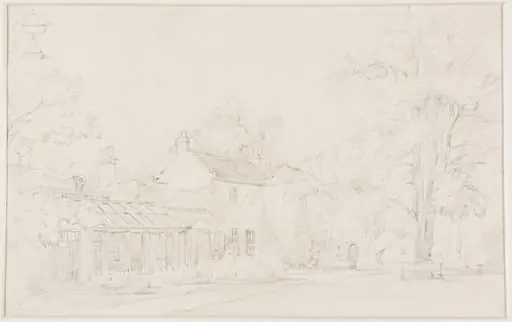
Sandy Lane, Ham is a watercolor work on paper by John Sanderson Sanderson-Wells. It dates from 1940 and is held in the collection of the Victoria and Albert Museum. This watercolour, signed and dated 1940 by John Sanderson-Wells, captures a quiet rural lane in Ham, England.
About this work
Overview
It forms part of the 'Recording Britain' initiative, a wartime effort to visually archive landscapes and everyday scenes deemed vulnerable to change.
This watercolour, signed and dated 1940 by John Sanderson-Wells, captures a quiet rural lane in Ham, England. It forms part of the 'Recording Britain' initiative, a wartime effort to visually archive landscapes and everyday scenes deemed vulnerable to change. The work reflects the project’s broader mission to preserve a sense of place during a time of national uncertainty, with over 1,500 similar pieces created between 1940 and 1943.
Subject & Meaning
The scene shows a tree-lined path with a small group of pedestrians—women and children—walking toward the viewer, while a parked car rests near the edge of the lane. The figures are unobtrusive, suggesting ordinary life continuing amid disruption. The absence of dramatic action and the muted tones convey a quiet resilience, emphasizing the endurance of rural routines despite the pressures of war and modernization.
Technique & Style
Sanderson-Wells employs delicate watercolour washes to render the bare trees and soft architectural forms in the background. The palette is restrained, with pale greys, browns, and muted greens creating a subdued, contemplative mood. Brushwork is precise yet fluid, allowing the paper’s texture to suggest light and atmosphere. The composition draws the eye along the lane, reinforcing a sense of stillness and depth.
History & Provenance
Created under the auspices of the Pilgrim Trust and the Committee for the Employment of Artists in Wartime, this work was produced as part of a government-supported initiative to document Britain’s vanishing countryside. The 'Recording Britain' collection was assembled to safeguard visual records of places at risk from conflict and development. The watercolour entered the collection held by the Victoria and Albert Museum, where it remains today.
Context
During the early years of the Second World War, Britain faced widespread disruption, and many feared the loss of its rural character. The 'Recording Britain' project responded to these anxieties by commissioning artists to record villages, churches, and lanes before they disappeared. Sanderson-Wells’s depiction of Ham reflects this cultural urgency, capturing a moment of calm within a nation preparing for prolonged hardship.
Legacy
The 'Recording Britain' collection endures as a significant archive of mid-20th-century English life. Sanderson-Wells’s watercolour contributes to a broader visual record that continues to inform historical and cultural studies of wartime Britain. Its quiet realism offers insight into how artists responded to national change—not through grand narratives, but through attentive observation of everyday spaces.
Artist & collection
Artist
John Sanderson Sanderson-Wells
John Sanderson-Wells painted quiet watercolor scenes of London’s riverside in the 1940s.