Artwork
The Old Gates, Ham House
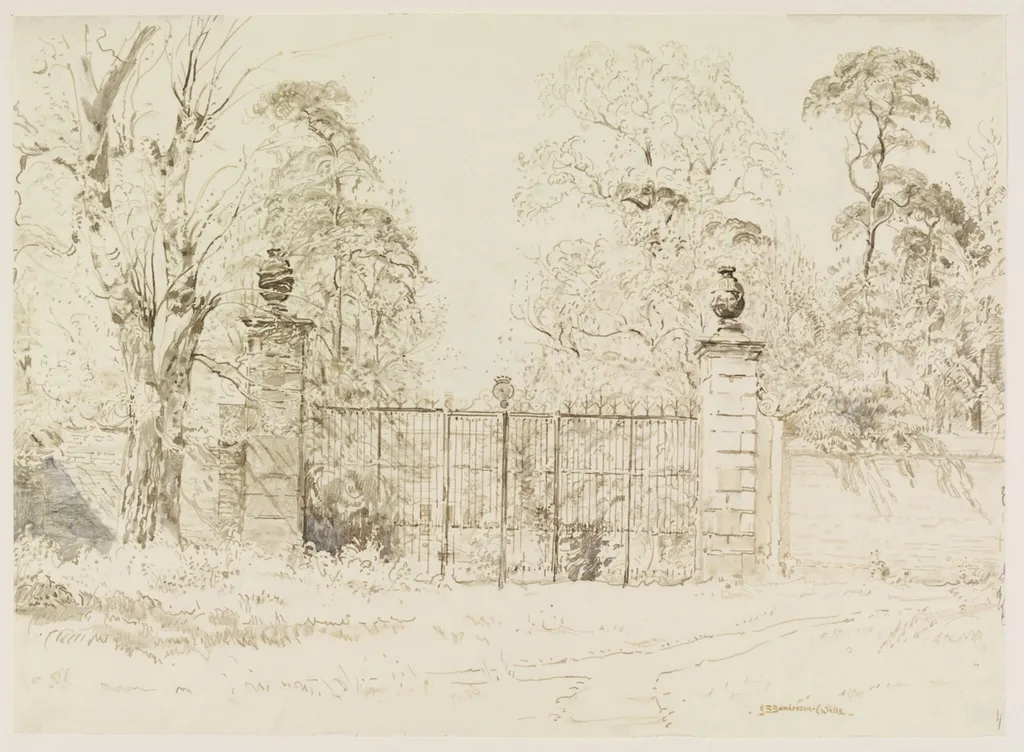
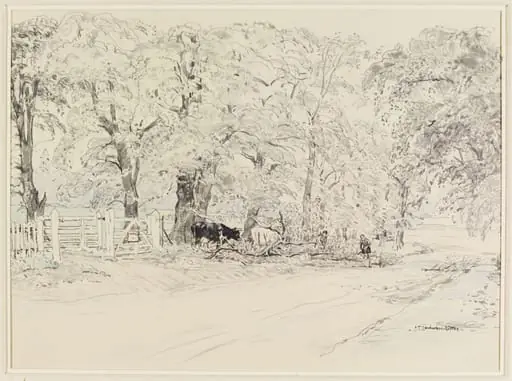
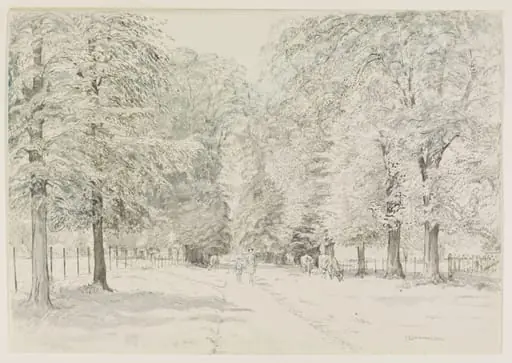
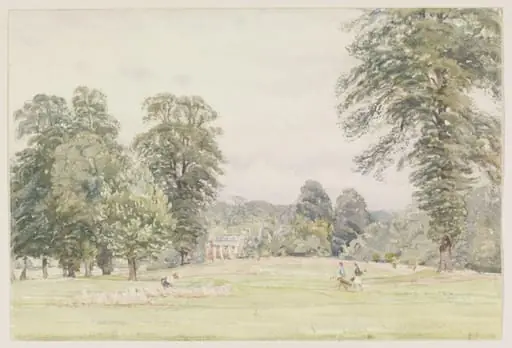
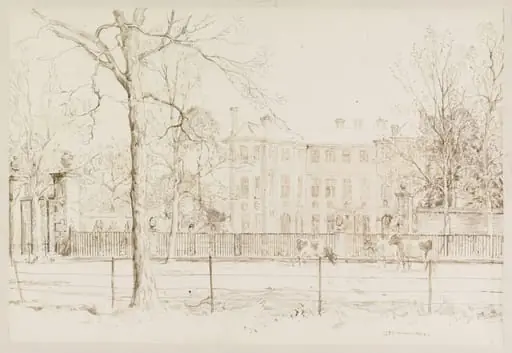
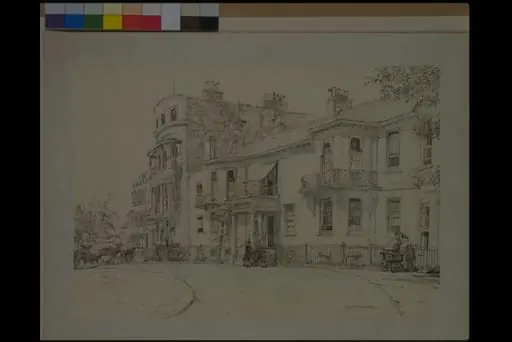
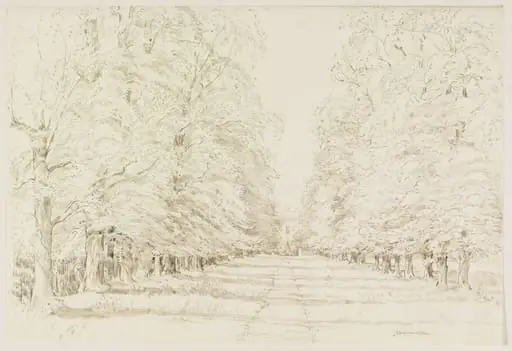
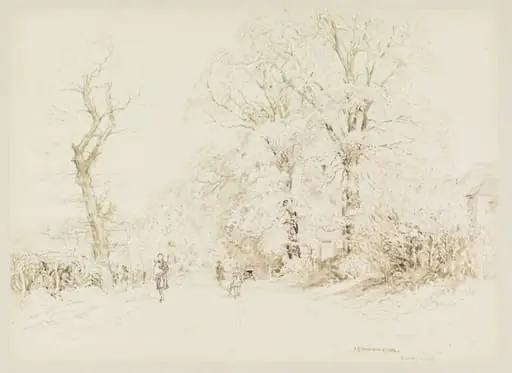
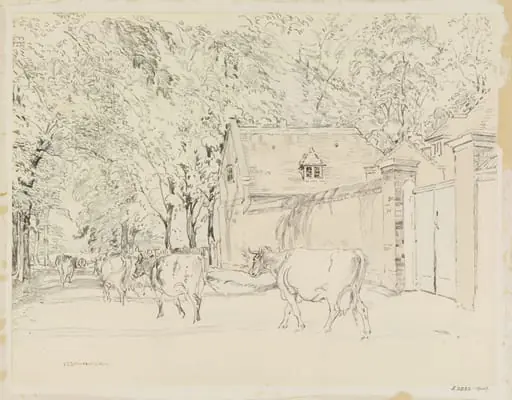
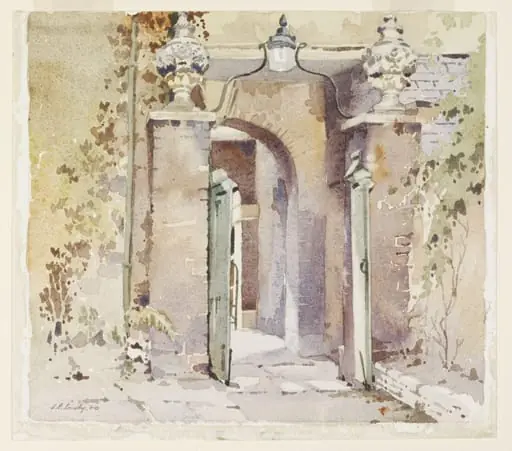
The Old Gates, Ham House is a watercolor work on paper by John Sanderson Sanderson-Wells. It dates from 1940 and is held in the collection of the Victoria and Albert Museum. This watercolour, created in 1940, portrays the entrance gates of Ham House in Surrey.
About this work
Overview
Rendered in delicate washes, the scene captures the rusted metal gates flanked by a weathered stone pillar, with dense foliage encroaching on the structure.
This watercolour, created in 1940, portrays the entrance gates of Ham House in Surrey. Rendered in delicate washes, the scene captures the rusted metal gates flanked by a weathered stone pillar, with dense foliage encroaching on the structure. The house lies just beyond, partially obscured by trees. Signed by the artist John Sanderson-Wells, the work is one of many produced under the 'Recording Britain' initiative, which sought to document the nation’s architectural heritage during wartime.
Subject & Meaning
The gates and surrounding walls represent a quiet threshold between private estate and public landscape. Their decay—rust on iron, cracks in stone, and vegetation reclaiming the structure—suggests the passage of time and the fragility of inherited spaces. The composition avoids grandeur, instead emphasizing quiet neglect, aligning with the project’s goal to record places at risk of disappearance due to war or modernization.
Technique & Style
Executed in watercolour, the piece employs translucent layers to suggest texture and atmosphere. The rusted metal is rendered with muted ochres and browns, while the stone pillar is defined by subtle gradations of grey. Greens of the surrounding shrubbery are applied with loose, fluid strokes, creating a sense of organic growth. The artist’s hand is restrained, favoring observational accuracy over dramatic effect.
History & Provenance
Commissioned in 1940 as part of the 'Recording Britain' project, this work was produced under the auspices of the Pilgrim Trust and the Committee for the Employment of Artists in Wartime. The initiative aimed to preserve visual records of Britain’s vernacular architecture amid wartime threats. The watercolour entered the Victoria and Albert Museum’s collection as part of this broader archival effort, where it remains today.
Context
During the Second World War, fears of cultural loss from bombing and urban development spurred efforts to document historic sites. 'Recording Britain' enlisted artists to capture landscapes, buildings, and rural scenes before they vanished. This work reflects a broader cultural anxiety about impermanence, turning everyday architectural details into quiet monuments to a vanishing past.
Legacy
The 'Recording Britain' collection, including this watercolour, endures as a significant archive of mid-20th-century British topography. John Sanderson-Wells’s contribution, though not widely known outside the project, exemplifies the quiet, documentary approach that defined the initiative. The work continues to inform historical and architectural studies, offering a tangible record of a specific moment in Britain’s material heritage.
Artist & collection
Artist
John Sanderson Sanderson-Wells
John Sanderson-Wells painted quiet watercolor scenes of London’s riverside in the 1940s.