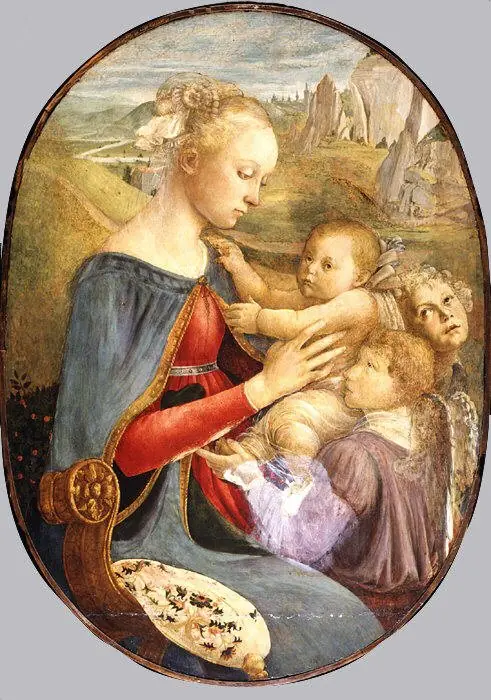
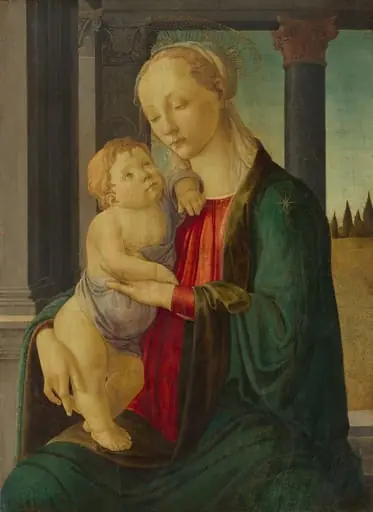
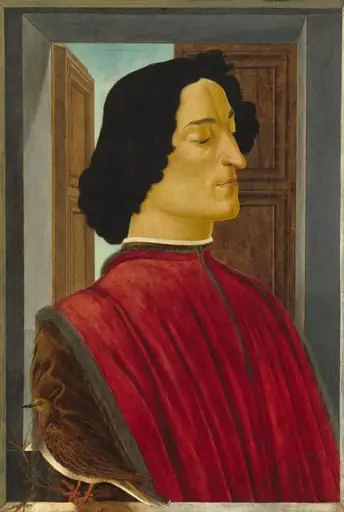
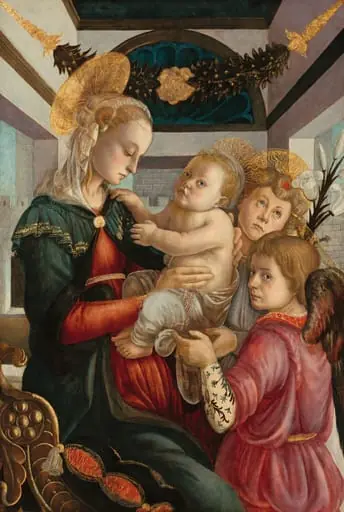
Artwork
Sant'Ambrogio Altarpiece
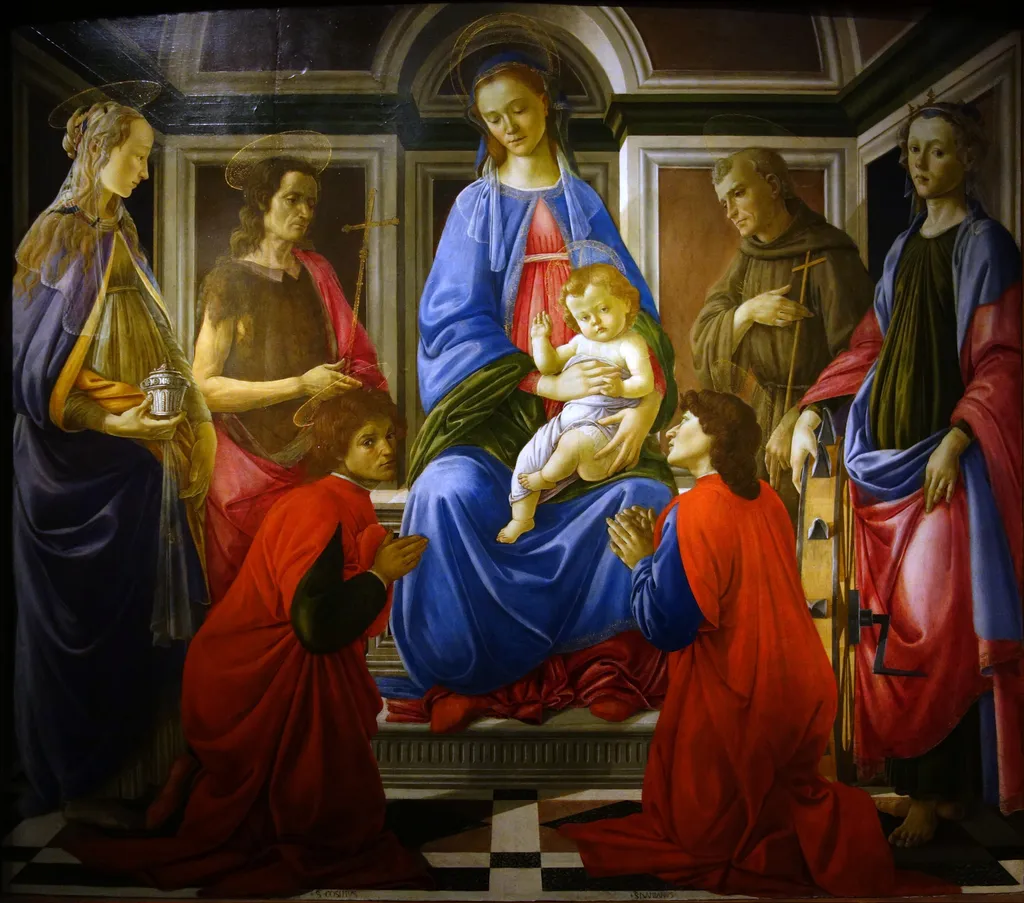
Sant'Ambrogio Altarpiece is a tempera painting by the Early Renaissance artist Sandro Botticelli. It dates from 1470 and is held in the collection of the Uffizi Gallery.
About this work
Overview
This small tempera painting, known as the Sant'Ambrogio Altarpiece or The Madonna and Child with Six Saints, was completed by Sandro Botticelli around 1470.
This small tempera painting, known as the Sant'Ambrogio Altarpiece or The Madonna and Child with Six Saints, was completed by Sandro Botticelli around 1470. It depicts the Virgin Mary enthroned with the Christ Child, flanked by a group of six saints. This work exemplifies the sacra conversazione genre, where holy figures from different eras are depicted together in a unified sacred space. Today, it is housed in the Galleria degli Uffizi in Florence.
Subject & Meaning
The central focus of the altarpiece is the enthroned Madonna, who cradles the infant Jesus. Surrounding them are six saints, including Mary Magdalene, identifiable by her ointment jar, and John the Baptist, holding a staff. Kneeling in the foreground are Saints Cosmas and Damian, who served as patron saints for the powerful Medici family. It is widely believed that these two figures are portraits of prominent Medici members, possibly Lorenzo the Magnificent and his brother Giuliano, underscoring the family's patronage.
Technique & Style
Botticelli executed this altarpiece using tempera, a common painting medium during the early Renaissance before the widespread adoption of oil paints. The composition arranges the saints in a serene, ordered row behind the central figures of the Virgin and Child. This careful arrangement, characteristic of a sacra conversazione, allows for a clear presentation of each figure and their attributes within the unified sacred space, reflecting the artistic conventions of the period.
Context
Completed around 1470, the Sant'Ambrogio Altarpiece reflects the artistic and political landscape of Renaissance Florence. While its precise original commission is not detailed, its association with the Medici family through the likely portraits of Cosmas and Damian suggests a significant patron. The work's current home in the Uffizi Gallery places it among a collection of pivotal Florentine art, illustrating Botticelli's early contributions to the city's rich artistic heritage.
Artist & collection

Artist
Sandro Botticelli was a Florentine painter who loved the drama of stories—myths, saints, and ancient tales.