Artwork
The Annunciation
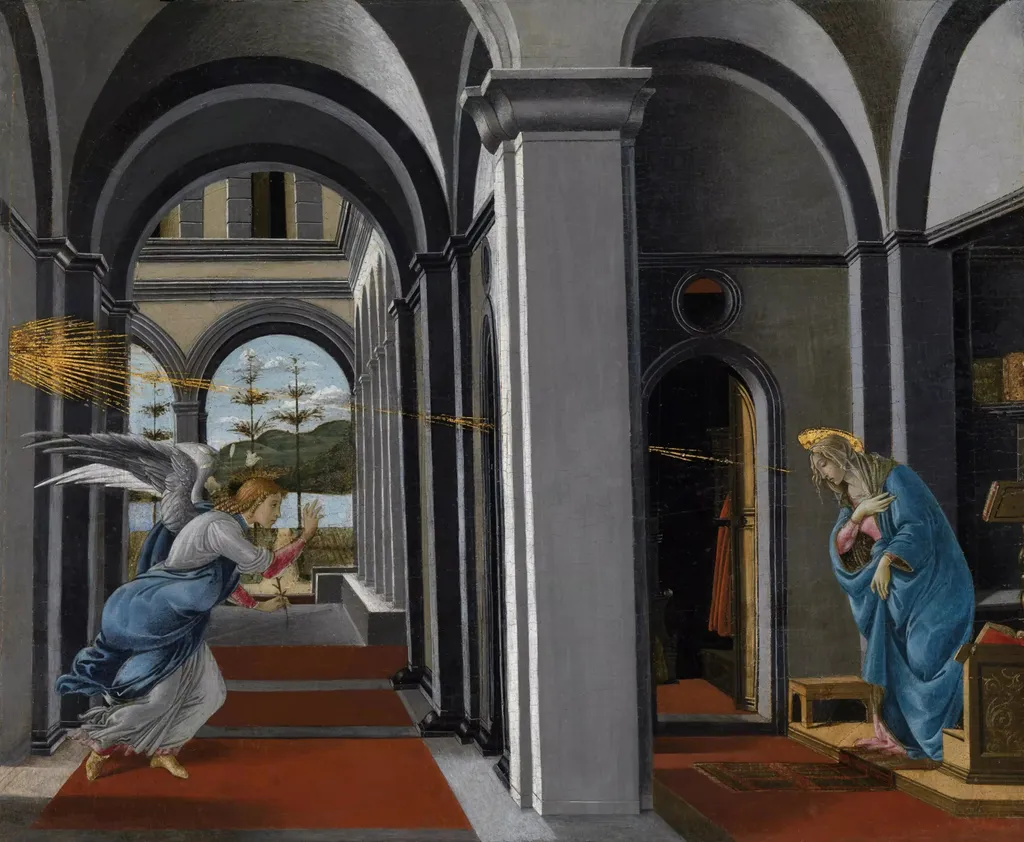
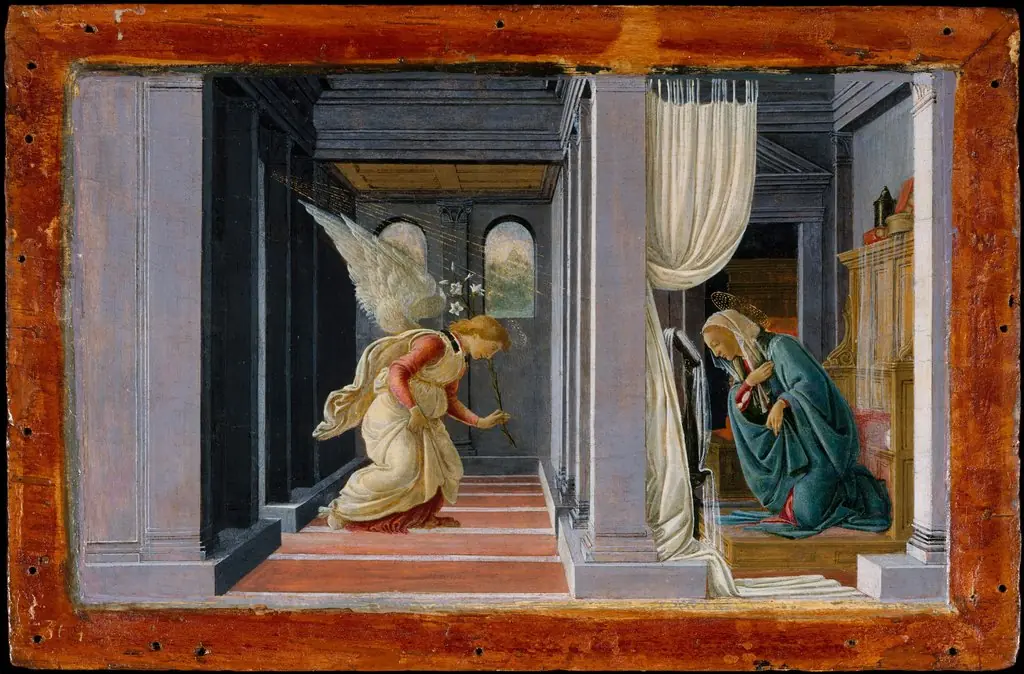
The Annunciation is a tempera painting by the Early Renaissance artist Sandro Botticelli. It dates from 1494 and is held in the collection of the Kelvingrove Art Gallery and Museum. The tempera panel, measuring roughly 49.
About this work
Overview
The tempera panel, measuring roughly 49.5 by 58.5 centimetres, presents the biblical moment when the archangel Gabriel informs the Virgin Mary of her forthcoming role in the birth of Christ. Executed by Sandro Botticelli and his workshop, the work now hangs in Glasgow’s Kelvingrove Art Gallery and Museum.
Subject & Meaning
In the composition, Gabriel, winged and robed in blue, kneels before a seated Mary who holds an open book, her expression one of startled reverence. The scene captures the theological theme of divine intervention and the acceptance of God’s plan, a central narrative in Christian art.
Technique & Style
Rendered in egg tempera on wood, the painting displays a delicate handling of colour and fine linear detail characteristic of Botticelli’s hand. Architectural elements—arched doorways, columns, and a distant landscape—frame the figures, while a subtle golden light bathes the angel, echoing contemporary conventions for indicating sacred illumination.
History & Provenance
An inscription on the panel’s reverse records its former placement in Florence’s Church of Saint Barnaba. The work is generally dated to around 1490, a period when Botticelli produced another Annunciation now held by the Metropolitan Museum of Art in New York.
Context
The composition reflects the influence of contemporary Florentine architect Giuliano da Sangallo, whose structural motifs appear in the painted arches and columns. This integration of architectural realism with devotional narrative aligns the piece with late‑15th‑century Renaissance trends toward harmonious spatial design.
Own this work as a print
Artist & collection

Artist
Sandro Botticelli was a Florentine painter who loved the drama of stories—myths, saints, and ancient tales.