Artwork
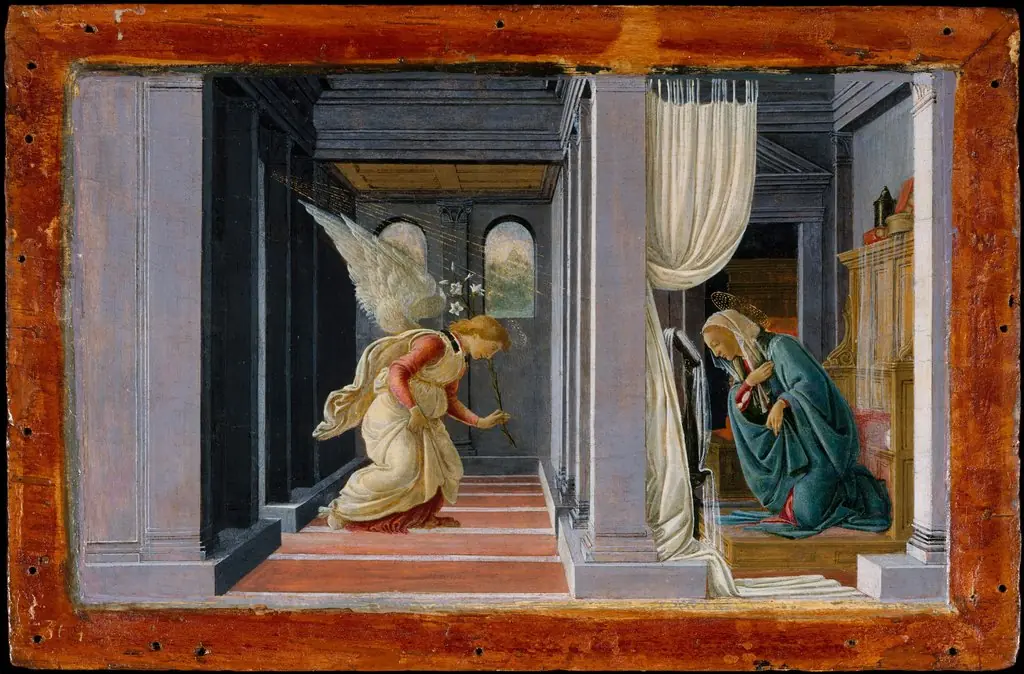
Cestello Annunciation
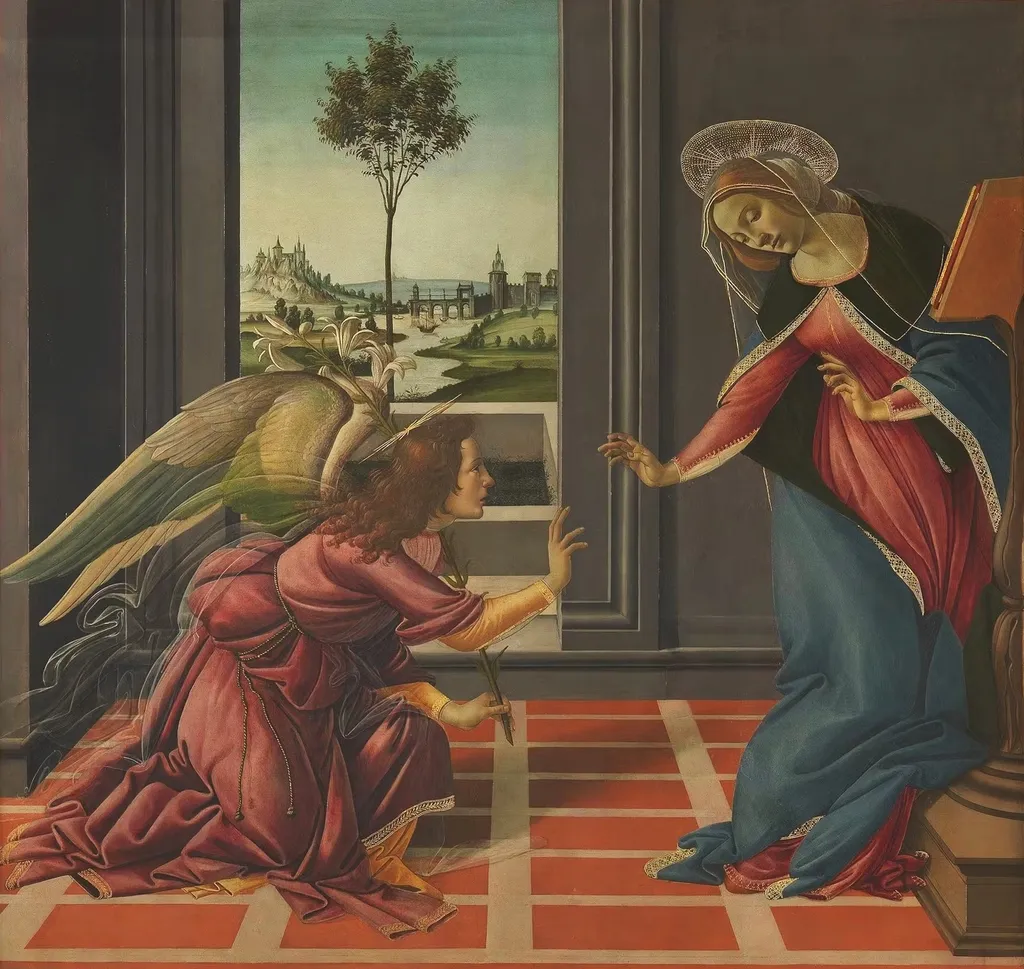
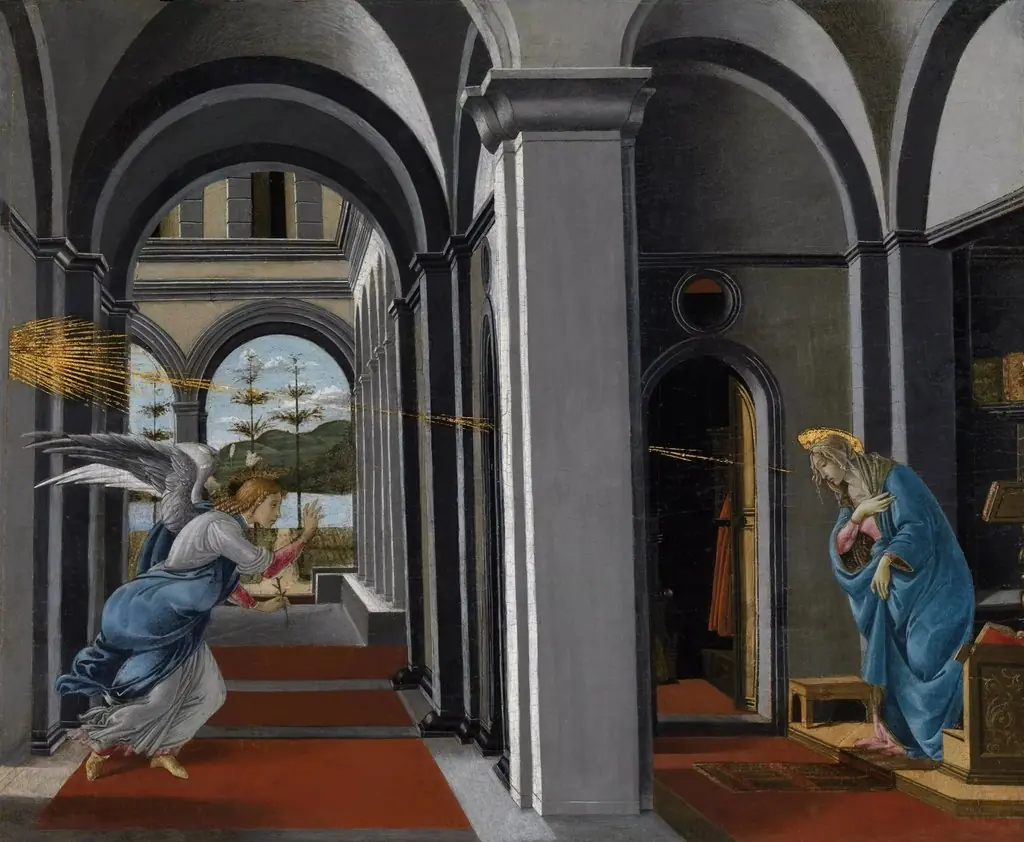
Cestello Annunciation is a tempera painting by the Early Renaissance artist Sandro Botticelli. It dates from 1495 and is held in the collection of the Uffizi Gallery.
About this work
Overview
Created in 1489, the Cestello Annunciation is a tempera panel painting by the Florentine artist Sandro Botticelli. Commissioned by the merchant Benedetto di Ser Giovanni Guardi, the work originally decorated the church of the Cestello monastery, today known as Santa Maria Maddalena de' Pazzi in Florence.
Subject & Meaning
The composition depicts the biblical moment when the Archangel Gabriel announces to the Virgin Mary that she will bear the Son of God. Botticelli presents the scene with a calm, devotional atmosphere, emphasizing the spiritual significance of the encounter rather than dramatic action.
Technique & Style
Executed in egg tempera on wood, the painting showcases Botticelli’s characteristic linear elegance and delicate coloration. The fine brushwork and subtle modeling of figures reflect the artist’s mastery of the medium, allowing for luminous surfaces and precise detailing typical of late‑15th‑century Florentine practice.
History & Provenance
The piece remained in its original monastic setting until the suppression of religious houses in the 19th century, after which it entered the public collection of the Uffizi Gallery. Its provenance traces directly from the Guardi patronage to the museum, preserving its link to the Cestello complex.
Context
The work belongs to Botticelli’s mature period, when he was responding to the humanist currents of the Florentine Renaissance. The commission aligns with the era’s emphasis on private devotional images for monastic churches, integrating theological narrative with the refined aesthetic of the Medici‑influenced artistic circle.
Artist & collection

Artist
Sandro Botticelli was a Florentine painter who loved the drama of stories—myths, saints, and ancient tales.