Artwork
The Discovery of the Body of Holofernes
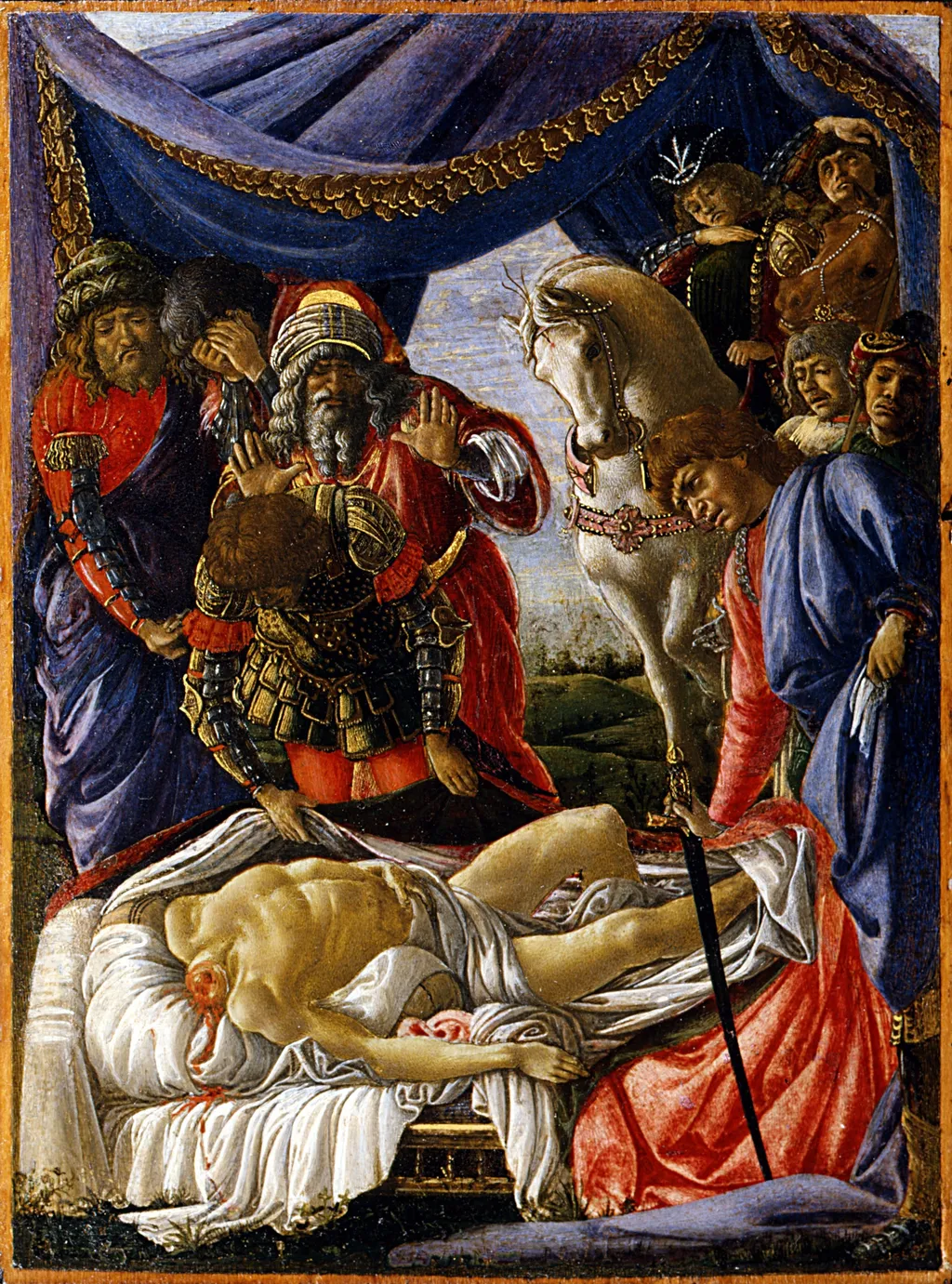
The Discovery of the Body of Holofernes is a tempera painting by the Early Renaissance artist Sandro Botticelli. It dates from 1470 and is held in the collection of the Uffizi Gallery.
About this work
Overview
Sandro Botticelli's early work, The Discovery of the Body of Holofernes, painted around 1472, is a small-format tempera on panel.
Sandro Botticelli's early work, The Discovery of the Body of Holofernes, painted around 1472, is a small-format tempera on panel. Measuring 31 × 24 cm, this painting is part of a pair, with its companion piece, The Return of Judith to Bethulia. Both artworks are housed in the Uffizi Gallery in Florence and illustrate episodes from the biblical Book of Judith, focusing on the dramatic aftermath of a significant event.
Subject & Meaning
This painting depicts a pivotal moment from the deuterocanonical Book of Judith: the discovery of the headless corpse of the Assyrian general Holofernes. After Judith, a Jewish widow, infiltrated his camp and beheaded him, his soldiers are shown reacting with shock and horror upon finding their leader's body. The scene emphasizes the dramatic consequences of Judith's courageous act, which saved her people. Its pendant piece completes the narrative by showing Judith's triumphant return to her city.
Technique & Style
Executed in tempera on panel, the painting showcases the medium's capacity for sharp lines and vibrant, yet often flat, color application. Botticelli employs a dramatic composition, highlighting the exposed body of Holofernes amidst a group of figures in richly colored robes and turbans, whose gestures convey intense surprise and distress. A dark background with gold accents contributes to the scene's urgent and tense atmosphere, lending the overall depiction a somewhat theatrical quality characteristic of early Renaissance art.
History & Provenance
Created by Sandro Botticelli around 1472, The Discovery of the Body of Holofernes represents an early phase in the artist's career. This tempera painting, along with its companion, The Return of Judith to Bethulia, has been preserved and is now part of the esteemed collection at the Uffizi Gallery in Florence. The pairing of these two small panels suggests they were likely intended to be viewed together, narrating a continuous biblical story.
Own this work as a print
Artist & collection

Artist
Sandro Botticelli was a Florentine painter who loved the drama of stories—myths, saints, and ancient tales.