Artwork
Virgin and Child with an Angel
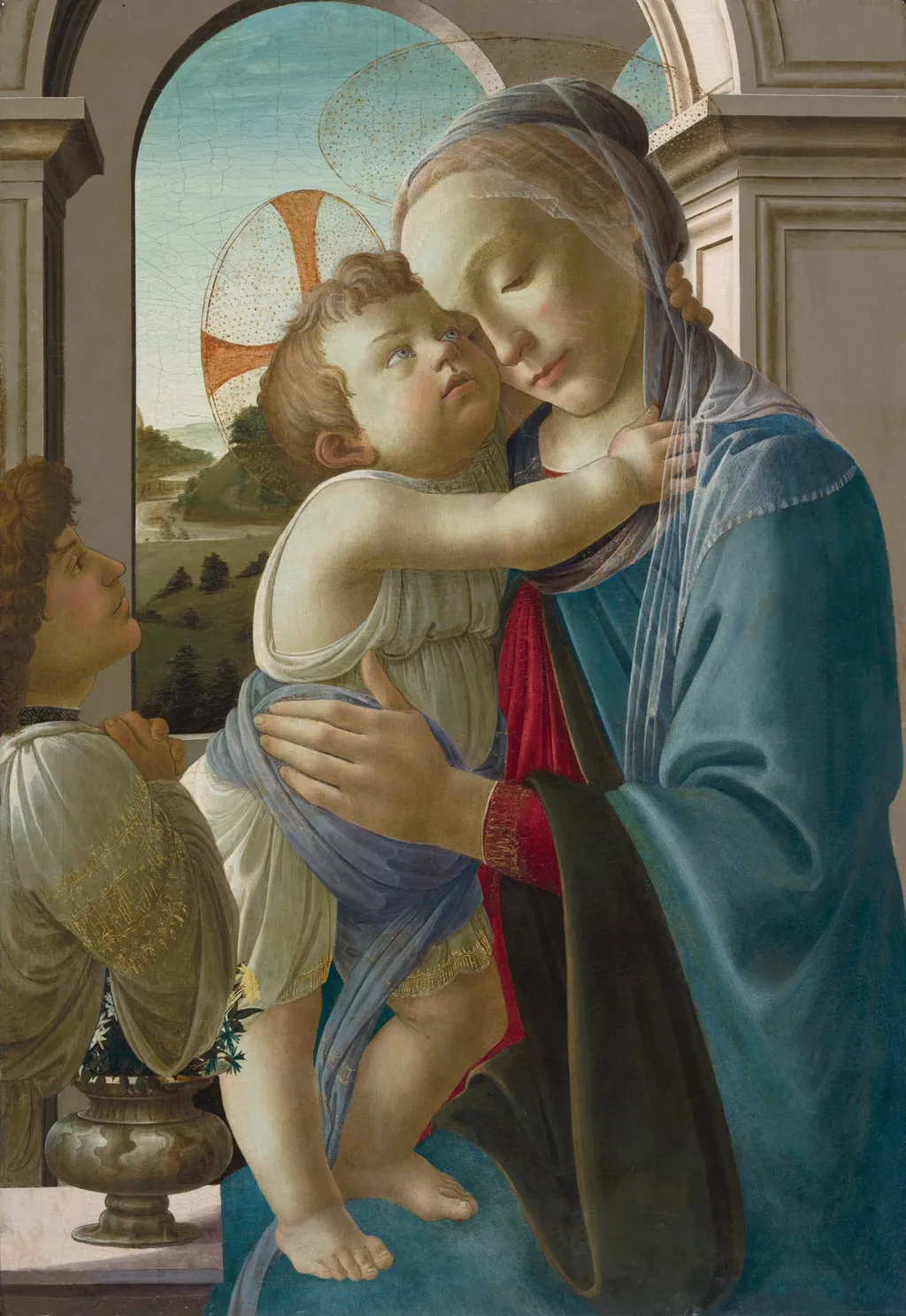
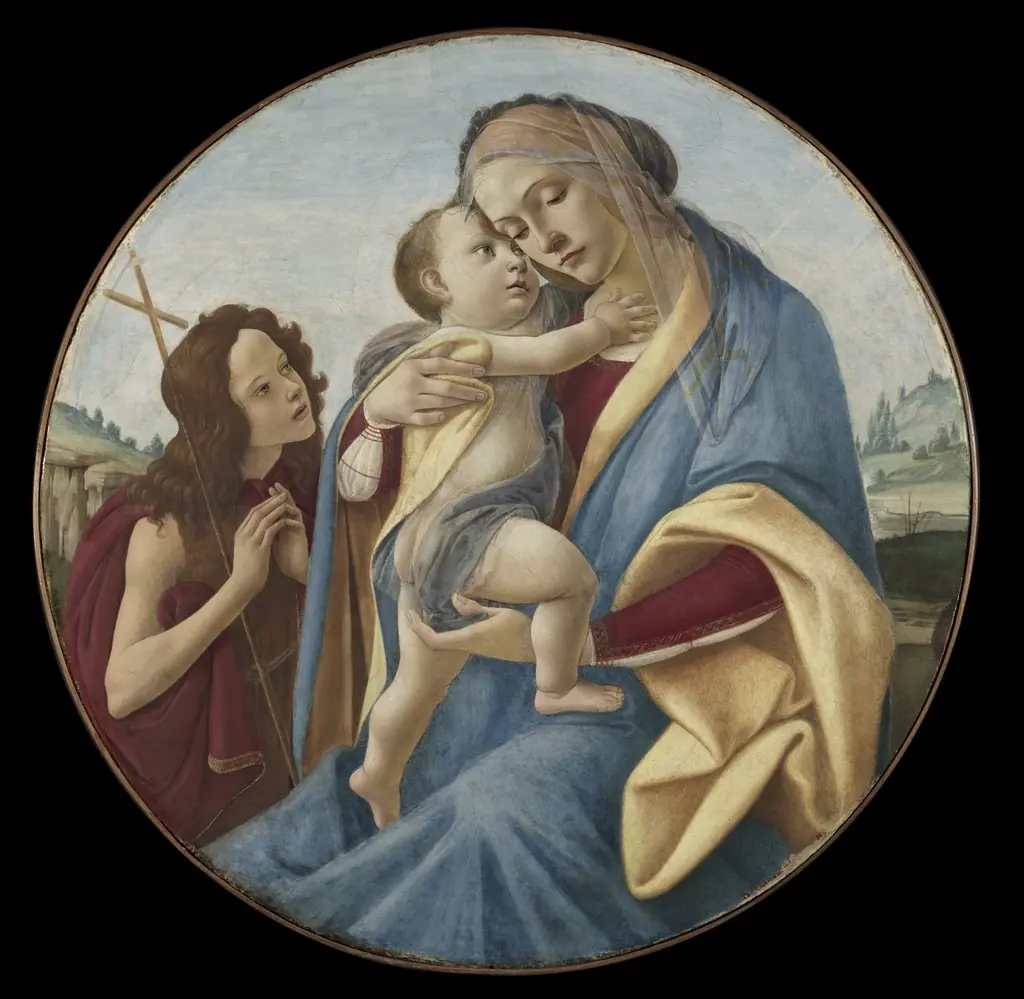
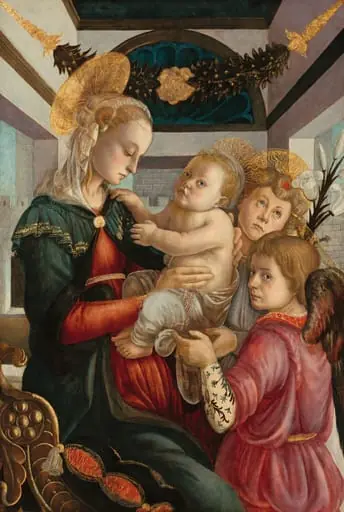
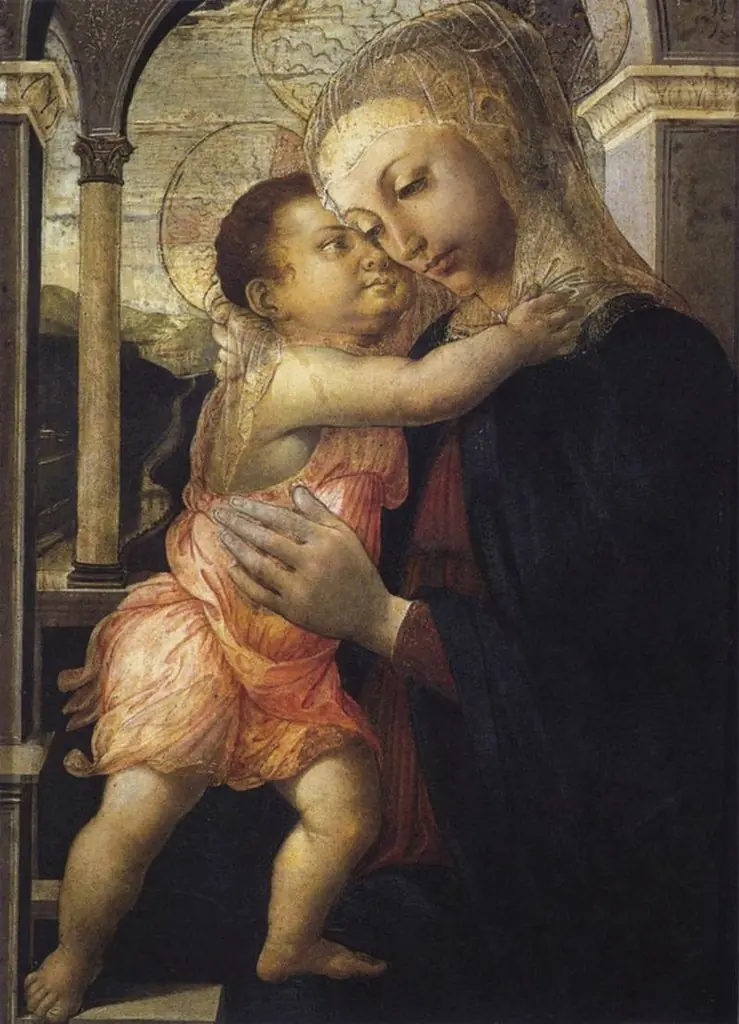
Virgin and Child with an Angel is a tempera painting by the Early Renaissance artist Sandro Botticelli. It dates from 1480 and is held in the collection of the Art Institute of Chicago.
About this work
Overview
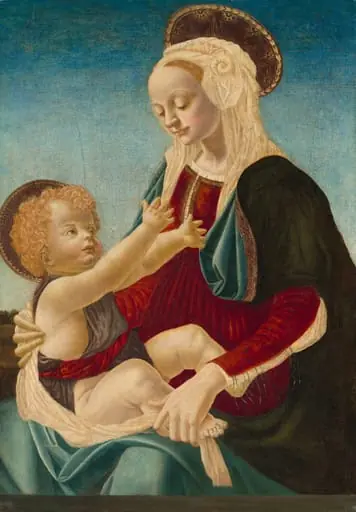
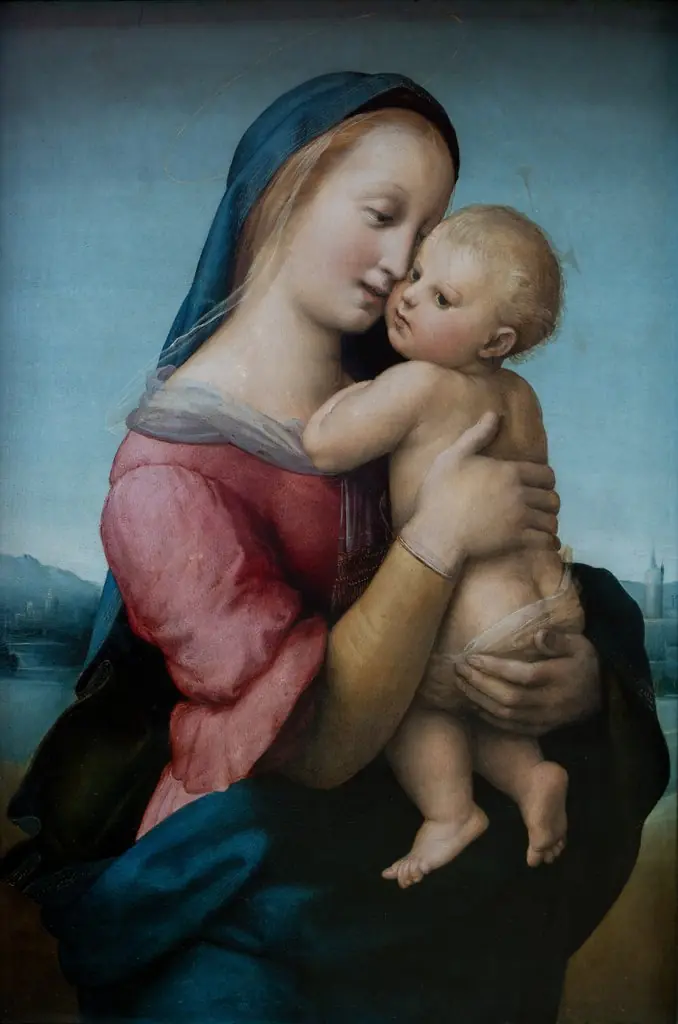
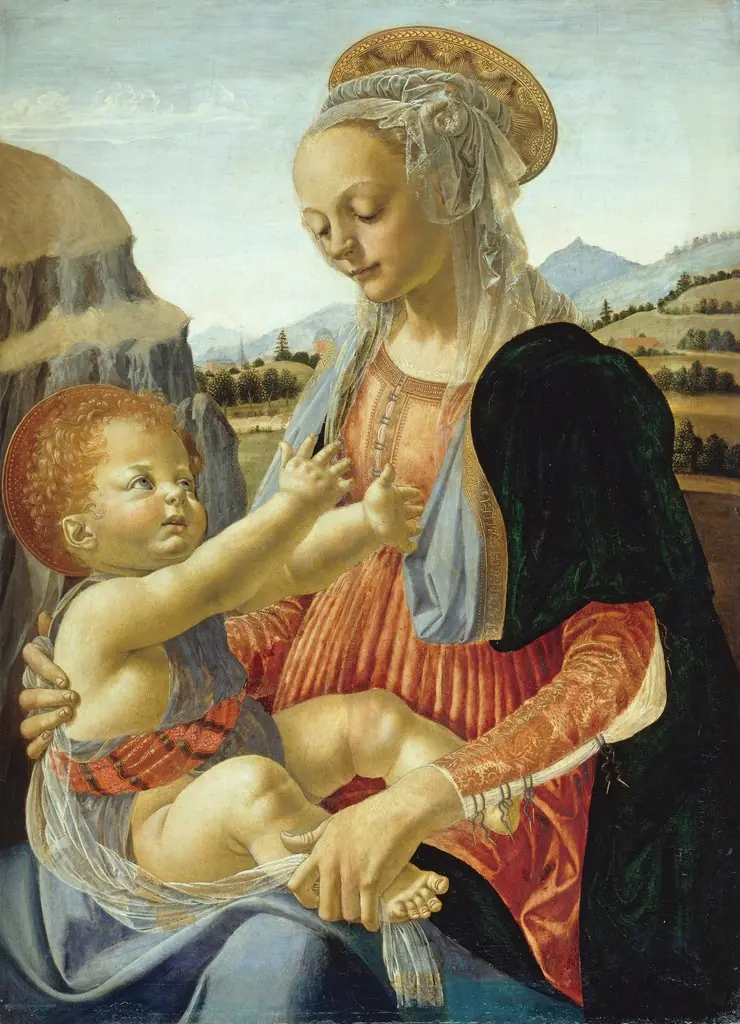
This tempera-on-panel painting by Sandro Botticelli presents the Virgin Mary with the infant Jesus, accompanied by a small angel. Created during the early Renaissance, it reflects a devotional tradition centered on maternal tenderness. The composition is intimate, focusing on physical closeness rather than grandeur, and the figures are rendered with refined detail and quiet emotional resonance.
Subject & Meaning
The Virgin and Child are depicted in a moment of private affection, emphasizing human emotion within a sacred context. Mary’s gentle gaze and tender touch convey maternal devotion, while the child’s grasp of her neck suggests vulnerability and trust. The angel, smaller in scale, serves as a witness, reinforcing the divine significance of the scene without disrupting its domestic intimacy.
Technique & Style
Botticelli employed tempera on wood panel, using fine brushwork to achieve smooth, luminous skin tones and delicate contours. His lines are fluid and precise, defining forms with elegance rather than volume. The figures appear weightless, suspended in a shallow space, with soft modeling and minimal shadowing—hallmarks of his lyrical approach to figuration.
History & Provenance
The painting dates to the 1460s or 1470s, likely commissioned for private devotion. It remained in Italian collections until the 19th century, when it entered a major European museum. Its attribution to Botticelli has been consistently supported by stylistic analysis and documentary evidence, though its exact early ownership remains partially undocumented.
Context
In 15th-century Florence, devotional images of the Virgin and Child were common in both public and private settings. Botticelli’s version stands apart through its emotional subtlety and emphasis on tactile connection, diverging from more formal Byzantine precedents. His style aligned with humanist ideals, blending spiritual reverence with naturalistic feeling.
Legacy
This work exemplifies Botticelli’s influence on Renaissance devotional art, particularly in his ability to merge spiritual symbolism with intimate human expression. Later artists adopted his soft modeling and linear grace, though few replicated his unique balance of idealization and tenderness. The painting remains a key reference for understanding early Florentine sensibility.
Artist & collection

Artist
Sandro Botticelli was a Florentine painter who loved the drama of stories—myths, saints, and ancient tales.