Artwork
Madonna and Child
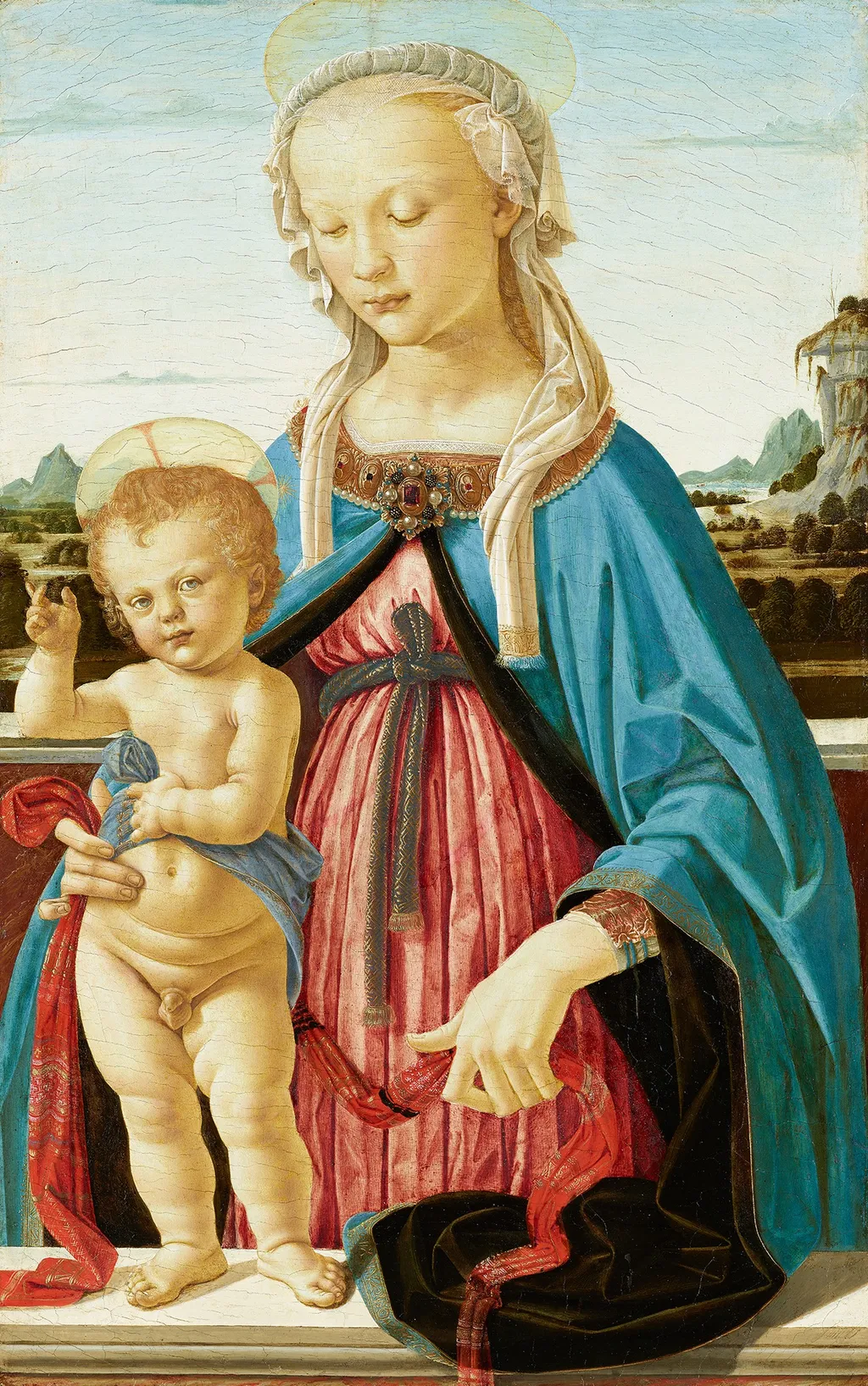
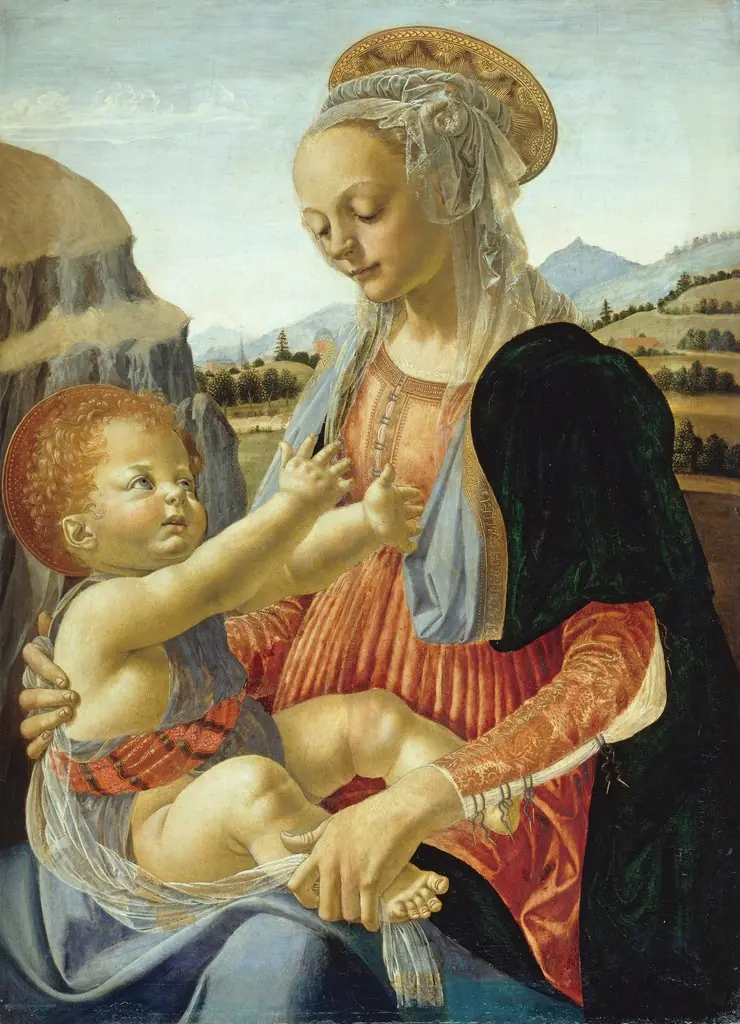
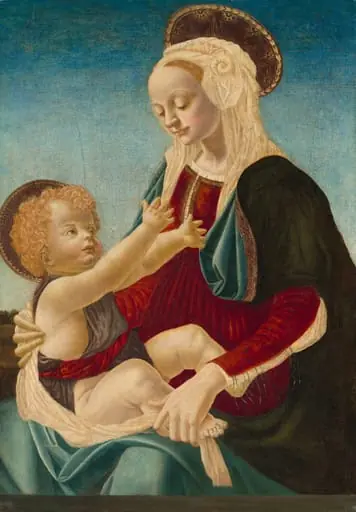
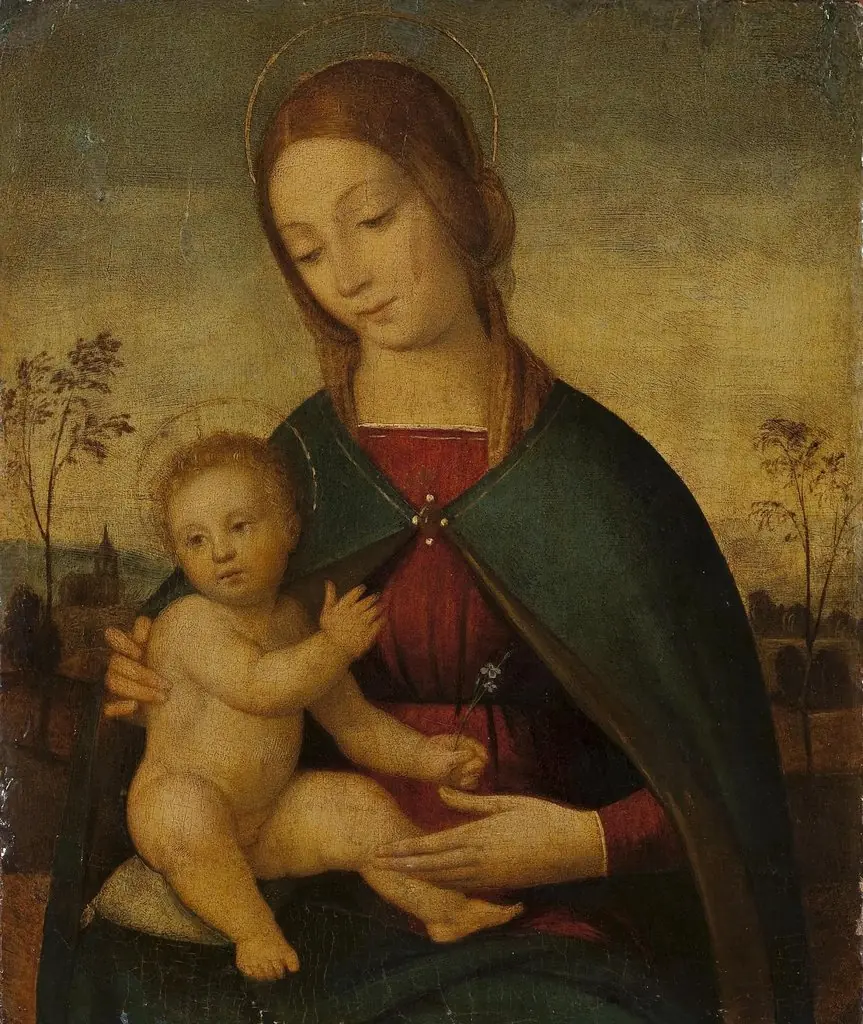
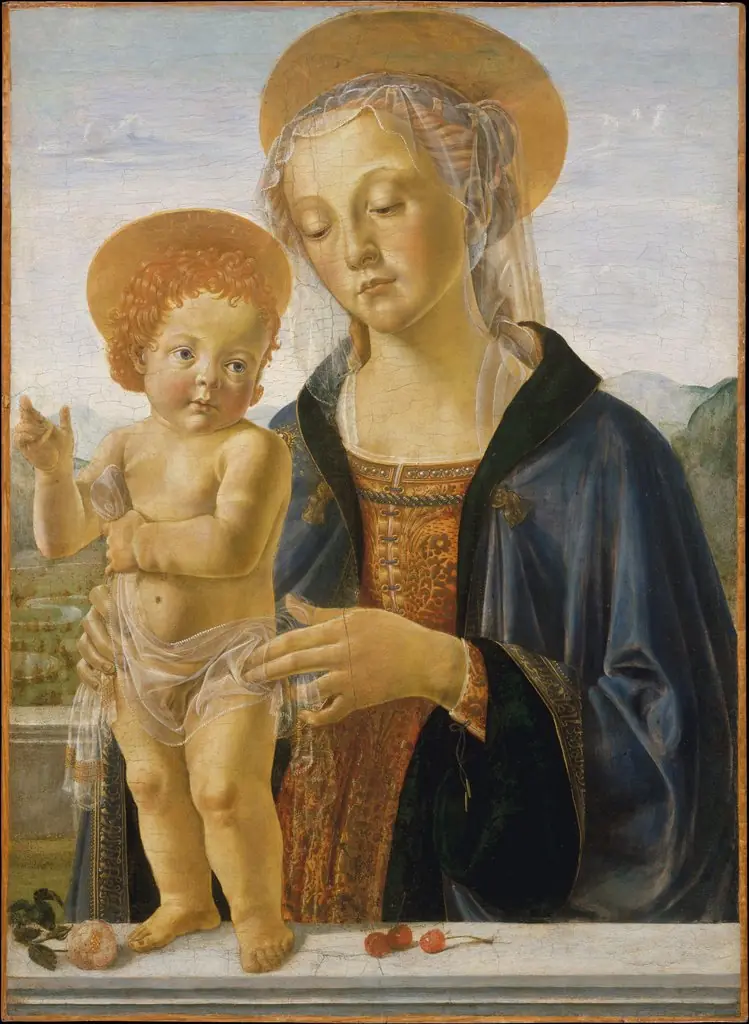
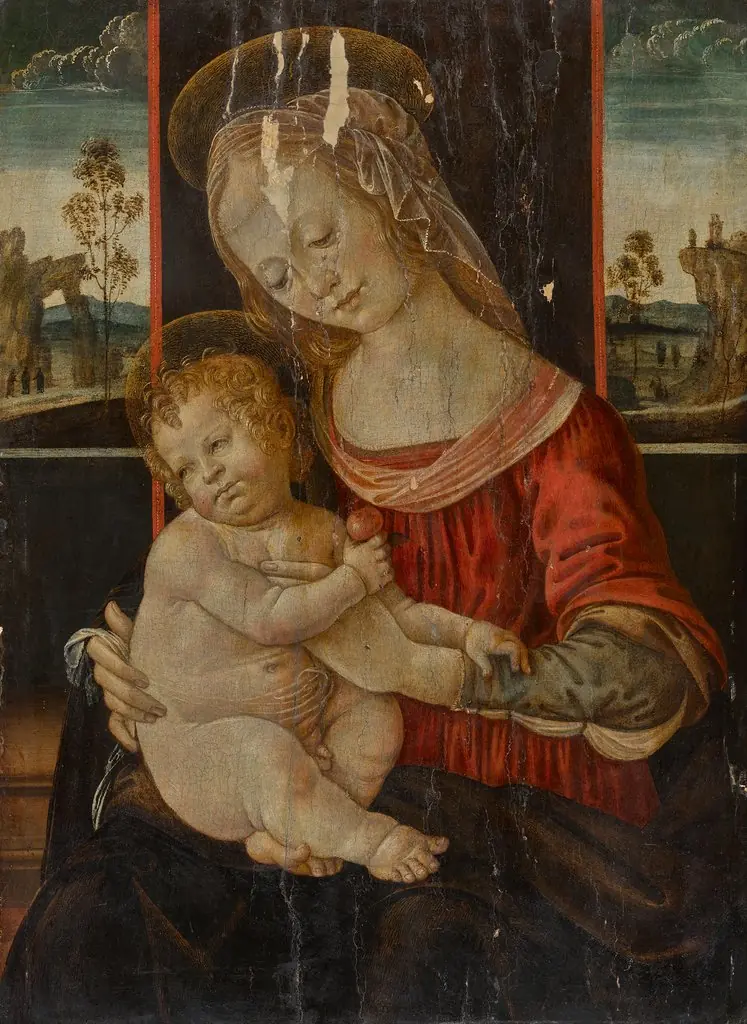
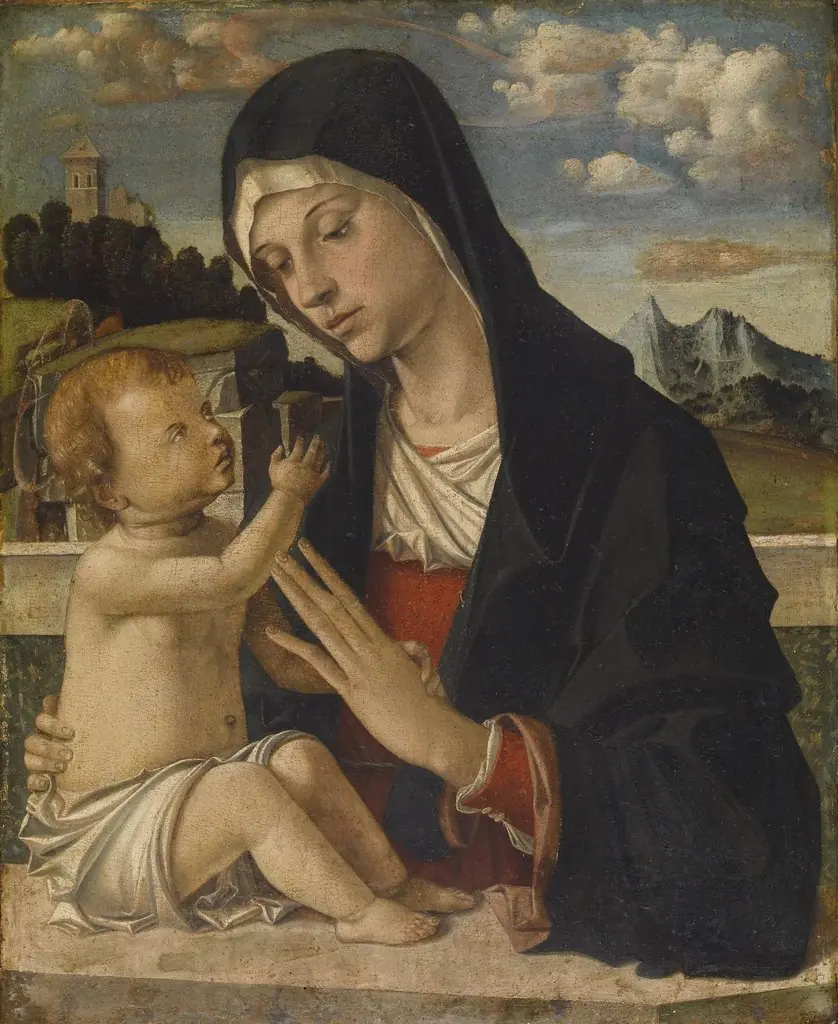
Madonna and Child is a wood painting by the Early Renaissance artist Andrea del Verrocchio. It dates from 1473 and is held in the collection of the Gemäldegalerie Berlin.
About this work
Overview
Created in 1473, this tempera painting on poplar panel presents a traditional Madonna and Child composition. Executed by the Florentine workshop of Andrea del Verrocchio, the work is now part of the collection of the Gemäldegalerie in Berlin.
Subject & Meaning
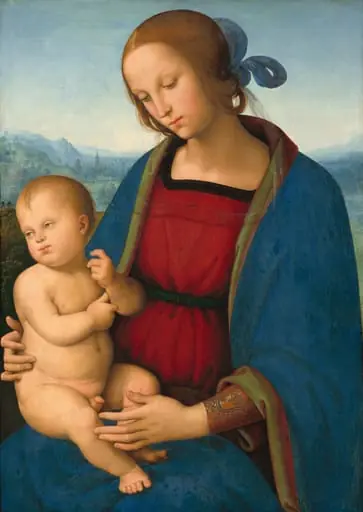
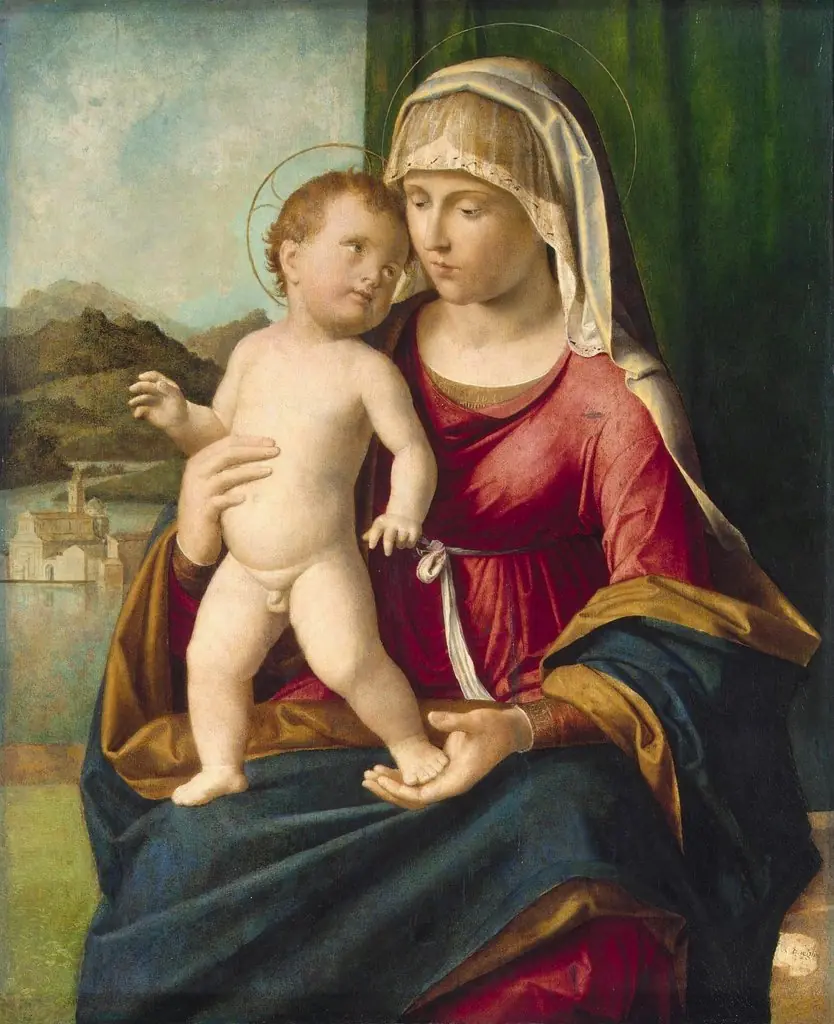
The central figures are the Virgin Mary and the infant Jesus. Mary is shown in a blue mantle over a pink underdress, her head covered with a white veil, while the child stands nude on a low table, reaching toward a red cloth she holds. Their gentle gaze toward each other conveys a tender, devotional intimacy typical of late‑15th‑century religious art.
Technique & Style
Rendered in a three‑dimensional manner, the figures display careful modeling of light and shadow, giving them volume against a modest landscape backdrop. The use of tempera on wood allows fine detail in the fabrics and the delicate rendering of the infant’s round, chubby features.
History & Provenance
The panel was produced in Verrocchio’s workshop during the height of his career in Florence. It entered the Berlin Gemäldegalerie collection in the early 20th century, where it has remained on public display, providing scholars with an example of Verrocchio’s approach to devotional imagery.
Context
In the 1470s, Florentine artists frequently depicted the Madonna and Child with a focus on naturalism and spatial depth. Verrocchio’s treatment reflects contemporary trends toward realistic anatomy and atmospheric landscape, aligning the work with the broader currents of Early Renaissance painting.
Artist & collection
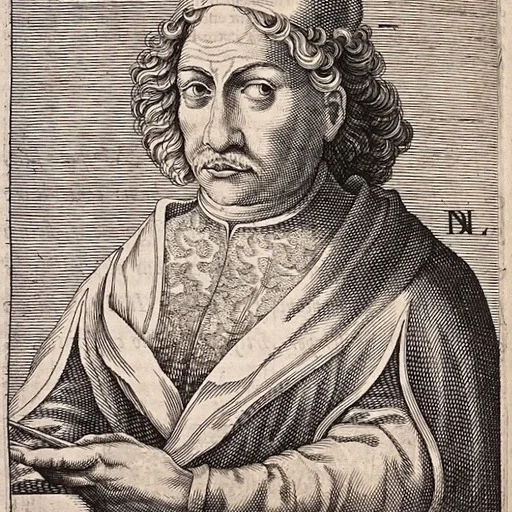
Artist
Andrea del Verrocchio ( və-ROH-kee-oh, US also -RAW-, Italian: ; born Andrea di Michele di Francesco de' Cioni; c.