Artwork
St Anthony at Mass Dedicates His Life to God
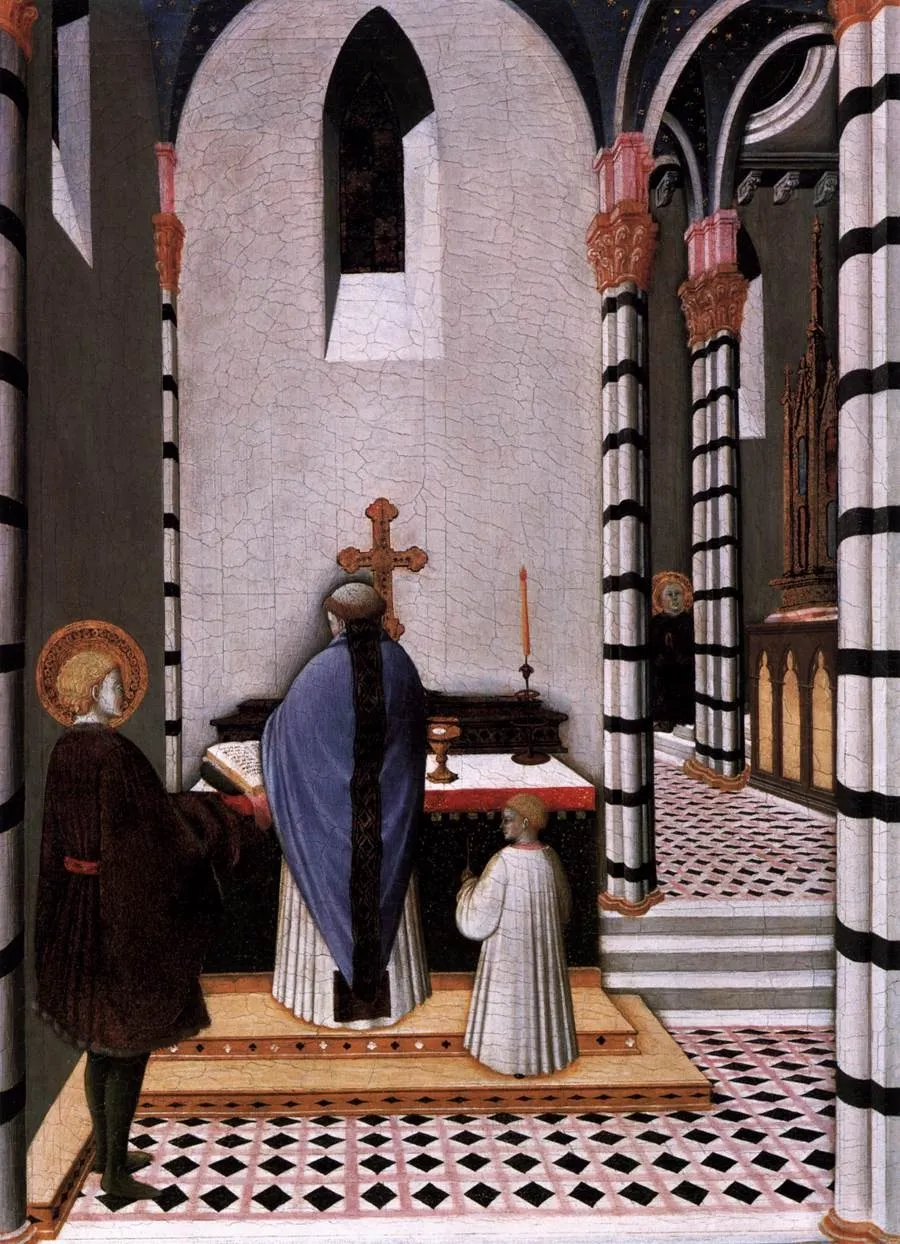
St Anthony at Mass Dedicates His Life to God is a paint painting by the Early Renaissance artist Sano di Pietro. It dates from 1435 and is held in the collection of the Gemäldegalerie Berlin.
About this work
Overview
Executed in tempera on panel, it portrays Saint Anthony of Padua during Mass, moments after he has vowed his life to divine service.
Painted in 1435 by Sano di Pietro, this work captures a quiet moment of spiritual commitment. Executed in tempera on panel, it portrays Saint Anthony of Padua during Mass, moments after he has vowed his life to divine service. The painting resides in the Gemäldegalerie, Berlin, as part of its collection of early Italian religious art. Its modest scale and intimate composition reflect devotional practices of the period.
Subject & Meaning
The scene centers on Saint Anthony, depicted at the altar in a posture of quiet devotion. Two attendants flank him—one in white, the other in dark robes—suggesting clerical presence or witnesses to his vow. The altar’s cross, candle, and red cloth signify sacred ritual. The moment is not dramatic but introspective, emphasizing personal consecration over spectacle, aligning with Franciscan ideals of humility and inner faith.
Technique & Style
Sano di Pietro employed tempera on wood, a standard medium in 15th-century Sienese painting. Forms are rendered with precise, linear clarity, and colors remain restrained: deep blues, muted reds, and earth tones dominate. The figures are arranged in a shallow space, with minimal modeling to suggest volume. The tiled floor and architectural details are rendered with careful attention to pattern, reinforcing the sacred setting without illusionistic depth.
History & Provenance
The painting was likely commissioned for private devotion or a small religious community in Siena, where Sano di Pietro was active. It entered the Gemäldegalerie Berlin’s collection in the 19th century, possibly through the acquisition of European ecclesiastical art. Its survival in good condition suggests it was preserved in a stable institutional or familial context, avoiding major disruptions over centuries.
Context
Created during the height of Sienese painting’s late Gothic phase, the work reflects a devotional culture that favored quiet, personal encounters with the sacred. Unlike the emerging Florentine focus on perspective and anatomy, Sienese artists retained emphasis on symbolic clarity and spiritual stillness. This piece aligns with contemporaneous altarpieces meant to inspire meditation rather than awe.
Legacy
While not widely reproduced or publicly celebrated, the painting remains a representative example of Sano di Pietro’s devotional output. It contributes to scholarly understanding of how Sienese workshops translated religious narratives into intimate, contemplative images. Its presence in Berlin underscores the 19th-century European interest in preserving regional Italian religious art beyond major centers like Florence or Venice.
Artist & collection
Artist
Sano di Pietro or Ansano di Pietro di Mencio (1405–1481) was an Italian painter of the Sienese school of painting.

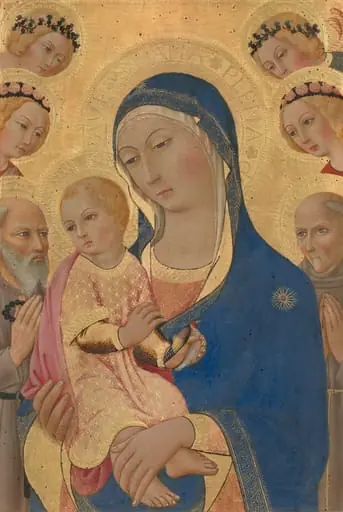 Madonna and Child with Saint Jerome, Saint Bernardino, and Angels
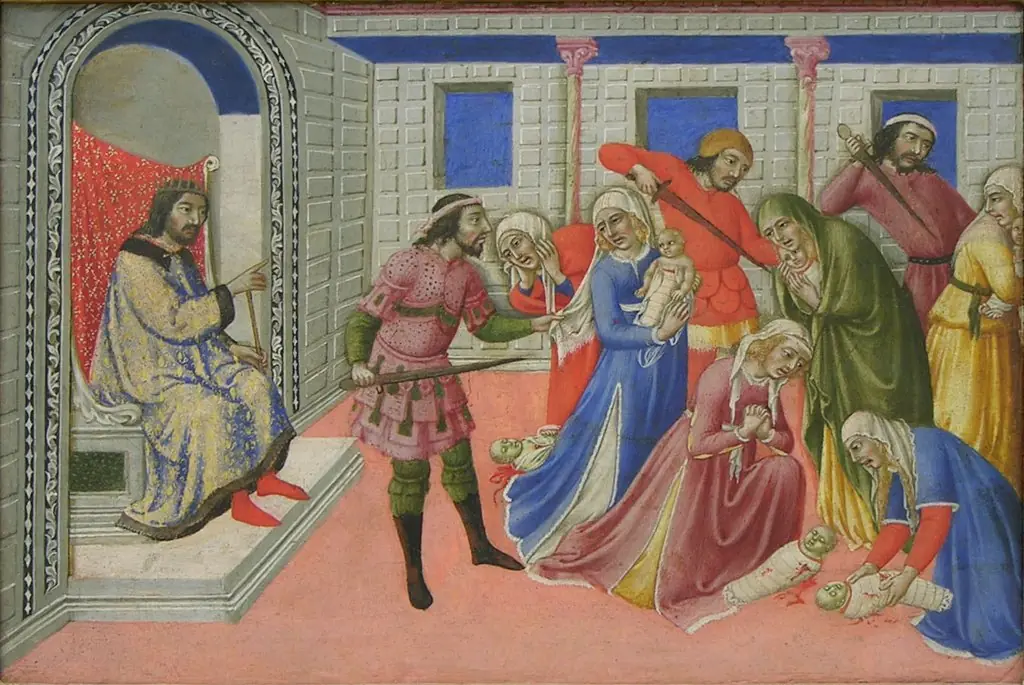 The Massacre of the Innocents
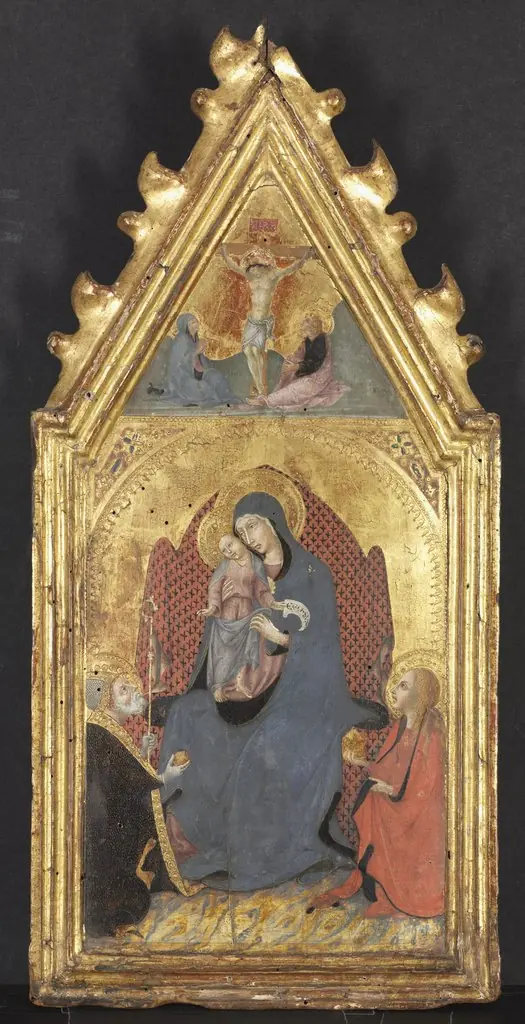 Virgin and Child Adored by Saints Mary Magdalene and Nicolas of Bari; Christ Crucified with the Virgin and Saint John the Evangelist
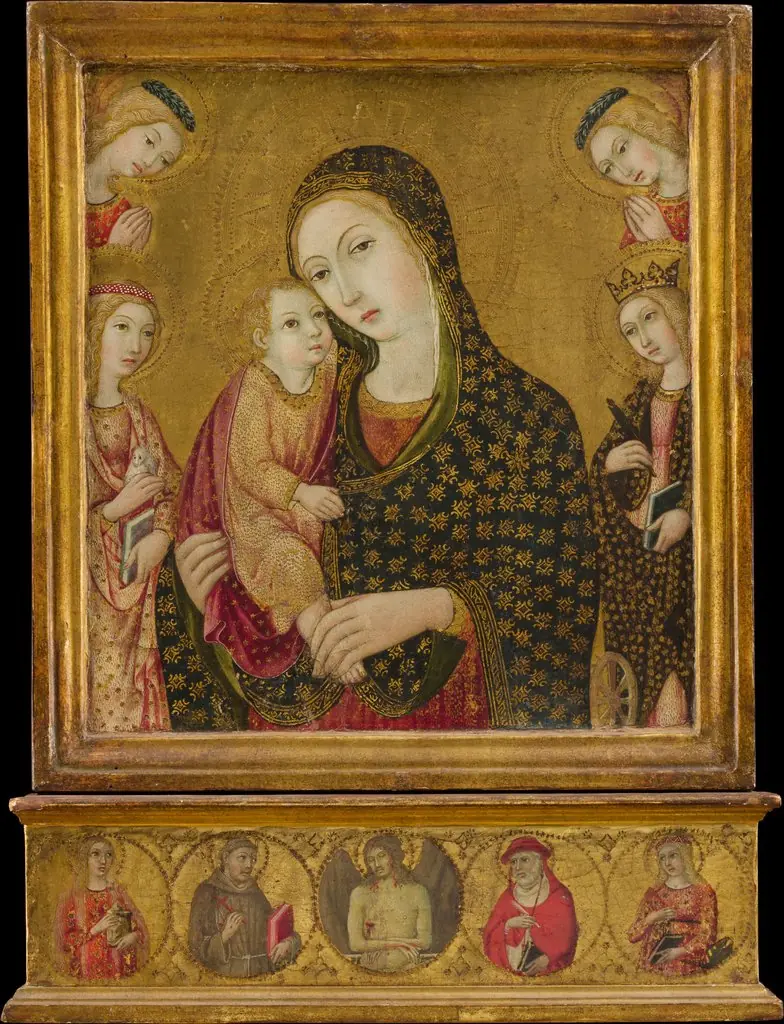 Madonna and Child with the Dead Christ, Saints Agnes and Catherine of Alexandria, and Two Angels
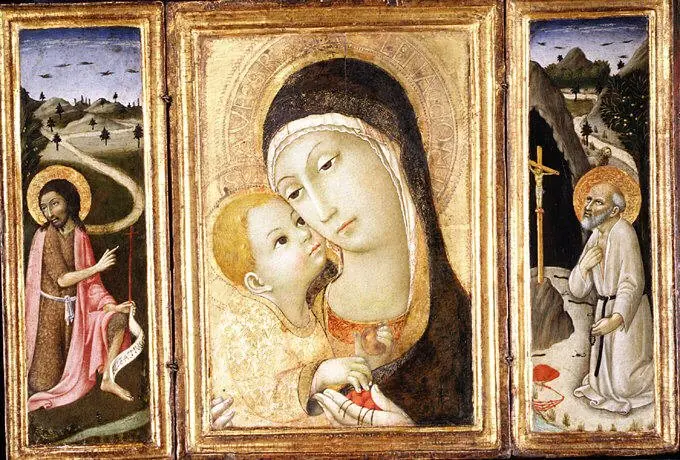 Madonna and Child; Saint John the Baptist; Saint Jerome
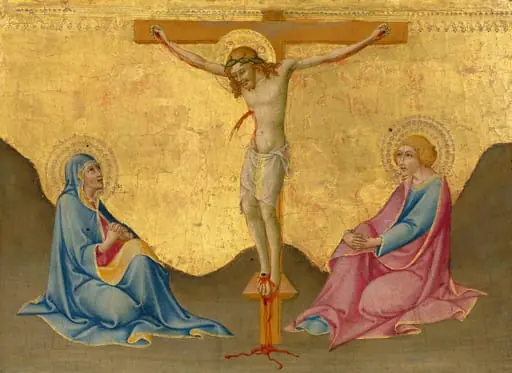 The Crucifixion
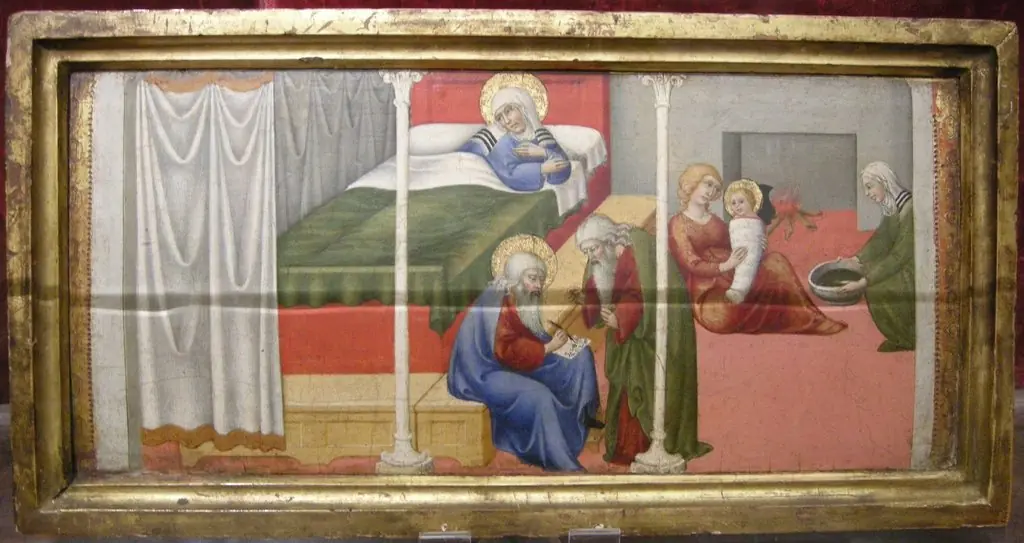 The Birth and Naming of Saint John the Baptist
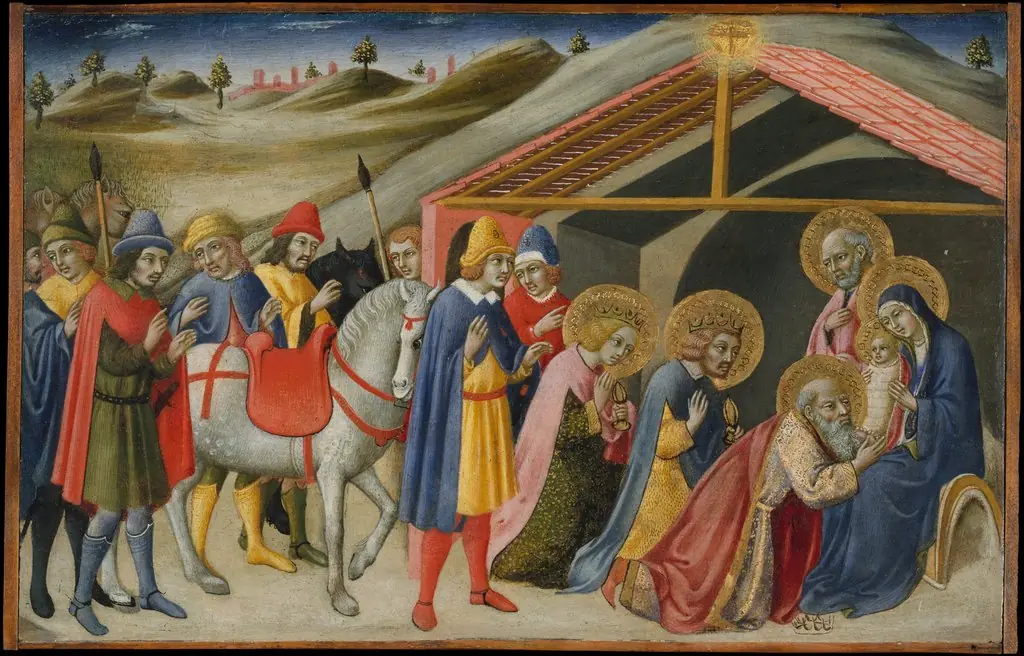 The Adoration of the Magi
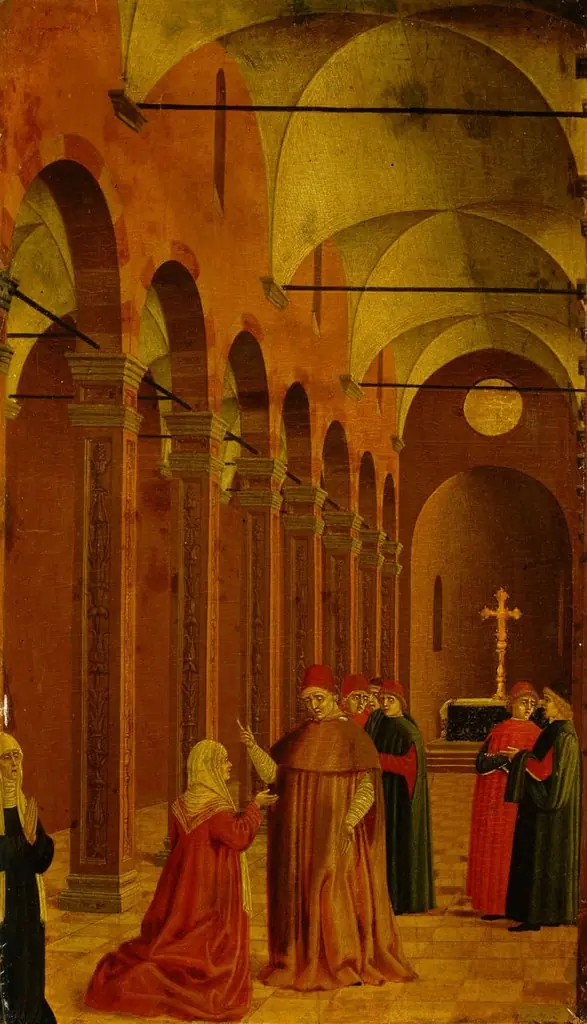 Szene aus dem Leben des Hl. Vinzenz Ferrer: Die Mutter des Heiligen fragt den Bischof von Valencia nach dem Sinn der wunderbaren Zeichen, die die Geburt ihres Kindes ankündigen
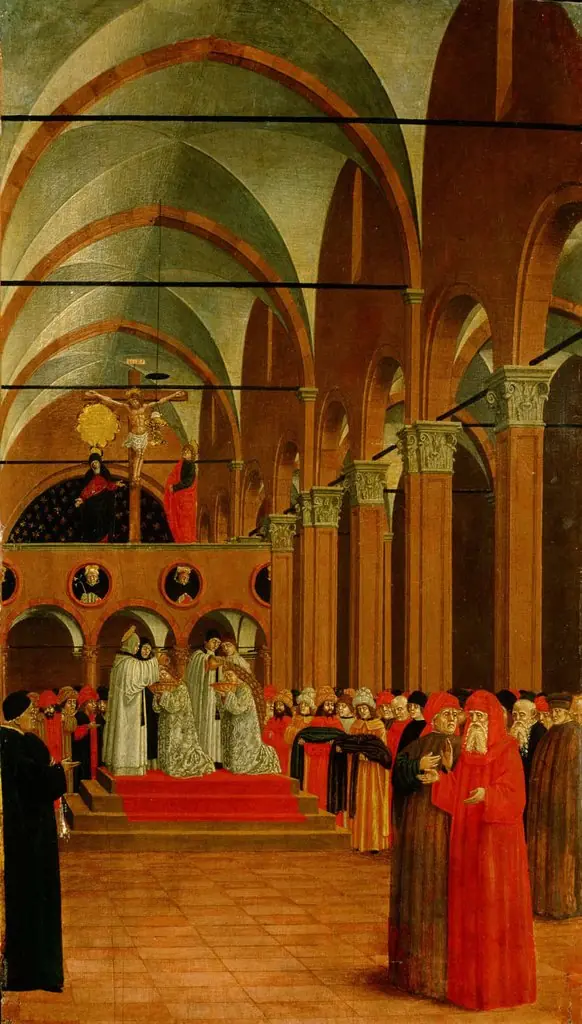 Szene aus dem Leben des Hl. Vinzenz Ferrer: Der Heilige bekehrt und tauft Sarazenen und Juden
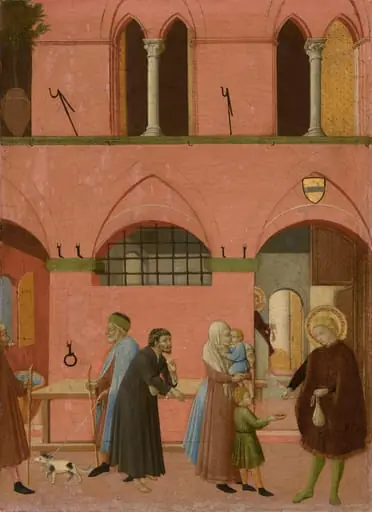 Saint Anthony Distributing His Wealth to the Poor
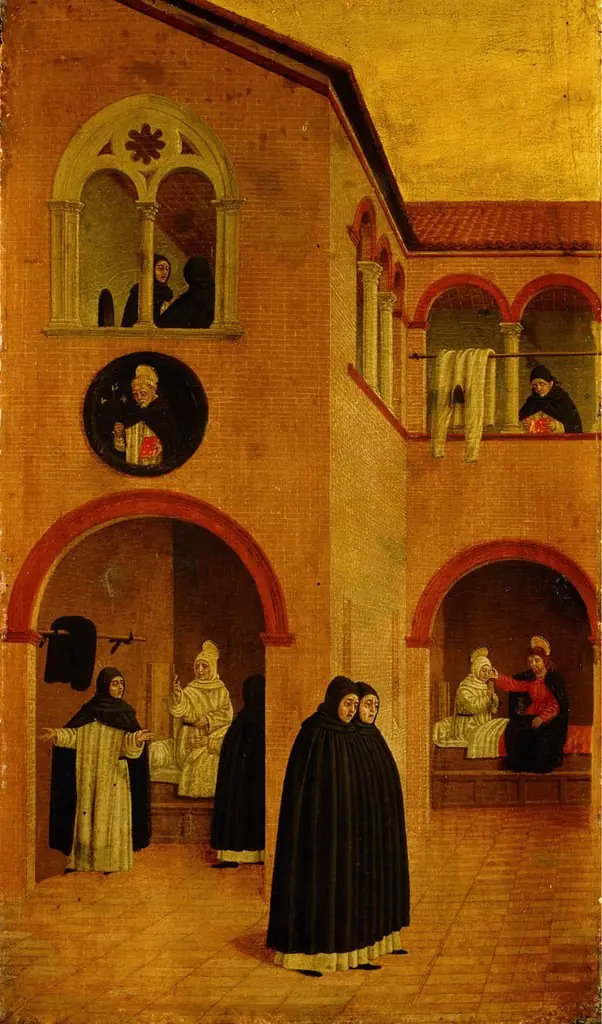 Szene aus dem Leben des Hl. Vinzenz Ferrer: Durch Aufregungen infolge des Schismas erkrankt der Heilige; er wird am Krankenbett vom Heiligen Dominikus besucht und von Christus geheilt
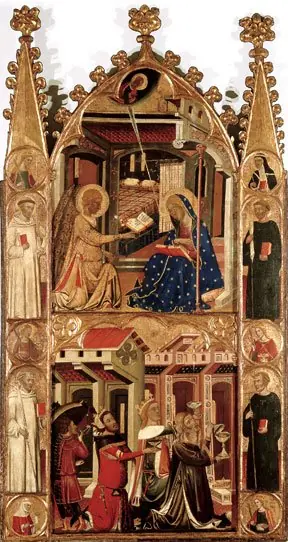 Annunciation and Three Kings of the Epiphany
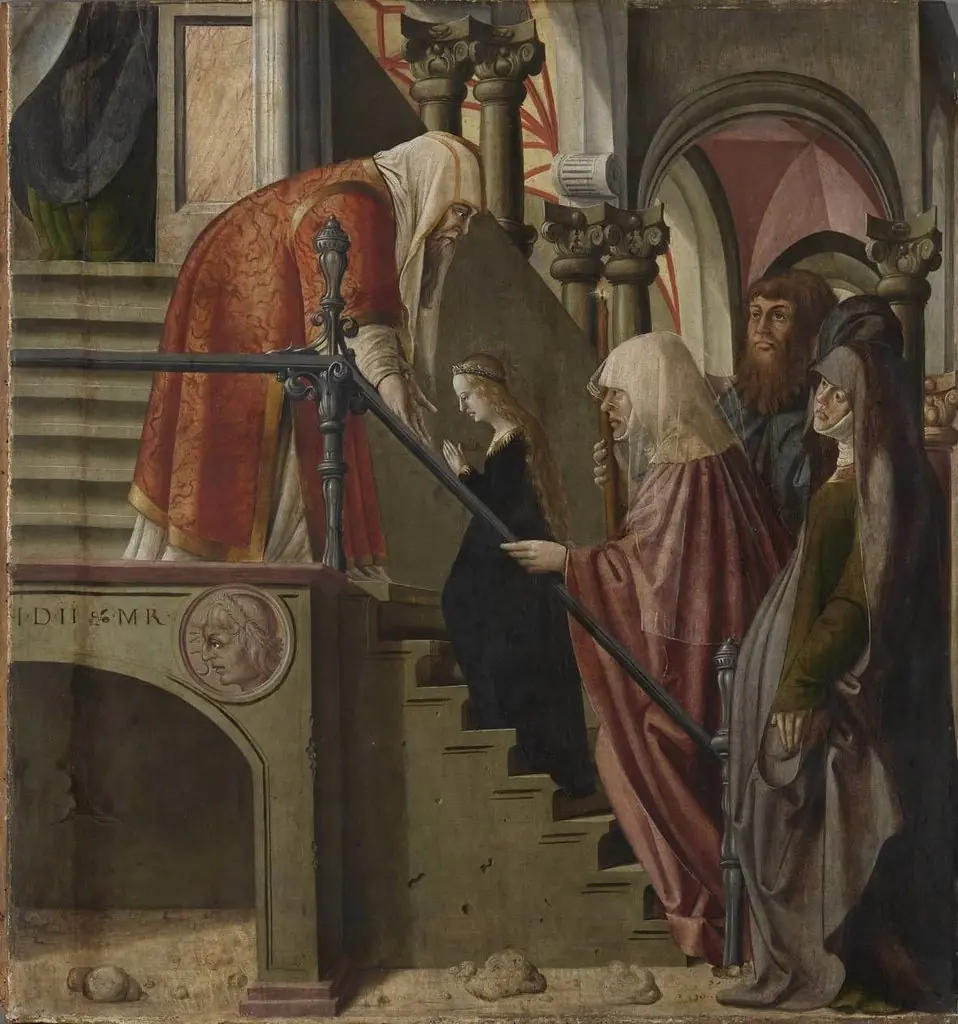 Marienaltar: Tempelgang Mariae
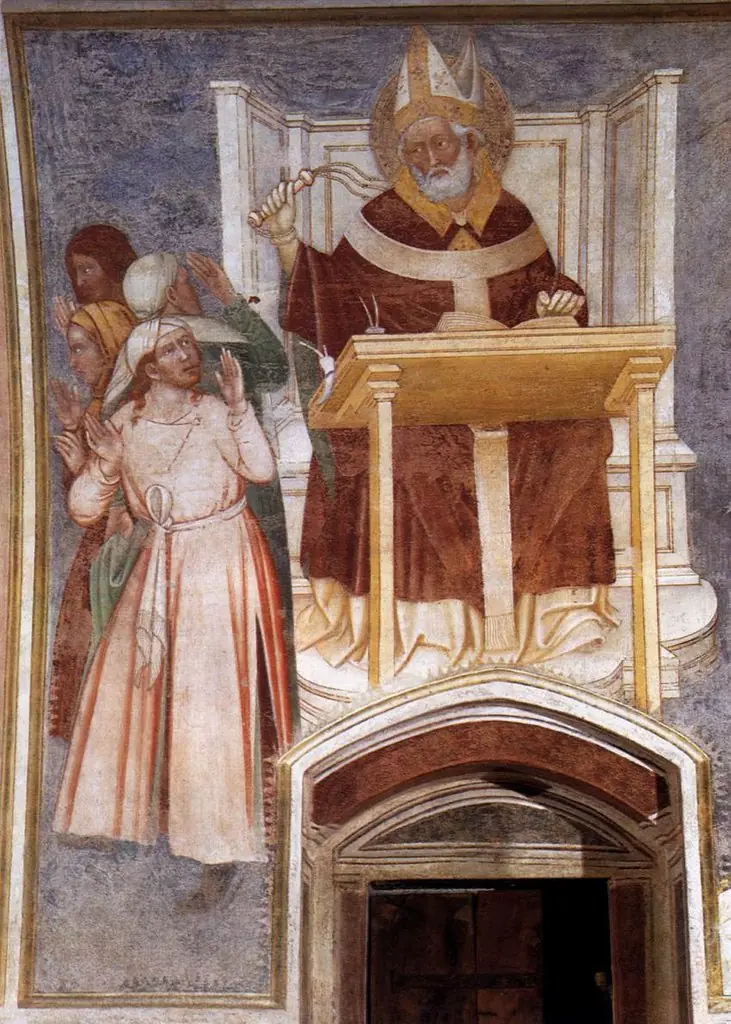 St Ambrose Enthroned Flagellating Two Heretics
![The Papacy Offered to Saint Gregory the Great [?], by Fra Angelico](https://artifactworldgallery.com/img/fra-angelico--the-papacy-offered-to-saint-gregory-the-great--6c28505dc47c9093-w320.webp) The Papacy Offered to Saint Gregory the Great [?]
The Papacy Offered to Saint Gregory the Great [?] The Birth of the Virgin
 The temptation of Thomas of Aquinas
 A Sermon on Charity (possibly the Conversion of Saint Anthony)
 The Death of Saint Anthony