Artwork
Triptych: The Virgin and Child with the Blessing Christ, Two Angels and a Donor
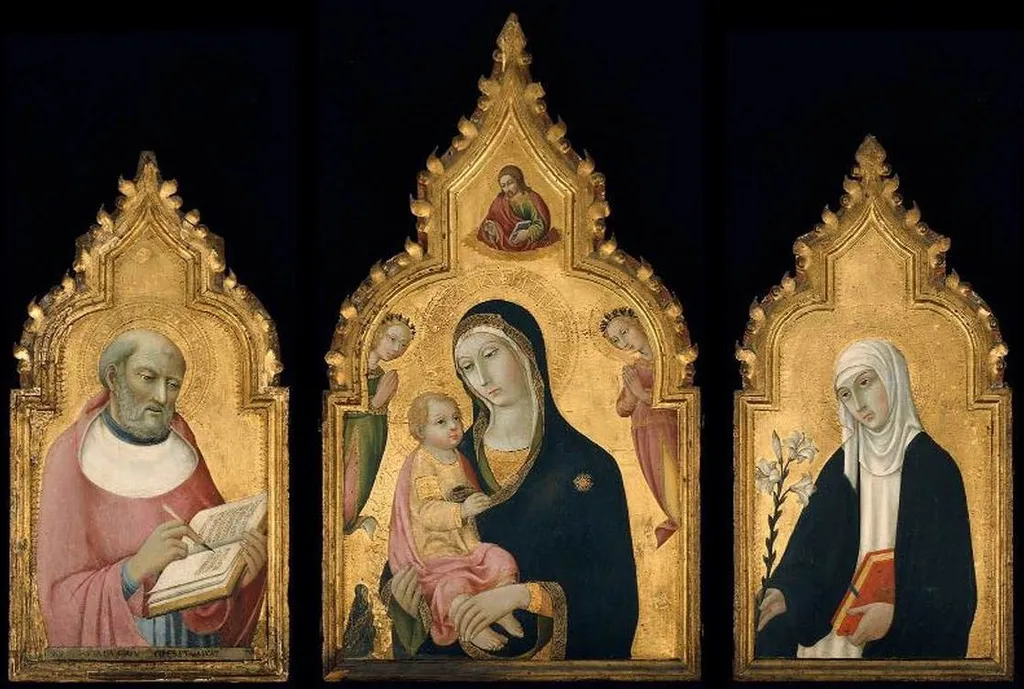
Triptych: The Virgin and Child with the Blessing Christ, Two Angels and a Donor is a tempera painting by the Early Renaissance artist Sano di Pietro. It dates from 1470 and is held in the collection of the Museum of Fine Arts Boston.
About this work
Overview
This three-panel tempera painting, dated around 1470, is attributed to Sano di Pietro, a Sienese artist active in the mid-to-late 15th century.
This three-panel tempera painting, dated around 1470, is attributed to Sano di Pietro, a Sienese artist active in the mid-to-late 15th century. It depicts sacred and devotional figures across its panels, framed in ornate gold leaf. The work is part of the collection at the Museum of Fine Arts, Boston, where it serves as an example of devotional art from the Italian Renaissance period, reflecting the devotional practices of its time.
Subject & Meaning
The central panel presents the Virgin Mary seated with the Christ Child, flanked by two angels. To the left, a male donor kneels in prayer, holding an open book, suggesting personal devotion. The right panel features a female figure, possibly a saint or another donor, holding a plant and a book. The composition invites contemplation, aligning the earthly petitioner with divine figures, reinforcing the spiritual connection between worshipper and sacred realm.
Technique & Style
Executed in tempera on wood, the painting employs fine brushwork and luminous color, characteristic of Sienese traditions. Gold leaf outlines halos and frames, enhancing the sacred atmosphere. Figures are rendered with elongated proportions and delicate facial features, typical of late Gothic influences. The flat, decorative space and emphasis on pattern over naturalism reflect a style rooted in medieval conventions, even as Renaissance ideals began to emerge.
History & Provenance
The triptych was likely commissioned for private devotion, possibly for a wealthy layperson in Siena. Its survival through centuries suggests it remained in religious or aristocratic hands before entering the Museum of Fine Arts, Boston’s collection. While its exact early provenance is undocumented, its preservation aligns with the broader trend of Italian panel paintings being collected by Western institutions in the 19th and early 20th centuries.
Context
Created during a period when Siena maintained its distinct artistic identity despite Florence’s growing influence, the triptych reflects enduring local preferences for rich color, gold backgrounds, and hierarchical composition. Such works were common in domestic chapels or small churches, serving as focal points for prayer. The inclusion of a donor figure underscores the personal nature of religious patronage in 15th-century Tuscany.
Legacy
The triptych exemplifies the transition between medieval and early Renaissance devotional art in central Italy. While not revolutionary in form, it preserves the aesthetic and spiritual priorities of its time. Today, it contributes to scholarly understanding of Sienese workshop practices and the role of private commissioning in sustaining religious imagery beyond large-scale public altarpieces.
Artist & collection
Artist
Sano di Pietro or Ansano di Pietro di Mencio (1405–1481) was an Italian painter of the Sienese school of painting.

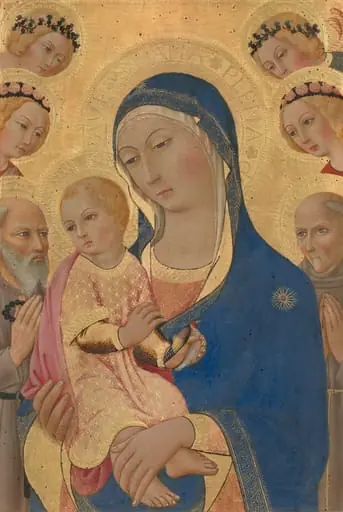 Madonna and Child with Saint Jerome, Saint Bernardino, and Angels
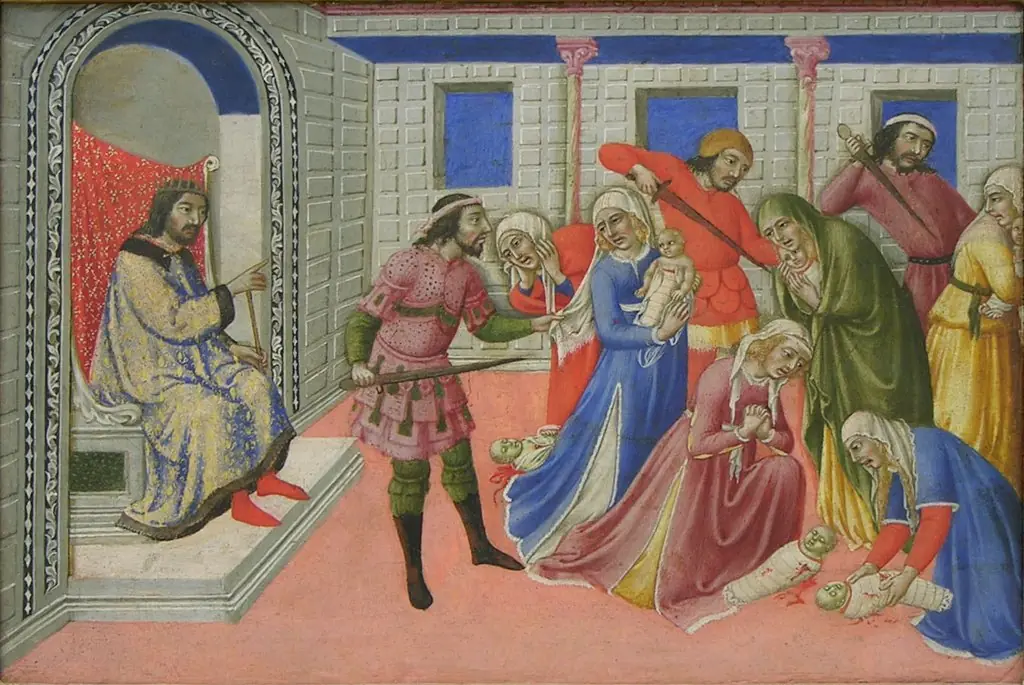 The Massacre of the Innocents
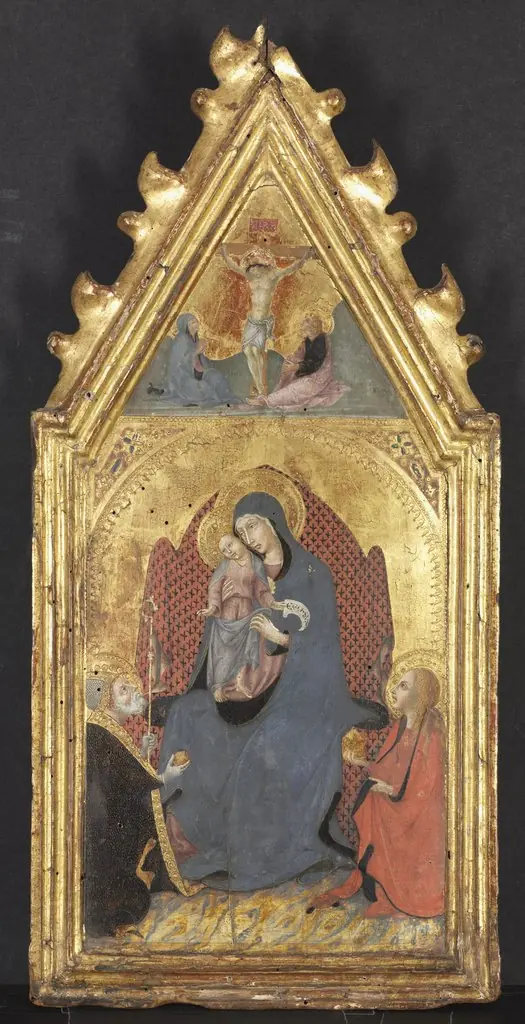 Virgin and Child Adored by Saints Mary Magdalene and Nicolas of Bari; Christ Crucified with the Virgin and Saint John the Evangelist
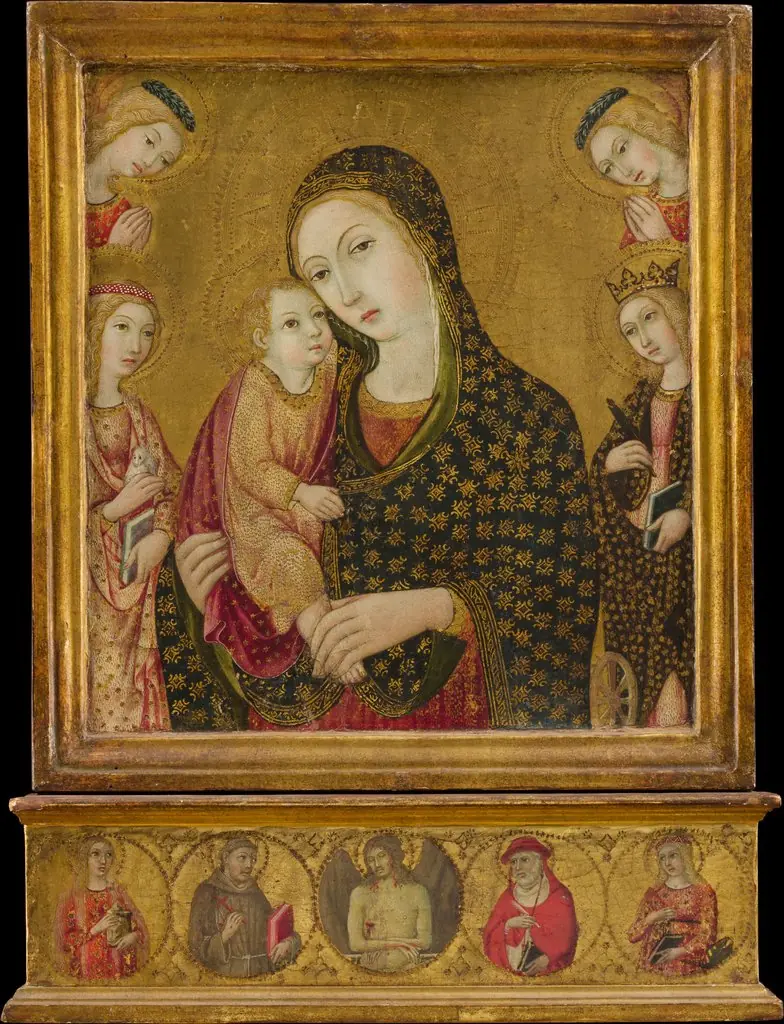 Madonna and Child with the Dead Christ, Saints Agnes and Catherine of Alexandria, and Two Angels
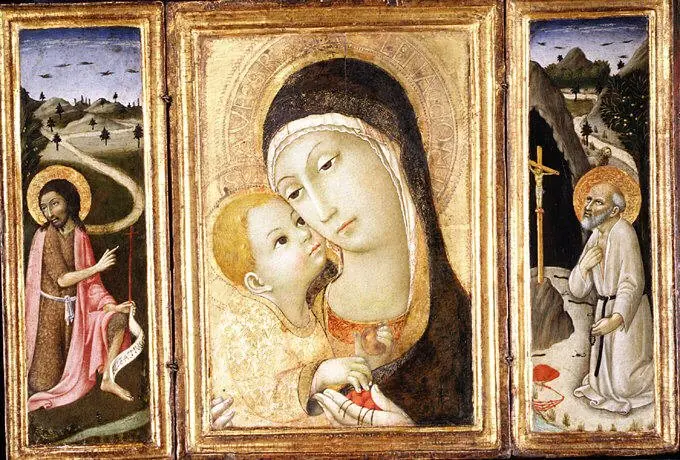 Madonna and Child; Saint John the Baptist; Saint Jerome
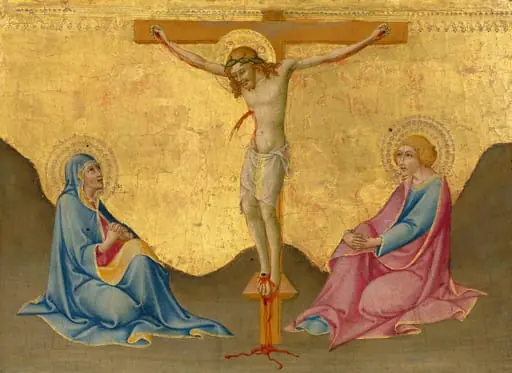 The Crucifixion
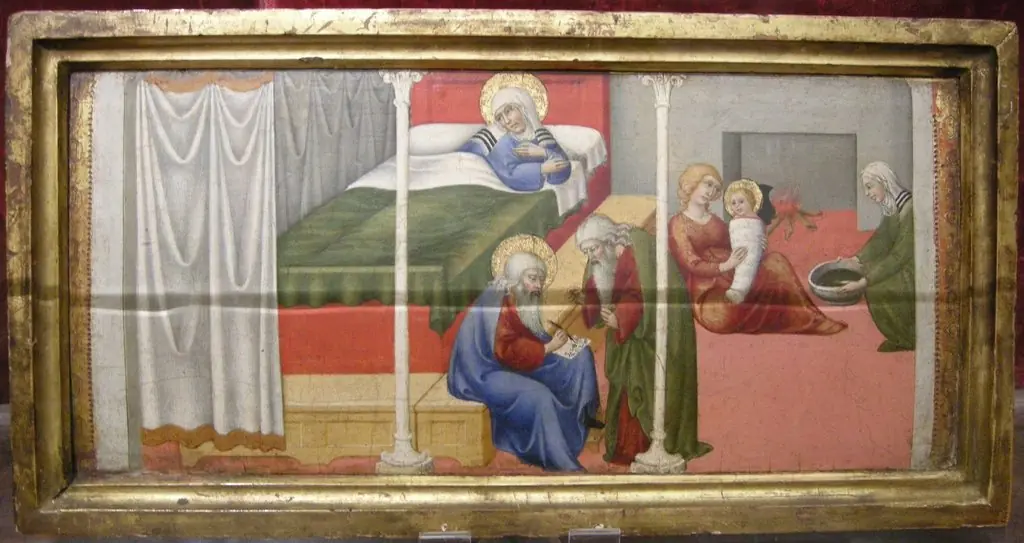 The Birth and Naming of Saint John the Baptist
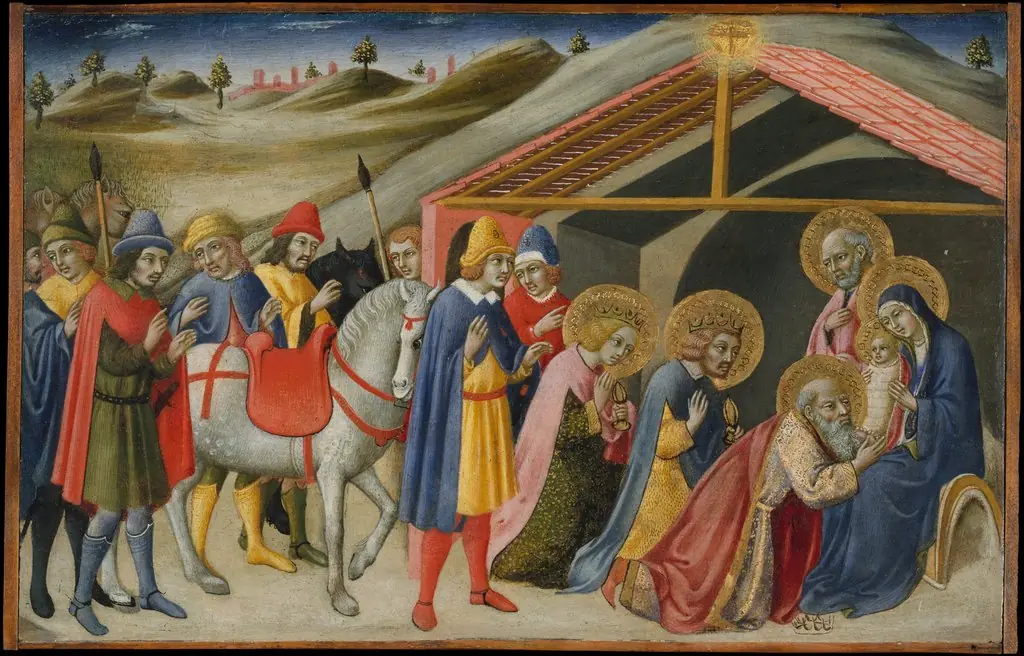 The Adoration of the Magi
![Madonna and Child with the Blessing Christ, and Saints Peter, James Major, Anthony Abbott, and a Deacon Saint [entire triptych], by Martino di Bartolomeo](https://artifactworldgallery.com/img/martino-di-bartolomeo--madonna-and-child-with-the-blessing-christ-and-saints-peter--2c53e26d577a363b-w320.webp) Madonna and Child with the Blessing Christ, and Saints Peter, James Major, Anthony Abbott, and a Deacon Saint [entire triptych]
Madonna and Child with the Blessing Christ, and Saints Peter, James Major, Anthony Abbott, and a Deacon Saint [entire triptych]![Madonna and Child with the Blessing Christ, and Saints Mary Magdalene and Catherine of Alexandria with Angels [entire triptych], by Pietro Lorenzetti](https://artifactworldgallery.com/img/pietro-lorenzetti--madonna-and-child-with-the-blessing-christ-and-saints-mary-m--f78e415f61769b64-w320.webp) Madonna and Child with the Blessing Christ, and Saints Mary Magdalene and Catherine of Alexandria with Angels [entire triptych]
Madonna and Child with the Blessing Christ, and Saints Mary Magdalene and Catherine of Alexandria with Angels [entire triptych]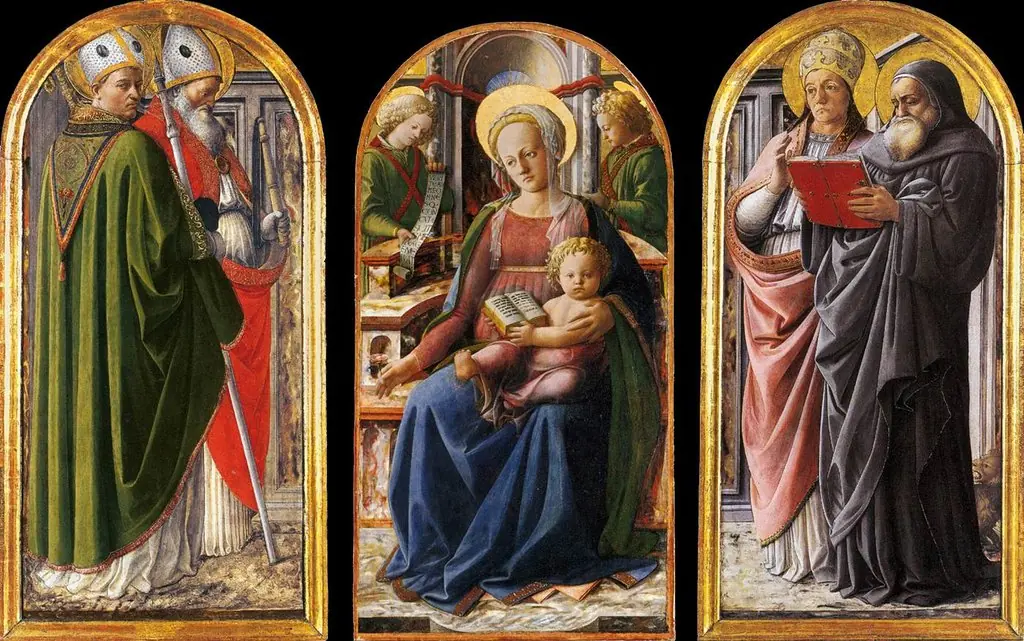 Madonna and Child with Angels and Saints
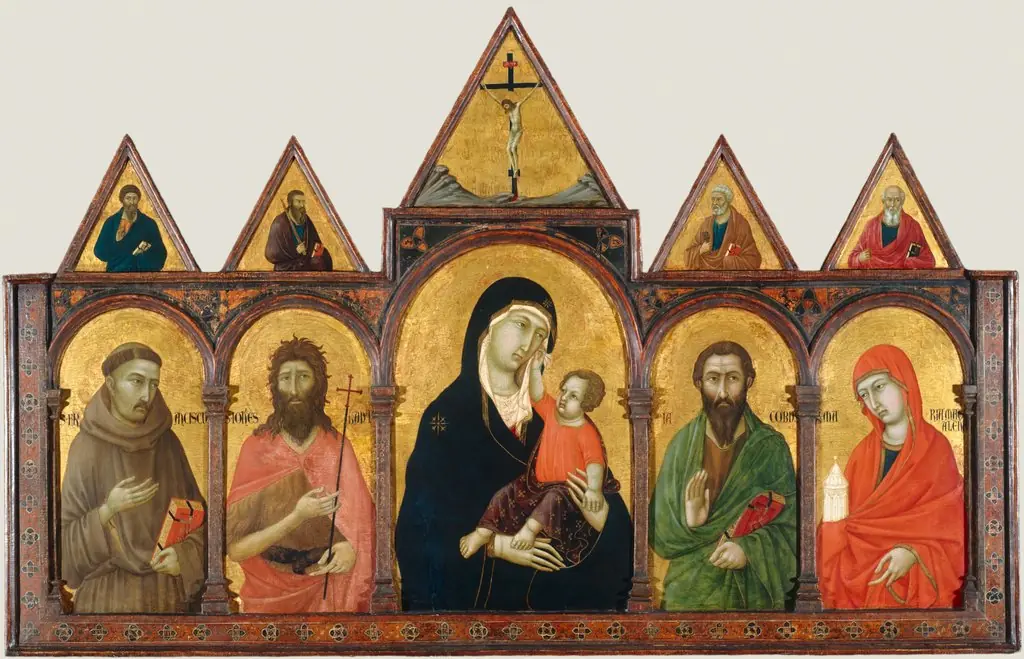 Virgin and Child with Saints
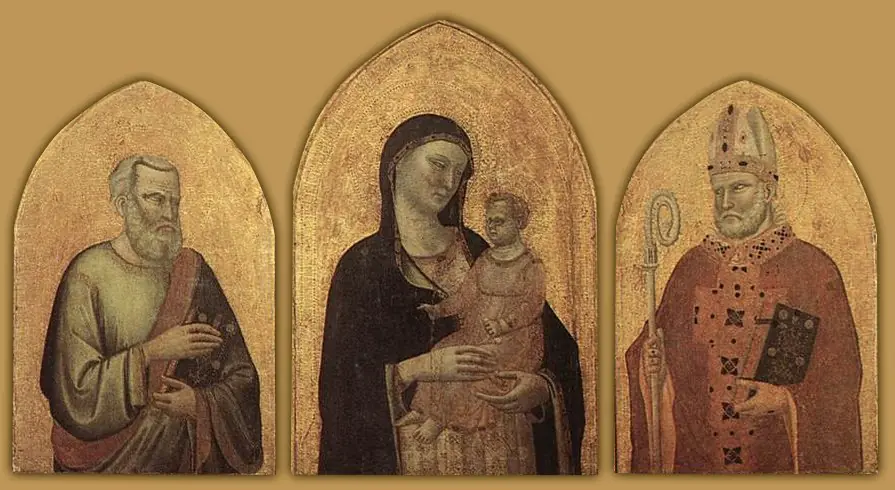 Madonna and Child with Sts Matthew and Nicholas
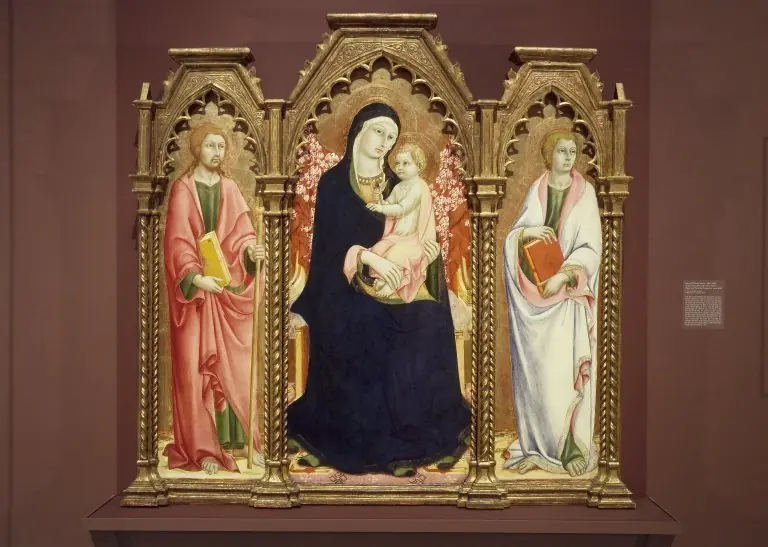 Madonna and Child with Saints James Major and John the Evangelist
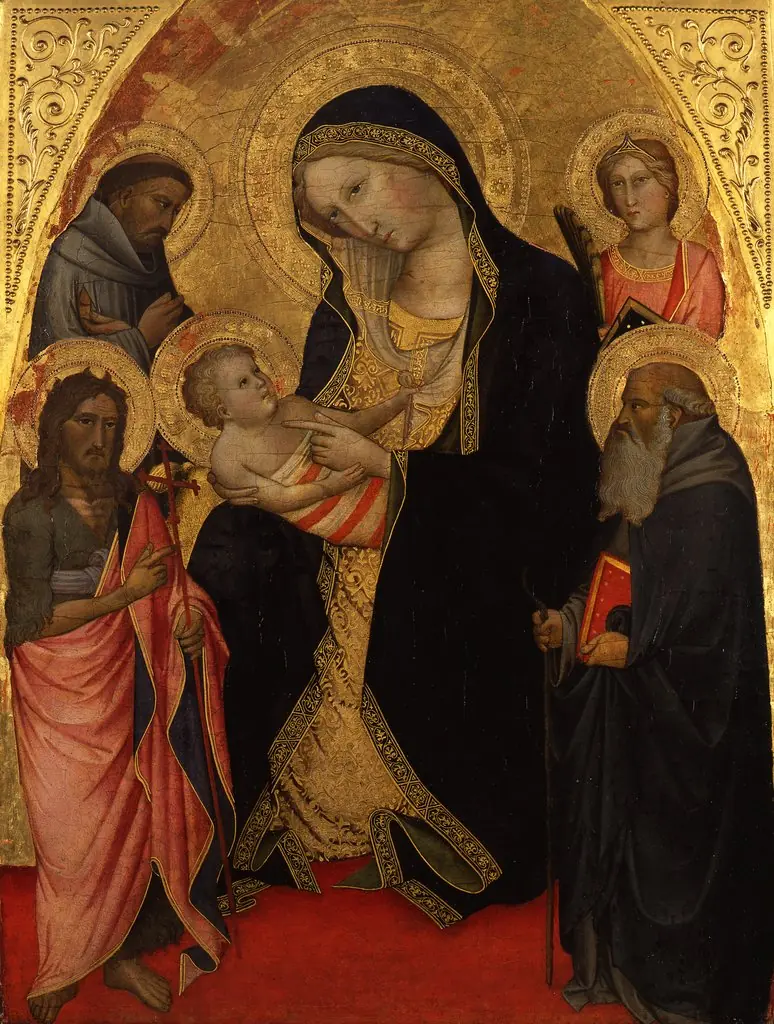 Madonna with the child, St. John the Baptist, St. Francis and St. Anthony and a martyr
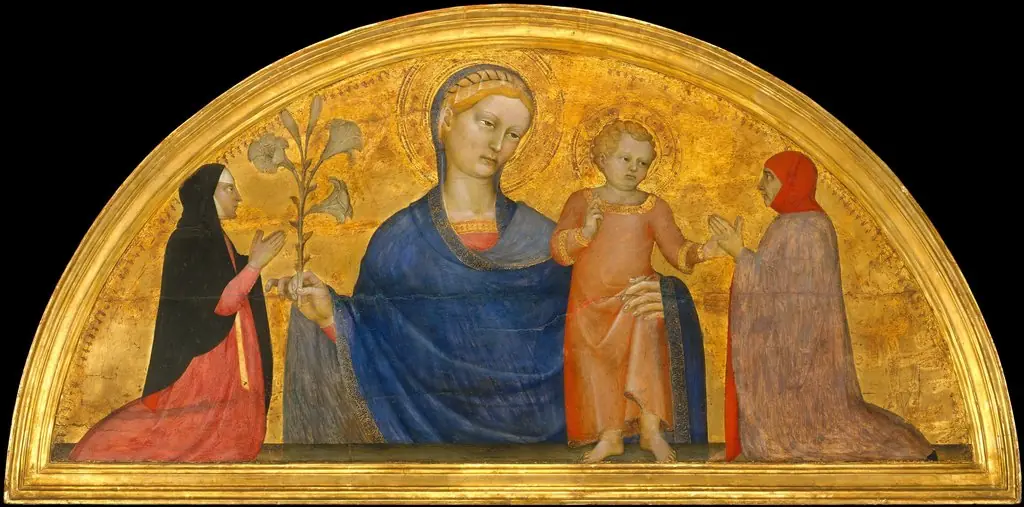 Madonna and Child with Donors
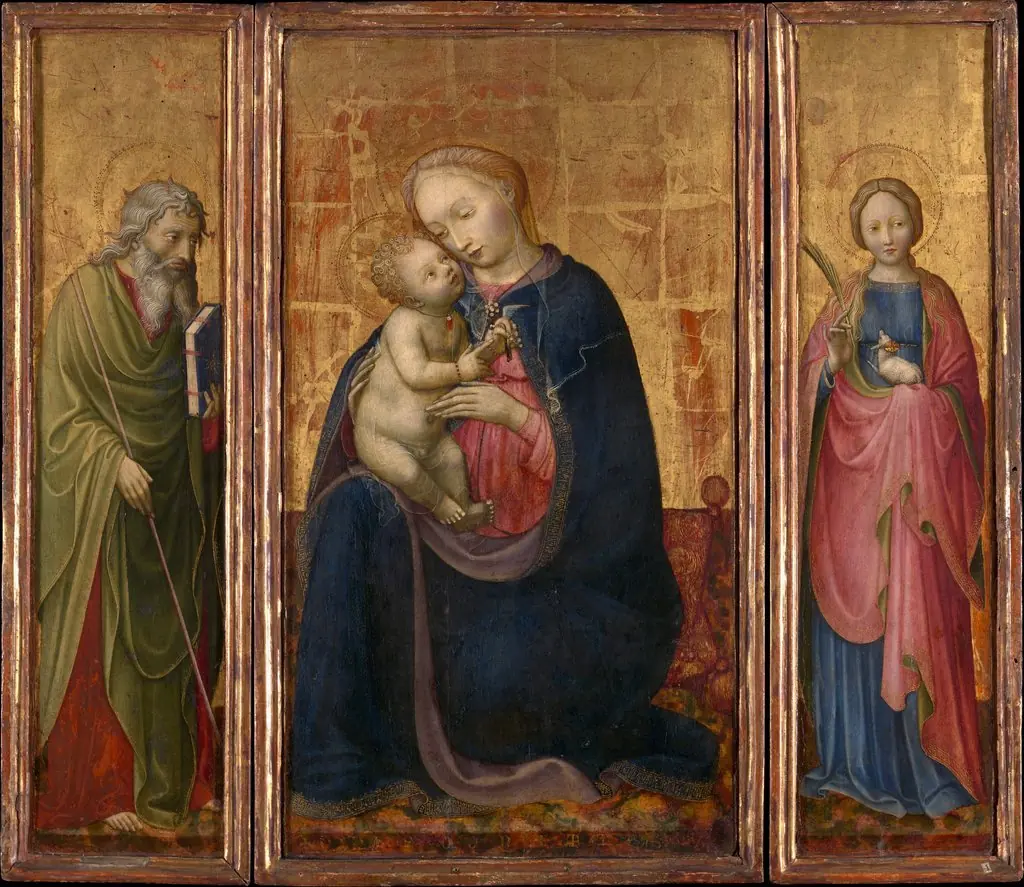 Madonna and Child with Saints Philip and Agnes