Artwork
Προσωπογραφία της Όλγας
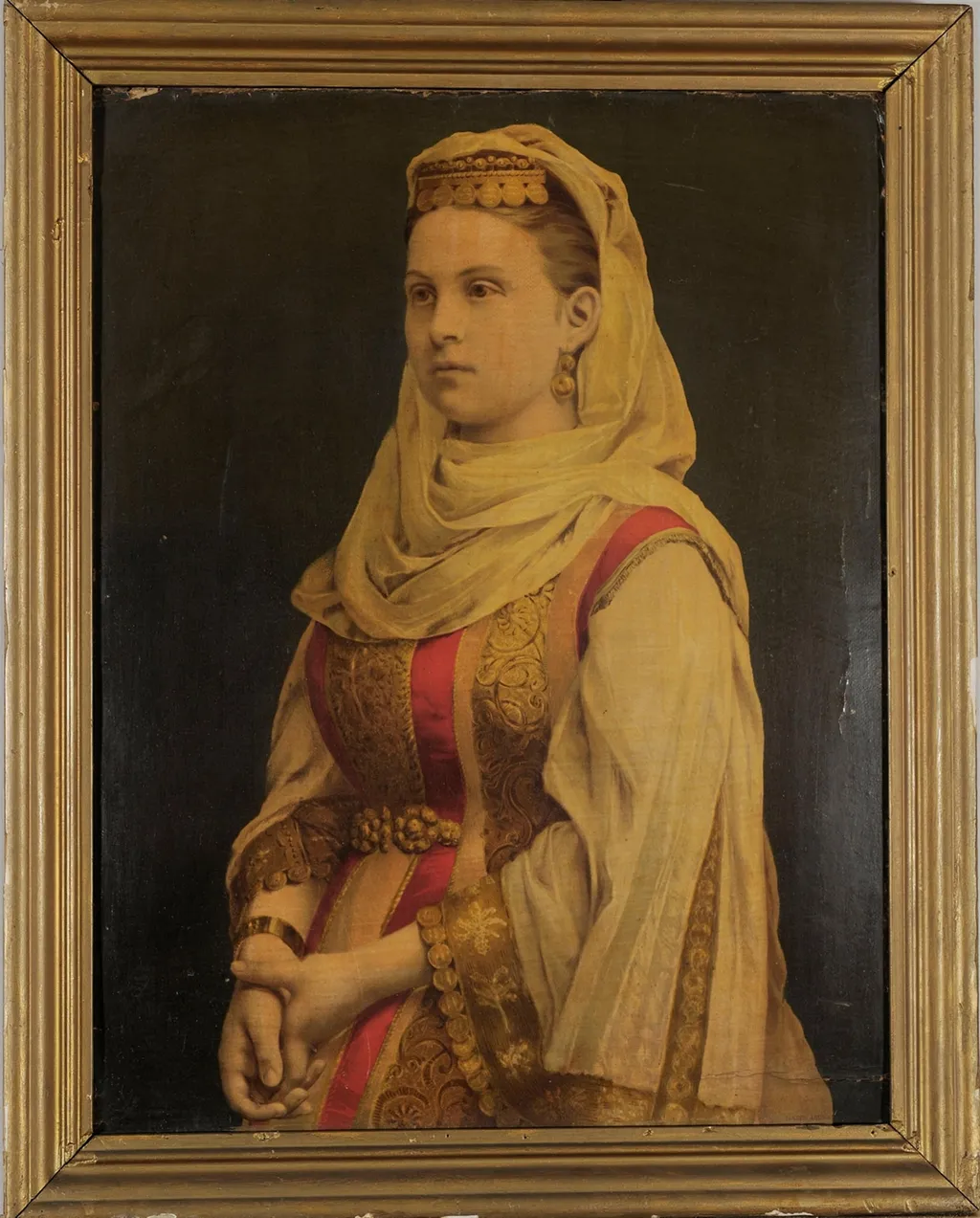
Προσωπογραφία της Όλγας is an unspecified painting by Sansoni Angelina. It dates from 2009 and is held in the collection of the Historical & Ethnological Society of Greece.
About this work
Overview
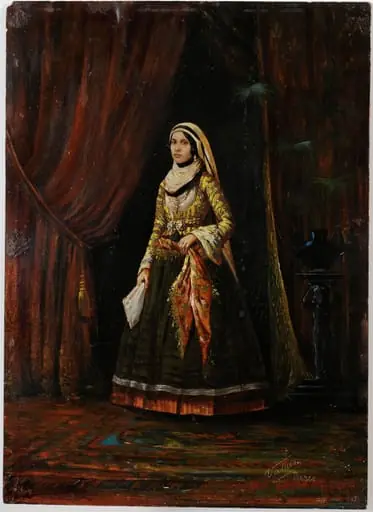
Created in 2009 by Sansoni Angelina, this portrait depicts a woman named Olga dressed in elaborate historical attire. The work is part of the Museum of Ethnography’s collection and reflects a deliberate engagement with traditional dress as a cultural symbol. The composition isolates the figure against a dark ground, emphasizing texture and form through controlled lighting.
Subject & Meaning
The subject, Olga, is portrayed in garments suggesting regional or ceremonial dress, likely drawn from Balkan or Eastern European traditions. The gold headpiece and yellow veil signal status or ritual significance, while her hands resting gently on her chest convey stillness and dignity. The portrait does not aim for realism but evokes a sense of cultural memory through costume and posture.
Technique & Style
Angelina employs chiaroscuro to model the figure’s form, using soft gradations of light to define the contours of the face, veil, and embroidered fabric. The dark background enhances the luminosity of the gold and red details, directing focus to the textures of jewelry and woven patterns. Brushwork is precise yet restrained, favoring clarity over expressive gesture.
History & Provenance
The painting was completed in 2009 and entered the Museum of Ethnography’s collection shortly thereafter. It was not part of a larger series but stands as an individual study in cultural representation. The artist’s intent appears rooted in documenting traditional dress as a living heritage, rather than as a historical reconstruction.
Context
This work emerged during a period of renewed interest in folk identity across Southeastern Europe. While not tied to a specific event, it aligns with broader efforts to preserve and reinterpret traditional attire through contemporary art. The choice of a named individual, Olga, personalizes the cultural reference, distinguishing it from generic ethnographic imagery.
Legacy
The portrait contributes to ongoing dialogues about how cultural heritage is visually encoded in modern art. It avoids romanticization, instead presenting costume with quiet solemnity. Its presence in an ethnographic museum underscores its role as a bridge between anthropological documentation and artistic interpretation.
Artist & collection
Artist
Museum
Historical & Ethnological Society of Greece
Continue through works from the same source collection.
 Portret de femeie din Câmpulung (Doamna Georgescu)
 Sancha
 Portrait of Caterina Cornaro
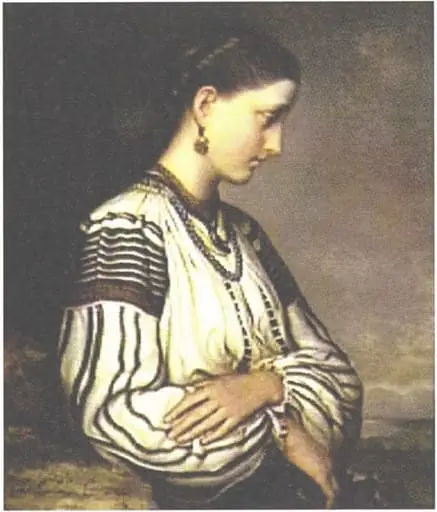 Profil de țărancă
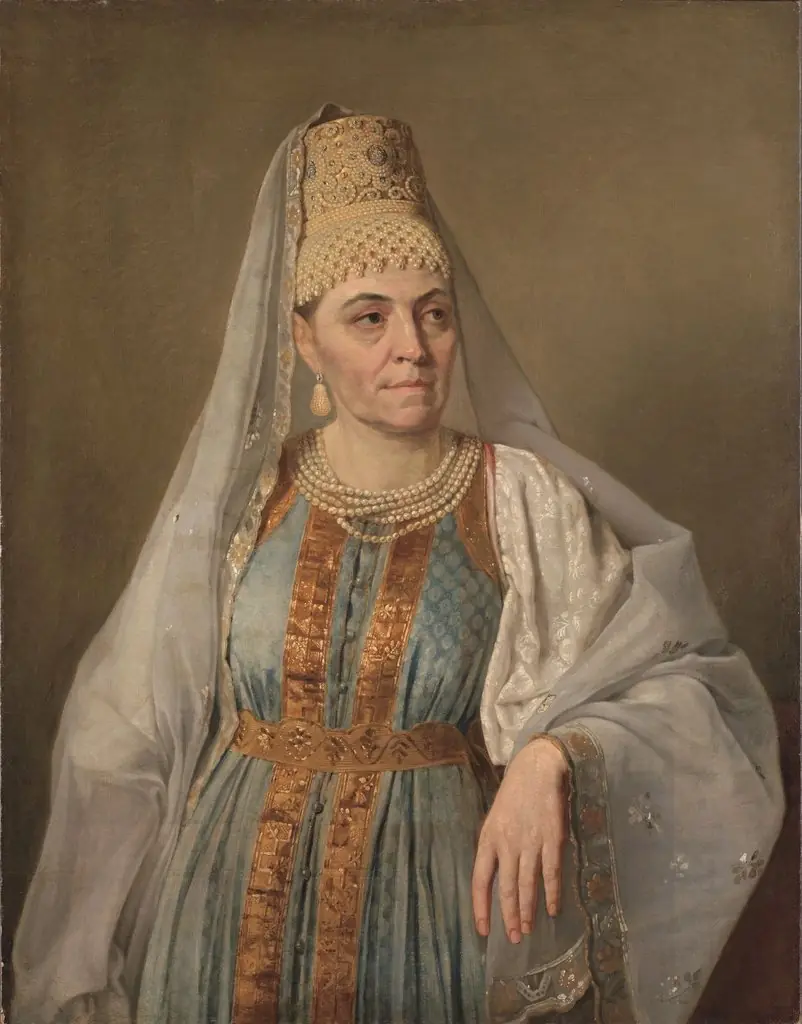 Портрет М.А. Венециановой в русском наряде
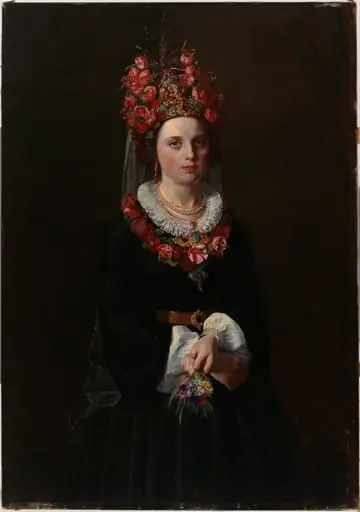 Ahvenanmaalainen talonpoikaismorsian
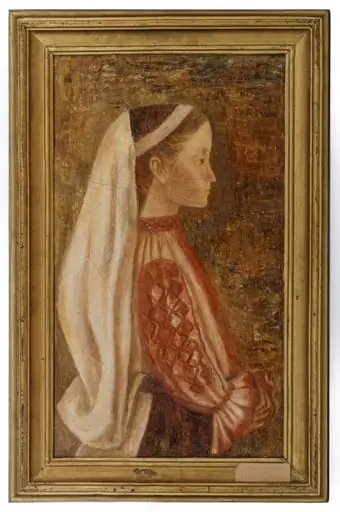 Pădureancă
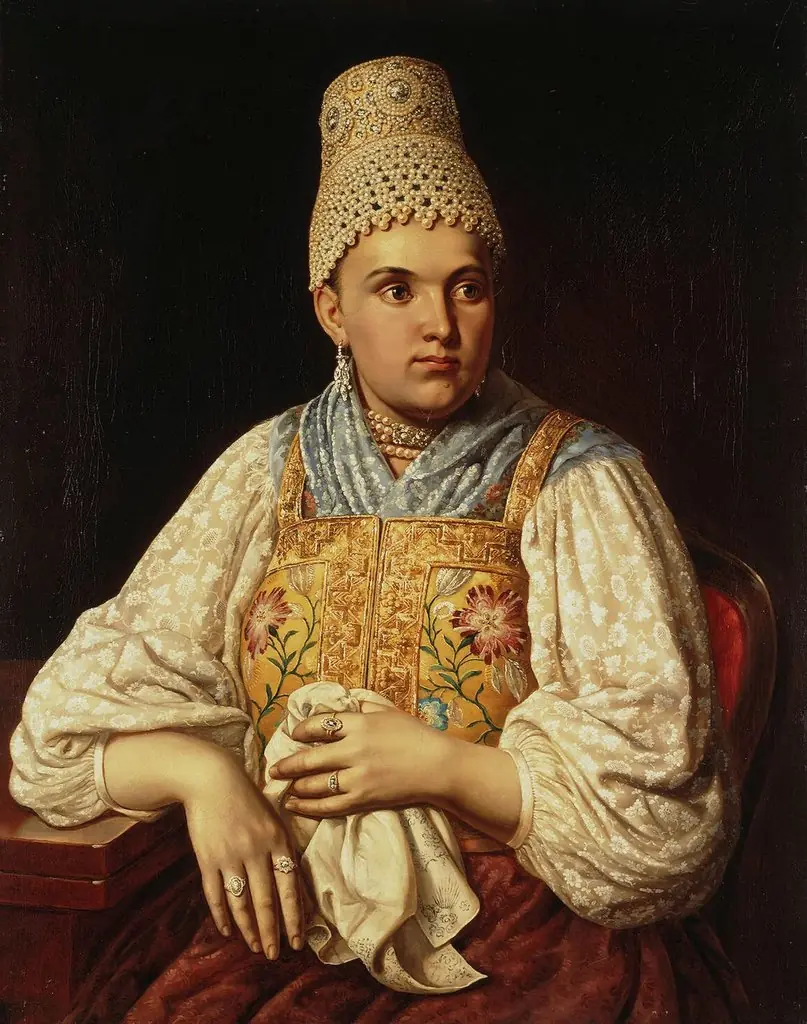 Portrait of Anna Filatova, a Merchant's Wife
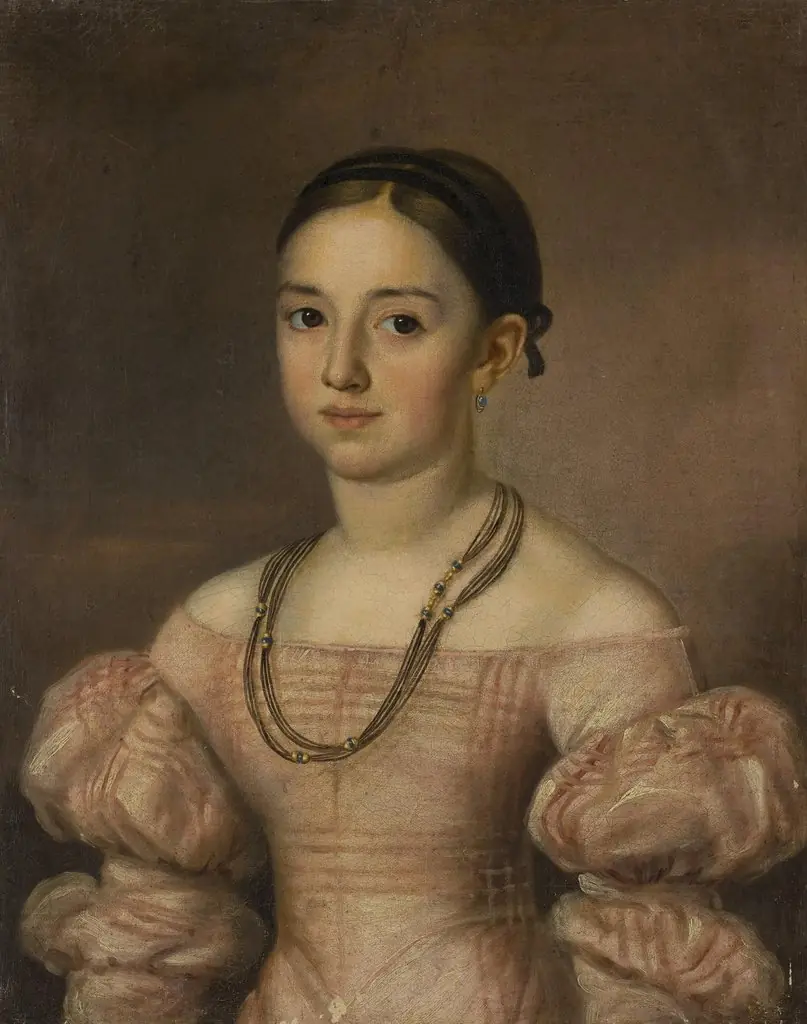 Portrait of an Adolescent Girl
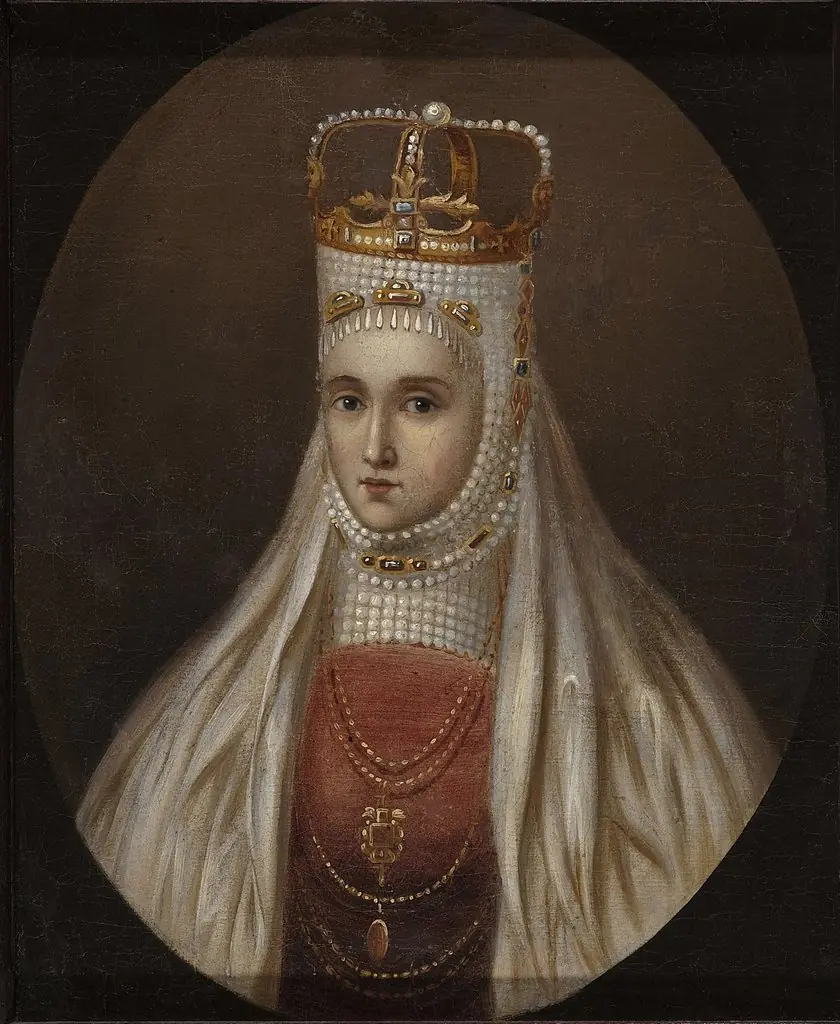 Portrait of Barbara Radziwiłł (1520–1551)
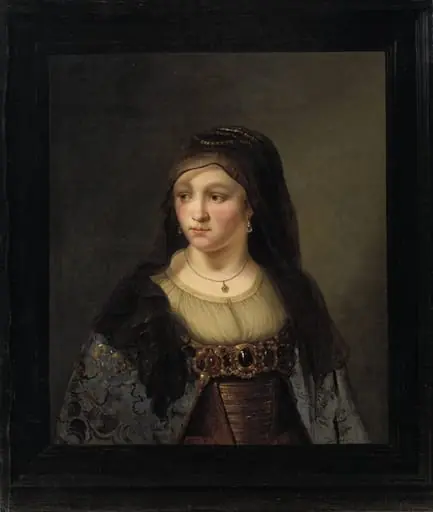 Portrait of a Lady in a Veil
 Προσωπογραφία της Κυριακούλας Αντωνίου Κριεζή