Artwork
Gloucester Harbor
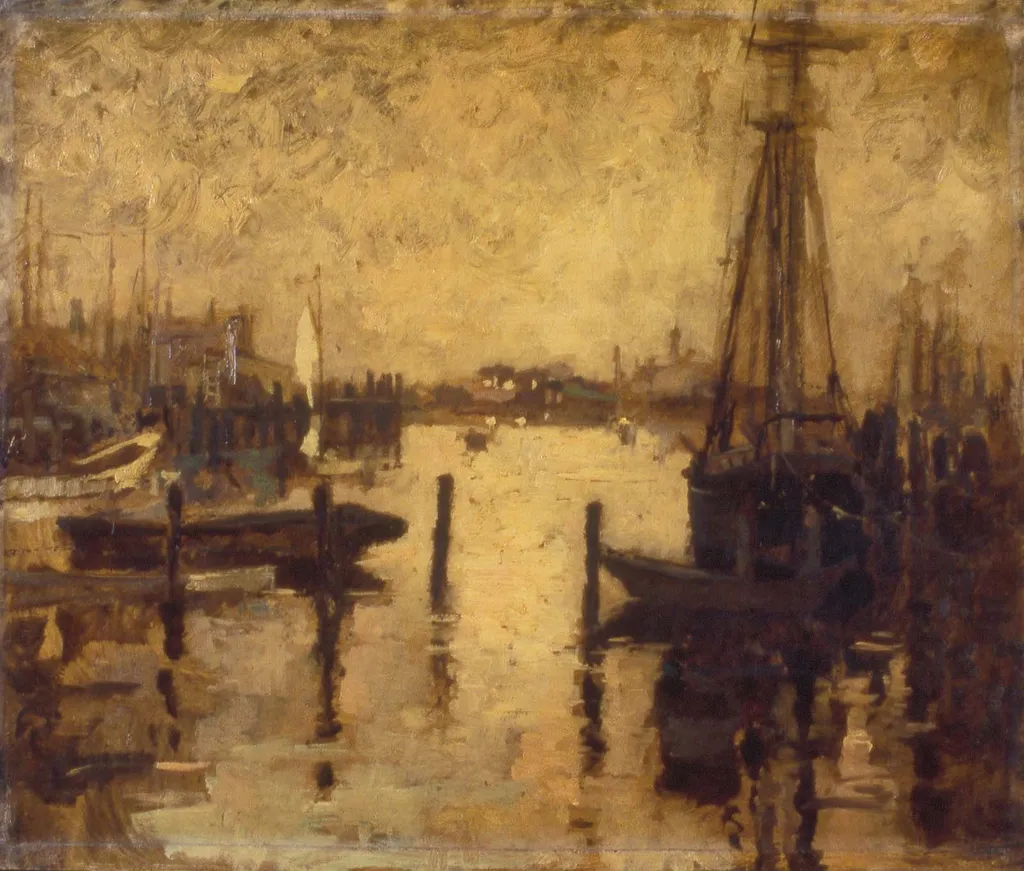
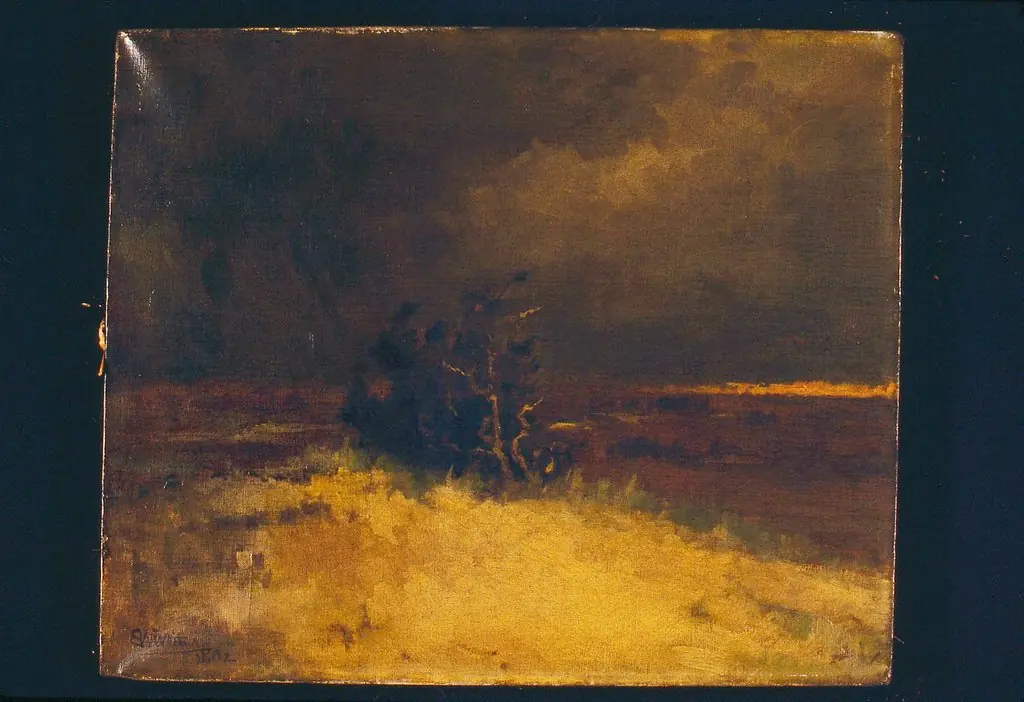
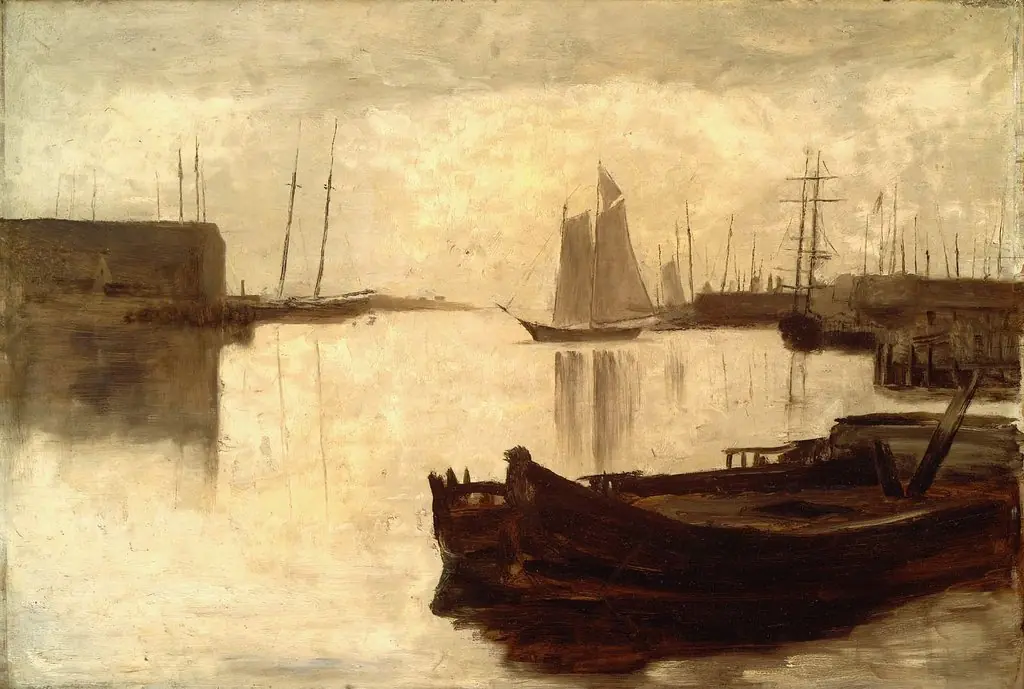
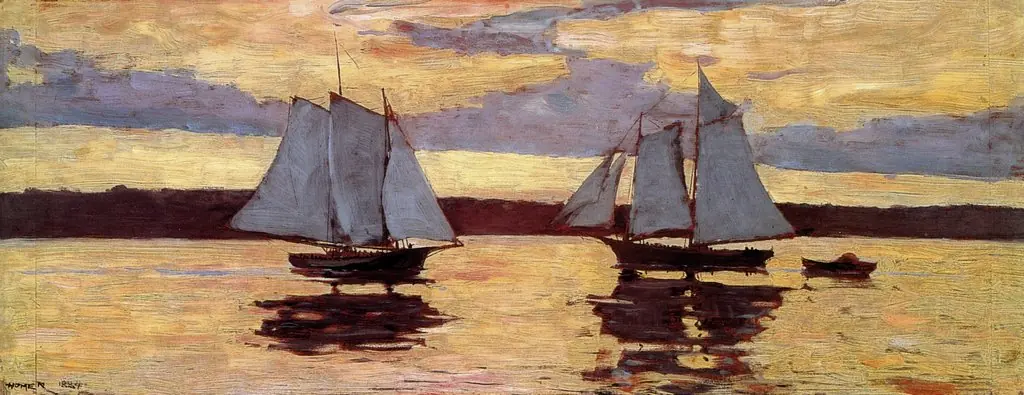
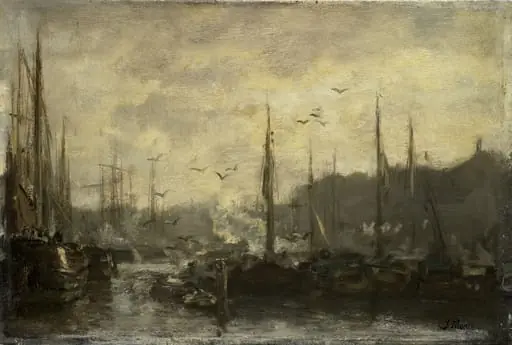
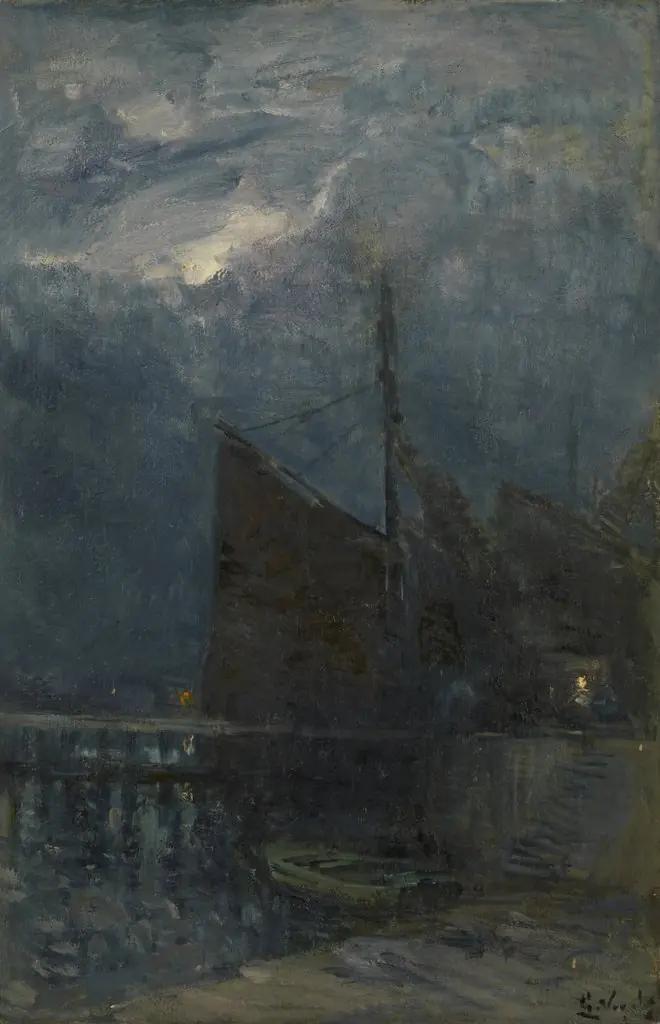
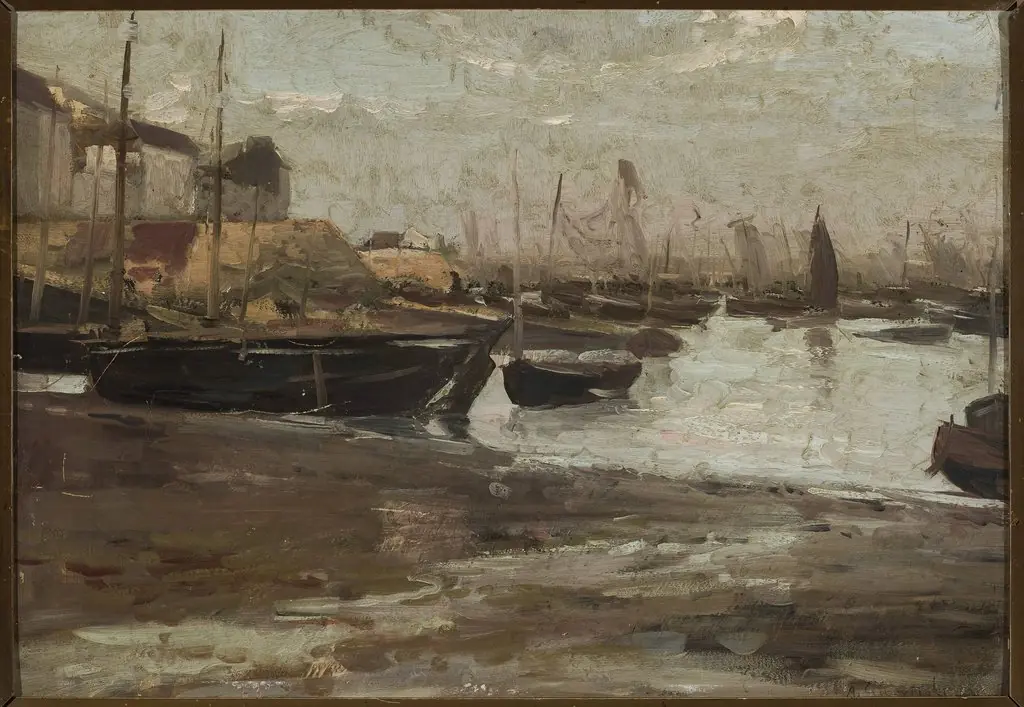
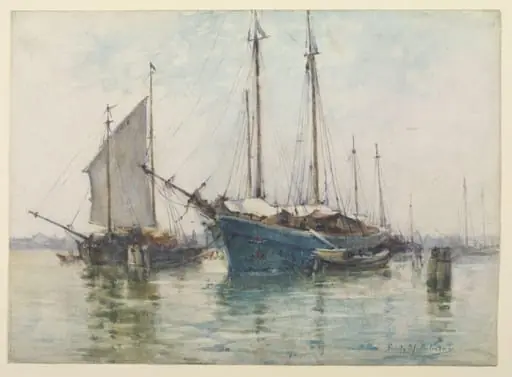
Gloucester Harbor is an oil painting by Sarah W. Whitman. It dates from 1883 and is held in the collection of the Museum of Fine Arts Boston. Sarah W.
About this work
Overview
Though better known for her stained glass and book design work, this piece reflects her engagement with landscape painting.
Sarah W. Whitman painted *Gloucester Harbor* circa 1883 in oil, capturing a quiet coastal scene in Massachusetts. Though better known for her stained glass and book design work, this piece reflects her engagement with landscape painting. The work is part of the Museum of Fine Arts, Boston’s collection, representing one of the few surviving oil paintings by a woman who carved a professional space in the male-dominated art world of the late 19th century.
Subject & Meaning
The painting portrays a tranquil harbor with anchored vessels, a larger ship to the right, and low buildings along the shoreline. No human figures are present, emphasizing stillness and solitude. The scene suggests a moment of pause in daily maritime activity, evoking the rhythm of coastal life without narrative drama. The calm water and muted tones reinforce a contemplative mood, aligning with Whitman’s interest in subtle, atmospheric effects over dramatic storytelling.
Technique & Style
Whitman employed a restrained palette of grays, browns, and soft blues, enhancing the painting’s quietude. Visible brushwork lends texture to the water and hulls, while subtle chiaroscuro models forms without heavy contrast. The reflections on the water are rendered with delicate precision, suggesting stillness rather than movement. Her handling of light and surface tension reveals an awareness of tonal harmony, influenced by contemporary American landscape traditions but executed with a personal restraint.
History & Provenance
Created during Whitman’s active years in Boston, the painting remained in private hands before entering the Museum of Fine Arts, Boston’s collection. Its provenance reflects the limited public recognition of women artists at the time, as few of her oil paintings were exhibited or documented widely. The work’s preservation in a major institution underscores its significance as a rare example of a female artist’s contribution to American marine painting in the Gilded Age.
Context
In the 1880s, American artists increasingly turned to coastal subjects as industrialization reshaped the landscape. Gloucester, a working fishing port, attracted painters seeking authenticity in everyday maritime life. Whitman, operating outside the mainstream art academies, engaged with these themes independently. Her work stands apart from the more dramatic seascapes of male contemporaries, favoring quiet observation over heroic scale.
Legacy
Though Whitman’s oil paintings are few and rarely exhibited, *Gloucester Harbor* endures as a quiet testament to her artistic range beyond stained glass. It contributes to broader reassessments of women’s roles in 19th-century American art, revealing how female artists navigated professional boundaries through understated, personal expression. The painting remains a subtle but important marker of artistic diversity in a period often defined by dominant male voices.
Artist & collection
Artist
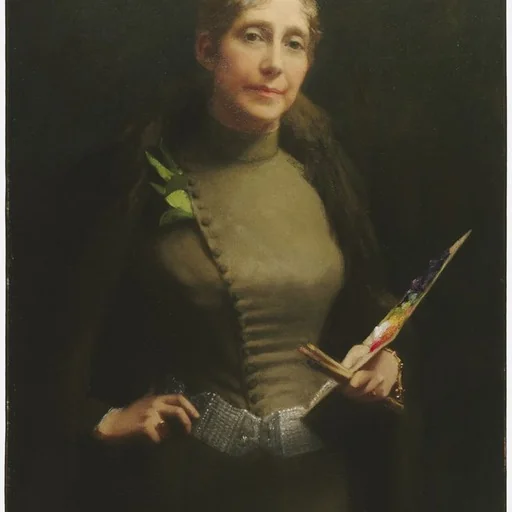
Sarah de St. Prix Wyman Whitman (1842–1904) was an American stained glass artist, painter, and book cover designer. Successful at a time when few women had professional art careers, she founded her own firm, Lily Glass…