Artwork
Înserare peste Chioggia
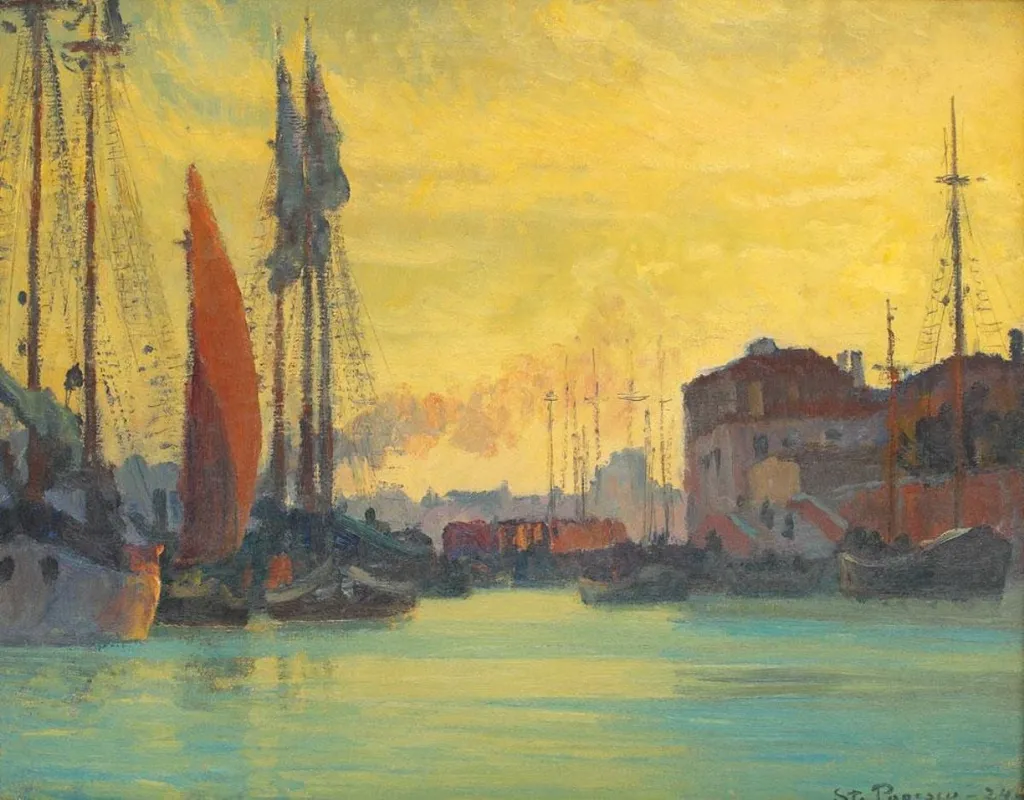
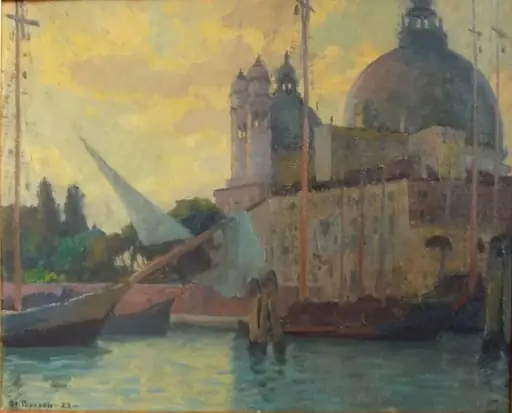
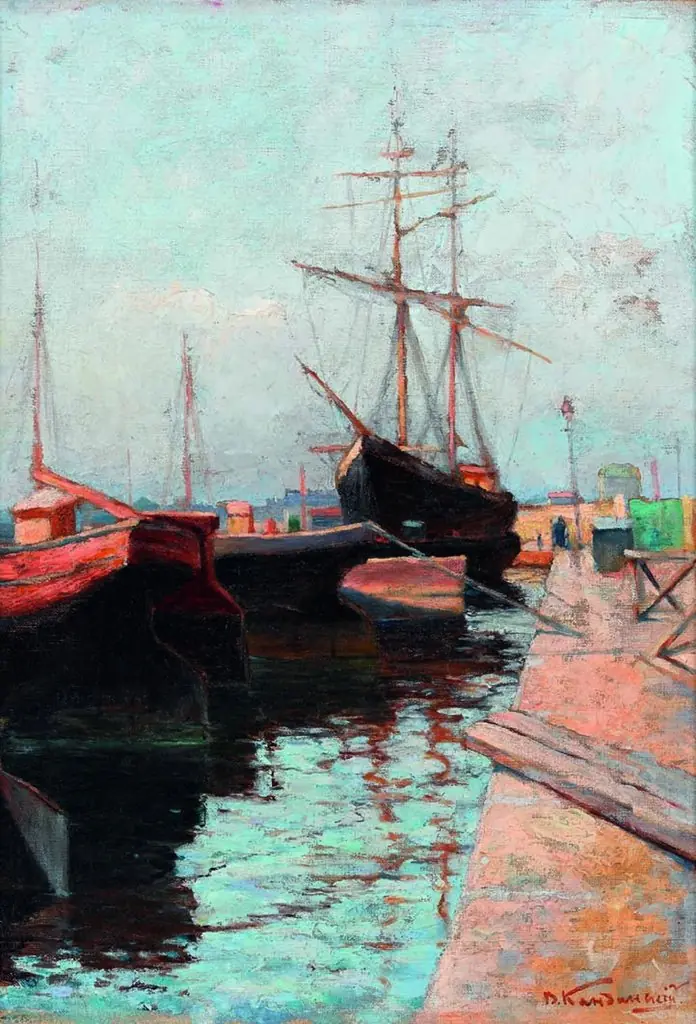
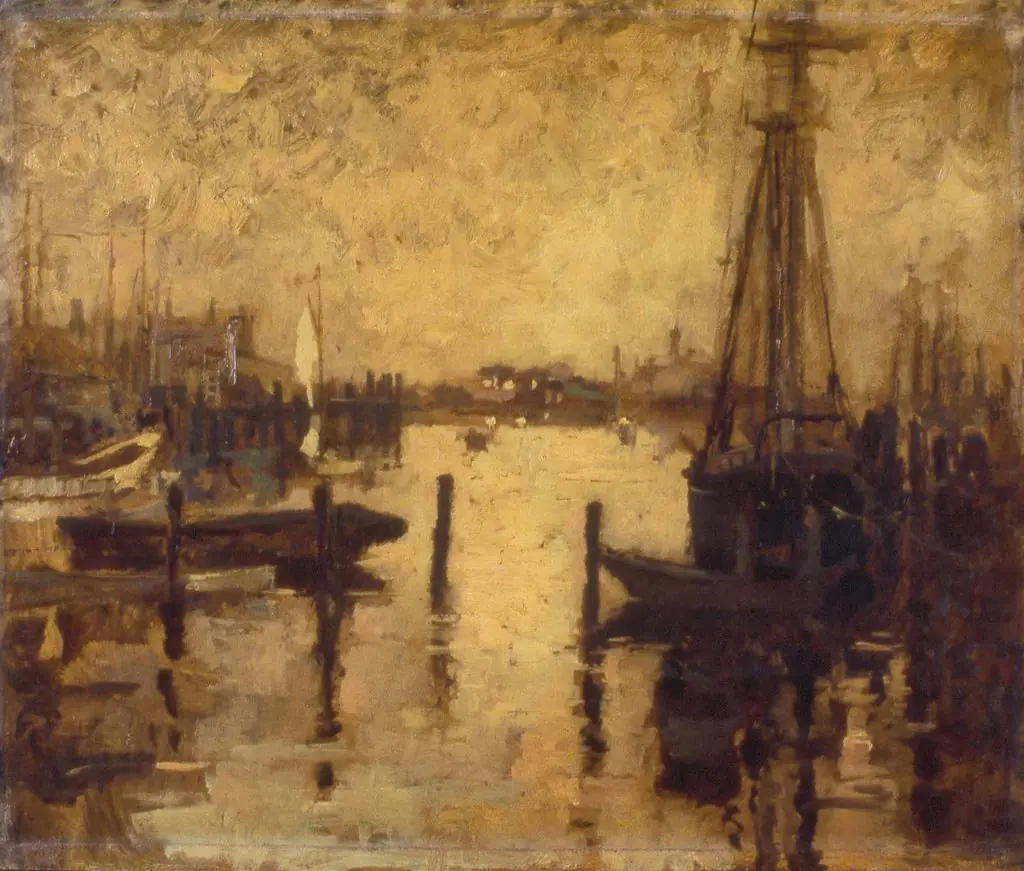
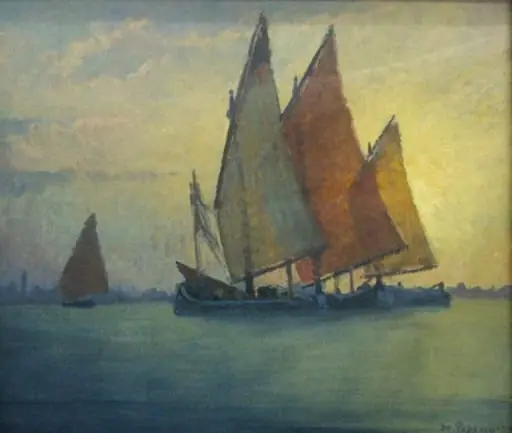
Înserare peste Chioggia is an unspecified painting by Ștefan Popescu. It is held in the collection of the Lucian Pop Art Collection. This image depicts the Venetian lagoon town of Chioggia at twilight, capturing the quiet rhythm of a harbor after daily activity.
About this work
Overview
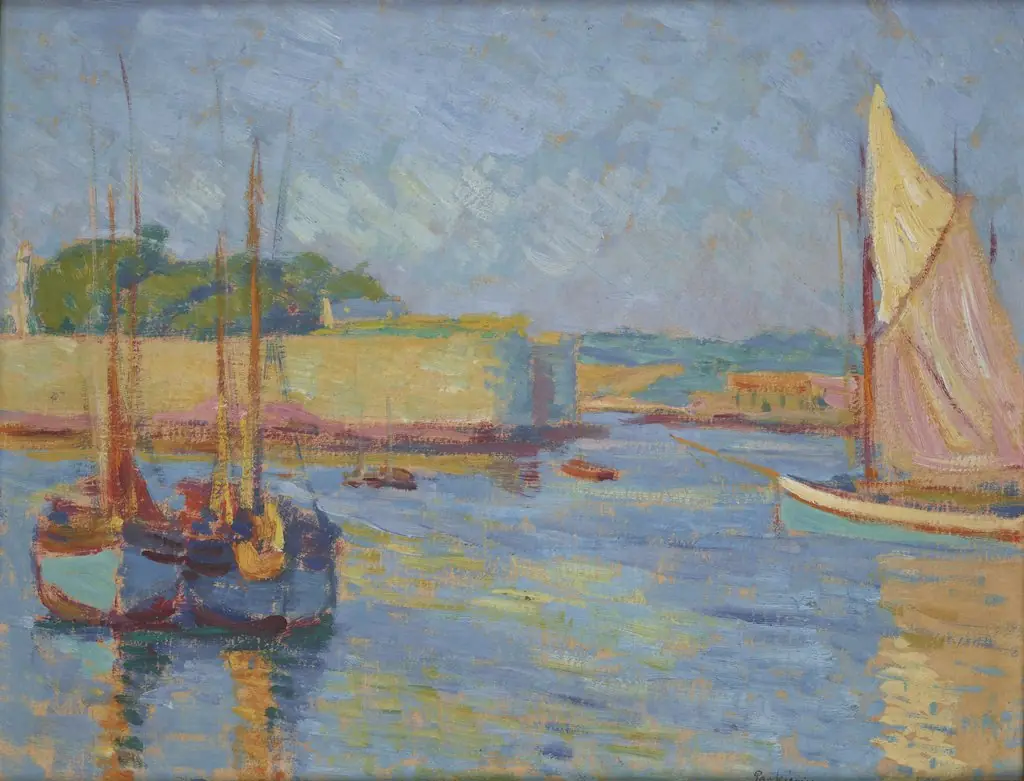
This image depicts the Venetian lagoon town of Chioggia at twilight, capturing the quiet rhythm of a harbor after daily activity. The scene is rendered with thick, tactile brushwork that lends physical presence to the water, buildings, and sails. A single red sail draws attention against a warm, fading sky, anchoring the composition in a moment of subdued transition between day and night.
Subject & Meaning
The painting presents a routine harbor scene—docked vessels, low buildings, and still water—without dramatic action. Its quietude suggests contemplation rather than narrative. The red sail, isolated and vivid, may imply a single vessel preparing to depart or returning, hinting at the persistence of movement amid stillness, a subtle tribute to daily maritime life.
Technique & Style
Thick applications of paint, known as impasto, create a textured surface that catches light and adds dimension. The brushwork is deliberate yet loose, allowing colors to blend softly at the edges, especially where sky meets water. This technique enhances the atmospheric glow of dusk, making the light feel tangible rather than merely observed.
History & Provenance
The work is attributed to an artist active in the late 19th or early 20th century, likely influenced by Venetian landscape traditions. Its origin is tied to the region’s artistic circles, though specific ownership records before the 20th century remain undocumented. It was likely painted en plein air, reflecting a direct engagement with the site.
Context
During the period, artists increasingly turned to everyday coastal scenes as industrialization reshaped traditional livelihoods. Chioggia, a quieter counterpart to Venice, offered a retreat from urban intensity. This painting aligns with a broader trend of capturing transient light and local life with emotional restraint, away from grand historical themes.
Legacy
The work contributes to a regional tradition of Venetian lagoon painting that prioritizes atmosphere over spectacle. Its use of impasto and muted palette influenced later artists seeking to convey mood through materiality. Though not widely exhibited, it remains a quiet example of how ordinary places were rendered with dignity and sensory precision.
Artist & collection
Artist
Ștefan Popescu painted quiet scenes from the 1920s, blending everyday places with soft light.