Artwork
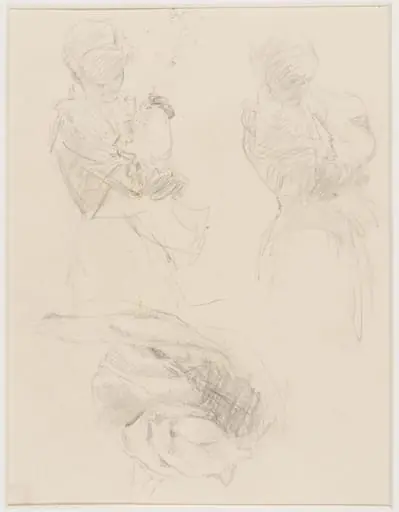
Mother and Child [recto]
![Mother and Child [recto], by John Singer Sargent, graphite, 1872](https://artifactworldgallery.com/img/john-singer-sargent--mother-and-child-recto--92db105a7bab38aa-w1024.webp)
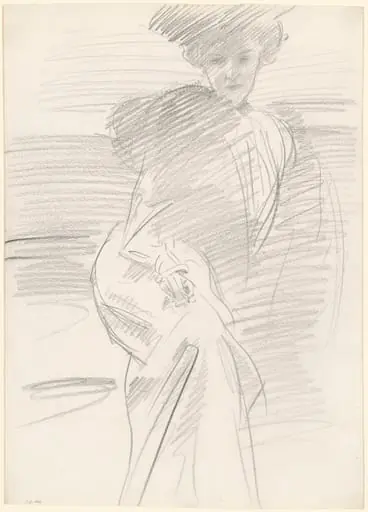
Mother and Child [recto] is a graphite drawing by the Impressionist artist John Singer Sargent. It dates from 1872 and is held in the collection of the National Gallery of Art.
About this work
Overview
John Singer Sargent’s drawing titled *Mother and Child* is a graphite study on wove paper. Executed as a single‑sheet sketch, the work presents a quiet domestic scene in which a woman and a young child share a moment of close contact. The composition is uncluttered, allowing the viewer’s attention to rest on the figures and their interaction.
Subject & Meaning
The drawing captures a tender exchange between a caregiver and her child, both dressed in informal attire that suggests a private, everyday setting. The relaxed posture and gentle gestures convey affection without overt narrative, emphasizing the universal bond of maternal care rather than a specific story or symbolic program.
Technique & Style
Rendered entirely in graphite, Sargent employs soft, overlapping strokes to model flesh and fabric, creating a subtle tonal range. The paper’s smooth surface supports delicate shading, while the minimal background—largely left blank—heightens the focus on line and form. The study reflects the artist’s early proficiency in conveying volume and emotion with few marks.
History & Provenance
Created during Sargent’s formative years, the sketch exemplifies his practice of quick observational drawings that he produced while developing his portraiture skills. The work remains in a private collection, having passed through several hands since its early twentieth‑century origin, and is documented in the artist’s catalogue raisonné as an example of his preparatory studies.
Artist & collection

Artist
John Singer Sargent (; January 12, 1856 – April 15, 1925) was an American expatriate artist, considered the "leading portrait painter of his generation" for his evocations of Belle Époque and Edwardian-era luxury.

![A Breton Woman and a Standing Man; Head and Hand of a Monkey [recto], by Paul Gauguin](https://artifactworldgallery.com/img/paul-gauguin--a-breton-woman-and-a-standing-man-head-and-hand-of-a-monkey--e35c46eb8cb6c297-w320.webp)
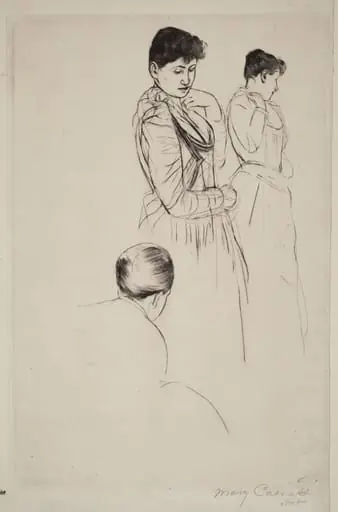
![The Fitting [recto], by Mary Cassatt](https://artifactworldgallery.com/img/mary-cassatt--the-fitting-recto--bdf1c75791eec1a5-w320.webp)