Artwork
A Breton Woman and a Standing Man; Head and Hand of a Monkey [recto]
![A Breton Woman and a Standing Man; Head and Hand of a Monkey [recto], by Paul Gauguin, graphite, 1886](https://artifactworldgallery.com/img/paul-gauguin--a-breton-woman-and-a-standing-man-head-and-hand-of-a-monkey--e35c46eb8cb6c297-w1024.webp)
A Breton Woman and a Standing Man; Head and Hand of a Monkey [recto] is a graphite drawing by the Impressionist artist Paul Gauguin. It dates from 1886 and is held in the collection of the National Gallery of Art.
About this work
Overview
The two images—each framed by a fine black line—are side by side, suggesting a deliberate pairing rather than random sketches.
Created in 1886, this drawing by Paul Gauguin combines two distinct studies on a single sheet of wove paper. Executed in crayon and graphite, the work reflects his transitional phase following his departure from Impressionism. The two images—each framed by a fine black line—are side by side, suggesting a deliberate pairing rather than random sketches. The materials and composition reveal his interest in direct, unembellished observation.
Subject & Meaning
The left panel portrays a Breton woman in traditional dress, facing right, with a man standing behind her, clutching a bag. The right panel shows a monkey’s head and curled hand, rendered with intimate detail. The juxtaposition may hint at contrasts between human ritual and animal instinct, or between rural life and the wild. Gauguin often used such pairings to evoke psychological or symbolic tensions without explicit narrative.
Technique & Style
Gauguin employed crayon for bold, smudged contours and graphite for finer, sharper lines, creating contrast in texture and weight. The wove paper’s subtle grain enhances the tactile quality of the marks. His lines are economical yet expressive, avoiding modeling in favor of suggestive form. This approach aligns with his move toward simplification and emotional resonance over naturalistic detail.
History & Provenance
The drawing dates from Gauguin’s time in Brittany, where he sought alternative artistic communities away from Paris. It was likely made during his second stay in Pont-Aven, a hub for artists exploring non-academic styles. The work remained in private collections until entering a public institution, where it is now preserved as part of his graphic oeuvre from this formative period.
Context
In 1886, Gauguin was distancing himself from Impressionist techniques, drawn instead to the spiritual and folk elements of Breton culture. His interest in non-Western art and symbolic content was growing, and this drawing anticipates his later stylizations. The monkey, a recurring motif in his work, may reference primitivism or the subconscious, themes central to Symbolist circles he engaged with.
Legacy
This drawing exemplifies Gauguin’s shift toward expressive line and symbolic composition, influencing later modernists who valued emotional clarity over optical realism. Its dual imagery and restrained palette became a model for artists exploring psychological depth through simplified forms. Though not widely exhibited, it remains a key document of his evolving visual language in the years before his departure to Tahiti.
Artist & collection
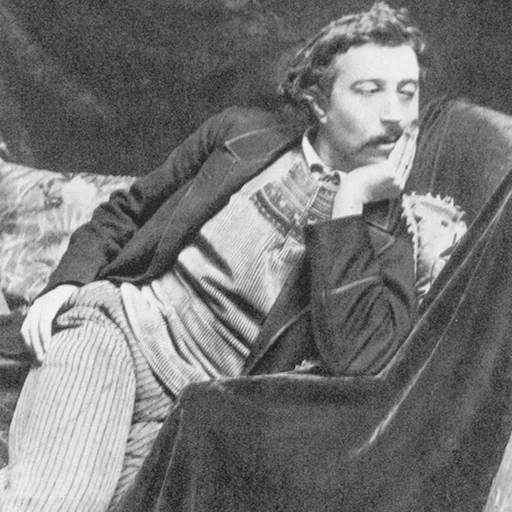
Artist
Eugène Henri Paul Gauguin (; French: ; 7 June 1848 – 8 May 1903) was a French painter, sculptor, printmaker, ceramist, and writer, whose work has been primarily associated with the Post-Impressionist and Symbolist movements.

![Two Breton Women; Landscape [recto], by Paul Gauguin](https://artifactworldgallery.com/img/paul-gauguin--two-breton-women-landscape-recto--3abe70d061ab2b76-w320.webp) Two Breton Women; Landscape [recto]
Two Breton Women; Landscape [recto]![Eye and Part of Face; A Breton Woman and Two Men [recto], by Paul Gauguin](https://artifactworldgallery.com/img/paul-gauguin--eye-and-part-of-face-a-breton-woman-and-two-men-recto--81c9125f35b9b9e6-w320.webp) Eye and Part of Face; A Breton Woman and Two Men [recto]
Eye and Part of Face; A Breton Woman and Two Men [recto]![Monkey and Cottage; Little Breton Boy [recto], by Paul Gauguin](https://artifactworldgallery.com/img/paul-gauguin--monkey-and-cottage-little-breton-boy-recto--b3a09959c238ad80-w320.webp) Monkey and Cottage; Little Breton Boy [recto]
Monkey and Cottage; Little Breton Boy [recto]![A Head of Man with Hat, Seen from Behind; A Standing Woman [recto], by Paul Gauguin](https://artifactworldgallery.com/img/paul-gauguin--a-head-of-man-with-hat-seen-from-behind-a-standing-woman-rec--2aa61ddf1796e9f0-w320.webp) A Head of Man with Hat, Seen from Behind; A Standing Woman [recto]
A Head of Man with Hat, Seen from Behind; A Standing Woman [recto]![Two Breton Figures; Bridge at Pont-Aven [recto], by Paul Gauguin](https://artifactworldgallery.com/img/paul-gauguin--two-breton-figures-bridge-at-pont-aven-recto--c0e464ebc5606803-w320.webp) Two Breton Figures; Bridge at Pont-Aven [recto]
Two Breton Figures; Bridge at Pont-Aven [recto]![Two Breton Figures and Studies of Two Geese; Man Wearing Hat [verso], by Paul Gauguin](https://artifactworldgallery.com/img/paul-gauguin--two-breton-figures-and-studies-of-two-geese-man-wearing-hat--f7cd3e5e03e12434-w320.webp) Two Breton Figures and Studies of Two Geese; Man Wearing Hat [verso]
Two Breton Figures and Studies of Two Geese; Man Wearing Hat [verso]![Five Sheep; Head of a Woman and Head of a Bearded Man [recto], by Paul Gauguin](https://artifactworldgallery.com/img/paul-gauguin--five-sheep-head-of-a-woman-and-head-of-a-bearded-man-recto--b52e1d9f193e7f08-w320.webp) Five Sheep; Head of a Woman and Head of a Bearded Man [recto]
Five Sheep; Head of a Woman and Head of a Bearded Man [recto]![Two Cows; A Seated Breton Woman [verso], by Paul Gauguin](https://artifactworldgallery.com/img/paul-gauguin--two-cows-a-seated-breton-woman-verso--e4a7eb7a31307828-w320.webp) Two Cows; A Seated Breton Woman [verso]
Two Cows; A Seated Breton Woman [verso]![Crouching Monkey and Man's Head; Bones and Muscles [verso], by Paul Gauguin](https://artifactworldgallery.com/img/paul-gauguin--crouching-monkey-and-man-s-head-bones-and-muscles-verso--6ce66c8fb6bba7c2-w320.webp) Crouching Monkey and Man's Head; Bones and Muscles [verso]
Crouching Monkey and Man's Head; Bones and Muscles [verso]