Artwork
Madonna of Humility
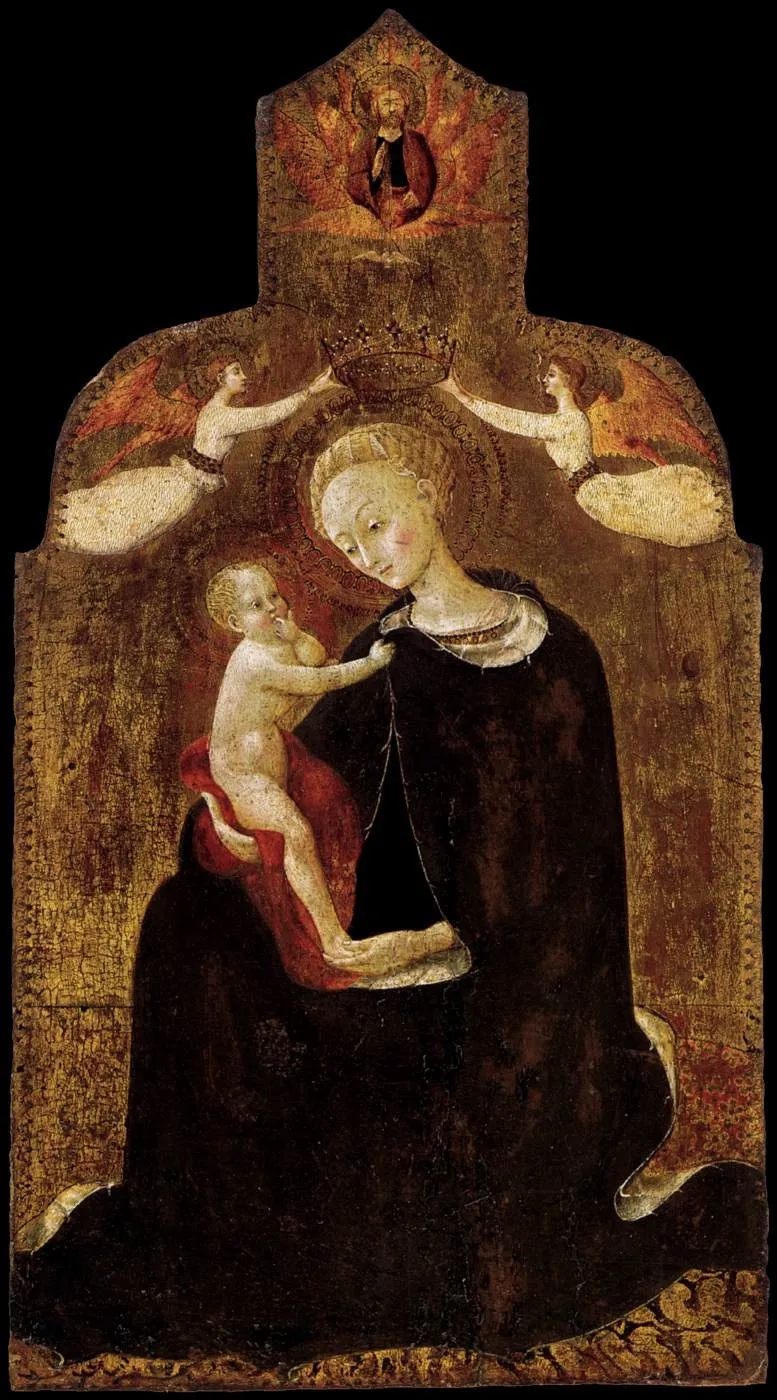
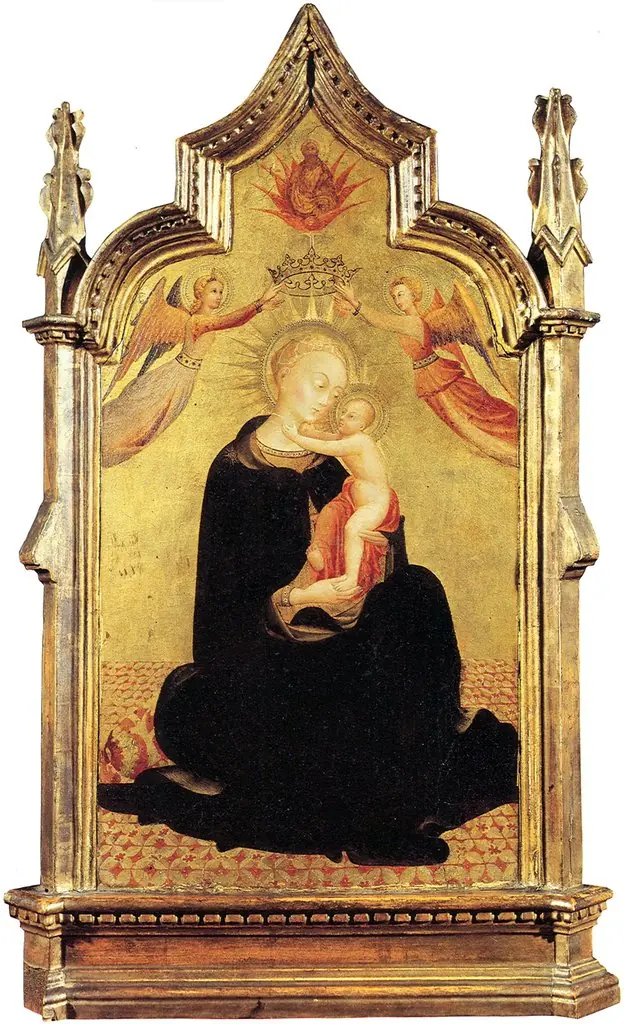
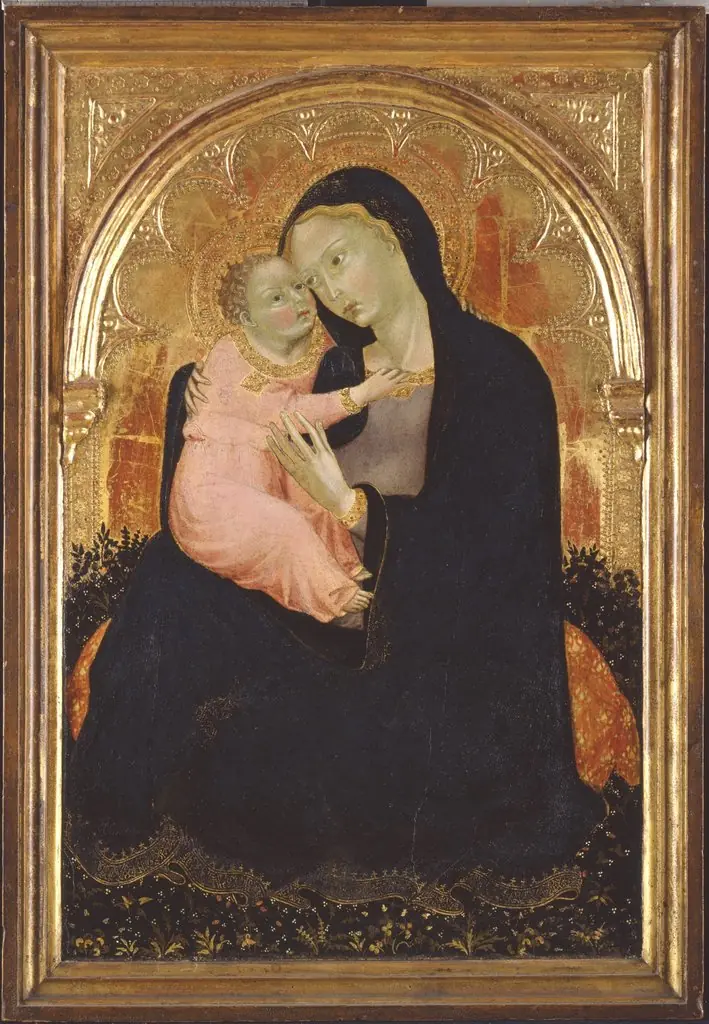
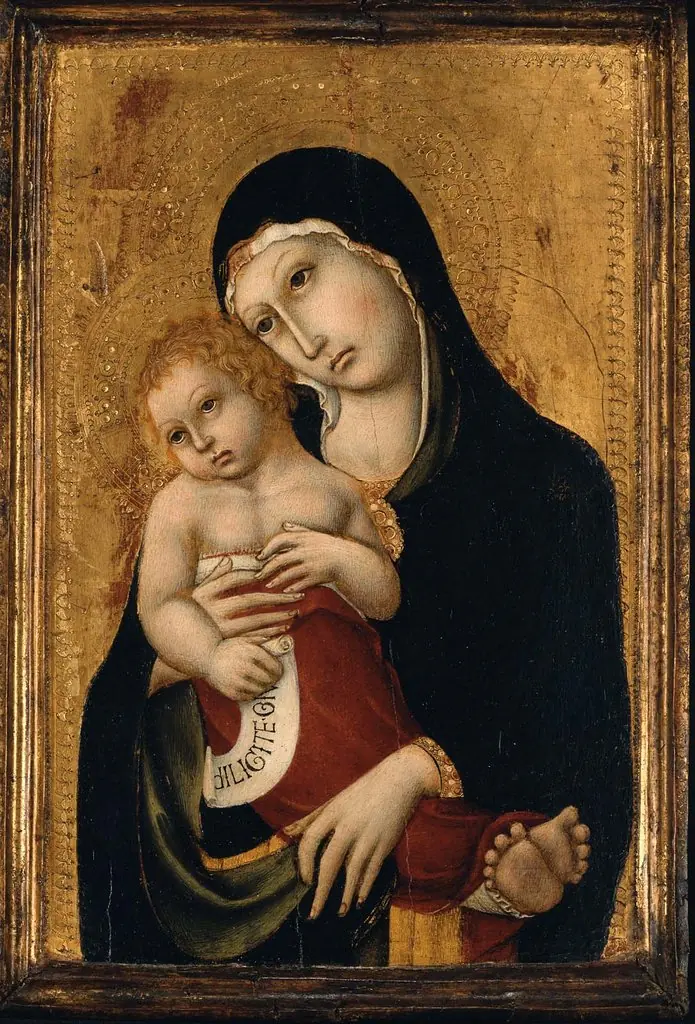
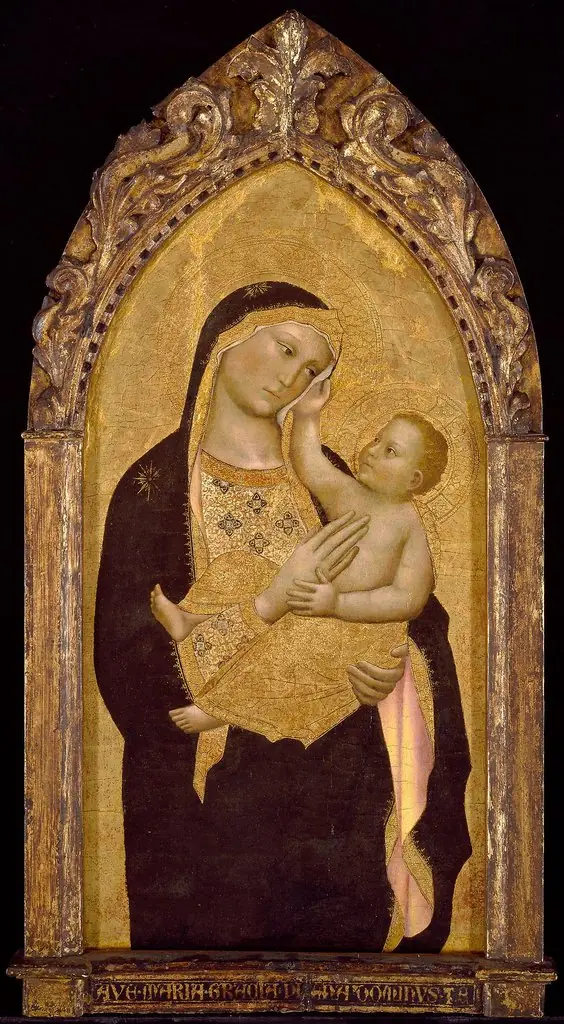
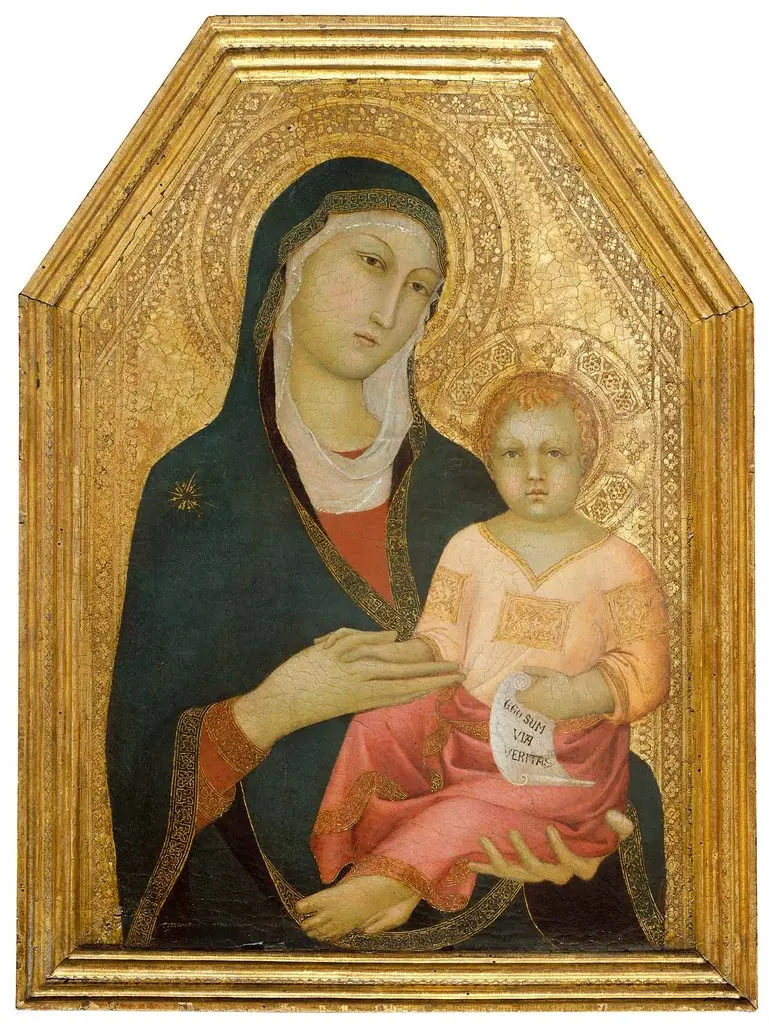
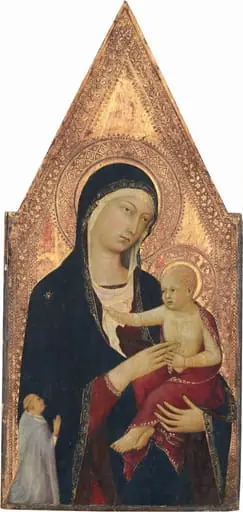
Madonna of Humility is a tempera painting by the Early Renaissance artist Sassetta. It dates from 1434 and is held in the collection of the Gemäldegalerie Berlin.
About this work
Overview
Madonna of Humility, created in 1434 by Sassetta (Stefano di Giovanni di Consolo), is a tempera painting embodying the transitional style of the early Renaissance, blending Sienese School traditions with Gothic and emerging Florentine realistic elements.
Subject & Meaning
The painting depicts a serene scene of the Virgin Mary kneeling on a red cushion, cradling the nude Christ Child (except for a draped red cloth), accompanied by two angels and a haloed figure above, interpreted as Jesus, symbolizing humility and divine presence.
Technique & Style
Executed in tempera, the work features a smooth, matte color finish. Sassetta's meticulous attention to detail is evident in the intricate folds of Mary's black robe and the gentle, serene facial expressions, reflecting both Gothic ornamentation and the realism influenced by Florentine artists like Masaccio.
History & Provenance
Originally created in 1434, the painting is now part of the collection at the Gemäldegalerie Berlin, highlighting its journey from a Sienese artistic product to a prized piece in a major European museum.
Context
Situated within the early Renaissance, this work bridges the Gothic era's decorative tendencies with the burgeoning realism of the time, placing Sassetta at the forefront of the Sienese School's evolution.
Legacy
While specific lasting influences of *Madonna of Humility* on subsequent art movements are not widely highlighted, it remains a significant example of the transitional early Renaissance style, particularly in illustrating the Sienese School's adaptability and innovation during this period.
Artist & collection

Artist
Stefano di Giovanni di Consolo, known as il Sassetta (c. 1392–1450) was a Tuscan painter of the Renaissance, and a significant figure of the Sienese School. While working within the Sienese tradition, he innovated the…