Artwork
Așezare orientală
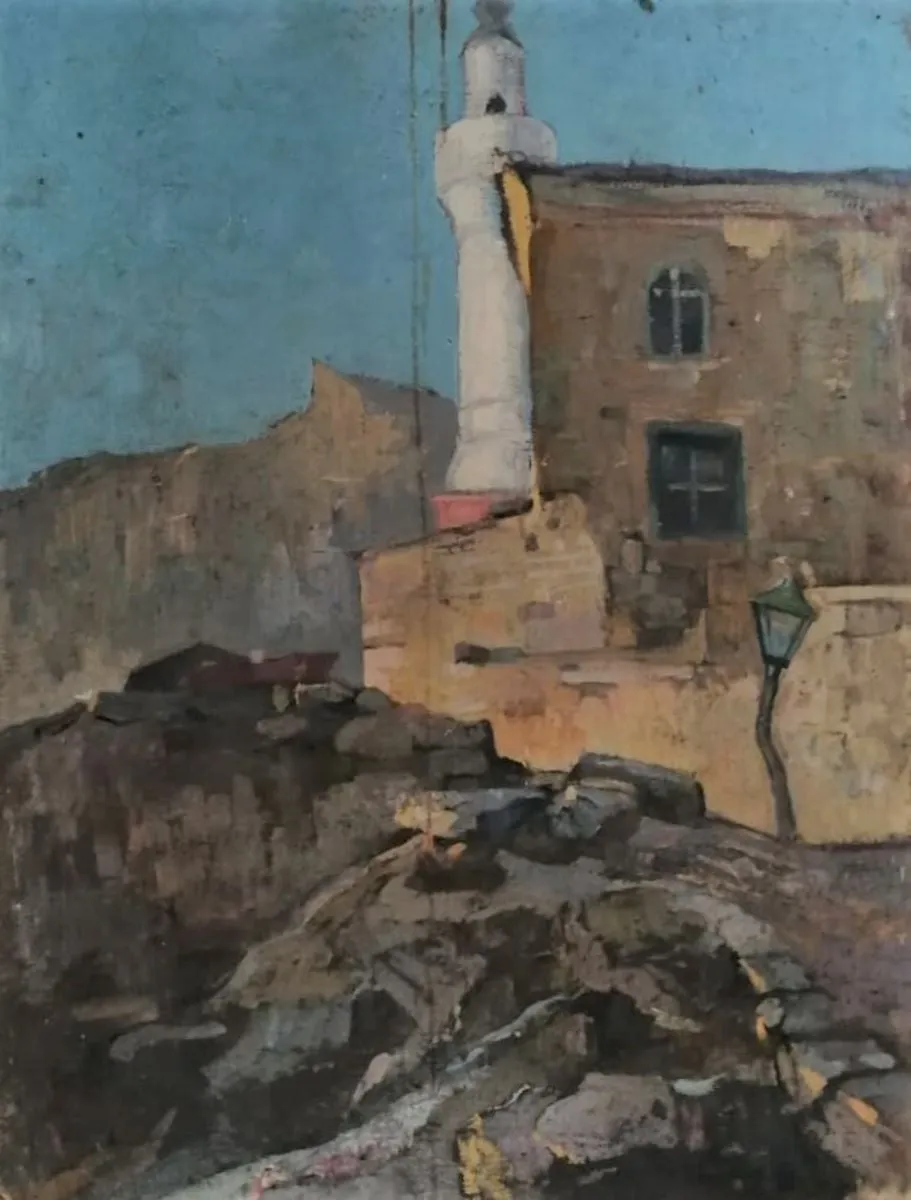
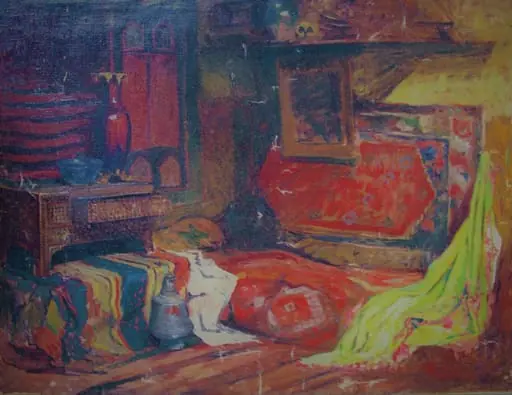
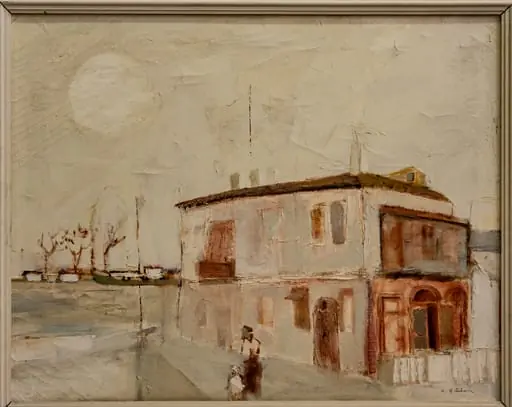
Așezare orientală is a print by Alexandru Carol Satmary. It dates from 1927 and is held in the collection of the Bucharest Municipality Museum.
About this work
Overview
Așezare orientală, painted around 1927 by Alexandru Carol Satmary, is part of the collection of the Museum of Ethnography.
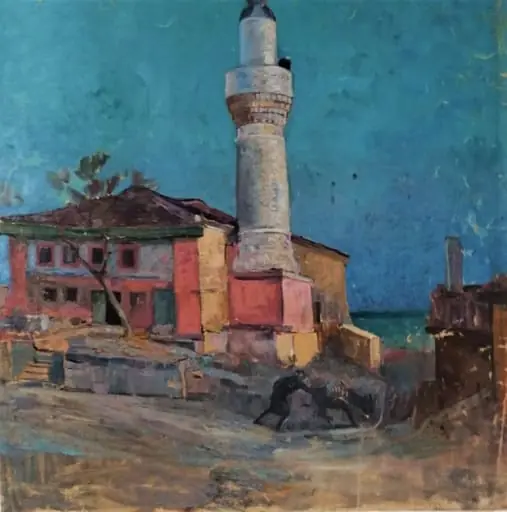
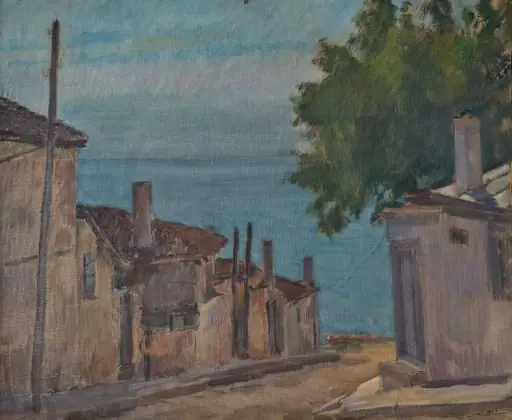
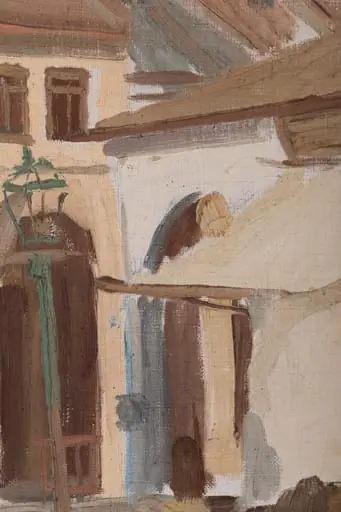
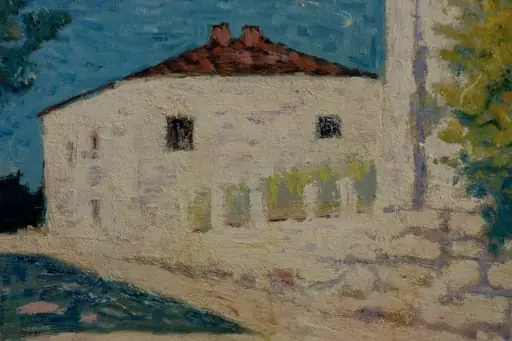
Așezare orientală, painted around 1927 by Alexandru Carol Satmary, is part of the collection of the Museum of Ethnography. The composition presents a solitary white tower perched on a rugged shoreline, with a modest window near its summit. Behind the tower a weathered structure with a green door and a circular window recedes, set against a uniformly blue sky and a ground strewn with uneven stones and pebbles.
Subject & Meaning
The work juxtaposes a stark, luminous tower against the muted, earthy surroundings, suggesting a dialogue between human construction and the natural landscape. The isolated tower, rendered in bright white, may evoke notions of guidance or watchfulness, while the adjacent dilapidated building hints at decay or abandonment, inviting contemplation of the passage of time within an oriental‑inspired setting.
Technique & Style
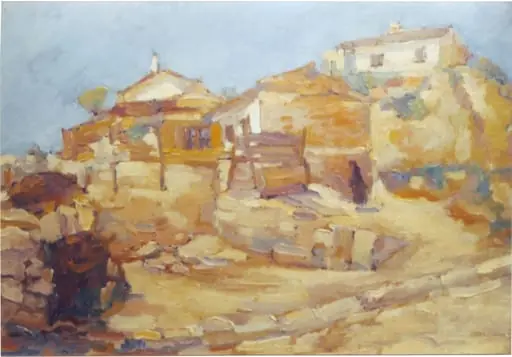
Satmary employs a pronounced impasto technique, applying thick layers of paint to convey the tactile quality of rock surfaces and the weathered walls. Broad, vigorous brushstrokes define the texture of the terrain, while smoother, flatter areas render the sky’s uniform blue. The contrast between the dense, sculptural paint and the flat background creates a visual tension that emphasizes the tower’s prominence.
History & Provenance
Created circa 1927, Așezare orientală entered the Museum of Ethnography’s holdings at an unspecified date, where it remains on display. The painting reflects Satmary’s interest in Eastern motifs during the interwar period, a time when Romanian artists frequently explored exotic themes in response to broader cultural currents.
Context
The interwar era in Romania saw a surge of artistic experimentation, with many painters incorporating oriental subjects as a means of expanding visual vocabulary. Satmary’s work aligns with this trend, integrating a stylized architectural element within a landscape that merges realistic observation with decorative simplification, characteristic of the period’s eclectic aesthetic.
Artist & collection
Artist
Alexandru Carol Satmary (1870–1933) was an artist, born in Bucharest.