Artwork
Clopotniță
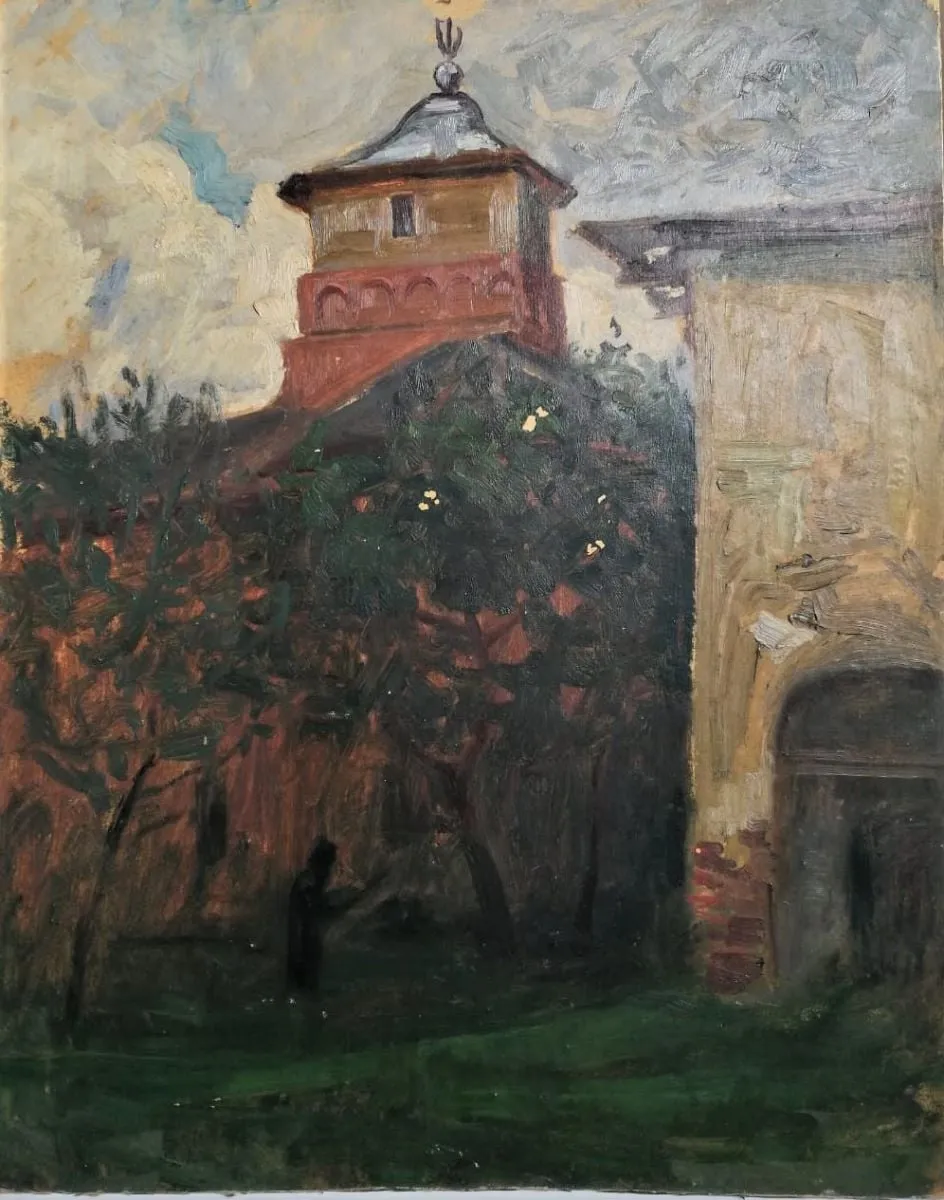
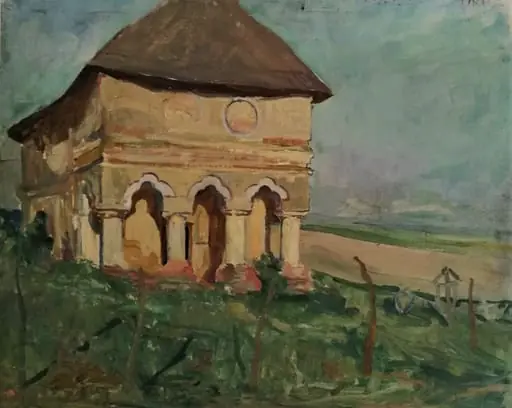
Clopotniță is an unspecified painting by Alexandru Carol Satmary. It dates from 1912 and is held in the collection of the Bucharest Municipality Museum.
About this work
Overview
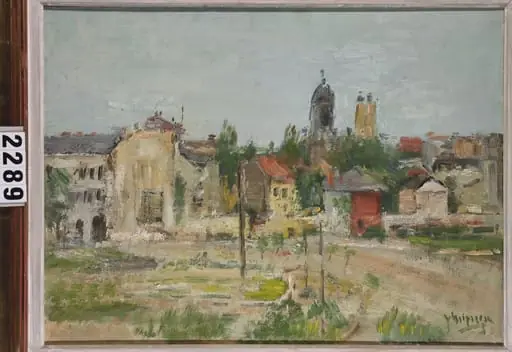
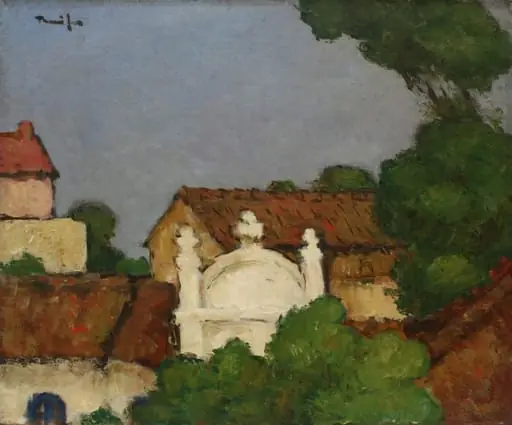
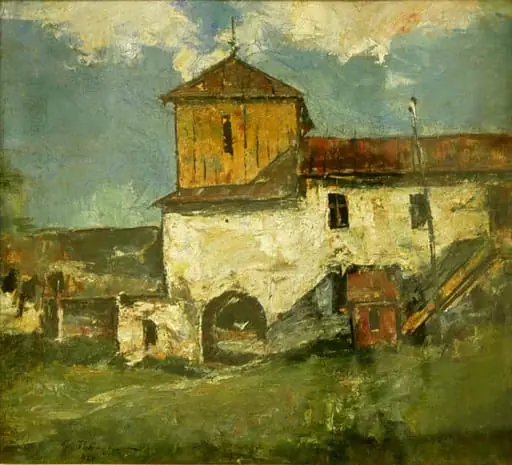
Alexandru Carol Satmary’s c. 1912 oil on canvas, titled Clopotniță, depicts a modest, tower‑like structure crowned with a plain cross. The building rests on a weathered red base and is set against a light, loosely brushed sky that suggests a watercolor effect. Thick foliage frames the scene, while a pale stone wall with a doorway appears on the right side of the composition.
Subject & Meaning
The work presents a solitary bell‑tower, a common feature in rural Romanian villages, symbolising communal gathering and religious practice. By isolating the tower amid overgrown vegetation, Satmary emphasizes its endurance against time and nature, inviting contemplation of the relationship between built heritage and the surrounding landscape.
Technique & Style
Satmary employs a rapid, expressive brushwork that leaves visible strokes, lending the painting a textured, unfinished quality. The palette is restrained, dominated by muted reds, dark roof tones, and a pale sky rendered in soft washes. This approach aligns with early 20th‑century Romanian regionalist tendencies, balancing realism with a loose, atmospheric handling of light.
History & Provenance
Created around 1912, Clopotniță entered the collection of the Museum of Ethnography, where it remains on display. The museum’s acquisition reflects its mission to preserve visual records of traditional Romanian architecture and rural life, situating Satmary’s work within a broader ethnographic context.
Context
The painting emerges from a period when Romanian artists increasingly turned to local subjects, documenting vernacular structures as expressions of national identity. Satmary’s focus on a modest bell‑tower mirrors contemporary interests in folk culture and the preservation of architectural forms threatened by modernization.
Artist & collection
Artist
Alexandru Carol Satmary (1870–1933) was an artist, born in Bucharest.