Artwork
Țărancă cu cobilița
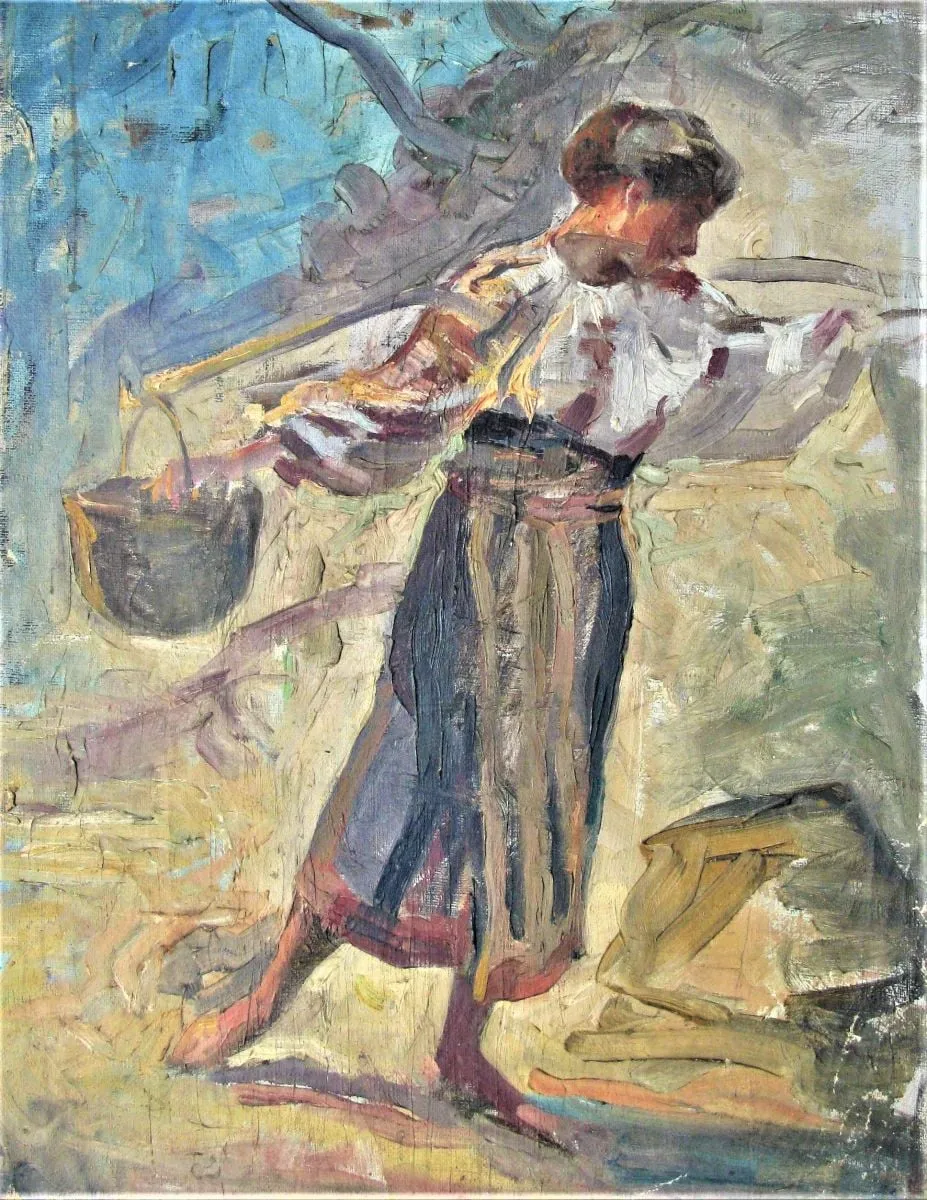
Țărancă cu cobilița is a print by Alexandru Carol Satmary. It dates from 1908 and is held in the collection of the Bucharest Municipality Museum.
About this work
Overview
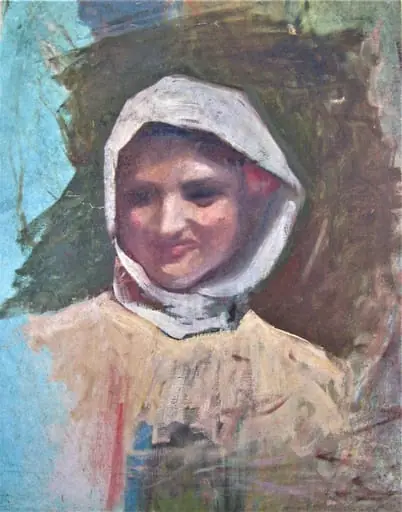
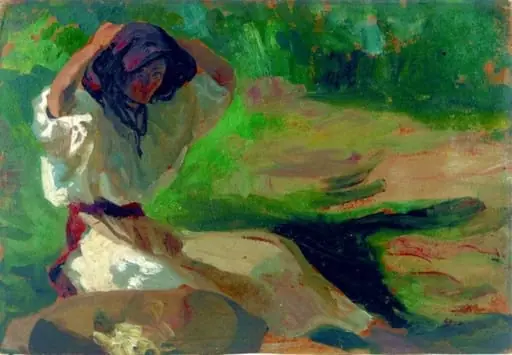
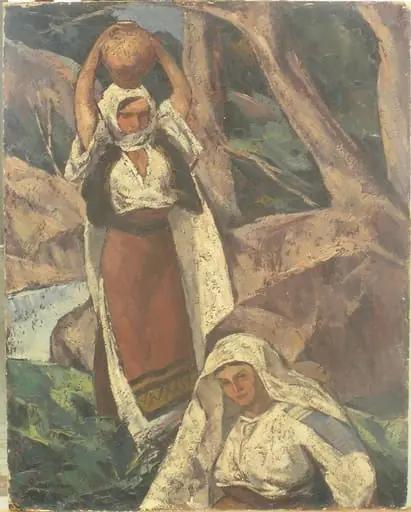
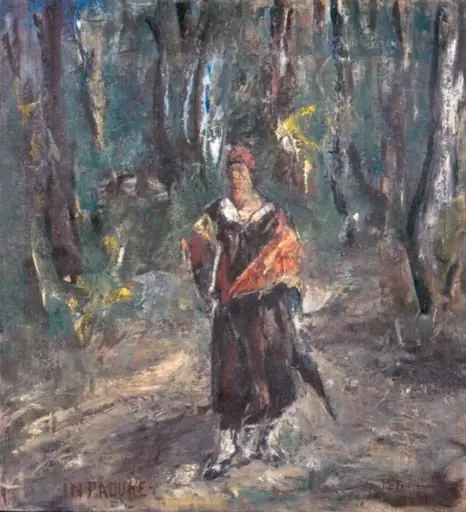
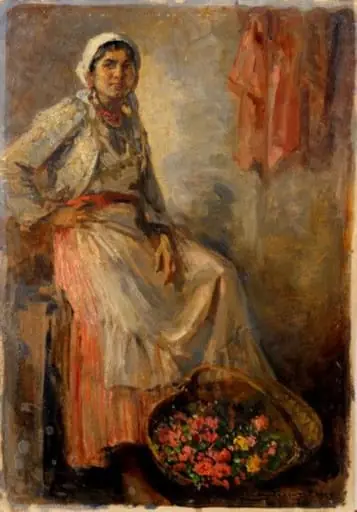
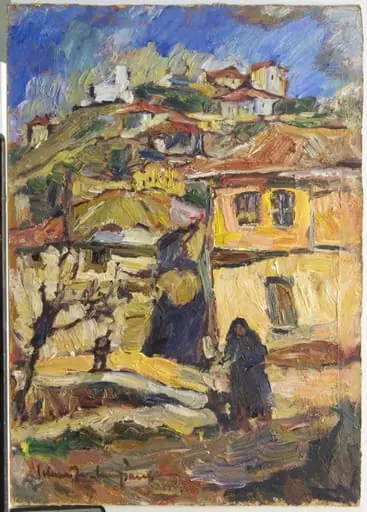
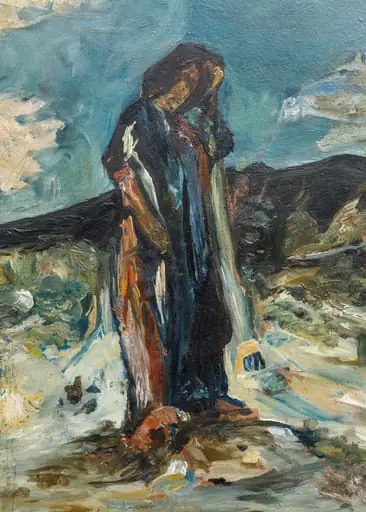
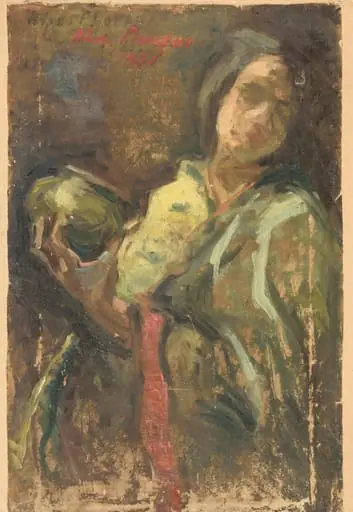
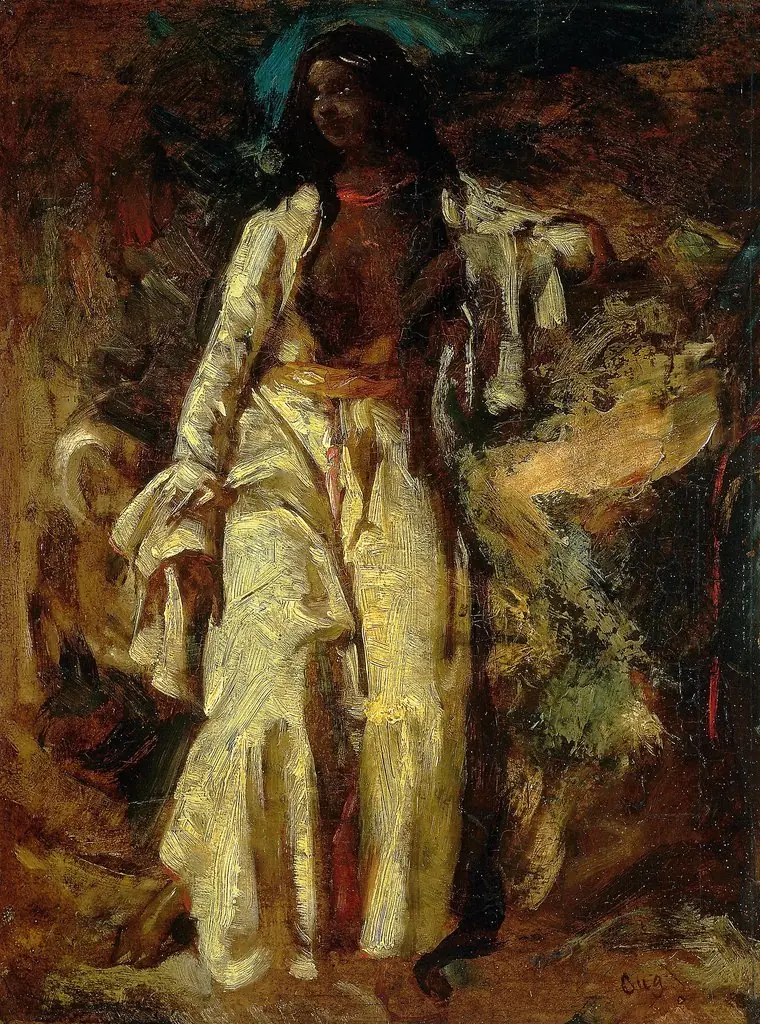
“Țărancă cu cobilița,” painted around 1908 by Alexandru Carol Satmary, is part of the collection of the Museum of Ethnography. The work portrays a solitary peasant woman in a dark skirt and white blouse, carrying a basket on her left arm, set against a muted landscape of blues, browns and greens.
Subject & Meaning
The figure’s barefoot stance, short dark hair and simple attire identify her as a rural laborer, while the basket suggests daily chores such as gathering produce or firewood. The composition captures a moment of ordinary life, emphasizing the dignity of work in a natural environment.
Technique & Style
Satmary employs a loose, expressive brushwork that leaves texture evident on the canvas. Muted earth tones dominate, with subtle chiaroscuro modeling the woman's form against the background. The visible strokes convey movement and a tactile quality, aligning the piece with early twentieth‑century realist tendencies.
History & Provenance
Created circa 1908, the painting entered the Museum of Ethnography’s holdings, where it remains on display. Its acquisition reflects the institution’s focus on documenting folk culture and everyday scenes from the region during the turn of the century.
Context
The work belongs to a period when Romanian artists were turning toward national subjects, depicting peasant life as a symbol of cultural identity. Satmary’s choice of a solitary figure in a simple setting mirrors broader artistic interests in realism and the social realities of rural communities.
Artist & collection
Artist
Alexandru Carol Satmary (1870–1933) was an artist, born in Bucharest.