Artwork
Nubian Woman
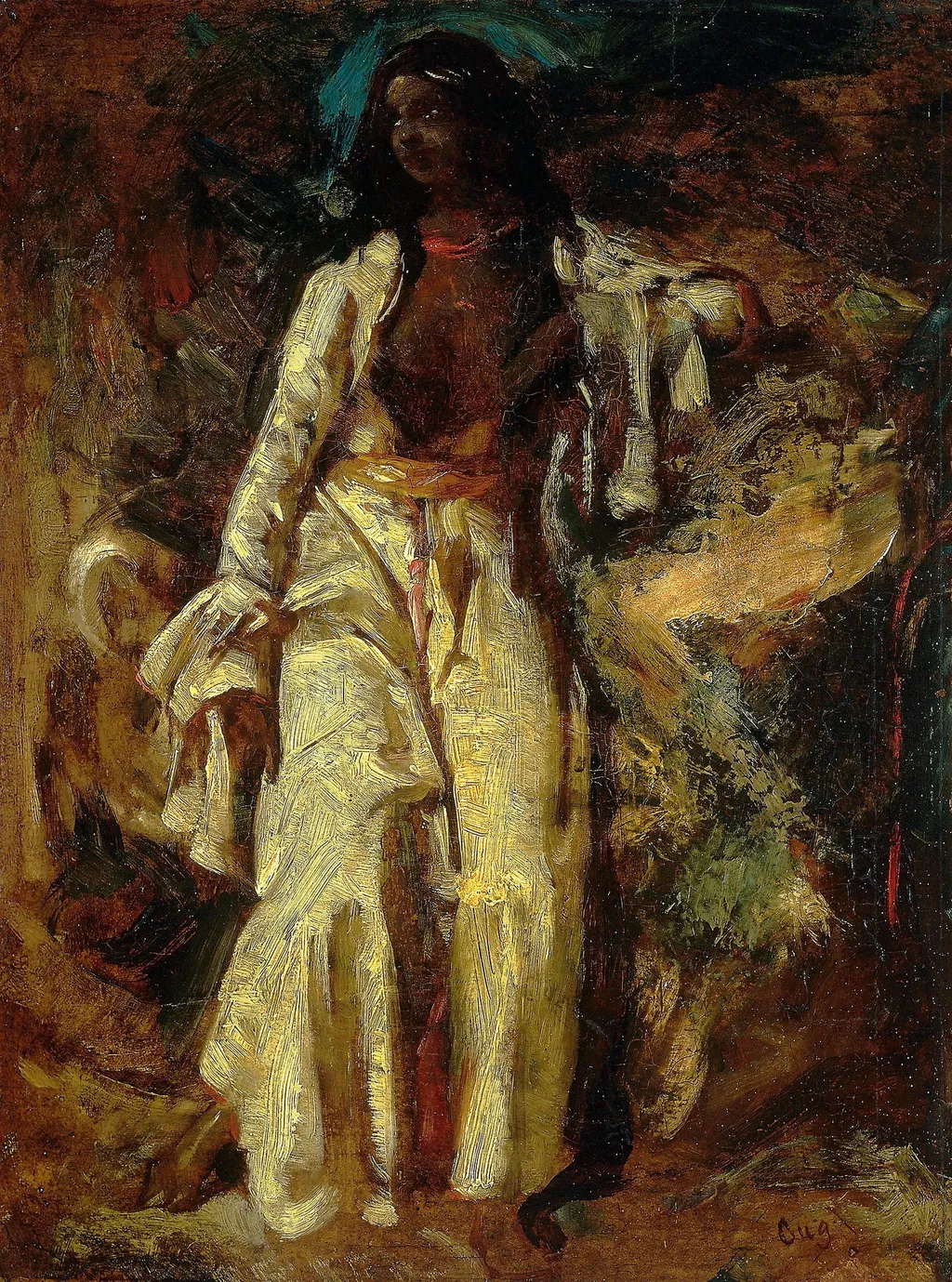
Nubian Woman is an unspecified painting by Jules-Robert Auguste. It dates from 1825 and is held in the collection of the Art Institute of Chicago. Jules Robert Auguste, a French artist trained as a sculptor and winner of the 1810 Prix de Rome, turned to painting in the 1820s.
About this work
Overview
His 1825 work *Nubian Woman* emerged from extensive travel across the Mediterranean and Near East, aligning with French Orientalist interests of the era.
Jules Robert Auguste, a French artist trained as a sculptor and winner of the 1810 Prix de Rome, turned to painting in the 1820s. His 1825 work *Nubian Woman* emerged from extensive travel across the Mediterranean and Near East, aligning with French Orientalist interests of the era. The painting is now held by the Art Institute of Chicago, representing a quiet yet deliberate engagement with non-European subjects during a period of heightened European fascination with the East.
Subject & Meaning
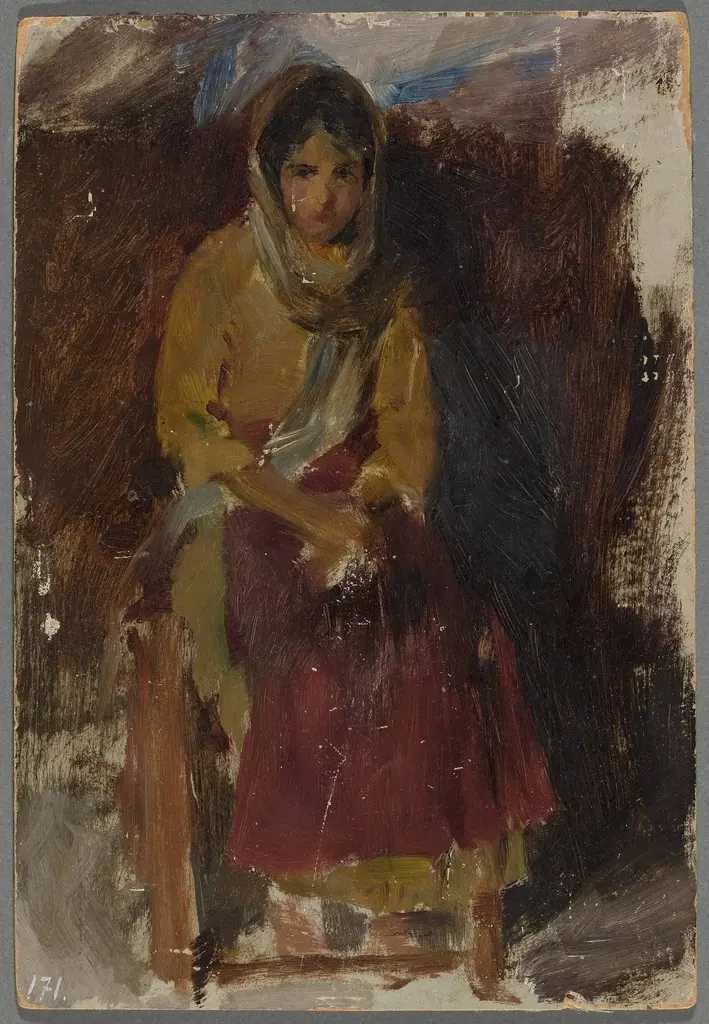
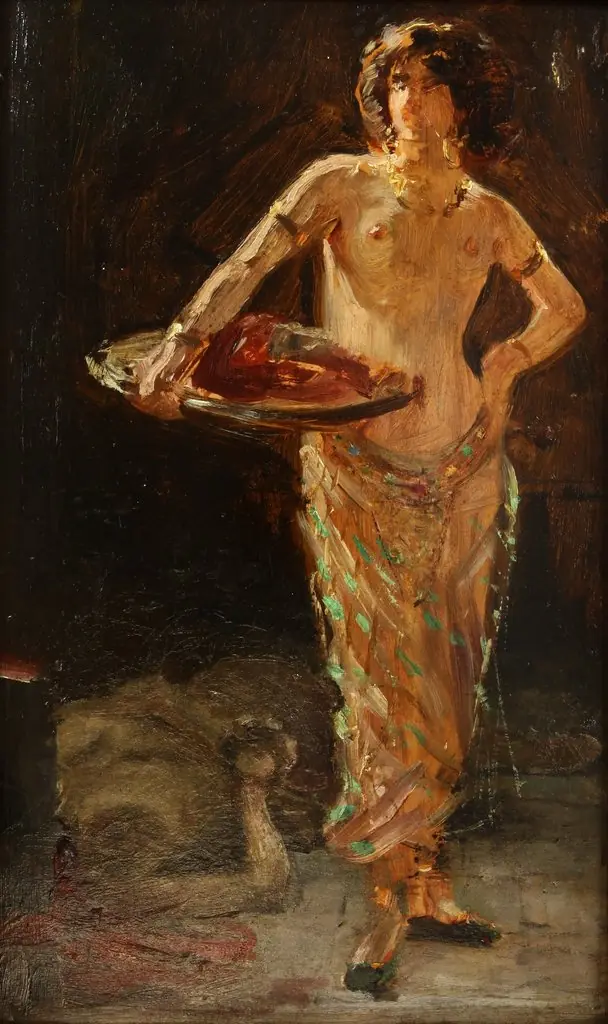
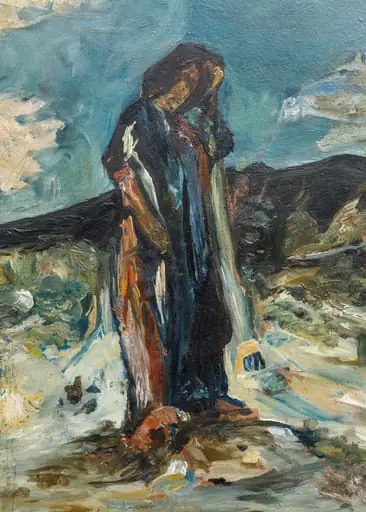
The painting portrays a Nubian woman, her identity rooted in the broader cultural geography of North Africa. She is depicted without narrative context, her presence defined by stillness and dignity. Auguste avoids exoticizing her through overt symbolism, instead focusing on her physicality and quiet composure. The work reflects an interest in individual humanity rather than stereotypical representation, though it remains framed by the colonial gaze of its time.
Technique & Style
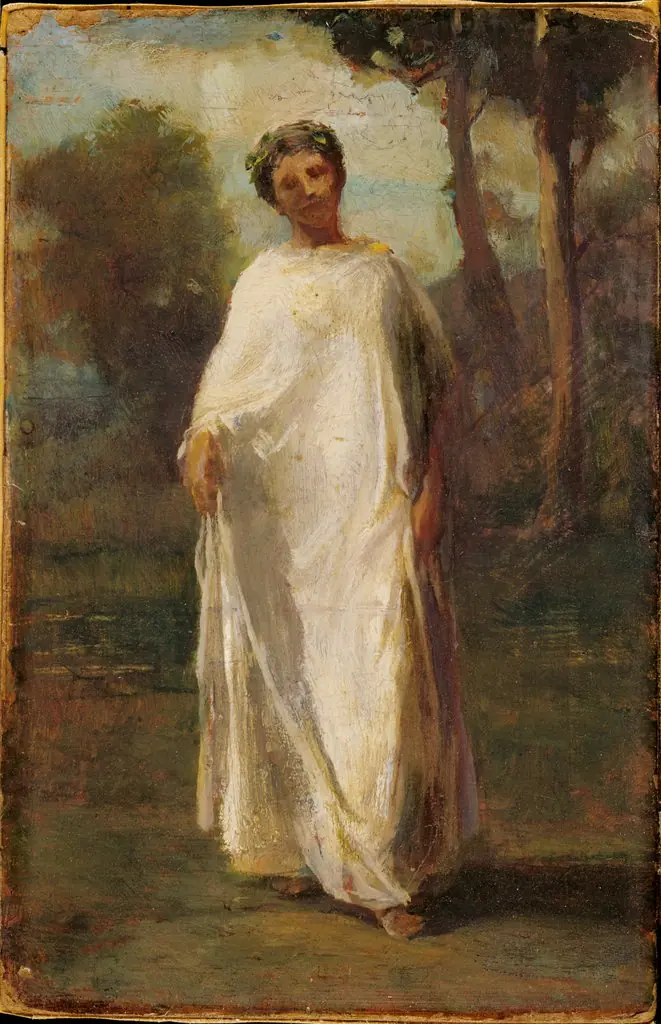
Auguste employs chiaroscuro to model the woman’s form against a dark, indistinct background, emphasizing volume and texture. The white robe, rendered with soft folds and subtle highlights, contrasts with her dark skin, enhancing the figure’s presence. The brushwork is restrained, avoiding theatricality; the headscarf and sash are rendered with precision but without ornamentation. This simplicity aligns with classical ideals while retaining the emotional weight characteristic of Romantic sensibility.
History & Provenance
Created in 1825, the painting likely originated from Auguste’s travels in Egypt and surrounding regions, where he studied local dress and physiognomy. It entered the Art Institute of Chicago’s collection in the 20th century, though its earlier ownership history remains undocumented. As part of a small body of works focused on African subjects, it stands apart from his more numerous mythological and portrait commissions.
Context
In the 1820s, French artists increasingly turned to the Middle East and North Africa as subjects, driven by colonial expansion and scholarly interest. Auguste’s work fits within this trend, yet his approach is less sensational than that of contemporaries like Delacroix. His focus on a solitary figure, stripped of exotic props or staged settings, suggests a more contemplative engagement with cultural difference, even if filtered through European assumptions.
Legacy
Though Auguste is not widely remembered today, *Nubian Woman* endures as a modest but significant example of early 19th-century Orientalist portraiture. Its restrained composition and emphasis on individual presence offer a counterpoint to more flamboyant depictions of the era. The painting contributes to ongoing scholarly discussions about representation, identity, and the visual politics of cross-cultural encounter in European art.
Own this work as a print
Artist & collection
Artist
Jules Robert Auguste (1789 – 15 April 1850) was a French painter associated with Romanticism and classicism.