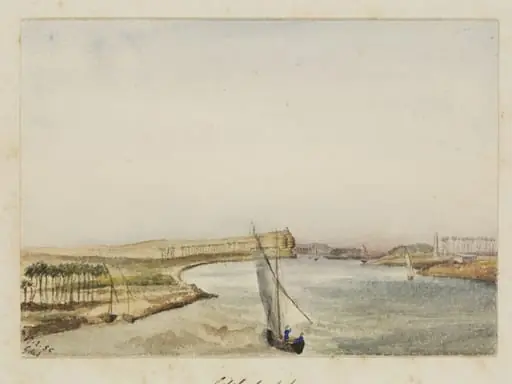
Artwork
View of the Nile
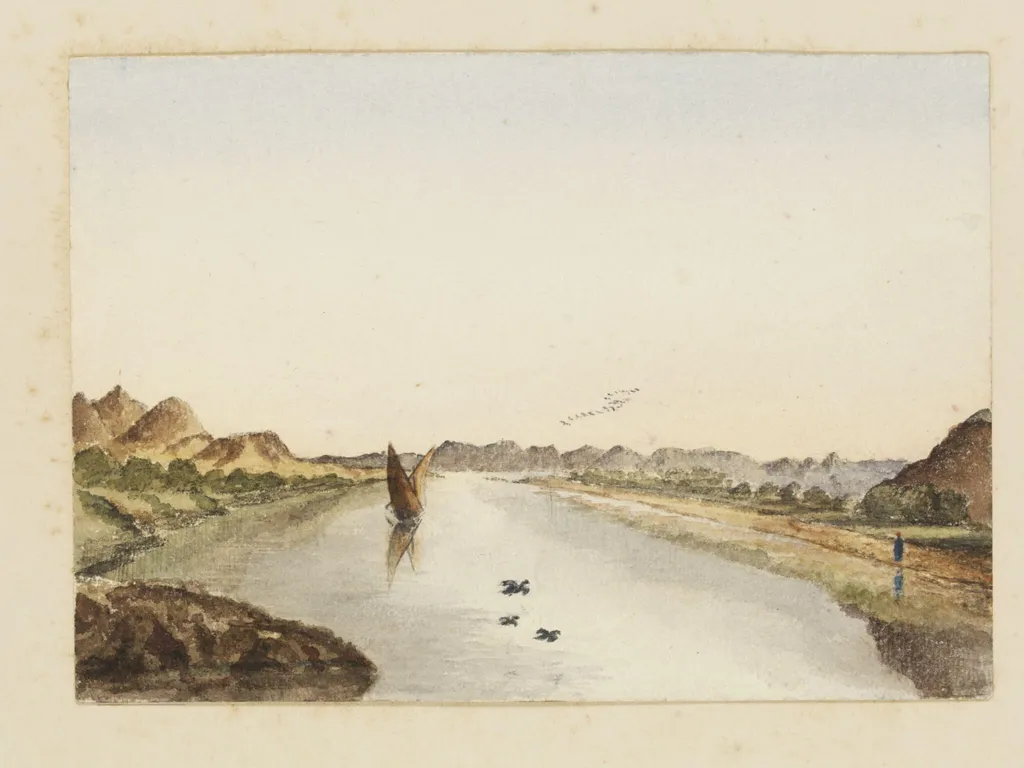
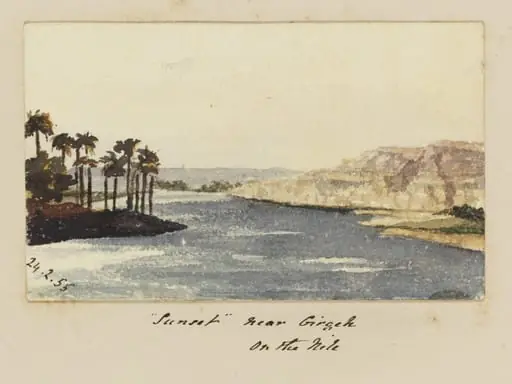
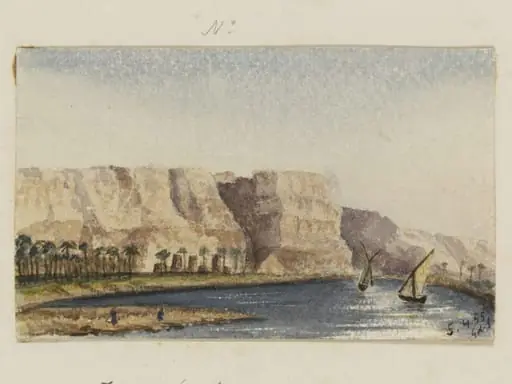
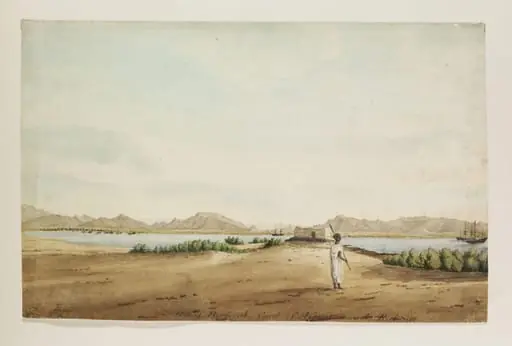
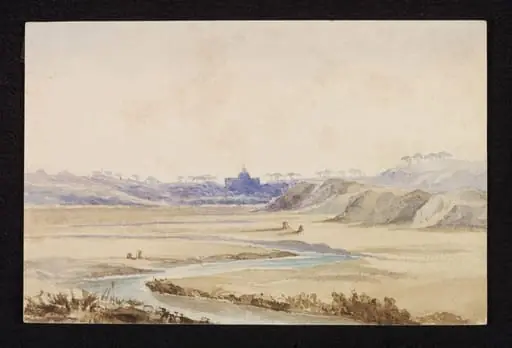
View of the Nile is a watercolor work on paper by the Impressionist artist George de Sausmarez. It dates from 1855 and is held in the collection of the Victoria and Albert Museum.
About this work
Overview
The sheet bears a preliminary sketch of a boat on its reverse, indicating the artist’s process of observation and revision.
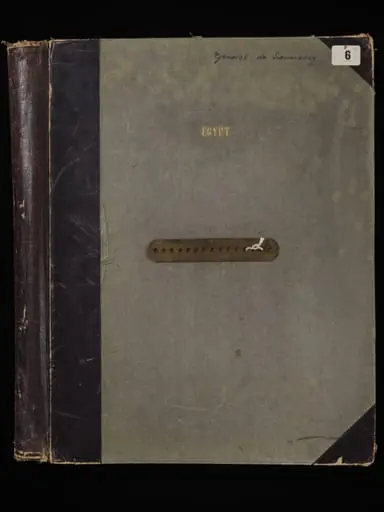
George de Sausmarez created this watercolour during or shortly after his 1855 expedition along the Nile. It is one of 45 works in a bound album documenting his travels through Egypt and Nubia. The album, bound in crimson morocco leather with an 'EGYPT' stamp, served as a personal record of the journey. The sheet bears a preliminary sketch of a boat on its reverse, indicating the artist’s process of observation and revision.
Subject & Meaning
The scene captures a quiet stretch of the Nile, with calm waters mirroring the sky. A solitary figure on the right bank gazes toward the river, suggesting contemplation or rest. Lush vegetation lines the left shore, while distant hills frame the horizon. The composition emphasizes stillness and solitude, reflecting the artist’s engagement with the landscape as a place of quiet observation rather than dramatic narrative.
Technique & Style
De Sausmarez employed transparent watercolour washes to achieve subtle tonal transitions and a soft, atmospheric effect. Muted greens, browns, and blues dominate, avoiding bold contrasts in favor of harmonious gradations. The technique allows light to pass through layers, enhancing the sense of air and distance. While the style is detailed, it avoids sharp definition, favoring a gentle, observational approach consistent with 19th-century travel sketching.
History & Provenance
The watercolour was part of a personal album compiled by de Sausmarez following his 1855 journey. The album’s binding in crimson morocco leather and its stamped title indicate deliberate curation. The presence of preparatory sketches on the reverse of the sheet suggests the works were not finished for public display but served as private documentation. The album’s survival offers insight into the practices of amateur travellers in the mid-19th century.
Context
De Sausmarez’s work emerged during a period of growing European interest in Egypt following Napoleon’s campaign and the rise of Egyptology. Unlike professional archaeologists or commercial artists, he recorded landscapes with a personal, non-scientific eye. His watercolours reflect the broader trend of amateur travel sketching, where art functioned as memory and personal testimony rather than academic record.
Legacy
The album remains a modest but valuable record of 19th-century travel in the Nile region. While not widely exhibited, it contributes to understanding how non-professional artists engaged with foreign landscapes. Its preservation highlights the role of private collections in documenting cultural encounters, offering a counterpoint to more monumental or institutional representations of Egypt from the same era.
Own this work as a print
Artist & collection
Artist
George de Sausmarez painted watercolors of Egypt’s Nile in the 1850s, recording river scenes and landmarks with quick, transparent washes.

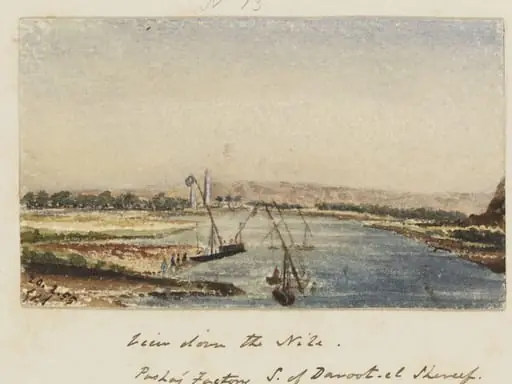 `View down the Nile. Pasha's Factory S.of Daroot-el Shereef. Upper Egypt'
 Album
Album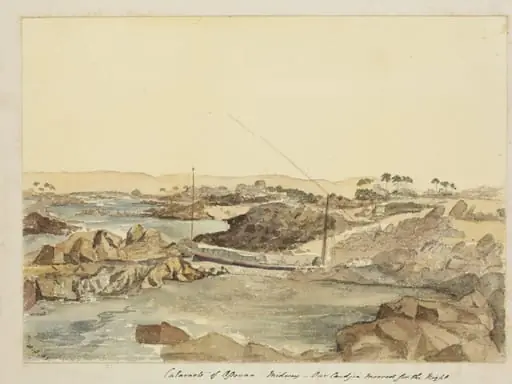 `Cataracts of Assouan. Midway. - Our Candjia Moored for the Night - On the Nile'
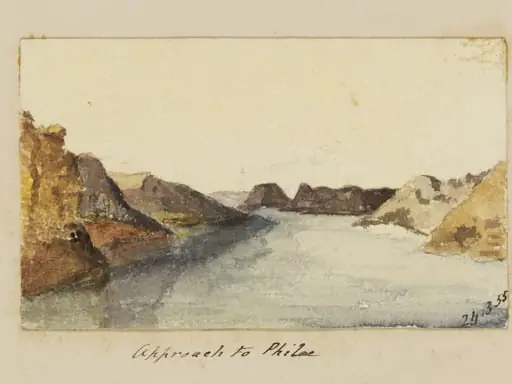 `Approach to Philae'
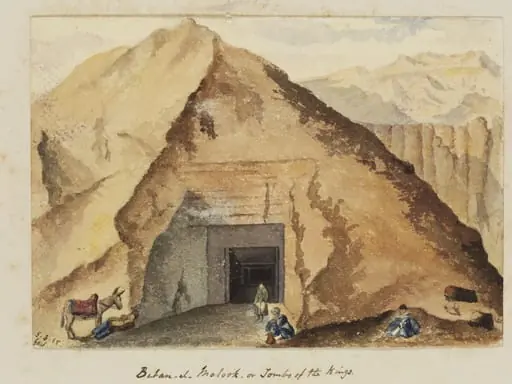 Biban-el-Molook, or Tombs of the Kings. Belzoni's Tomb. Thebes
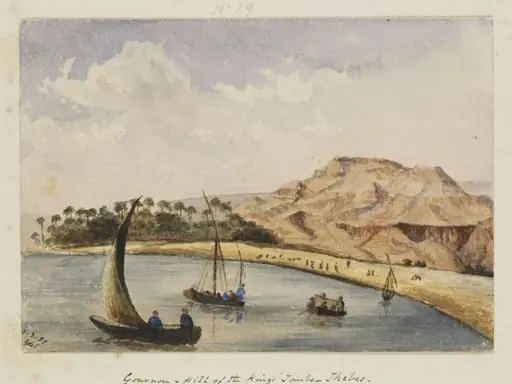 `Gournou & Hill of the Kings' Tombs - Thebes'
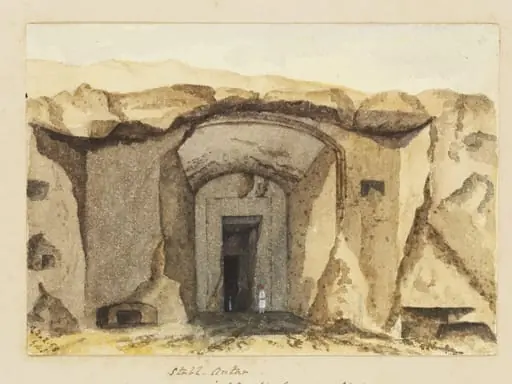 `Stabl-Antar. Ancient Egyptian Cave near Siout. Upper Egypt'
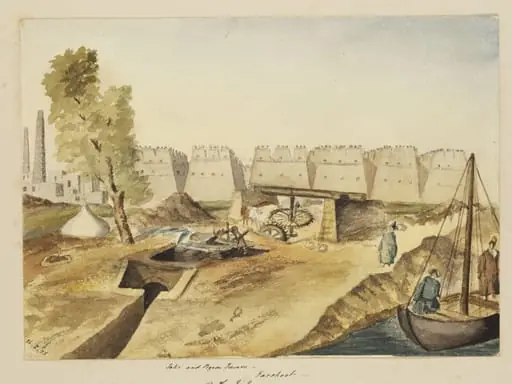 `Saki and Pigeon Towers - Farshoot - On the Nile'
![`River. 3 Mile [N] of Saboua Nubia "On the Nile", by George de Sausmarez](https://artifactworldgallery.com/img/george-de-sausmarez--river-3-mile-n-of-saboua-nubia-on-the-nile--4584718b99edc50f-w320.webp)