Artwork
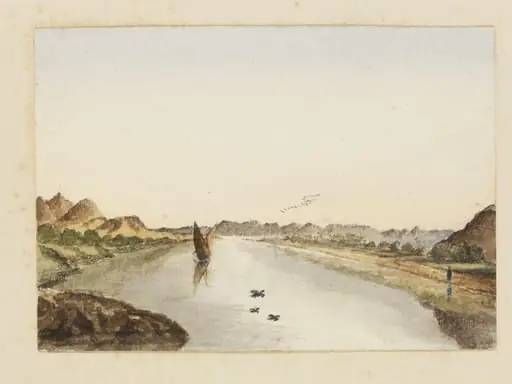
`River. 3 Mile [N] of Saboua Nubia "On the Nile"
![`River. 3 Mile [N] of Saboua Nubia "On the Nile", by George de Sausmarez, watercolor, 1855](https://artifactworldgallery.com/img/george-de-sausmarez--river-3-mile-n-of-saboua-nubia-on-the-nile--4584718b99edc50f-w1024.webp)
`River. 3 Mile [N] of Saboua Nubia "On the Nile" is a watercolor work on paper by the Impressionist artist George de Sausmarez. It dates from 1855 and is held in the collection of the Victoria and Albert Museum.
About this work
Overview
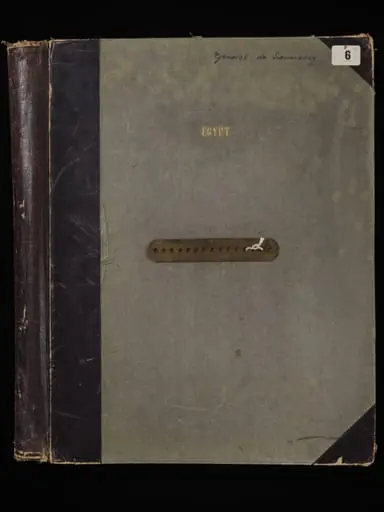
The album is housed in a crimson morocco binder stamped 'EGYPT,' suggesting a curated collection intended for personal or scholarly use.
This watercolour is one of forty-five works in a bound album documenting landscapes along the Nile, produced following a journey through Egypt and Nubia in 1855. The album is housed in a crimson morocco binder stamped 'EGYPT,' suggesting a curated collection intended for personal or scholarly use. The piece captures a quiet stretch of river north of Saboua, emphasizing natural topography over human activity.
Subject & Meaning
The scene depicts a tranquil segment of the Nile as it winds through Nubian terrain, framed by undulating hills that rise subtly from the water’s edge. There are no figures, structures, or signs of settlement, focusing attention on the land and river as enduring elements. The absence of human presence evokes a sense of solitude, reflecting a contemplative engagement with the landscape rather than its exploitation or documentation as a colonial record.
Technique & Style
The artist employed light, translucent washes to suggest form without heavy detail, allowing the paper’s whiteness to contribute to the luminosity of the sky and water. Soft gradations of blue-gray and muted ochre define the river and hills, while sparse green touches indicate patches of vegetation. The composition avoids sharp contours, relying instead on atmospheric perspective to convey depth and stillness, creating a sense of quiet expansiveness.
History & Provenance
The watercolour was created after a journey along the Nile in 1855, likely by a British artist or traveler documenting the region during a period of increasing European interest in Egypt and Nubia. The album’s binding and organization suggest it was assembled with care, possibly for private circulation or as a record of observation. Its survival in original condition offers rare insight into 19th-century travel practices and visual documentation.
Context
Produced during a time when European travelers were systematically recording Nile landscapes, this work reflects a shift from grand architectural focus to quieter, topographical observation. Unlike official surveys or orientalist imagery, it avoids exoticism, presenting the land with restraint. Its simplicity aligns with emerging 19th-century aesthetic values that prized naturalism and atmospheric effect over narrative or spectacle.
Legacy
Though not widely exhibited, the album contributes to a lesser-known body of 19th-century watercolour travel studies that prefigure later landscape traditions. Its quiet, unembellished approach stands apart from more dramatic Orientalist works of the era. The piece remains a quiet testament to the value of observational art in documenting place with humility and attention to light and form.
Own this work as a print
Artist & collection
Artist
George de Sausmarez painted watercolors of Egypt’s Nile in the 1850s, recording river scenes and landmarks with quick, transparent washes.

 View of the Nile
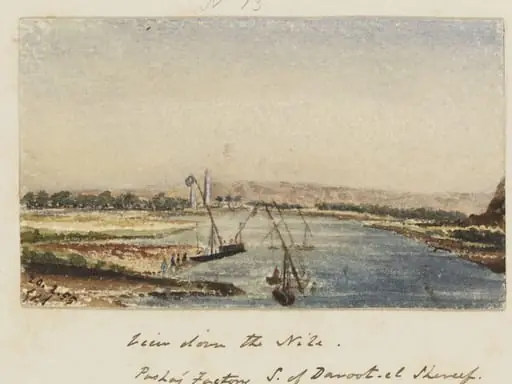 `View down the Nile. Pasha's Factory S.of Daroot-el Shereef. Upper Egypt'
 Album
Album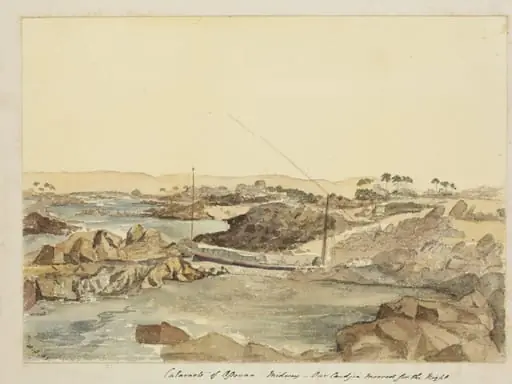 `Cataracts of Assouan. Midway. - Our Candjia Moored for the Night - On the Nile'
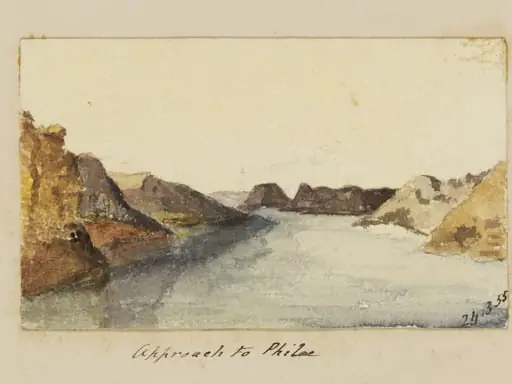 `Approach to Philae'
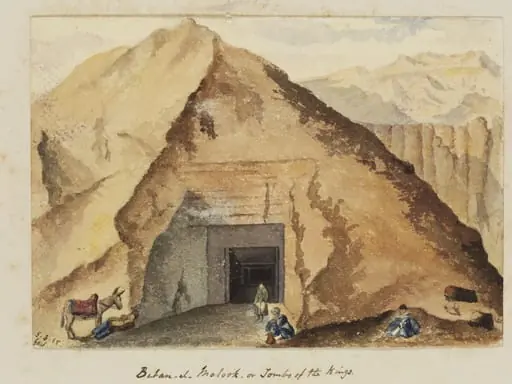 Biban-el-Molook, or Tombs of the Kings. Belzoni's Tomb. Thebes
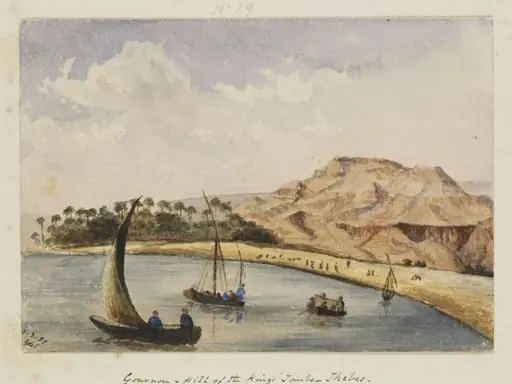 `Gournou & Hill of the Kings' Tombs - Thebes'
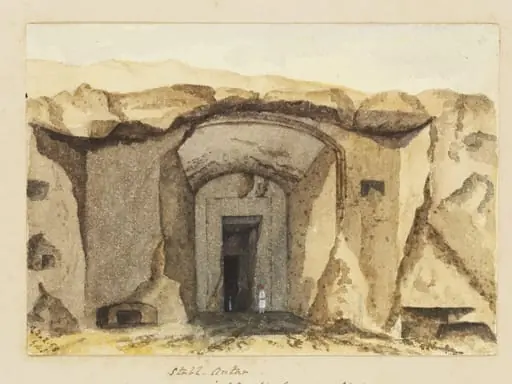 `Stabl-Antar. Ancient Egyptian Cave near Siout. Upper Egypt'
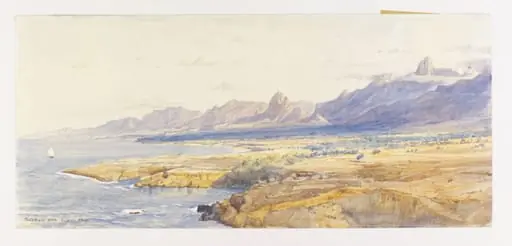 Cyprus
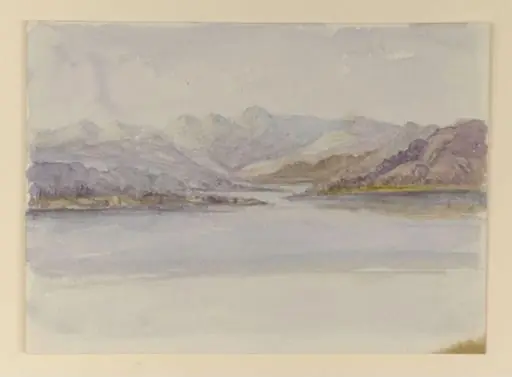 View across a lake to the Langdale Pikes
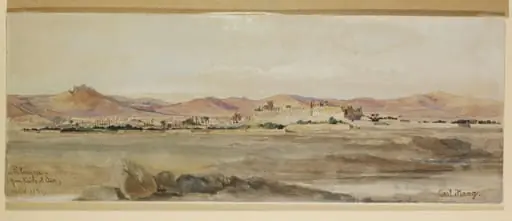 Palmyra (from Kasr el Ain)
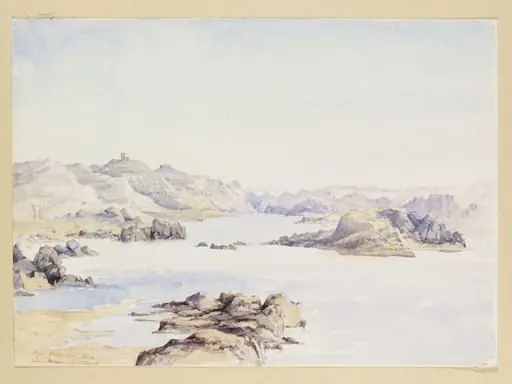 From Elephantine between Asouan and the 1st Cataract
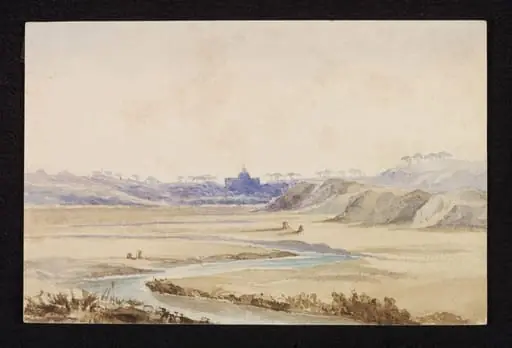 Landscape with a building, probably a tomb, in the distance
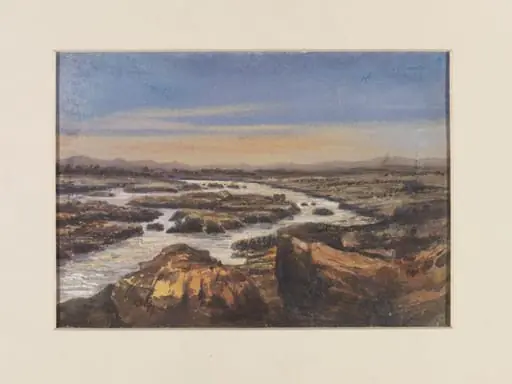 The Second Cataract
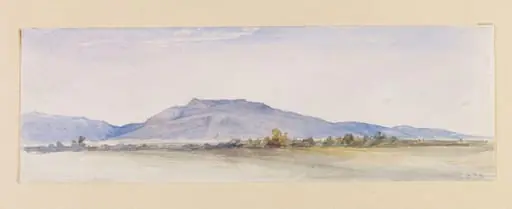 The Xanthus Valley, Lycia
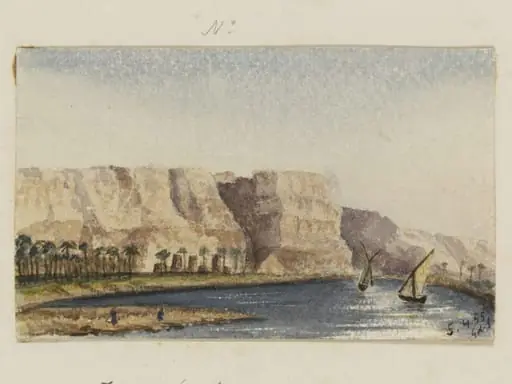 `Kusr-é-Syad. Opposite Choenoboscion. Upper Egypt'
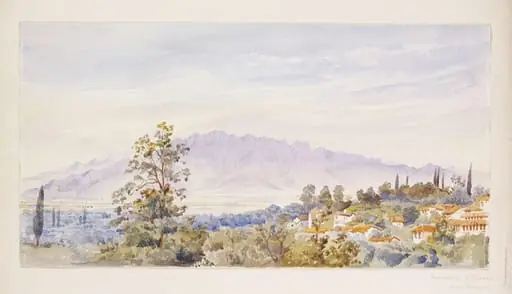 Mountains of Nicaea from Broussa