Artwork
Isis
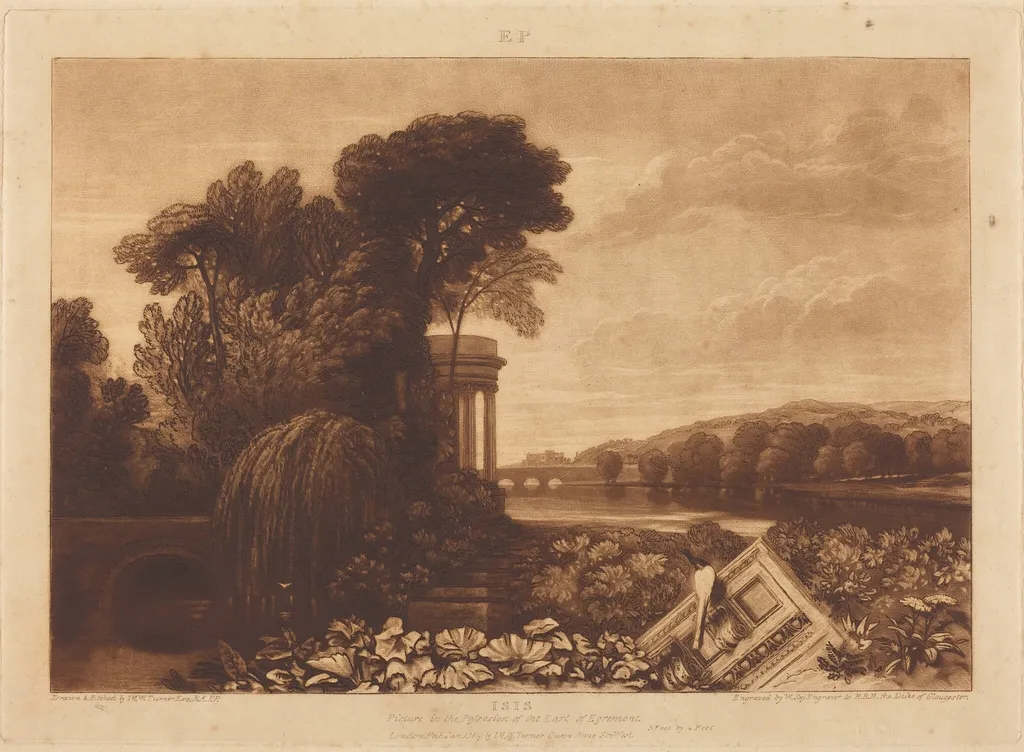
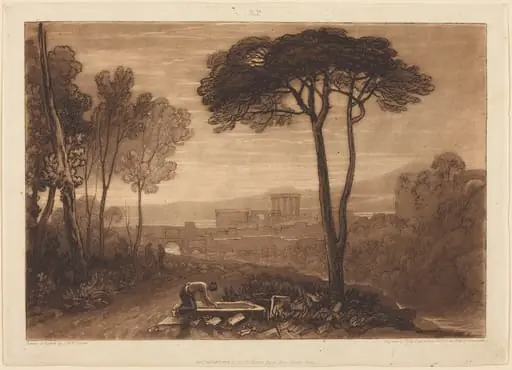
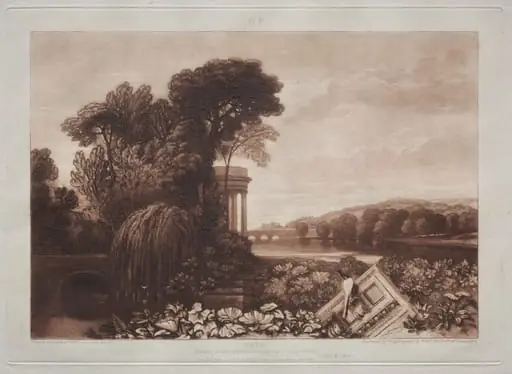
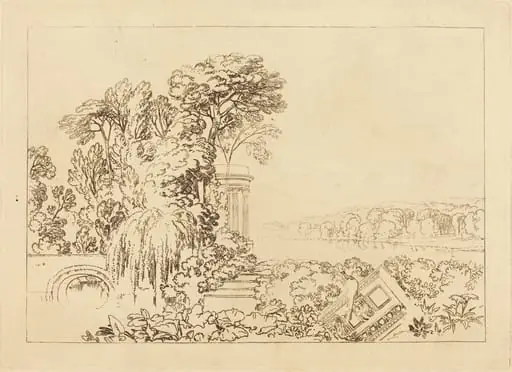
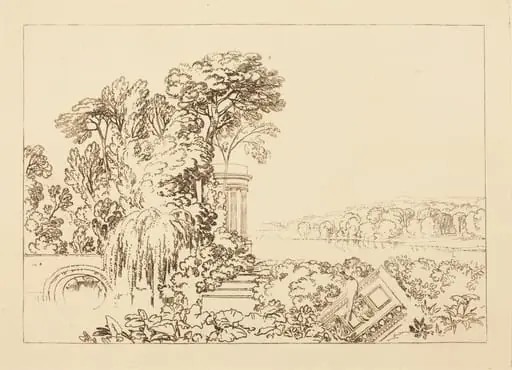
Isis is an ink print by the Romanticist artist William Say. It dates from 1819 and is held in the collection of the National Gallery of Art.
About this work
Overview
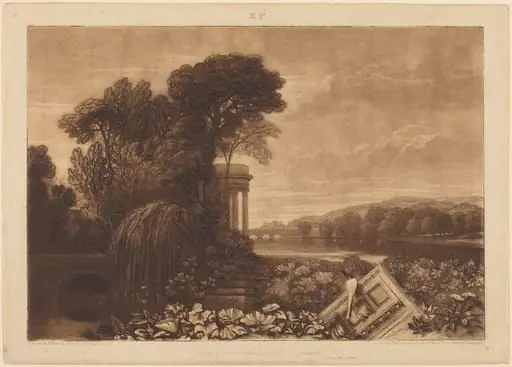
William Say’s 1819 print, titled Isis, combines etching with mezzotint to present a tranquil landscape. The composition balances a dominant tree on the left with a distant water body, while foreground flora and a stone colonnade occupy the right. Rendered in muted brown tones, the sky is lightly clouded, creating a calm, reflective atmosphere.
Subject & Meaning
The scene depicts an idealized natural setting, possibly alluding to the River Isis, the historic name for the Thames near Oxford. The solitary tree and serene water suggest a contemplation of nature’s permanence, while the classical columns introduce a hint of antiquity, inviting viewers to consider the harmony between the natural and the built environment.
Technique & Style
Say employed both etching and mezzotint, allowing for fine line work alongside rich, velvety tonal gradations. The mezzotint areas provide deep, atmospheric shadows, while the etched lines define the foliage and architectural details. This blend aligns the work with early Romantic sensibilities, emphasizing mood and the sublime qualities of landscape.
History & Provenance
Created in 1819, the print reflects Say’s active period in early 19th‑century British printmaking. While specific ownership records are limited, the work has been catalogued among his oeuvre of landscape prints, illustrating his engagement with contemporary Romantic themes and his technical experimentation with mixed print processes.
Artist & collection