Artwork
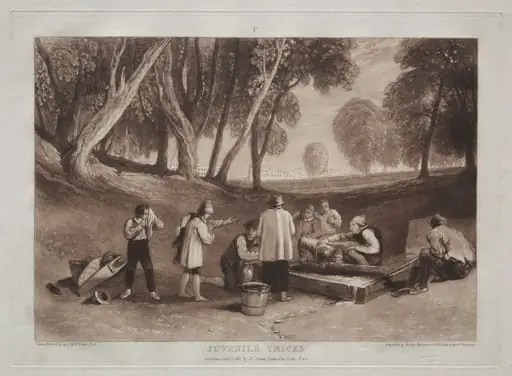
Juvenile Tricks
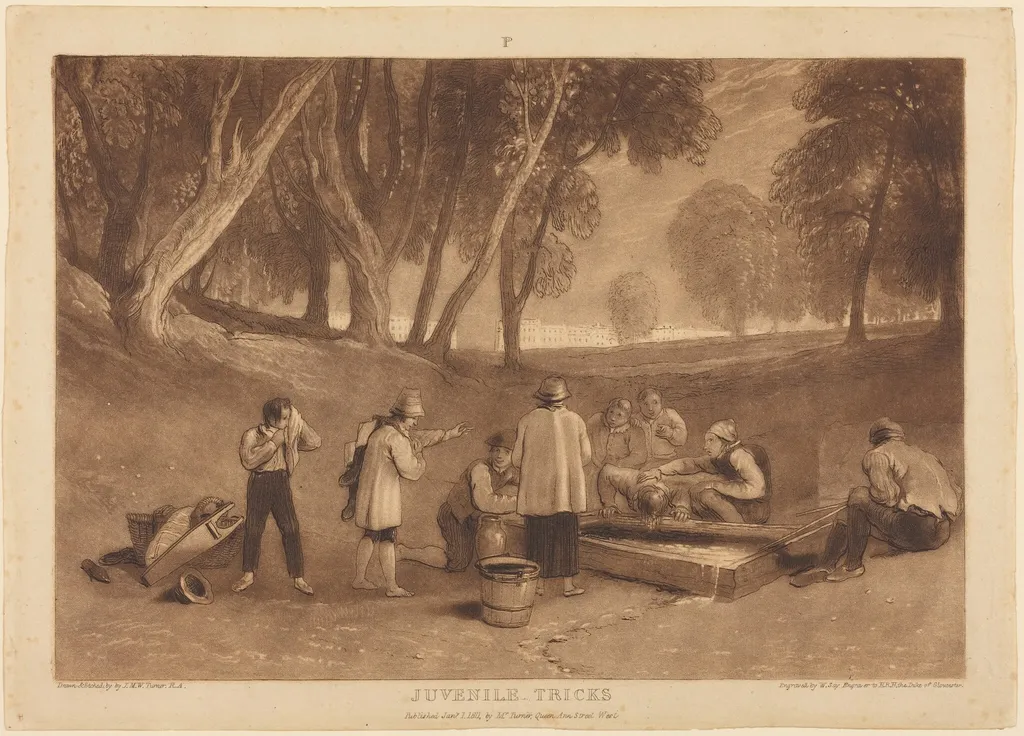
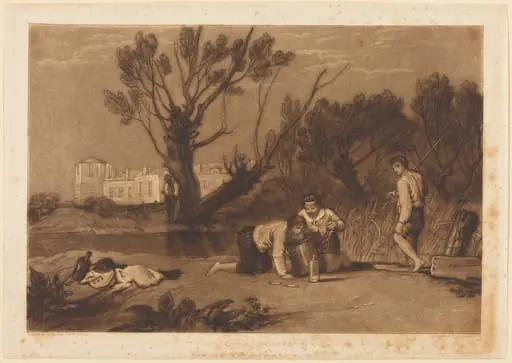
Juvenile Tricks is an ink print by the Romanticist artist William Say. It dates from 1811 and is held in the collection of the National Gallery of Art.
About this work
Overview
Created in 1811 by William Say, Juvenile Tricks is a print combining etching and mezzotint techniques. It depicts a group of children engaged in informal activities beside a river, with a small boat nearby and a distant building visible across the water. The scene captures a quiet moment of childhood play, rendered with careful attention to tonal variation and naturalistic detail.
Subject & Meaning
The children are shown in relaxed, unposed postures—some seated, others standing or carrying baskets—suggesting everyday rural leisure. The title, Juvenile Tricks, implies lighthearted or slightly mischievous behavior, though the image avoids overt drama. Rather than portraying moral instruction, it observes childhood as a natural, unembellished part of the landscape.
Technique & Style
Say employed etching for fine linear detail and mezzotint for rich, gradated shadows, particularly evident in the children’s faces and the boat’s wooden surfaces. The interplay of light and dark enhances the sense of depth and atmosphere, while the soft textures of foliage and water reflect a sensitivity to natural light. The composition is grounded in observation rather than idealization.
History & Provenance
The print was produced in 1811 during a period when British printmakers increasingly turned to domestic and genre scenes. Though not widely exhibited, it was likely circulated as a commercial print, appealing to middle-class audiences interested in sentimental rural life. Its survival in institutional collections suggests early recognition of its technical merit.
Context
In early 19th-century Britain, prints of children at play reflected growing interest in childhood as a distinct phase of life. Say’s work aligns with contemporaneous depictions by artists like William Hogarth and Thomas Rowlandson, though it lacks their satire. The riverbank setting and modest architecture point to a specific, unromanticized English countryside.
Legacy
Juvenile Tricks remains a modest but well-crafted example of early 19th-century British printmaking. While not influential in shaping major artistic movements, it contributes to the record of how everyday life was visually documented outside of portraiture or grand narrative. Its preservation underscores the value placed on quiet, observational art in its time.
Artist & collection


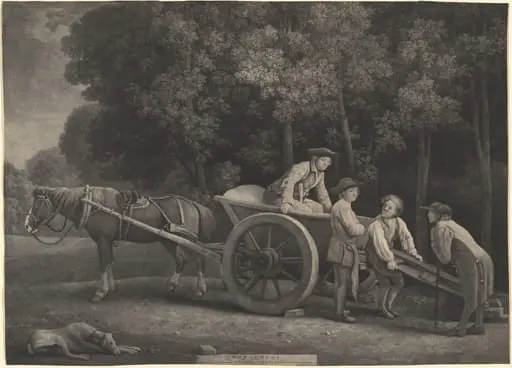 Labourers
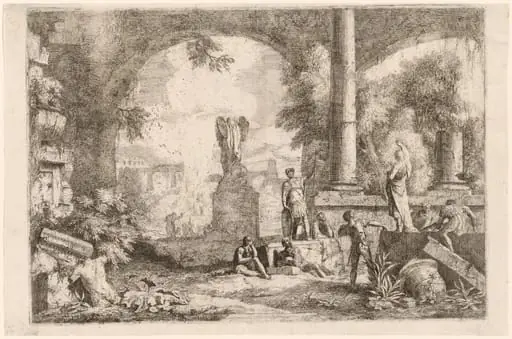 Capriccio of Antique Ruins with Men Gazing at a Classical Orator
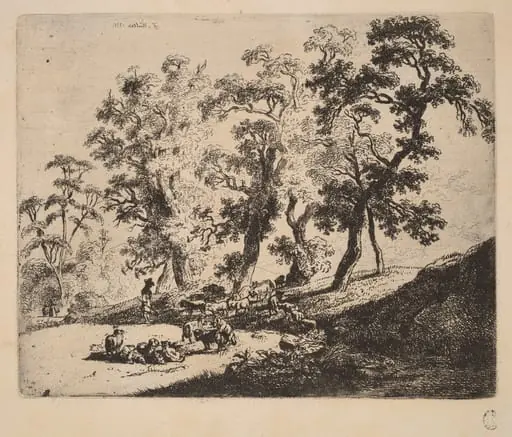 Landscape with Shepherds
 Young Anglers
 Landscape with Nudes Boarding a Boat
 I was also in Arcadia (Kai ego en Arkadia)
 October, Drawing the Honey from the Beehives
 Apeáronse junto á la fuente
 The Farm-yard with the Cock
 Les présents du berger
 Procris and Cephalus
 Liber Studiorum: Juvenile Tricks