Artwork
Seascape
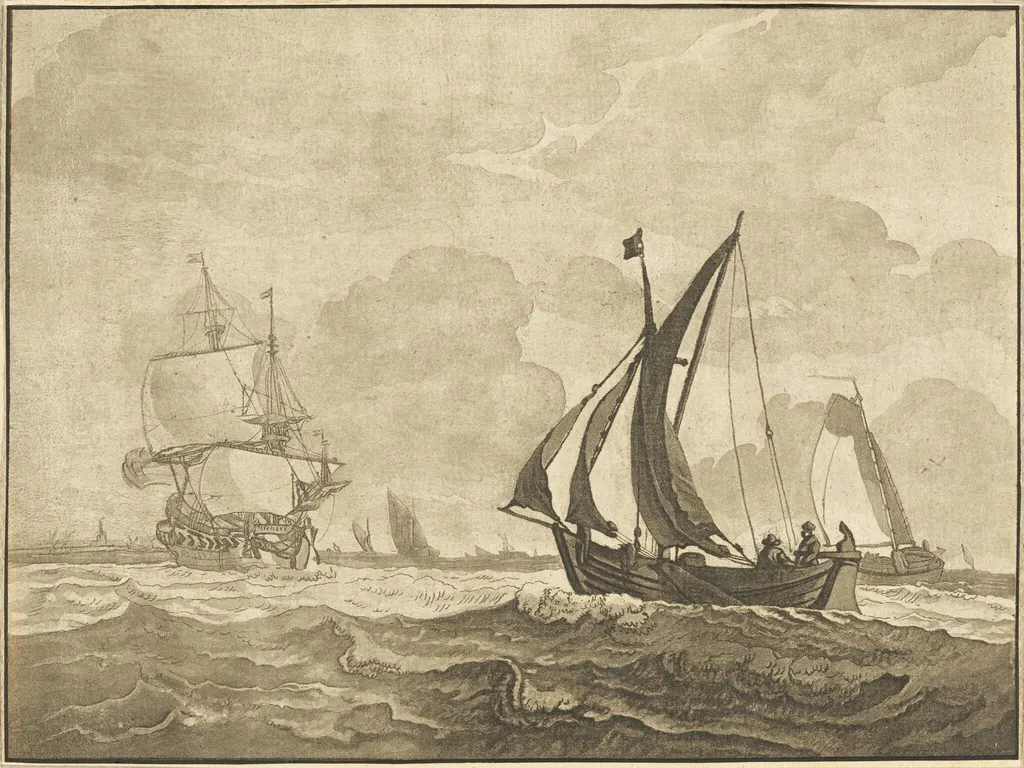
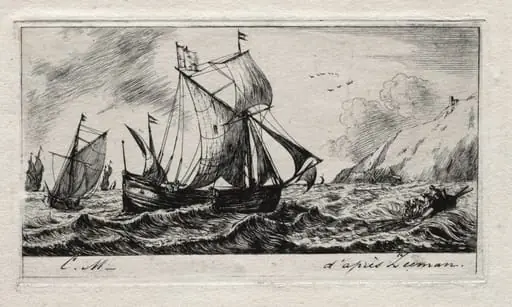
Seascape is an ink print by the Romanticist artist Schönecker. It dates from 1784 and is held in the collection of the National Gallery of Art.
About this work
Overview
Seascape, created in 1784 by Schönecker, is a print composed of etching and aquatint. The work captures a coastal scene with two vessels—a small sailboat near the foreground and a larger ship farther out. The composition balances quiet movement with stillness, using tonal gradations to suggest distance and atmosphere without overt drama.
Subject & Meaning
The scene presents a quiet maritime moment, devoid of human activity or narrative tension. The sailboat and distant vessel suggest travel or labor, yet their presence feels incidental rather than central. The mood arises from the interplay of natural elements—wind, water, and sky—evoking solitude and the rhythm of the sea without symbolic embellishment.
Technique & Style
Schönecker employed etching for fine linear detail and aquatint to achieve subtle tonal shifts. The rough texture of the waves and cloud cover contrasts with the smooth, unbroken surface of the sail, enhancing the sense of material difference. The limited palette of ink tones reinforces atmospheric depth, relying on gradation rather than color to convey mood.
History & Provenance
The print dates to 1784, a period when landscape and marine subjects were gaining traction among printmakers in Central Europe. While Schönecker’s broader oeuvre remains understudied, this work reflects the period’s interest in naturalistic observation. Its survival as a single known impression suggests limited circulation, possibly intended for private collectors.
Context
In the late 18th century, printmaking offered artists a means to explore nature beyond grand historical or religious themes. Schönecker’s seascape aligns with a growing trend toward intimate, observational scenes, influenced by Enlightenment ideals of quiet contemplation and the sublime in everyday landscapes.
Legacy
Though not widely reproduced or exhibited, the print exemplifies the quiet precision of late 18th-century German printmaking. Its restrained aesthetic and technical restraint distinguish it from more dramatic marine works of the era, offering a modest but enduring record of personal observation in a time of shifting artistic priorities.
Own this work as a print
Artist & collection


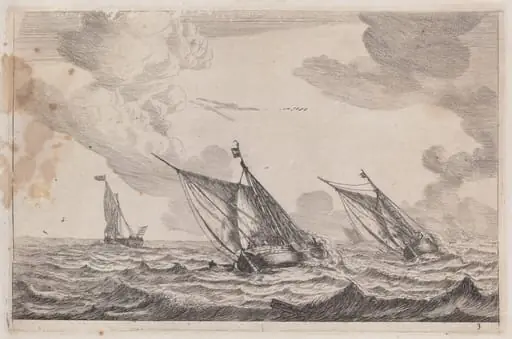 Three Sailing Vessels at Choppy Sea
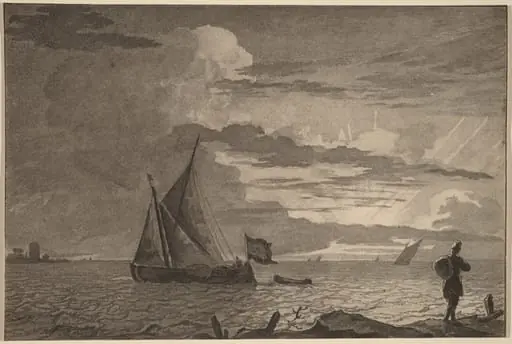 Fisherman with Pack over His Shoulder
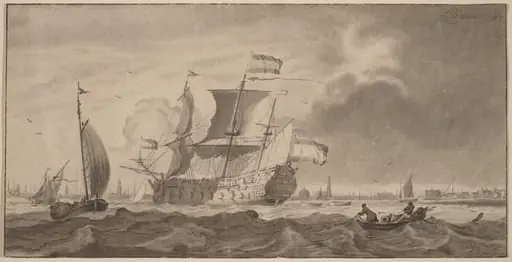 War Vessel in the Y
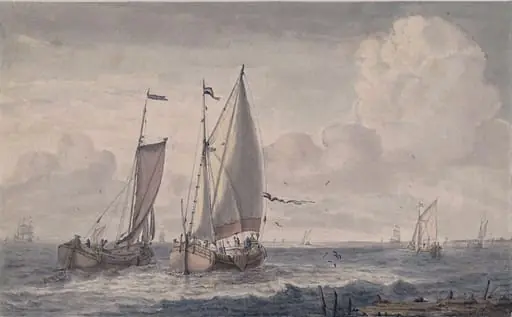 Dutch Fishing Boats
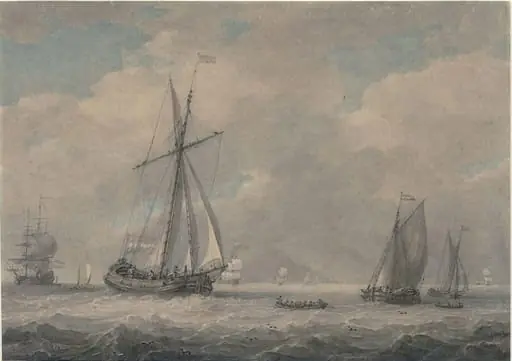 Dutch Shipping
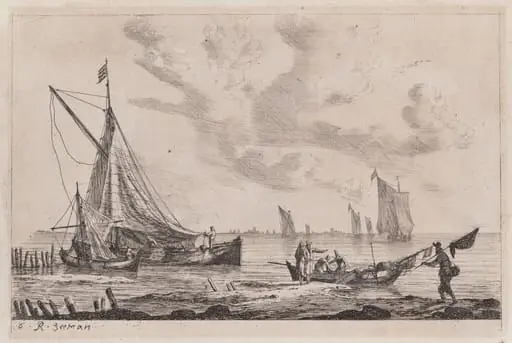 Shore of Inland Waterway with a Ketch, Two Smaller Boats, and Fisherman
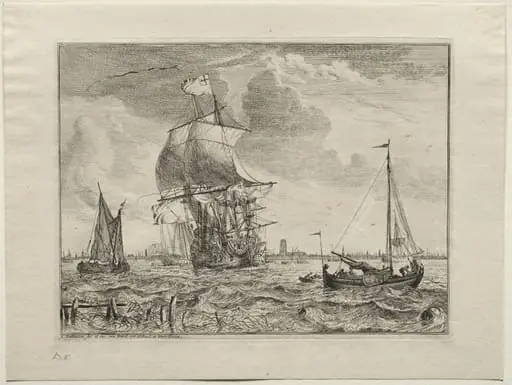 Marine Scene with Amsterdam in the Distance
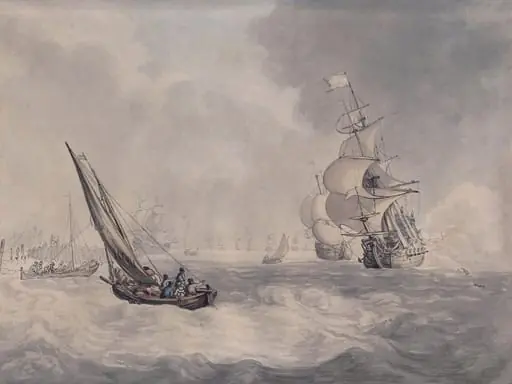 Firing a salute off Portsmouth
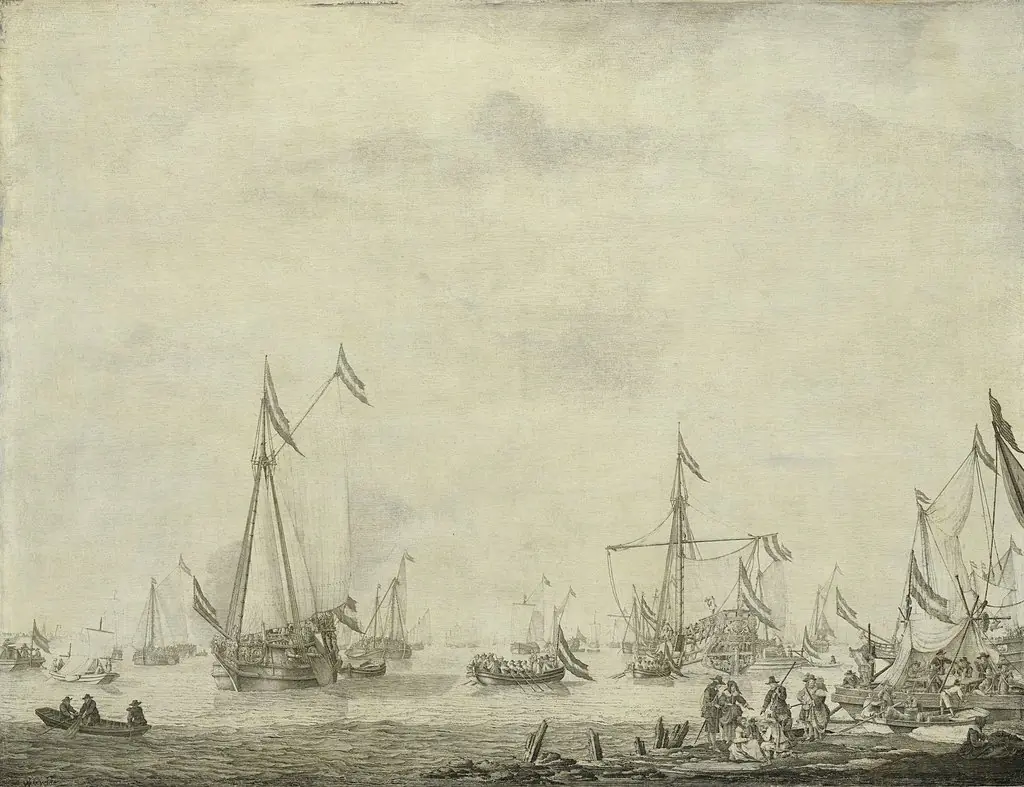 The prince's yacht and the sate yacht leaving Moerdijk with Charles II of England on board, 1660
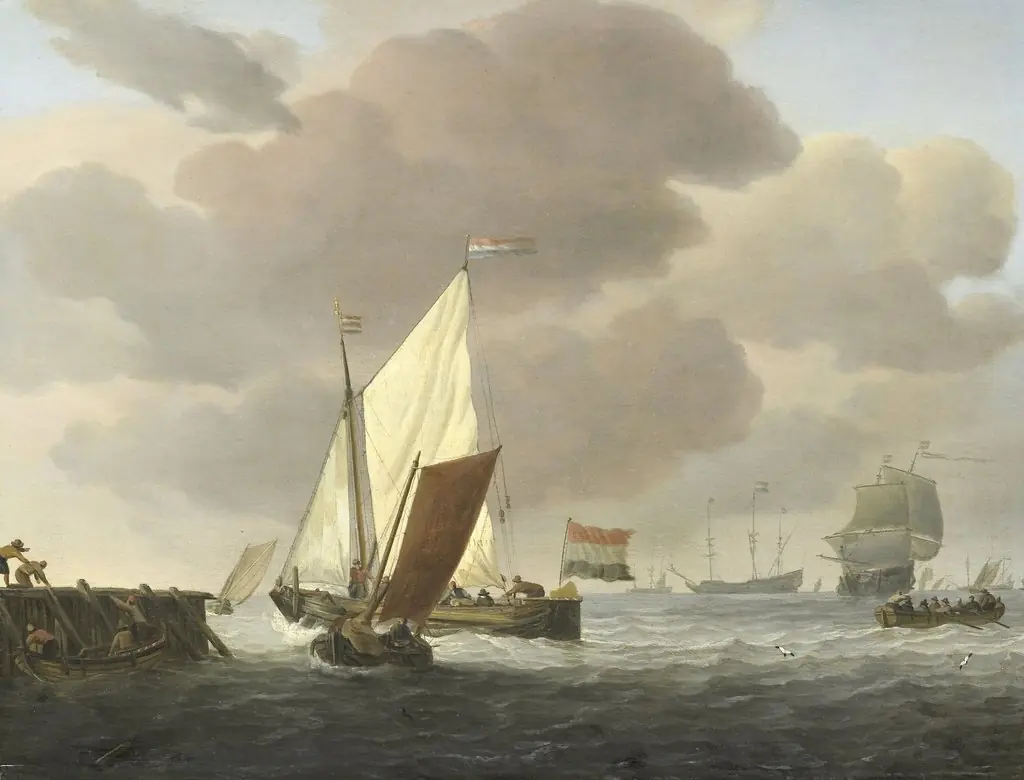 Ships near the shore in a stiff breeze
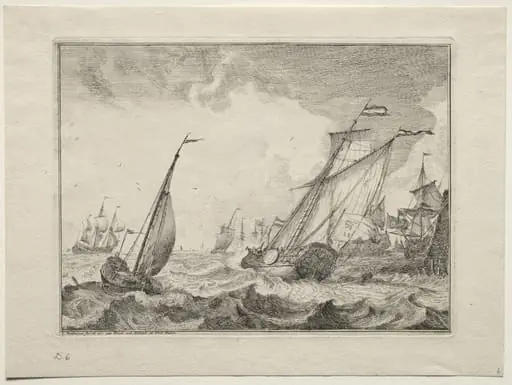 Ships in a Gale
 The Galliot of Jean de Vyl of Rotterdam