Artwork
Apostolul Petru tăgăduind pe Iisus
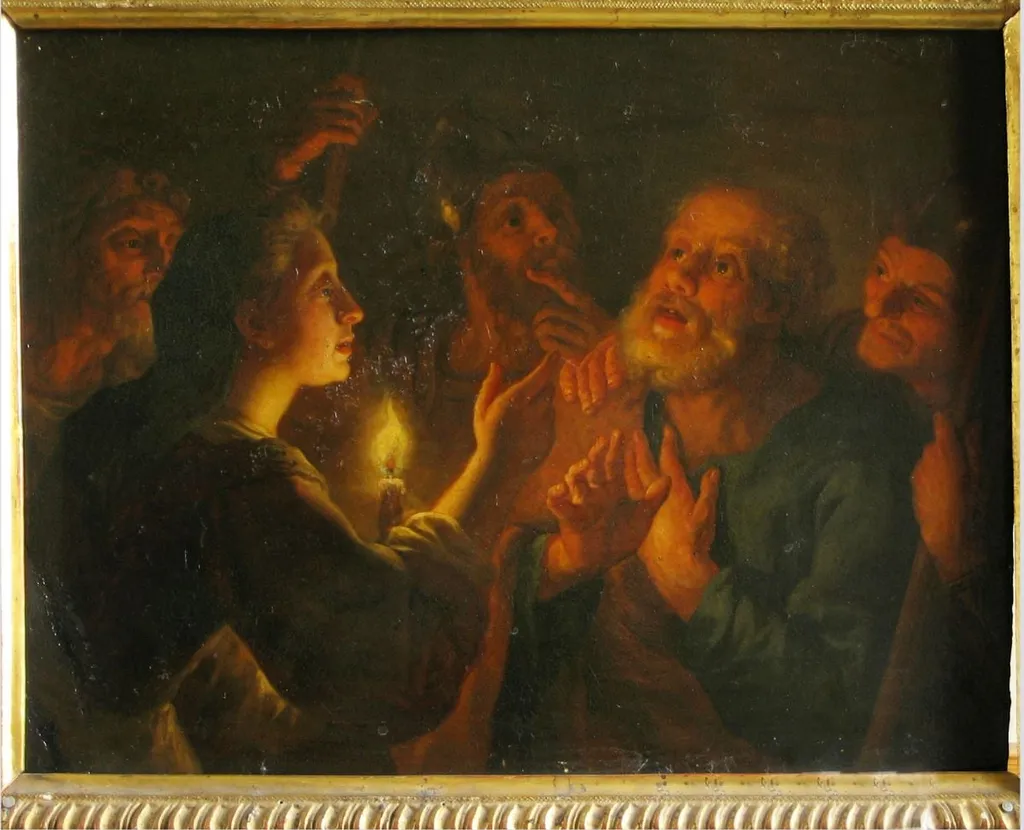
Apostolul Petru tăgăduind pe Iisus is a print by the Baroque artist Gottfried Schalken. It dates from 1684 and is held in the collection of the Brukenthal National Museum.
About this work
Overview
Painted around 1684 by Gottfried Schalken, this work depicts the moment Saint Peter denies knowing Jesus after his arrest.
Painted around 1684 by Gottfried Schalken, this work depicts the moment Saint Peter denies knowing Jesus after his arrest. The scene is rendered in a nocturnal setting, with a single candle serving as the sole source of illumination. The composition isolates five figures in a tight, intimate space, their expressions caught in the flickering glow. The darkness surrounding them heightens the emotional tension of the moment.
Subject & Meaning
The painting illustrates Peter’s threefold denial of Christ, as recounted in the Gospels. The central figure, Peter, raises his hands defensively while holding the candle, his face illuminated with anxiety. Surrounding figures react with shock and distress, emphasizing the gravity of his betrayal. The candle, though a source of light, also symbolizes the fragility of faith under pressure, reinforcing the narrative’s moral weight.
Technique & Style
Schalken employs chiaroscuro with precision, using stark contrasts between light and shadow to model the figures and direct the viewer’s gaze. The candle’s glow falls selectively on faces and hands, leaving the rest in deep obscurity. Brushwork is refined yet restrained, focusing on texture and expression rather than detail. The effect is theatrical, drawing attention to psychological nuance over environmental context.
History & Provenance
Created during Schalken’s mature period in the Dutch Republic, the painting reflects his specialization in candlelit scenes influenced by Caravaggio and his followers. It likely originated as a private devotional piece, given its intimate scale and subject matter. While its early ownership is undocumented, it entered public collections in the 19th century, where it has remained a noted example of Dutch genre painting infused with religious narrative.
Context
In late 17th-century Dutch art, biblical scenes were often rendered with domestic realism and controlled lighting. Schalken’s focus on nocturnal interiors aligned with a broader trend among Utrecht Caravaggisti, who used artificial light to heighten drama and moral tension. This work fits within a tradition that prioritized emotional immediacy over grandeur, appealing to private collectors seeking contemplative imagery.
Legacy
Schalken’s handling of candlelight in this painting influenced later artists interested in psychological realism and controlled illumination. Though not widely reproduced, it remains a studied example of how light can convey moral ambiguity and human vulnerability. Its quiet intensity continues to resonate in collections focused on Dutch Golden Age religious painting and the evolution of chiaroscuro.
Artist & collection

Artist
Godfried Schalcken was a Dutch artist who specialized in genre paintings and portraits.

 Salomé recebe a cabeça de João Baptista
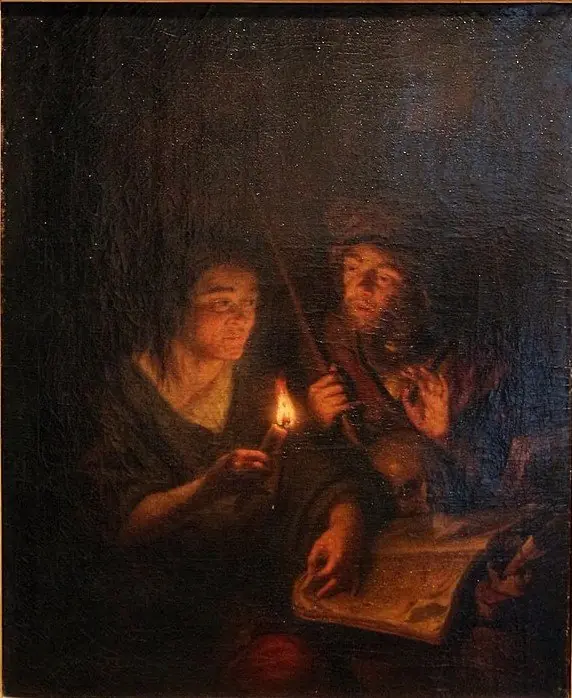 A pitonisa de Endor
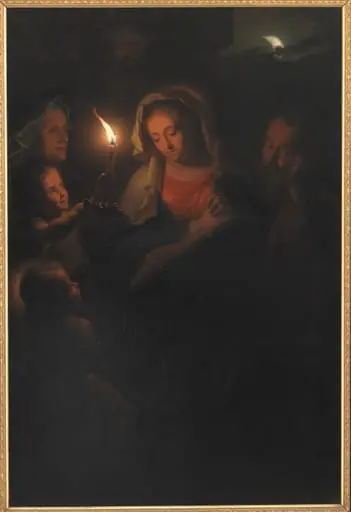 The Holy Family
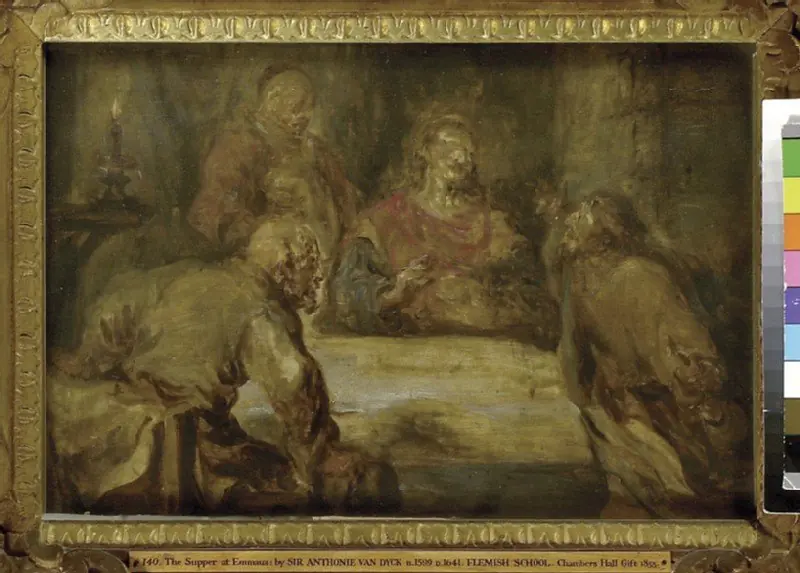 The Supper at Emmaus
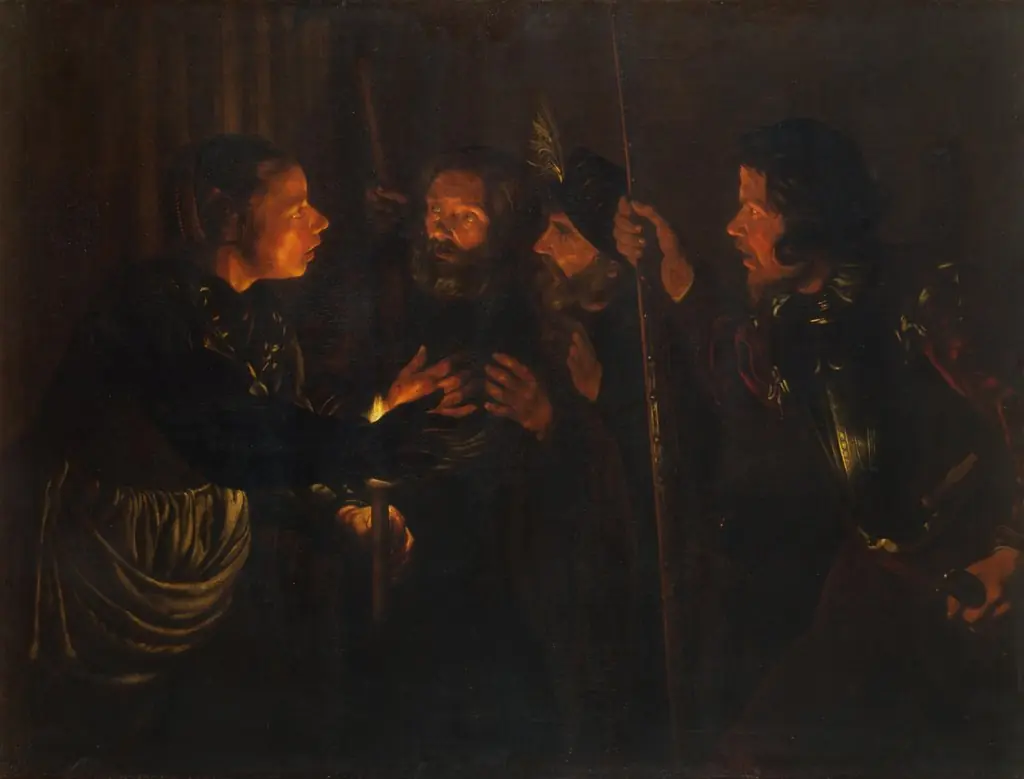 Denial of St Peter
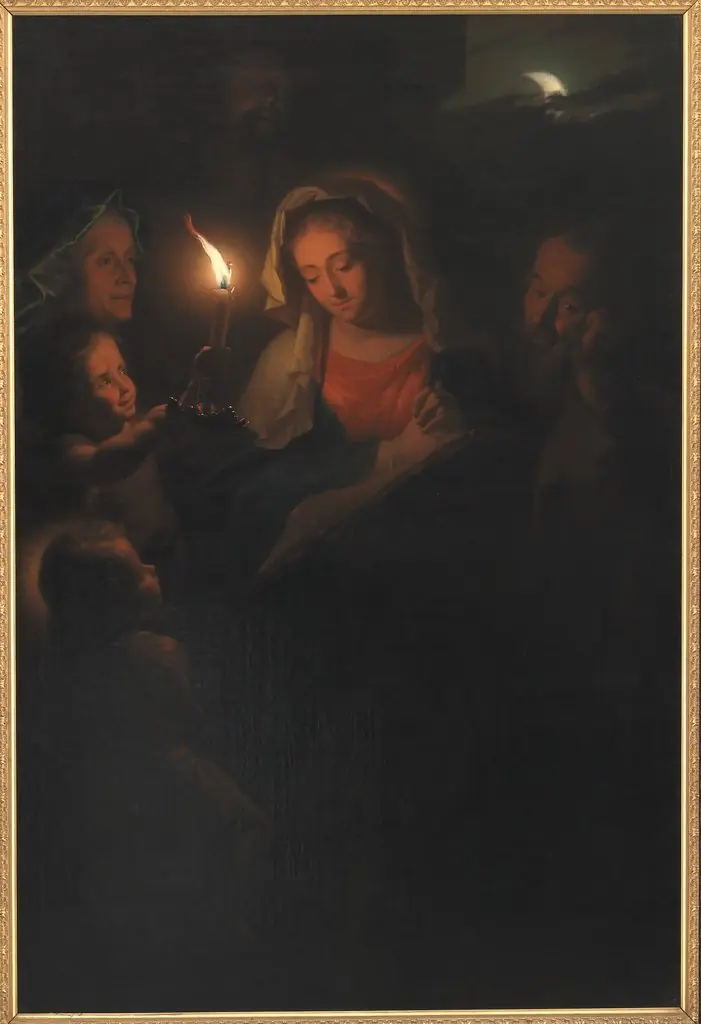 The Holy Family
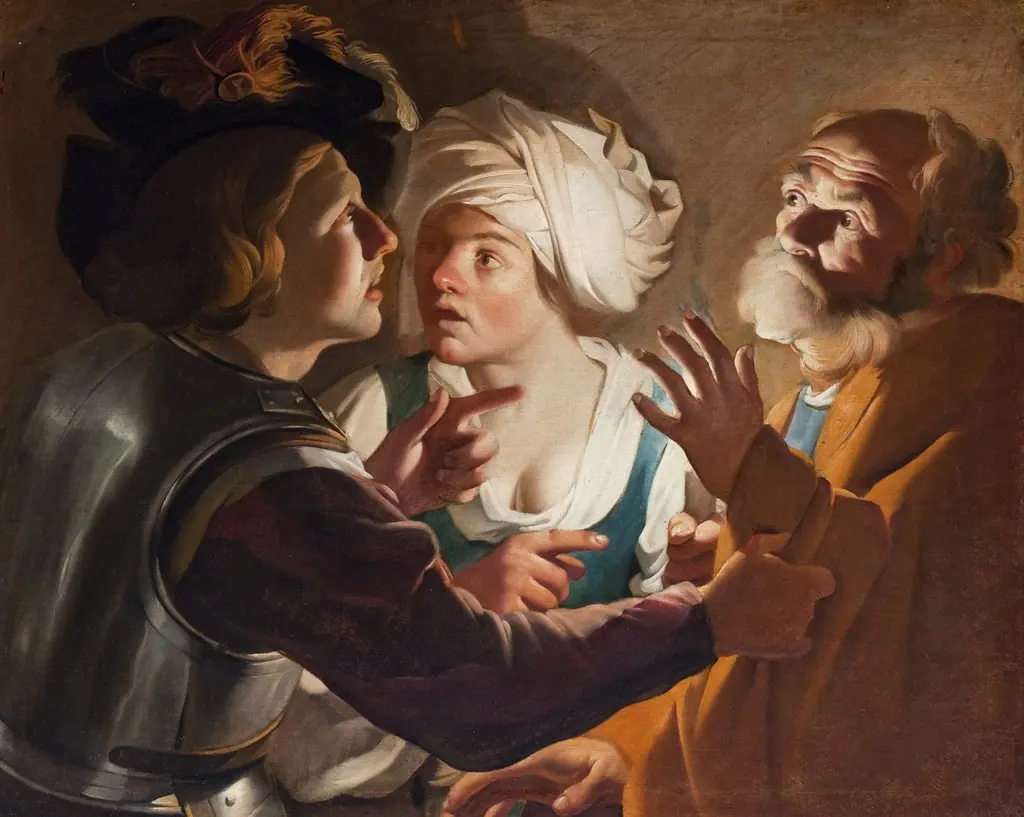 Denial of Saint Peter
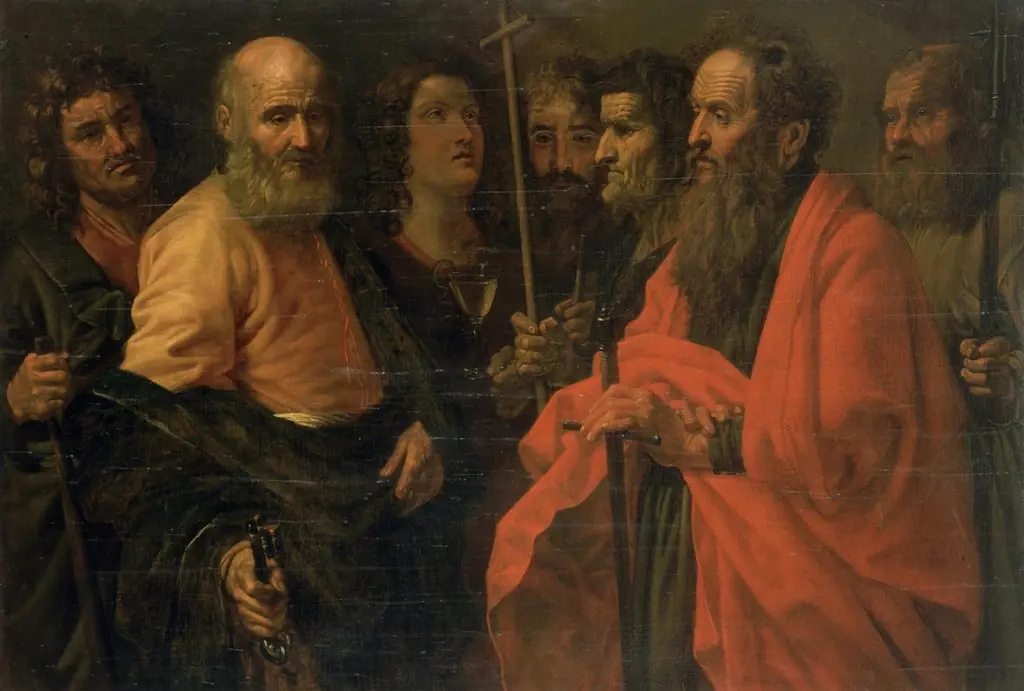 St James the Less, Sts Peter, Paul, John, Thomas, Philip, Judas and Thaddeus the Apostles
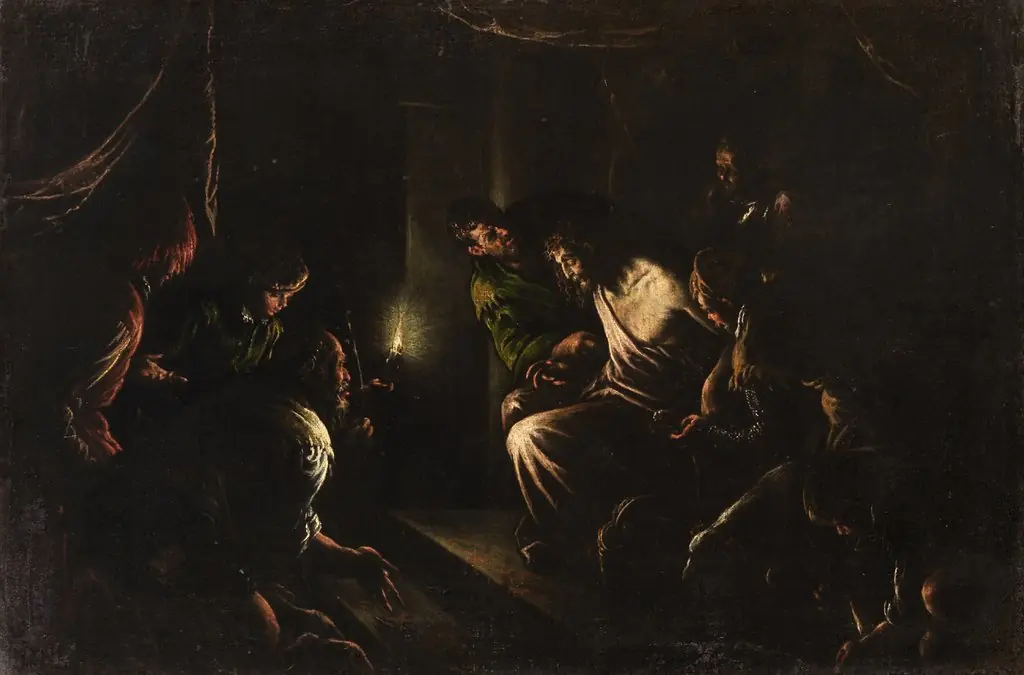 Mocking of Christ
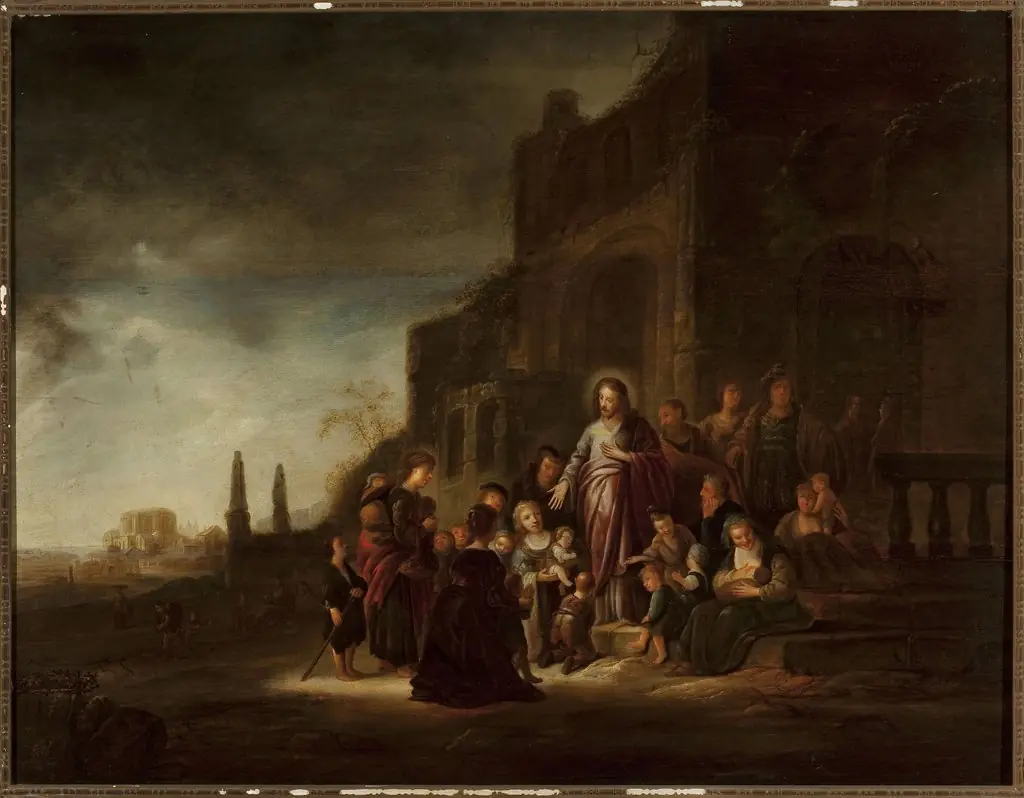 Christ among children
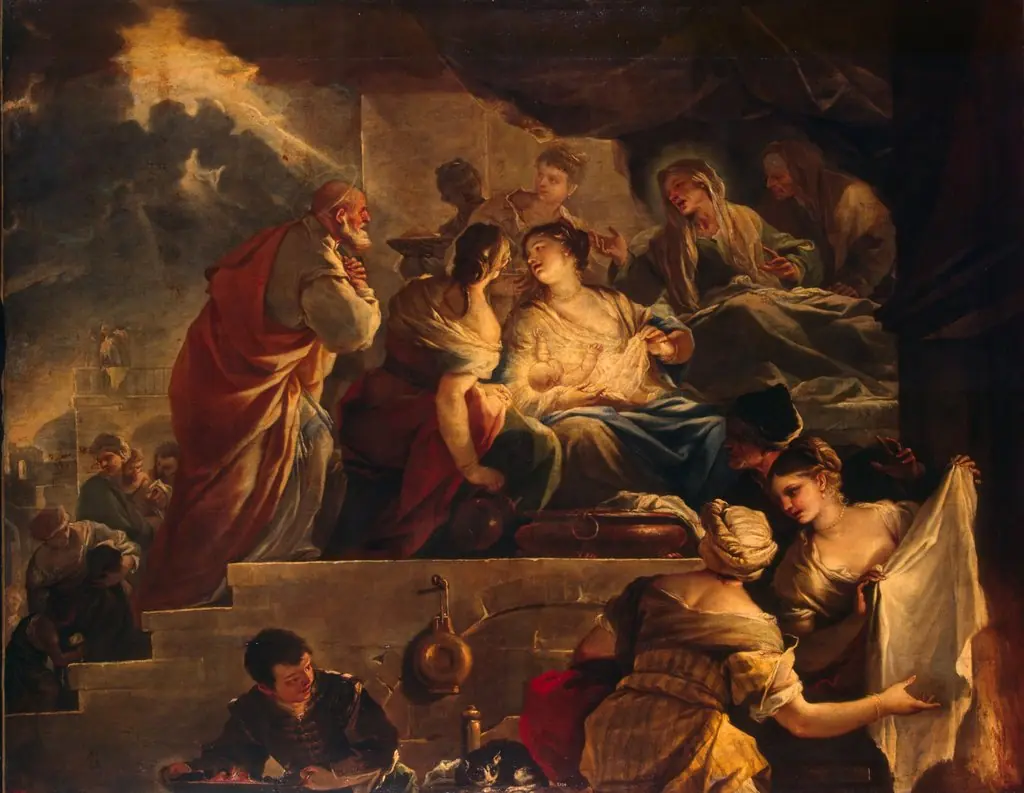 Birth of St John the Baptist
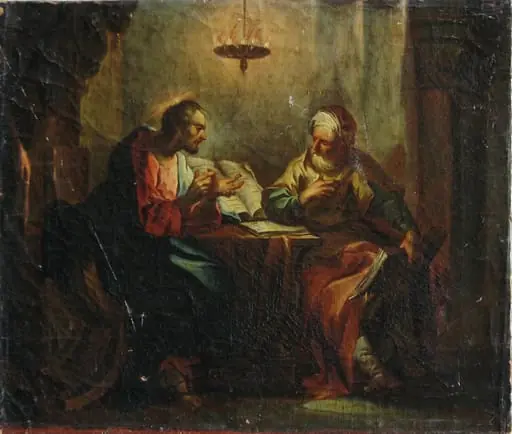 Cristos de vorbă cu Nicodim ; pandant: Cristos și samariteana