Artwork
The Supper at Emmaus
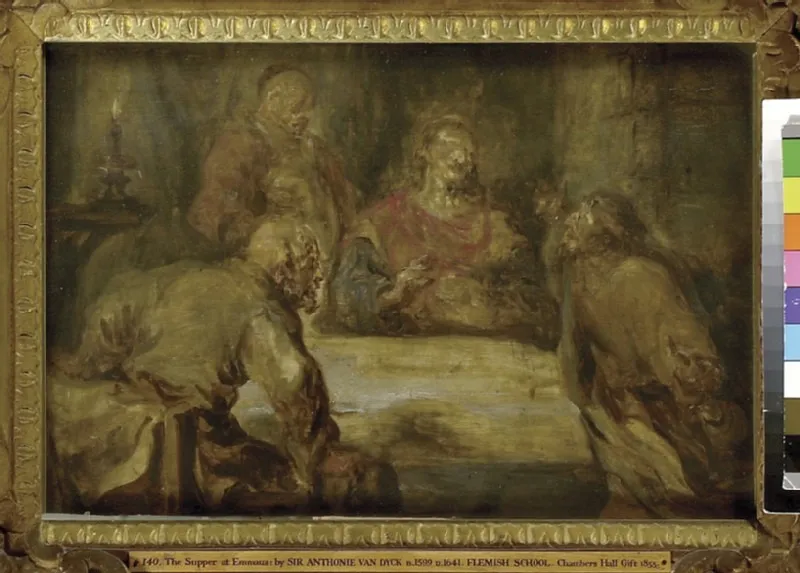
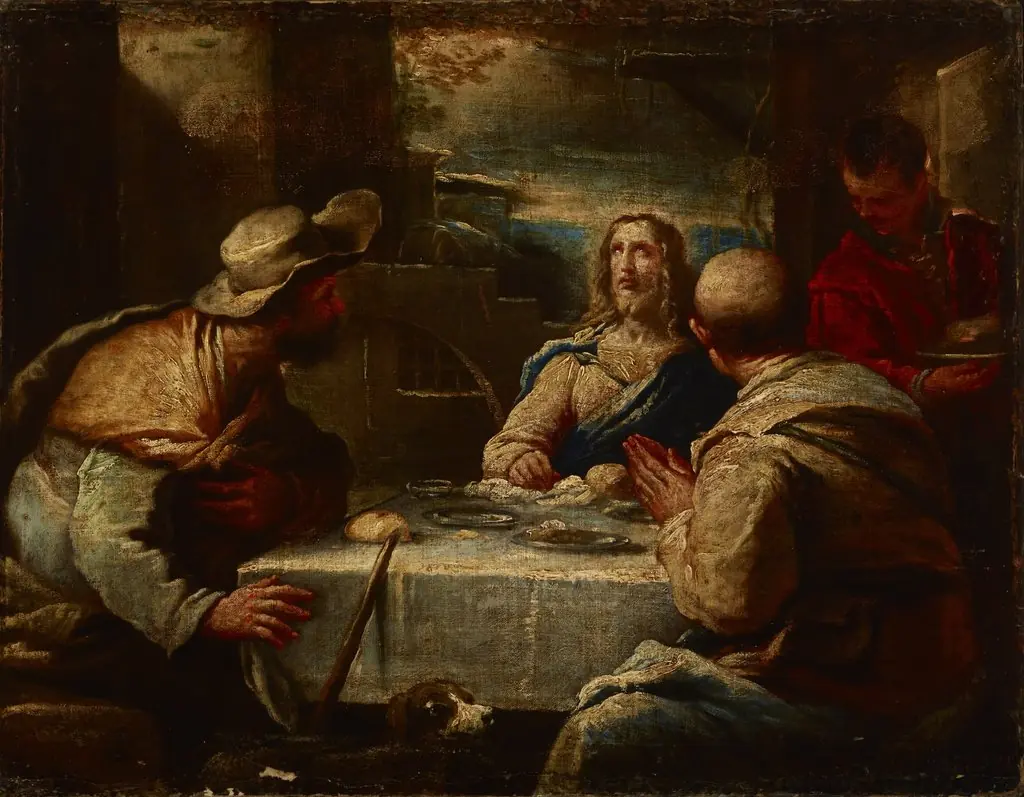
The Supper at Emmaus is an oil painting by the Flemish Baroque painting artist Anthony van Dyck. It dates from 1628 and is held in the collection of the Ashmolean Museum.
About this work
Overview
Created in 1628, *The Supper at Emmaus* is an oil painting by the Flemish Baroque artist Anthony van Dyck. Executed during his early Antwerp period, the work belongs to the religious genre and illustrates a moment from the New Testament when the risen Christ reveals himself to two disciples at a modest meal.
Subject & Meaning
The composition captures the biblical episode in which Jesus appears to his followers at Emmaus, prompting a sudden recognition. Van Dyck portrays three figures gathered around a wooden table; the central figure in a red robe holds a piece of bread, his expression one of astonishment, while the companions lean forward, attentive to the revelation.
Technique & Style
Employing the dramatic chiaroscuro typical of Flemish Baroque, the painter renders the scene in low light, allowing shadows to model faces and garments with tactile depth. Thick, impasto brushstrokes give the surface a sculptural quality, while the contrast between illuminated flesh and dark interior heightens the emotional intensity of the encounter.
History & Provenance
Van Dyck, a prodigy who trained under Peter Paul Rubens and entered Antwerp’s Guild of Saint Luke as a master by 1617, produced this work before his later appointment as court painter in England. The painting remains a testament to his early mastery of religious narrative and his assimilation of Rubens’ dynamic visual language.
Artist & collection
Artist
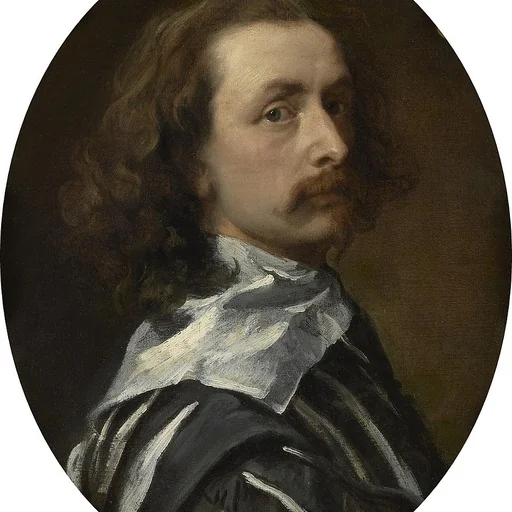
Sir Anthony van Dyck (; Dutch: Antoon van Dijck ; 22 March 1599 – 9 December 1641) was a Flemish Baroque artist, who became the leading court painter in England after success in the Spanish Netherlands and Italy.

 Christ in Emmaus
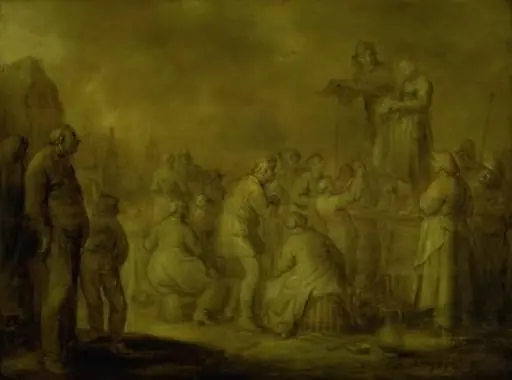 Street Singers
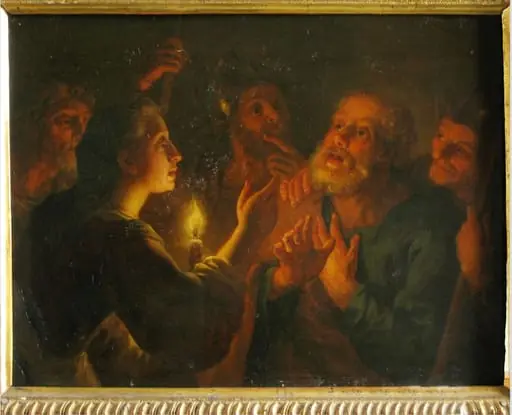 Apostolul Petru tăgăduind pe Iisus
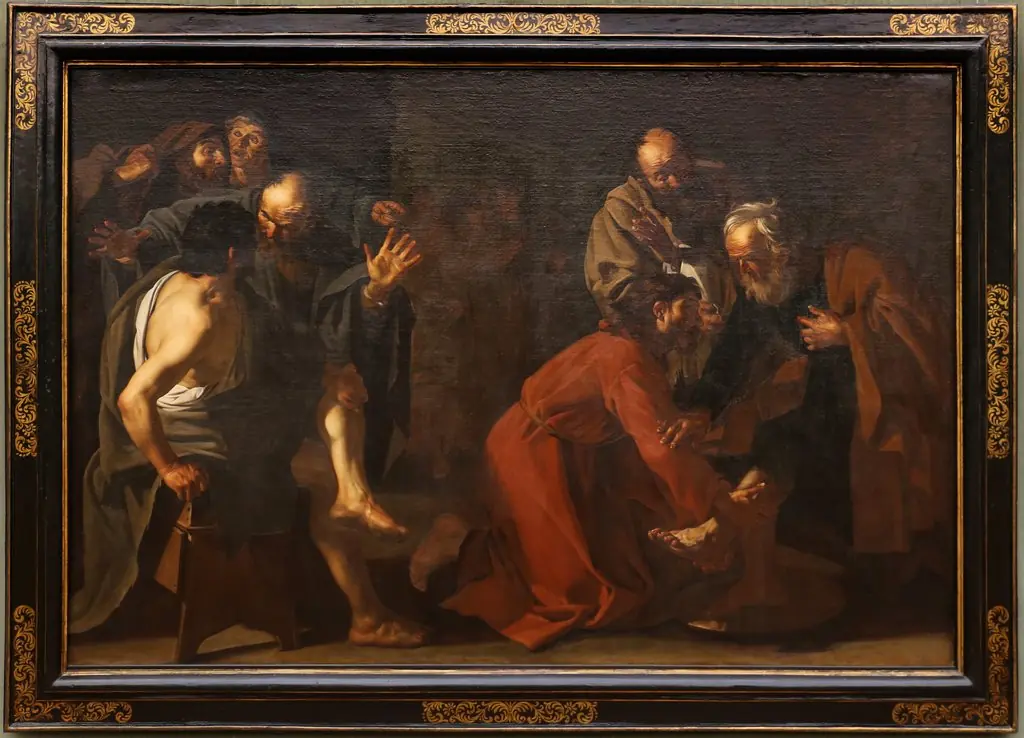 Christ washing the feet of Saint Peter (John 13:1-20)
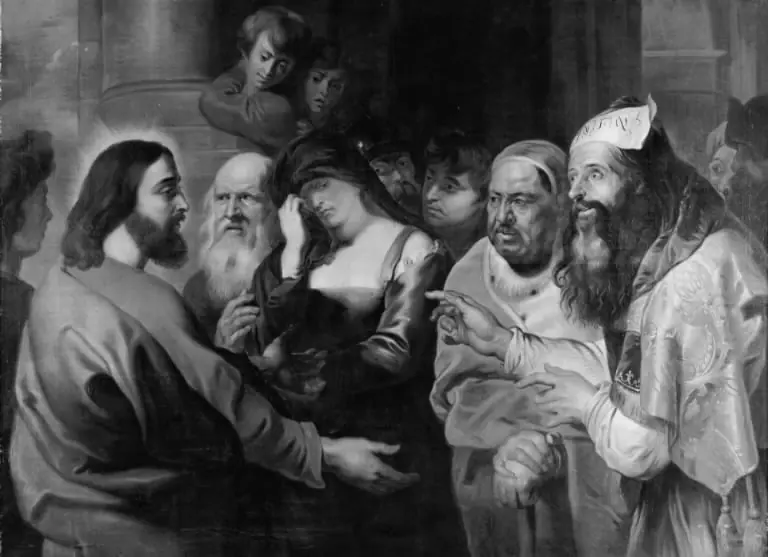 Kristus og synderinden
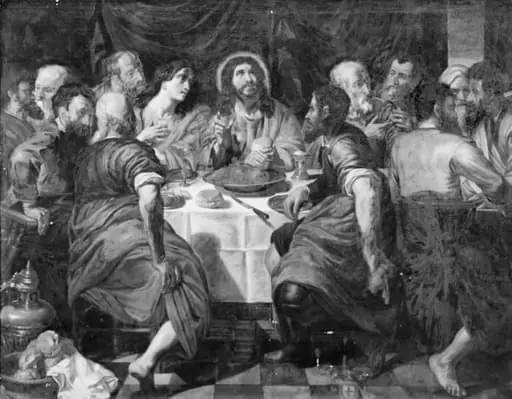 The Last Supper
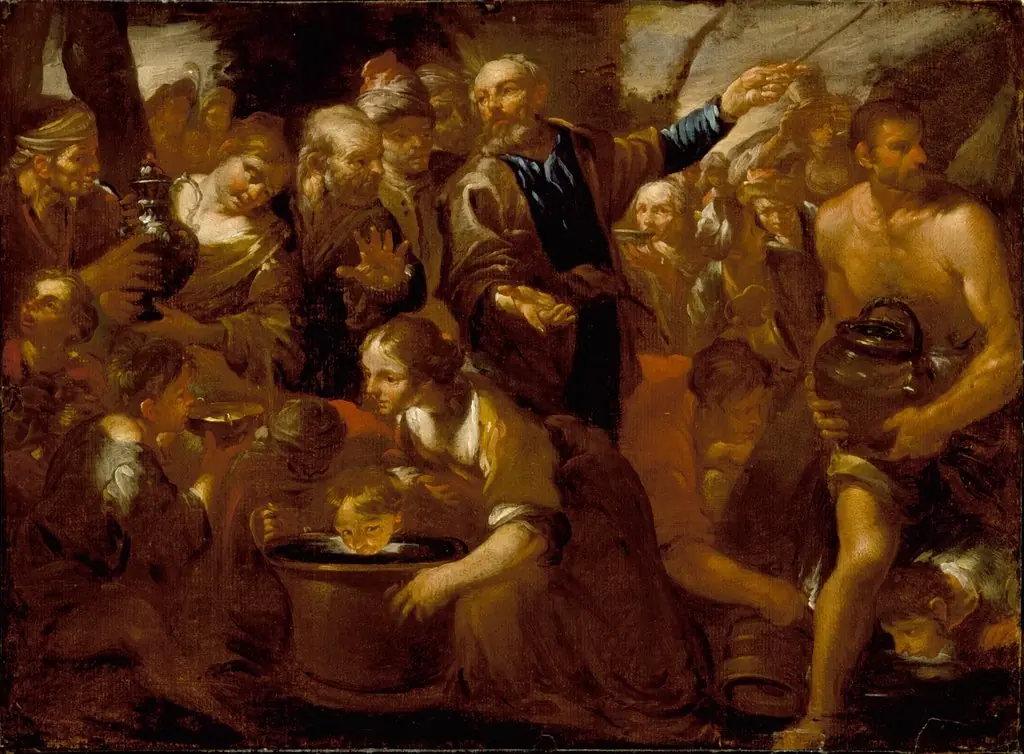 Moses Striking the Rock
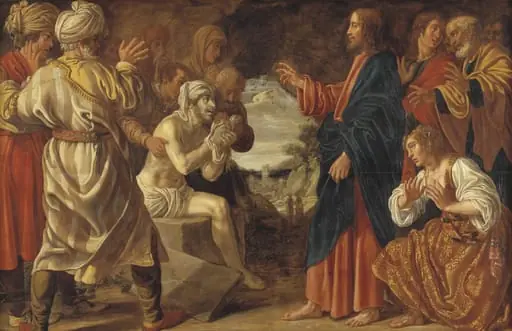 The Raising of Lazarus
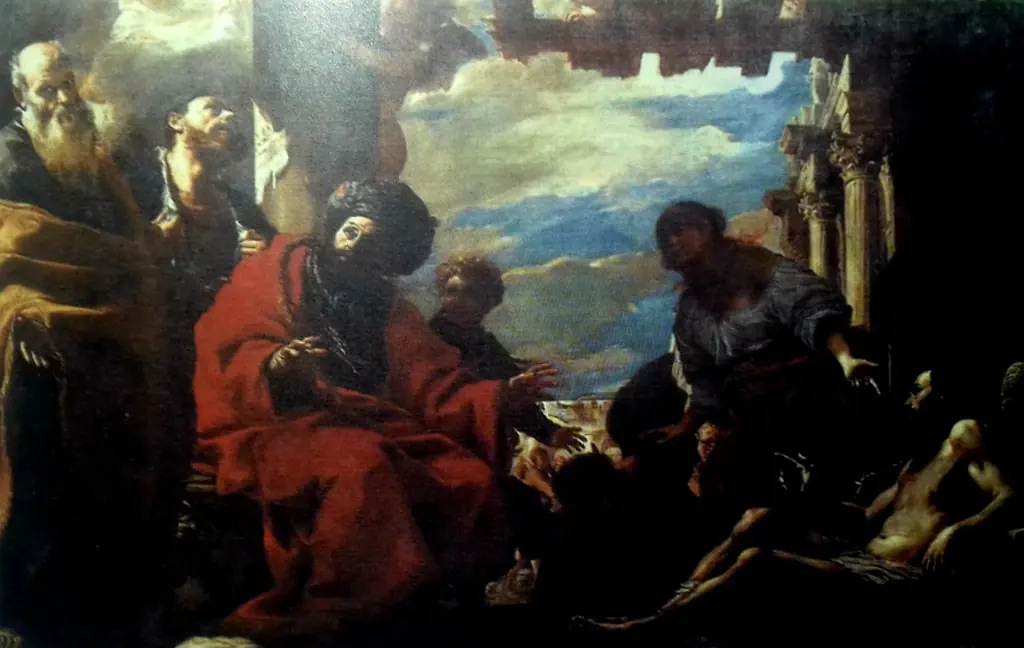 Job and his friends
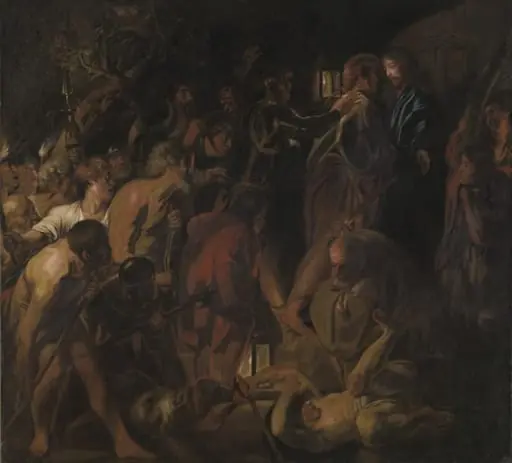 The Betrayal of Christ
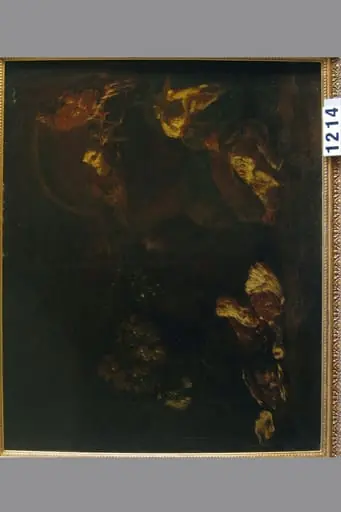 Natură statică cu porumbei (în registrul inventar: Natură moartă și un coș cu porumbei)
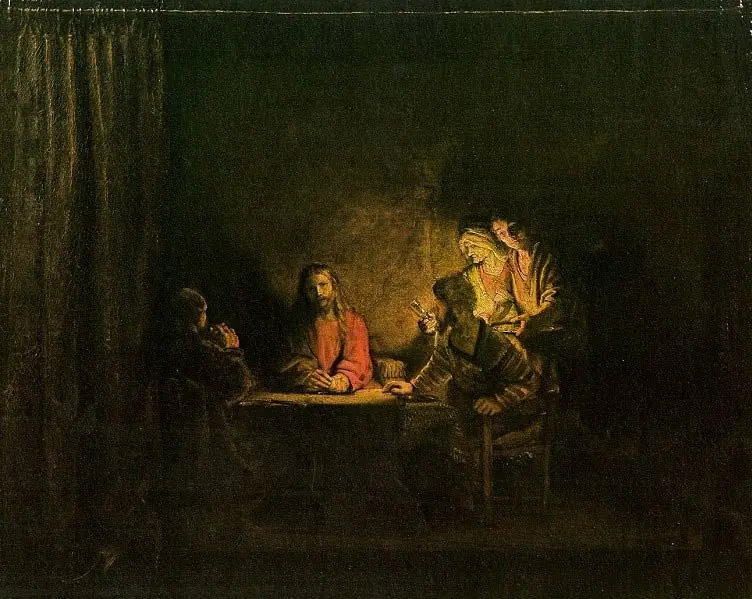 Supper at Emmaus