Artwork
Les oublies
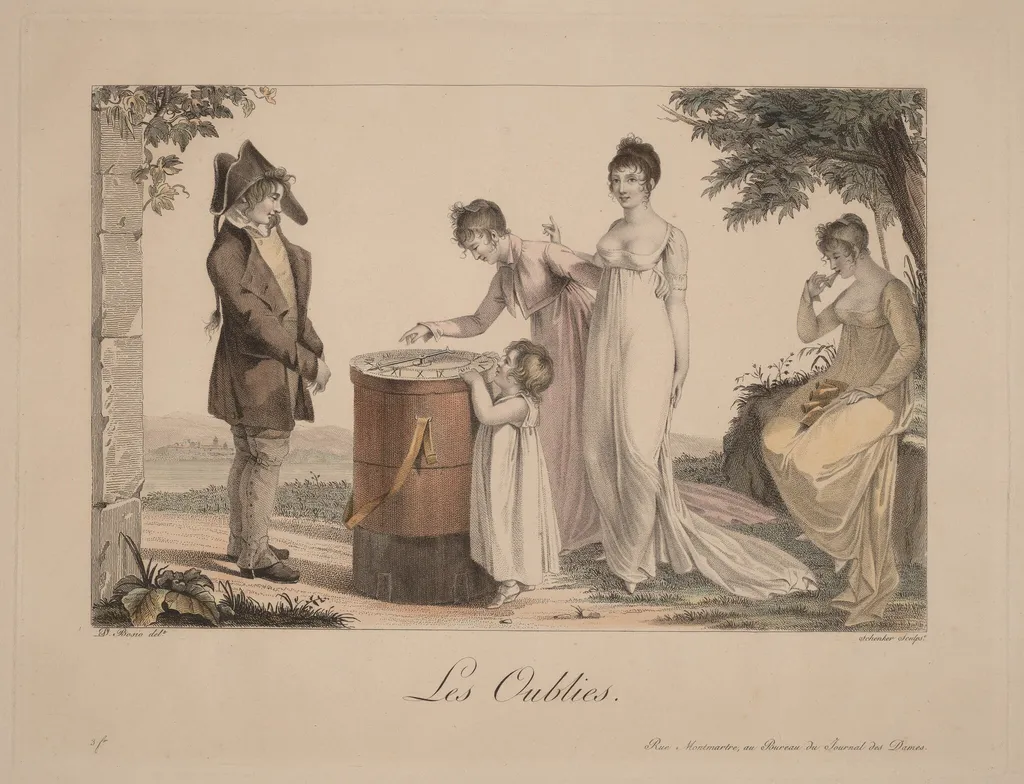
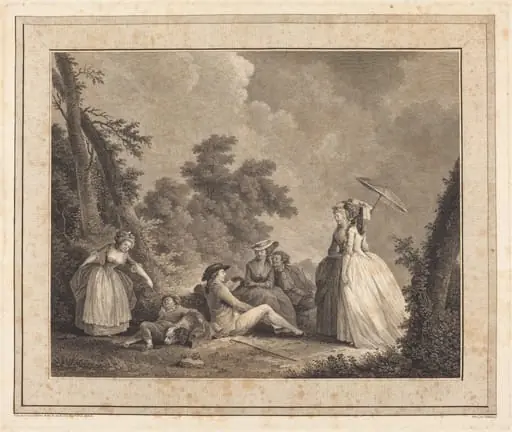
Les oublies is an ink print by the Romanticist artist Nicolas Schencker. It dates from 1804 and is held in the collection of the National Gallery of Art.
About this work
Overview
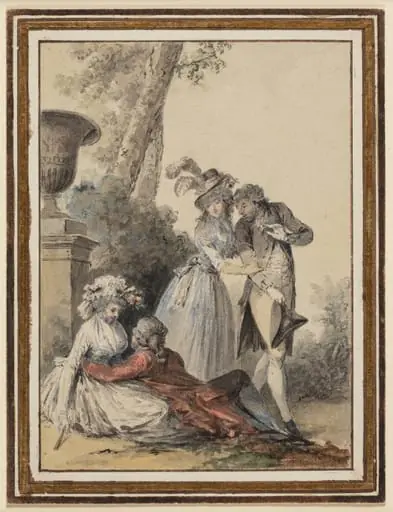
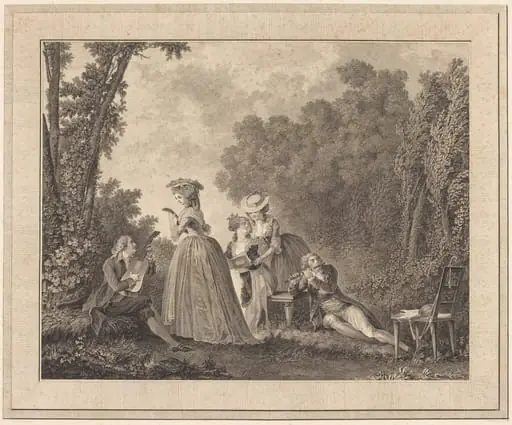
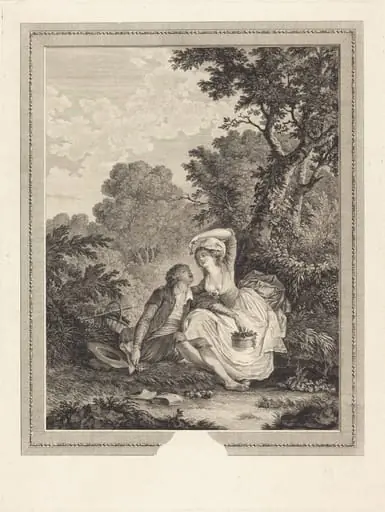
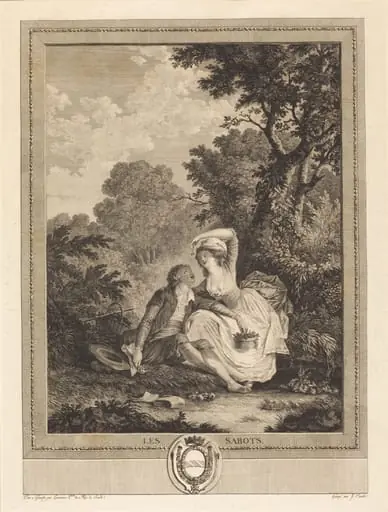
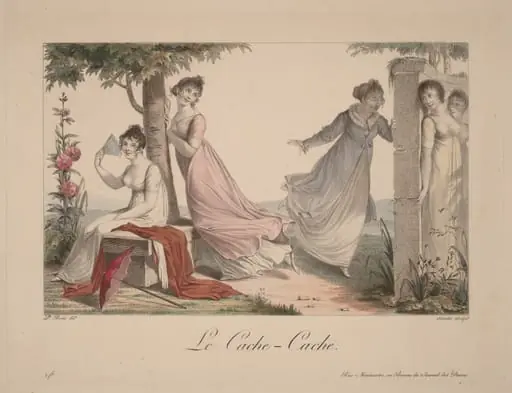
Les oublies, a hand‑colored engraving executed by Nicolas Schencker in 1804, presents a modest garden tableau populated by four figures. The composition balances a solitary man in a dark coat with three women engaged in everyday gestures, set against a backdrop of trees, a fence, and a distant landscape.
Subject & Meaning
The work’s title, translating to "the forgotten," invites speculation that the central barrel—examined by one of the women—symbolizes objects or moments overlooked in daily life. The women's varied activities, from adjusting attire to reclining with a basket, underscore themes of domestic routine and unnoticed detail.
Technique & Style
Created through the meticulous process of engraving, the image was subsequently hand‑colored, a common practice in the early nineteenth century to enhance tonal variation. Schencker employs soft cross‑hatching for shading, achieving a delicate gradation that conveys depth while retaining the linear precision characteristic of the period’s printmaking.
History & Provenance
Produced in 1804, the print reflects the transitional aesthetic between late Rococo intimacy and emerging Romantic sensibilities. While specific ownership records are scarce, the piece has circulated among collections of early nineteenth‑century French prints, illustrating the era’s interest in genre scenes rendered in reproducible media.
Context
During the early 1800s, French engravers frequently depicted bucolic or domestic subjects to appeal to a growing middle‑class market for affordable art. Schencker’s choice of a garden setting aligns with contemporary tastes for idyllic, yet relatable, scenes that could be reproduced and disseminated widely.
Artist & collection