Artwork
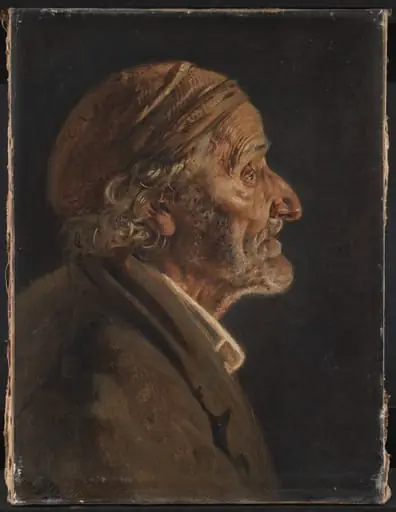
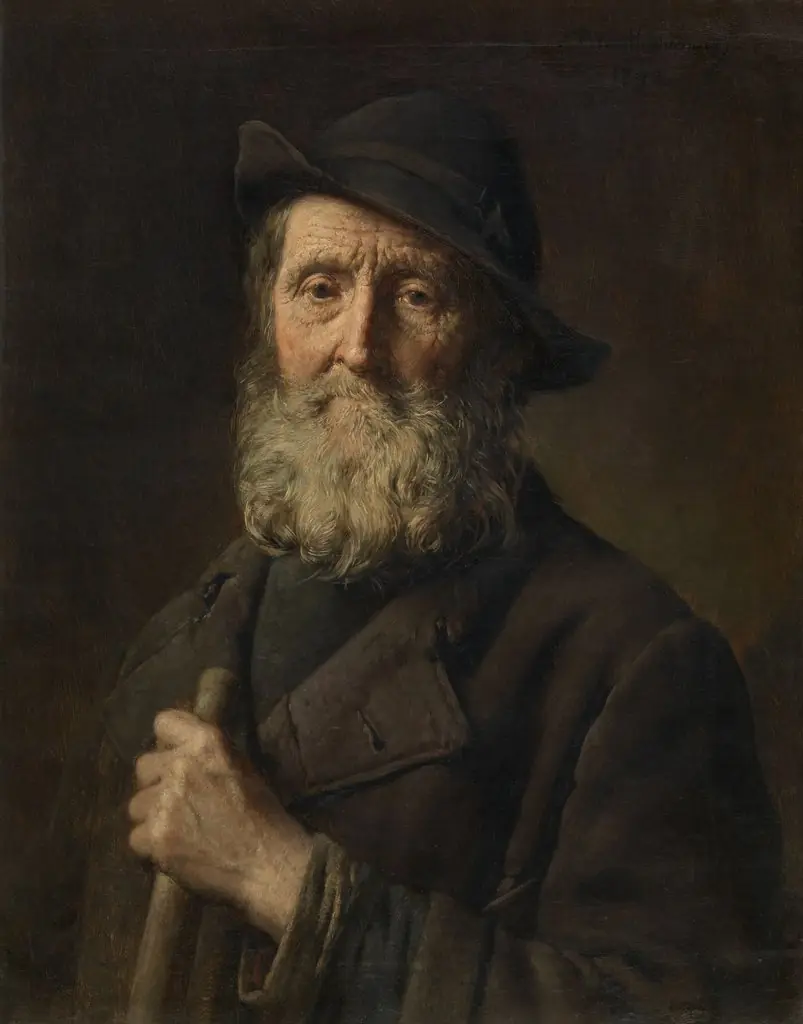
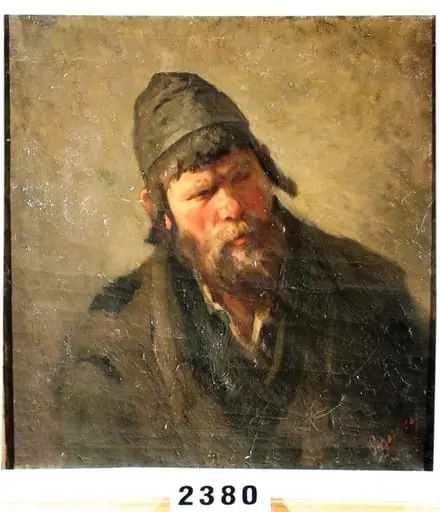
Bătrân din Ciociara (în registrul inventar: Un bătrân). Pandant: Țăran din Carrara
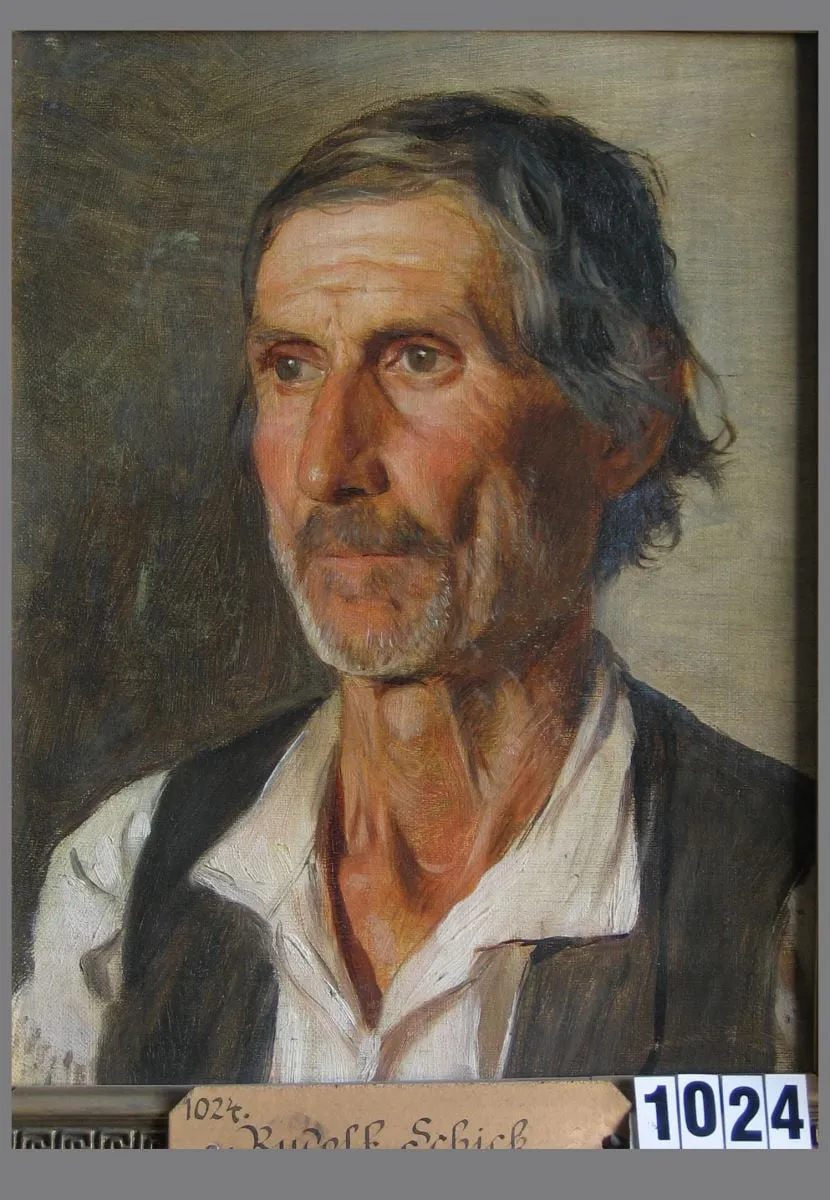
Bătrân din Ciociara (în registrul inventar: Un bătrân). Pandant: Țăran din Carrara is an unspecified painting by Rudolf Schick. It is held in the collection of the Brukenthal National Museum. The work presents an intimate, close‑up portrait of an elderly man whose face bears the marks of time.
About this work
Overview
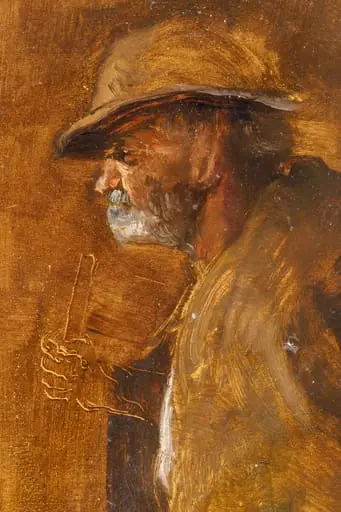
The work presents an intimate, close‑up portrait of an elderly man whose face bears the marks of time. Warm, earthy tones dominate his skin, while deep shadows accentuate the hollows beneath his eyes and around his mouth. He is dressed in a simple white shirt with a dark collar, and his dark hair and beard show streaks of gray, emphasizing his age.
Subject & Meaning
The figure is identified as a rural elder, evoking the archetype of the seasoned peasant. The direct, unembellished rendering invites contemplation of a life spent in labor, suggesting dignity in the ordinary and the quiet resilience of a generation rooted in agrarian tradition.
Technique & Style
Thick, textured brushwork builds the contours of the man's face, creating a tactile surface that conveys the roughness of lived experience. The painter employs strong chiaroscuro, using pronounced light and shadow to model the features against a neutral, blurred background, thereby concentrating the viewer’s attention on the subject’s expression.
Context
The portrait belongs to a series that includes a companion piece titled “Țăran din Carrara,” indicating an interest in documenting regional peasant types. Such works reflect a broader 19th‑century artistic focus on ethnographic portraiture, aiming to preserve the visual record of local communities amid social change.
Artist & collection
Artist
Rudolf Schick carved his place in art history with quiet, unsentimental portraits that feel like doorways into 19th-century village life.