Artwork
Tânără sportivă
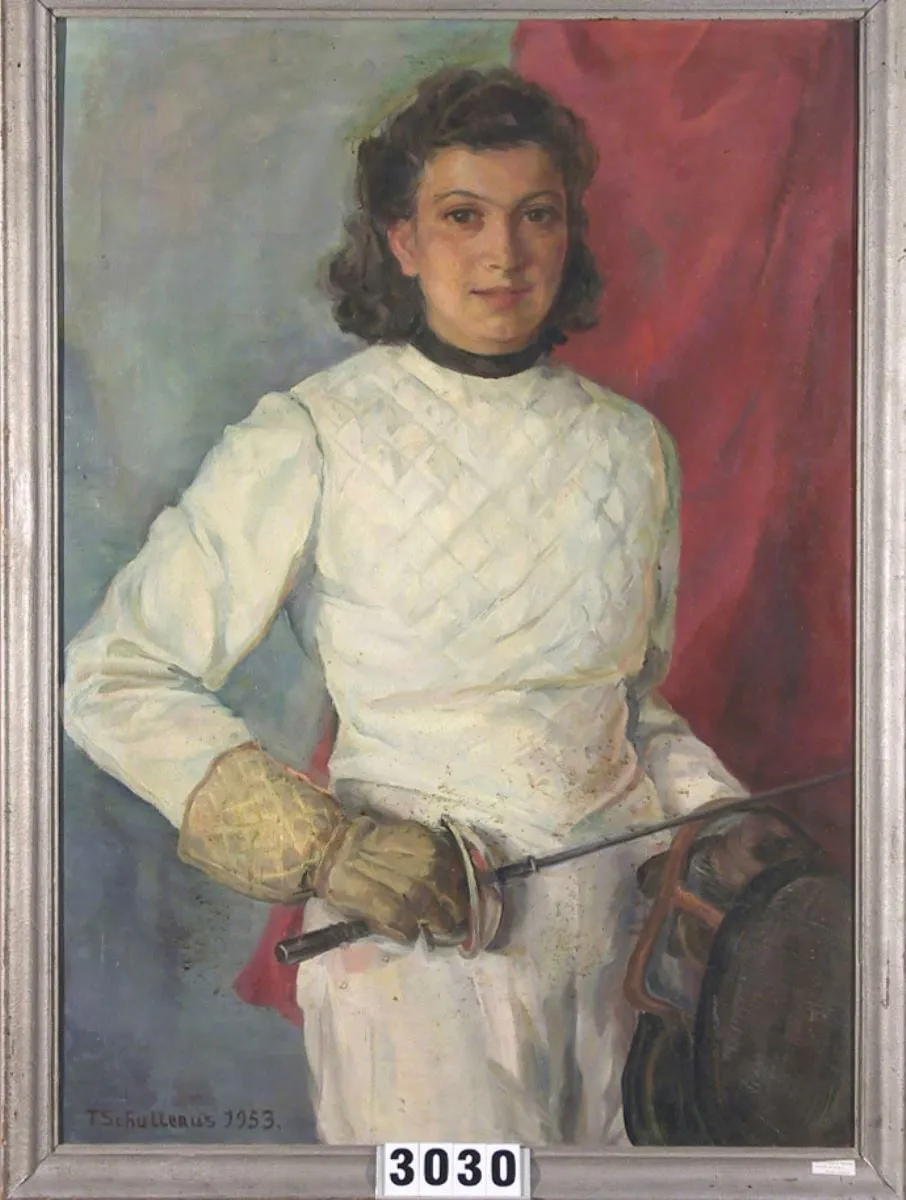
Tânără sportivă is an unspecified painting by Trude Schullerus. It is held in the collection of the Brukenthal National Museum. This painting depicts a young female fencer in motion, dressed in a white fencing jacket and skirt, with a foil sword held poised.
About this work
Overview
This painting depicts a young female fencer in motion, dressed in a white fencing jacket and skirt, with a foil sword held poised.
This painting depicts a young female fencer in motion, dressed in a white fencing jacket and skirt, with a foil sword held poised. Her dark hair is tightly gathered, and a black collar contrasts beneath the jacket. The background blends red and blue-purple tones, while a dark, ambiguous form on the right suggests a fencing mask. Thick, textured brushwork emphasizes the fabric of her gear, creating a tactile presence.
Subject & Meaning
The figure represents a female athlete engaged in a disciplined, precise sport, challenging traditional gender roles in early 20th-century visual culture. Her focused expression and poised stance convey determination rather than spectacle. The absence of spectators or a defined setting isolates her, emphasizing individual effort and quiet concentration over external validation.
Technique & Style
The artist employs impasto to build texture in the jacket and gloves, giving physical weight to the fabric. Soft, diffused lighting draws attention to the face and hands, key areas of expression and action. The background’s muted, abstract hues avoid distraction, allowing the figure to emerge through contrast and brushwork rather than detailed environment.
History & Provenance
The painting’s origin and early ownership are not documented in available records. It appears to date from the early 1900s, a period when depictions of women in sports were uncommon in fine art. Its survival suggests it was privately held, possibly by a collector with interest in modernist or gender-subversive themes.
Context
During the early 20th century, women’s participation in athletics like fencing was expanding, though rarely celebrated in mainstream art. This work aligns with a quiet shift in visual culture, portraying female athletes with dignity and autonomy. It reflects broader social changes without overt political messaging, instead asserting presence through quiet realism.
Legacy
The painting contributes to a lesser-known strand of modernist portraiture that elevates everyday athletic figures. Its emphasis on texture and subdued color anticipates later interest in materiality and psychological presence. While not widely exhibited, it remains a quiet testament to the visibility of women in physical disciplines during a time of social transition.
Artist & collection
Artist